
Choosing where to sail next is genuinely one of the most exciting and overwhelming decisions a traveler can face. The world offers hundreds of examples of sailing destinations that range from crowded charter hotspots to remote island chains most people never hear about. This guide cuts through that noise. You'll find region-by-region breakdowns, practical criteria for evaluating any sailing spot, and honest comparisons to help you match a destination to your skill level, budget, and sense of adventure.
Table of Contents
- Key takeaways
- Examples of sailing destinations: what makes a location truly great
- 1. British Virgin Islands
- 2. The Bahamas and Exumas
- 3. Grenada and the Grenadines
- 4. French Polynesia
- 5. Seychelles and Maldives
- 6. Thailand's Andaman Sea
- 7. Greece
- 8. Croatia's Dalmatian coast
- 9. Northern and challenging destinations
- 10. Destination comparison and recommendations by traveler type
- My honest take on picking a sailing destination
- Plan your sailing adventure with Sailorix
- FAQ
Key takeaways
| Point | Details |
|---|---|
| Criteria matter more than hype | Evaluate wind patterns, anchorage variety, and cultural appeal before booking any sailing trip. |
| Caribbean leads for beginners | The British Virgin Islands and Bahamas offer reliable trade winds, short passages, and calm waters. |
| Mediterranean rewards skilled sailors | Greece and Croatia pack history, culture, and strong seasonal winds into some of the world's finest routes. |
| Remote options exist and shine | French Polynesia and the Seychelles offer less crowded, more authentic experiences for adventurous sailors. |
| Match destination to your profile | Beginners, families, solo adventurers, and experienced sailors each have ideal destinations suited to their needs. |
Examples of sailing destinations: what makes a location truly great
Before you start pinning spots on a map, it helps to understand what separates a genuinely great sailing destination from one that just looks good in photos.
Wind and water conditions are where you start. Consistent trade winds, manageable currents, and predictable weather create the kind of conditions where sailing is actually enjoyable rather than white-knuckled. The Caribbean's reliable trade winds are the gold standard for this, while some Mediterranean regions demand real skill to handle seasonal gusts.
Beyond conditions, consider these factors when sizing up any destination:
- Anchorage variety. A destination with diverse anchorages, from busy marinas to secluded bays, gives you flexibility to adjust plans based on weather or mood.
- Accessibility. Proximity to international airports and well-equipped marinas reduces logistical headaches, especially on a first trip.
- Island hopping potential. Short distances between stops let you cover more ground without exhausting passages.
- Cultural depth. Onshore experiences, local food, markets, and historic towns transform a sailing trip into a full travel adventure.
- Skill-level fit. Some destinations punish beginners with complex navigation, while others are forgiving and structured for learning.
- Marine life and natural beauty. Coral reefs, sea turtles, and dramatic coastlines turn anchorages into destinations in their own right.
Pro Tip: Always research the prevailing wind system for your target month before booking. A destination that's perfect in April can be dangerous in August.
1. British Virgin Islands
The British Virgin Islands hold a reputation that isn't just marketing. They are widely regarded as the sailing capital of the world, and the title is earned. With over 60 islands and cays spread across calm, sheltered water, you can visit multiple islands in a single day without pushing any limits.
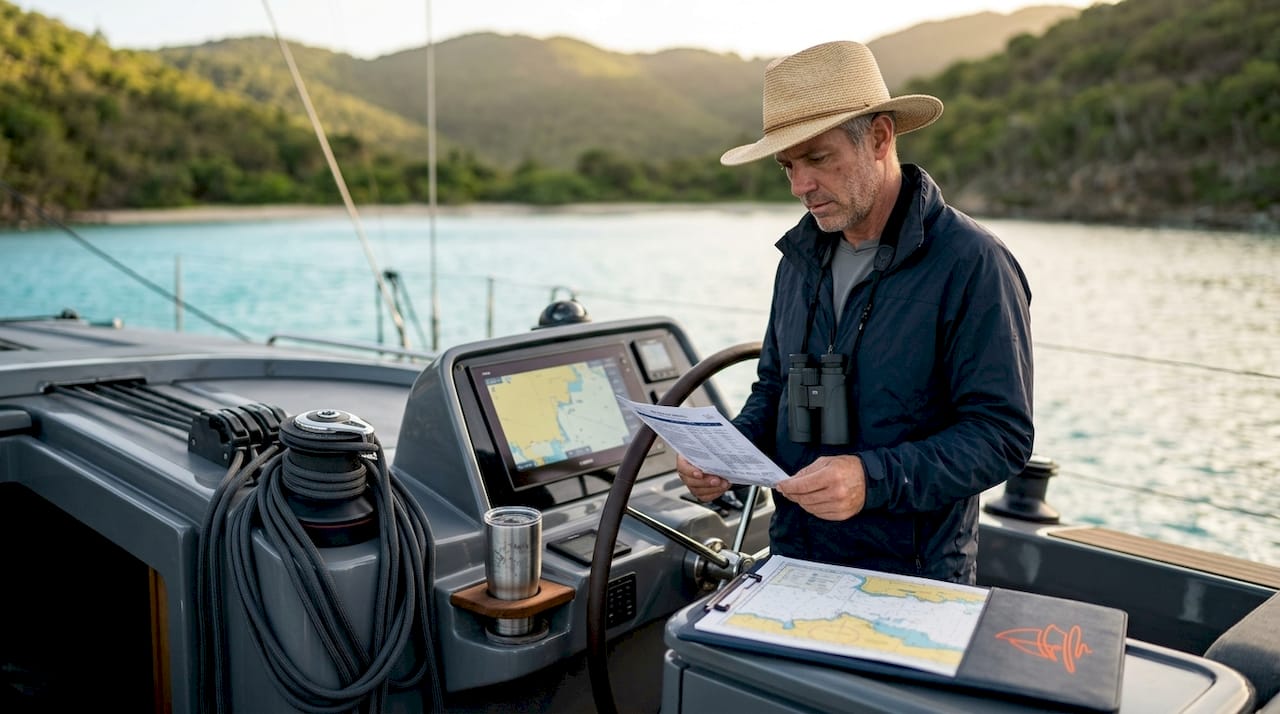
Trade winds blow consistently from the northeast, typically between 15 and 25 knots, giving sailors a clean and predictable experience. Famous stops include Norman Island (said to be the inspiration for Treasure Island), the Baths at Virgin Gorda, and Jost Van Dyke's beachside bars. Mooring balls are plentiful, regulations are clear, and the sailing community is welcoming.
The BVI is the first destination most sailing instructors recommend for new bareboat charterers. The distances are short, the hazards are marked, and the reward is immediate.
2. The Bahamas and Exumas
Few sailing trip ideas generate as much excitement as the Exumas chain in the Bahamas. The water clarity here is extraordinary. Crystal clear waters over white sand bottoms make navigation feel almost effortless, and snorkeling off the stern becomes a daily ritual.
The Exumas stretch across roughly 150 miles and include Staniel Cay, Warderick Wells, and the famous swimming pigs of Big Major Cay. Families love the shallow, protected anchorages. More adventurous sailors head to the outer islands for true isolation. The Bahamas works for a wide range of experience levels, though passages across the Gulf Stream from Florida require timing and preparation.
3. Grenada and the Grenadines
This chain of islands running south through the Eastern Caribbean punches far above its profile. Grenada itself is called the Spice Island for its nutmeg and cocoa production. The sailing between Grenada and St. Vincent covers some of the most beautiful sailing waters in the entire Atlantic.
Bequia is a sailor's town with a real boatbuilding heritage and excellent provisioning. The Tobago Cays Marine Park offers five uninhabited islands surrounded by a horseshoe reef. This region suits sailors who want tropical scenery combined with genuine local culture rather than packaged resort experiences.
4. French Polynesia
French Polynesia earns its place among the most exotic examples of sailing destinations on the planet. The lagoons of Bora Bora are iconic, but the Gambier Islands offer something rarer: an authentic Polynesian sailing experience with almost no cruiser traffic. Known for black pearl farming and quiet, remote anchorages, the Gambiers reward sailors who put in the miles to reach them.
Navigation here requires a different skill set. Water color coding is the primary way to assess depth in Polynesian lagoons. Turquoise means safe anchoring, deep blue indicates deeper water, and brown signals coral reef. This isn't something you learn from a chart alone.
Pro Tip: In French Polynesia, plan to arrive at lagoon passes during slack water in good light. Morning arrivals with the sun behind you make reading water colors dramatically easier.
French Polynesia demands patience, preparation, and a willingness to move slowly. Sailors who embrace that pace find the experience genuinely life-changing.
5. Seychelles and Maldives
Both the Seychelles and Maldives sit in the Indian Ocean and offer extraordinary marine biodiversity that makes them magnetic for sailors who care as much about what's underwater as what's above it. The Seychelles is a year-round destination with tropical islands like Mahé, Praslin, and La Digue providing diverse cruising options and vibrant onshore culture.
The Maldives functions differently. Its atolls are spread across nearly 500 miles, and charter regulations are specific. You'll need to plan passages carefully and understand that provisioning options are limited outside of Malé. The payoff is near-total solitude and some of the world's best diving directly from your anchorage.
6. Thailand's Andaman Sea
Phuket serves as the charter base for one of Southeast Asia's best sailing areas. The Andaman Sea offers sheltered water between dramatic limestone karst formations, with islands like Ko Phi Phi and Ko Lipe providing picture-perfect stops. Distances between anchorages are short, and the cultural richness of Thailand means every port stop involves excellent food and genuine local life.
The sailing season runs from November through April, when monsoon conditions ease. Outside that window, conditions deteriorate quickly. Sailors who time their visits correctly find this one of the most visually striking scenic sailing routes anywhere in Asia.
7. Greece
Greece is not one sailing destination. It is five distinct ones. Over 6,000 islands span five main cruising grounds: the Ionian, Saronic Gulf, Cyclades, Dodecanese, and Sporades. Each has a completely different character, wind regime, and difficulty level.
The Ionian Sea suits newer sailors with its gentler winds averaging 10 to 20 knots and numerous sheltered anchorages. The Cyclades offer dramatic scenery and stronger Meltemi winds in summer that demand proper preparation. The Dodecanese, near Turkey, mixes Greek and Ottoman history in ways that feel completely unlike anywhere else in Europe.
8. Croatia's Dalmatian coast
Croatia has become one of the most popular sailing spots in Europe, and the appeal is obvious. The Dalmatian coast runs over 1,000 miles with more than 1,200 islands, islets, and reefs. Medieval towns like Dubrovnik, Hvar, and Korčula sit directly on the water, which means sailing from one UNESCO World Heritage Site to another is a realistic itinerary.
Winds here are predictable enough for planning but interesting enough for real sailing. The Maestral blows reliably in summer. Water clarity is exceptional. Charter bases in Split and Dubrovnik are well-organized, making logistics clean for first-time visitors to the region.
9. Northern and challenging destinations
For sailors who find the Caribbean too comfortable, three regions push the experience in different directions.
- Faroe Islands. The fjords and tidal currents here are spectacular and genuinely dangerous in equal measure. Limited facilities and unpredictable weather mean this is not a casual charter destination. Using local current apps designed for complex tidal regions is not optional here. It's survival planning.
- New England, U.S. East Coast. Historic ports from Newport to Bar Harbor combine strong maritime heritage with varied conditions. Fog, tidal currents, and lobster pot fields keep sailors alert. The fall foliage season viewed from a cockpit is genuinely spectacular.
- Australia's Whitsunday Islands and New Zealand. The Whitsundays offer protected water and the famous Whitehaven Beach. New Zealand's Marlborough Sounds and Bay of Islands provide remote, dramatic scenery with a vibrant local sailing culture built around real offshore experience.
Pro Tip: In the Faroe Islands and New Zealand's more exposed waters, prioritize vessels with reliable diesel engines over pure sail performance. Conditions can change before you can tack out of trouble.
10. Destination comparison and recommendations by traveler type
Different sailors need different things. This comparison helps match the best sailing locations to your specific situation.
| Destination | Best for | Difficulty | Budget level |
|---|---|---|---|
| British Virgin Islands | Beginners, families | Easy | Mid to high |
| Bahamas / Exumas | Families, adventurers | Easy to moderate | Mid to high |
| Ionian Sea, Greece | Beginners, couples | Easy | Mid |
| Croatia | All levels, culture lovers | Moderate | Mid |
| Cyclades, Greece | Experienced sailors | Moderate to hard | Mid |
| French Polynesia | Adventurous, experienced | Hard | High |
| Seychelles | Luxury travelers | Moderate | High |
| Faroe Islands | Expert sailors only | Very hard | High |
| Whitsundays, Australia | Families, nature lovers | Easy to moderate | Mid |
| Thailand Andaman Sea | Culture seekers | Easy to moderate | Low to mid |
Beginners should strongly consider the BVI, the Ionian, or the Whitsundays as first charters. Experienced sailors ready for a genuine challenge will find the Faroe Islands or French Polynesia rewarding in ways that no easy cruise can replicate. Budget travelers get the best value in Greece and Thailand. Families with children consistently rate the Bahamas and the BVI as ideal.
My honest take on picking a sailing destination
I've spent years watching sailors overthink destination selection and underthink preparation. Here's what I've actually learned from seeing thousands of trips planned and completed.
The iconic destinations are iconic for a reason. The BVI, Greece, and Croatia earned their reputations through consistent delivery. Don't dismiss them as "too touristy" without sailing them first. The infrastructure in those regions exists to make your trip work, and that matters more than you'd think on your first charter.
What I've found is that the most memorable trips usually involve at least one destination that wasn't on the original plan. A squall reroutes you to a quiet bay you'd never have found. A local fisherman points you toward an anchorage not in any guide. The sailors who leave room for that kind of discovery consistently report better trips than those who schedule every night in advance.
Lesser-known spots like the Gambier Islands or the Faroe Islands demand more from you, but they give back proportionally. They filter out casual visitors. The reward is an experience that belongs to you in a way that a packed marina never can.
My take: pick a region that excites you, study its specific conditions thoroughly, then leave two or three nights unplanned. That gap in your itinerary is where the real trip happens.
— Sailorix
Plan your sailing adventure with Sailorix
Reading about top sailing areas is only the beginning. Turning that inspiration into a real trip is where most people get stuck on pricing, availability, and logistics.

Sailorix makes that next step genuinely straightforward. As a global boat booking platform, Sailorix gives you access to yachts and charter vessels across every destination covered in this guide, from the British Virgin Islands to Thailand's Andaman Sea, with real-time availability and transparent pricing. The annual membership model means you pay €100 per year and then access bookings with roughly 1% service fees instead of the 10 to 20% that most charter platforms charge. Whether you're planning your first bareboat charter or looking for your next blue-water adventure, browse available boats and find the right vessel for the sailing trip you've been picturing.
FAQ
What is a sailing destination?
A sailing destination is any geographic area offering suitable conditions, anchorages, and points of interest to make it a worthwhile base or route for sailing. Good examples include the British Virgin Islands, the Greek islands, and French Polynesia.
Which sailing destination is best for beginners?
The British Virgin Islands and Greece's Ionian Sea are consistently recommended for beginners. Both offer predictable winds, short passages, plentiful anchorages, and well-marked waters.
When is the best time to sail the Mediterranean?
The Mediterranean sailing season runs from May through October, with June and September offering the best balance of weather, wind, and crowd levels. The Meltemi winds in the Aegean peak in July and August, which suits experienced sailors but can challenge newcomers.
How do I choose between Caribbean and Mediterranean sailing?
Choose the Caribbean for easier conditions, consistent trade winds, and tropical scenery. Choose the Mediterranean if you want historical richness, diverse cuisine, and a broader range of island cultures. Your skill level and conditions should be the deciding factor for first-time charterers.
Are remote destinations like French Polynesia suitable for charter sailors?
French Polynesia is achievable for experienced charter sailors but requires specific preparation. Navigation in Polynesian lagoons depends on reading water color to assess depth and reef hazards, local weather patterns differ significantly from Caribbean norms, and provisioning options are limited outside of Tahiti.