
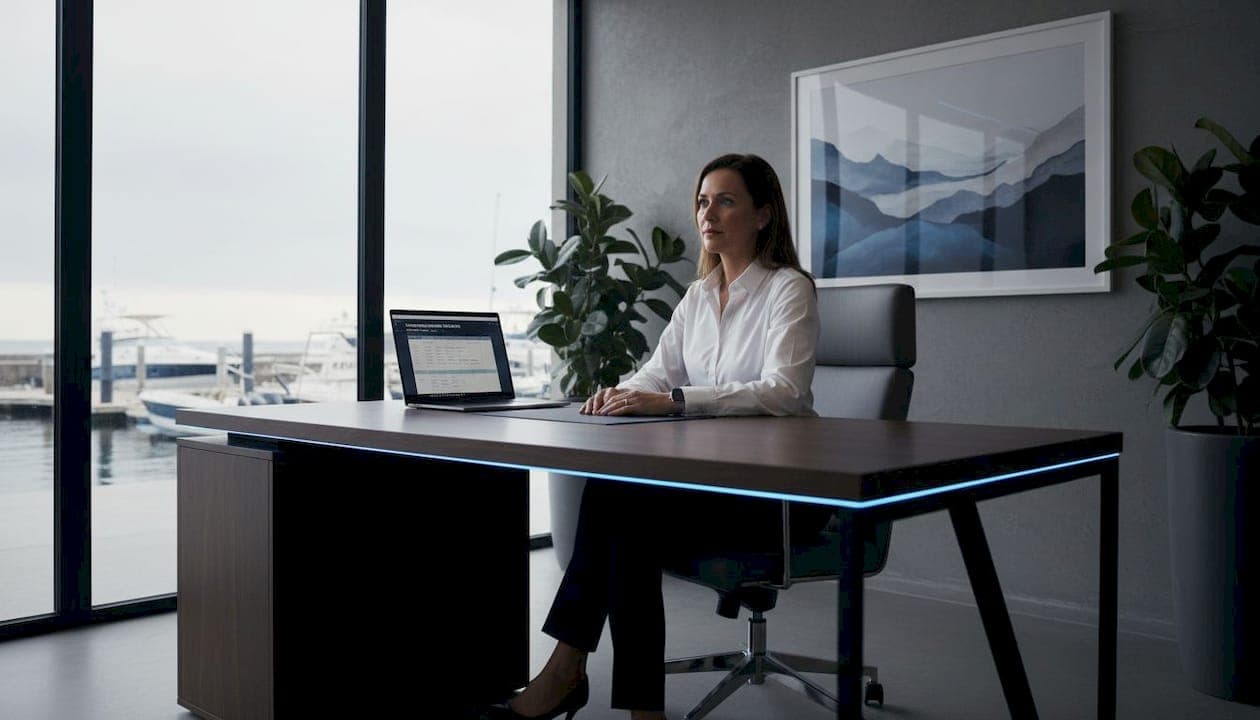
Picture this: you finally book a sailboat for a weekend getaway, receive a confirmation email, drive two hours to the marina, and discover someone else is already aboard your vessel. Double-bookings, unanswered phone calls, paper waivers left unsigned, and frantic last-minute scrambles used to be the standard reality for boat renters worldwide. Fortunately, automation has changed the game entirely. Today, live inventory syncing, digital waivers, and instant confirmations mean that renting a boat can be as smooth as booking a hotel room online.
Table of Contents
- Understanding automation in boat reservations
- Reducing no-shows and improving check-in reliability
- Automating contracts, waivers, and access codes
- Dealing with edge cases: Avoiding overbooking and 'phantom' availability
- Streamlining operations and measuring the impact of automation
- Why automation needs to be smart, not just fast
- Take the next step toward seamless boat rentals
- Frequently asked questions
Key Takeaways
| Point | Details |
|---|---|
| Centralized booking | Automation combines all reservation channels into a single system, preventing conflicts and double-bookings. |
| Automated reminders | SMS and email confirmations reduce no-shows and make check-in more reliable for boat renters. |
| Digital waivers | Online contract and waiver signing allow seamless, self-serve operations and faster arrivals. |
| Edge case management | Robust automation handles cancellation lags, sync errors, and avoids phantom slot availability. |
| Service + automation balance | Smart automation enhances convenience but must keep personal guest service and reliability intact. |
Understanding automation in boat reservations
Automation, in the context of boat rentals, means replacing manual processes with software-driven workflows that handle availability tracking, confirmations, reminders, payments, and customer communication without human intervention at every step. It is not about removing people from the experience. It is about giving those people the right tools so that repetitive, error-prone tasks happen reliably in the background.
The most critical function automation performs is real-time availability syncing across every booking channel simultaneously, whether that is your marina's own website, a third-party boat listing platform, a phone-in reservation, or a walk-up request at the dock. When a booking is confirmed on one channel, every other channel updates instantly. That single capability eliminates the most frustrating outcome in the rental business: two guests arriving for the same boat.
Manual vs. automated reservation workflows
| Step | Manual process | Automated process |
|---|---|---|
| Availability check | Staff checks paper log or spreadsheet | Real-time calendar updates across all channels |
| Booking confirmation | Staff calls or emails manually | Instant automated confirmation sent |
| Payment processing | Cash or phone card transaction | Secure online payment at time of booking |
| Reminder before rental | Staff phones the guest | Automated SMS/email reminder sent automatically |
| Waiver and contracts | Paper forms signed at check-in | Digital waiver sent and signed before arrival |
| Cancellation update | Staff manually adjusts calendar | Instant slot release and availability update |
The contrast is stark. Manual processes rely on a staff member remembering to update four different systems before another customer books the same slot. Automated workflows do all of that in milliseconds.
Core features of a modern automated reservation system include:
- Centralized inventory management that unifies all booking sources into one calendar
- Automatic availability blocking when maintenance, cleaning buffers, or repairs are scheduled
- Online payment processing with deposit collection and refund handling
- Guest communication workflows for confirmations, reminders, and post-rental follow-up
- Digital document management for waivers, contracts, and ID verification
- Reporting dashboards showing occupancy rates, revenue per vessel, and booking patterns
Pro Tip: When evaluating any reservation platform, ask specifically how the system handles simultaneous booking attempts. A well-built system should reject the second request within milliseconds and notify that customer immediately, not hours later.
Reducing no-shows and improving check-in reliability
No-shows are expensive. A guest who does not arrive wastes a vessel's revenue window for that time slot, and if the marina could have accepted another booking, that lost income doubles. Industry experience consistently points to automated reminder sequences as one of the most effective tools for reducing this problem. Automated confirmations and reminders that include both SMS and email touchpoints keep the reservation top-of-mind and give guests easy ways to confirm, modify, or cancel in advance.
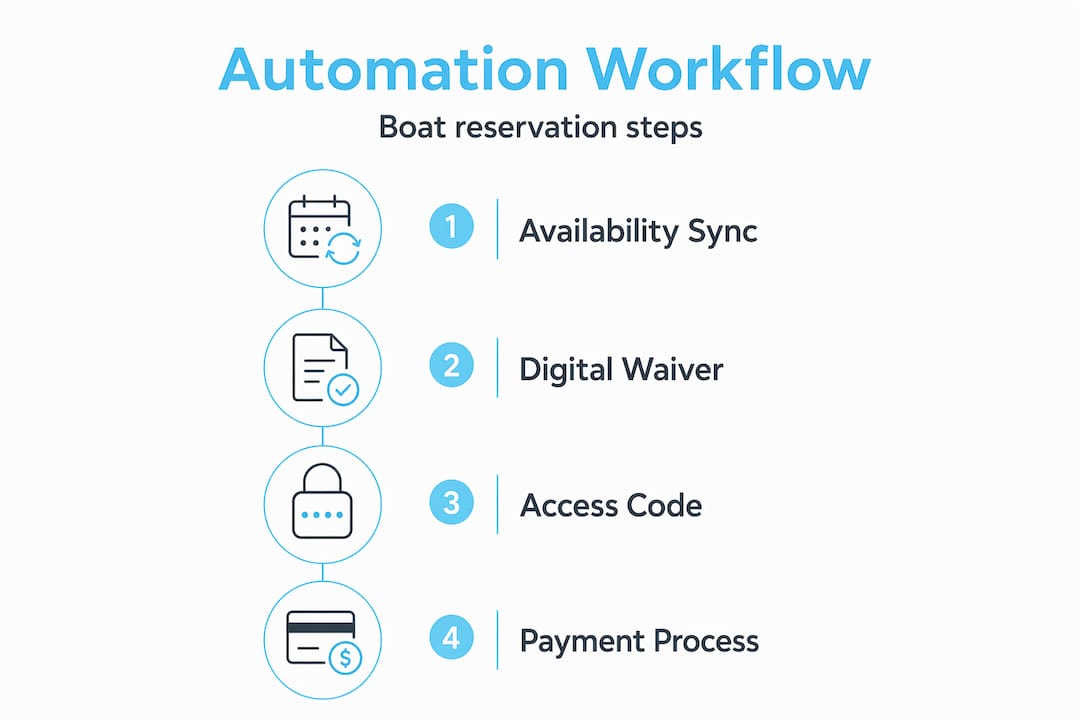
Here is what a well-designed automated booking-to-check-in flow typically looks like:
- Booking confirmed: Guest completes online reservation and receives an immediate confirmation email with booking details, location, and a link to the digital waiver.
- Digital waiver sent: Within minutes of booking, an automated message delivers the waiver for electronic signature, so the guest reviews safety rules and policies before arrival day.
- 72-hour reminder: An automated email or SMS reminds the guest of the upcoming rental date and includes any weather or marina-specific notes.
- 24-hour reminder: A shorter reminder message goes out the day before, often including the access code for the vessel or gate, parking directions, and a check-in overview.
- Day-of check-in: Guest arrives with waiver already signed, payment already processed, and access code already in hand. Check-in takes minutes rather than a prolonged paperwork session at the dock.
- Post-rental follow-up: An automated message thanks the guest and requests a review or offers a return discount.
"Rental businesses that adopt automated confirmation and reminder sequences see significant reductions in missed appointments and last-minute cancellations, with guests feeling more informed and prepared before they ever step on board."
That preparation matters more than many marina operators realize. A guest who arrives unsure of where to park, how to access the gate, or where to sign paperwork creates a backlog for staff and a stressful start to what should be a relaxing day on the water. Automation removes every one of those friction points before the guest even leaves home.
Pro Tip: Set your digital waiver to require completion at least 24 hours before the rental window. This creates a natural confirmation checkpoint. If a waiver is not signed, the system can trigger an additional nudge or flag the booking for staff follow-up. It also means the day-of check-in requires zero paperwork.
Automating contracts, waivers, and access codes
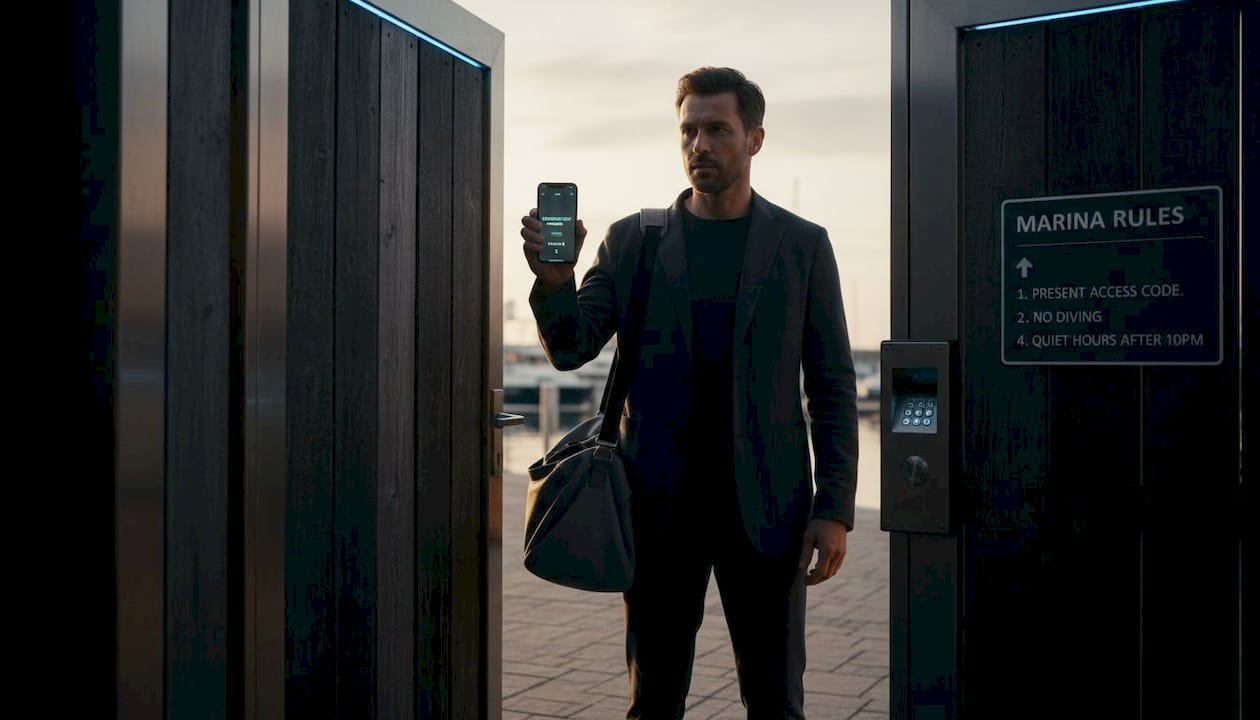
Beyond appointment reminders, digital waivers and access code automation represent a genuine leap toward fully self-serve rental operations. Guests can arrive at the marina at any time of day, access their vessel using a time-sensitive code sent to their phone, sign all required documents from their couch the night before, and return the boat without needing to interact with a single staff member unless they choose to.
Automation actions and their operational impact
| Automation action | Guest benefit | Staff benefit |
|---|---|---|
| Digital waiver signing | Complete before arrival, no wait time | No paper storage, instant record access |
| Time-sensitive access codes | Independent, flexible check-in | No key handoffs required |
| Automated deposit collection | Secure, no cash required | Reduced fraud risk, instant reconciliation |
| Automated damage hold | Clear, transparent process | Simplified claims process |
| Post-rental return confirmation | Peace of mind on return | Automated vessel availability update |
This level of self-service was largely impossible before modern cloud-based reservation platforms. The underlying technology relies on integrations between booking software, payment processors, electronic signature tools, and smart lock or keypad systems at the marina.
Benefits of digital access automation for guests and staff:
- Guests can begin their rental experience independently, at any time within their booked window
- Staff are freed from repetitive key handoffs and paperwork sessions, allowing them to focus on fleet care and genuine customer service
- Time-sensitive codes expire automatically, preventing unauthorized access after the rental window closes
- Electronic records of signed waivers are stored securely and searchable, simplifying disputes
- Operational hours effectively extend without additional staffing costs
- Late-arriving guests do not require a staff member to stay past normal hours
This combination of digital contracts, automated payments, and smart access technology is what separates a modern rental operation from one still running on spreadsheets and phone calls. For renters who value flexibility and efficiency, these features are no longer a luxury. They are an expectation.
Dealing with edge cases: Avoiding overbooking and 'phantom' availability
Automation is only as reliable as its synchronization logic. One of the trickiest problems in multi-channel boat rental operations is what the industry calls phantom availability). This occurs when a boat appears available on one booking channel even though it has already been reserved through another. The root cause is almost always a sync delay, where one platform has updated its calendar but the secondary channel has not yet received that signal.
This problem intensifies during peak season when bookings happen rapidly across multiple sources. A guest browsing a listing platform may see an open slot, complete their payment, and receive a confirmation, only to find out hours later that the slot was already taken via the marina's direct website.
Common edge cases that automation must handle reliably include:
- Simultaneous booking attempts on the same slot from two different channels at the same moment
- Cancellation lag, where a cancellation on one platform takes minutes or hours to propagate to others
- Modification requests, where a guest changes their rental window and the original slot is not immediately released
- Maintenance blocks, where a vessel is pulled from service for repairs but the calendar is not updated in real time
- Manual overrides, where staff books a phone-in reservation without logging it in the system first
- Payment failures, where a booking appears confirmed to the guest but was never fully processed, leaving the slot technically open
Each of these scenarios can trigger overbookings if the underlying platform does not handle them with precise, real-time logic. The best systems use a single source of truth model, where one master calendar governs all channels and updates propagate outward within seconds, not minutes.
Pro Tip: Before committing to any boat reservation platform, ask the provider specifically about their sync interval. Platforms that sync every few minutes rather than in real time create meaningful overbooking risk during high-traffic periods. Native integrations built directly into the platform are almost always more reliable than third-party connector tools.
Streamlining operations and measuring the impact of automation
Automation's value is not just felt by guests. Operators and marina staff experience meaningful reductions in administrative burden when workflows for deposits, payments, pricing, and communication are standardized and integrated into a single platform. Instead of reconciling three separate spreadsheets at the end of the day, staff review one dashboard. Instead of manually sending payment receipts, the system generates and delivers them instantly.
Real-world results reinforce this. Operational improvements from automation include measurable gains in call handling capacity, booking conversion rates, and overall administrative efficiency, though the exact impact varies by fleet size, the number of channels used, and how well the tools are integrated. Companies that align their communication systems, reservation platforms, and payment processors into a unified stack tend to see the strongest gains.
Key results that well-implemented automation can deliver:
- Reduction in missed calls and unanswered inquiries, since automated systems capture booking intent 24 hours a day, even when staff are unavailable
- Higher booking conversion rates, because guests who can complete a reservation immediately are far more likely to follow through than those asked to call back
- Fewer administrative errors, since automated systems do not transpose dates, forget to block maintenance windows, or misquote pricing
- Lower cost per booking, as staff time shifts from manual data entry toward value-adding activities like fleet maintenance and guest satisfaction
- Improved cash flow, because deposits and payments are collected instantly at the time of booking rather than at check-in
The numbers tell a clear story: marinas and rental operators that invest in purpose-built automation technology spend less time on administrative firefighting and more time delivering the kind of boating experience that earns repeat customers.
Why automation needs to be smart, not just fast
Here is something the industry rarely says out loud: speed is not the only thing that matters in automation. We have seen platforms rush to automate every touchpoint, and the result is a cold, robotic experience that leaves guests feeling like a transaction rather than a valued customer.
The real lesson is that automation and high-touch service must coexist. When connectivity fails, when an access code does not work, or when a payment hold gets flagged incorrectly, guests need to reach a real person quickly. Automation that does not build in human escalation paths at critical moments erodes trust faster than any manual process ever could.
"Marina guests arrive expecting a memorable, stress-free experience. When automated systems fail to communicate clearly during those critical moments, especially around access and billing, trust breaks down in ways that are hard to repair."
The brands that earn long-term loyalty are those that use automation to handle the repetitive and predictable, while keeping genuine human support visible and accessible for the moments that genuinely need it. A well-timed automated reminder is a convenience. An unanswered phone when an access code fails at 7 a.m. on a Saturday is a reputation problem.
Our perspective at SAILORIX is that automation should make every step of the rental process feel effortless, not mechanical. That means real-time availability that you can actually trust, digital waivers that work on any device, and instant confirmations backed by a platform that is monitoring for the edge cases that simpler tools miss. Automation done right is invisible. You simply show up and sail.
Take the next step toward seamless boat rentals
Automation has made boat and yacht rentals faster, more reliable, and genuinely exciting to plan. If you have ever lost a booking to a slow platform or paid excessive service fees for a process that still required three phone calls, you already understand why the right technology makes such a difference.
At SAILORIX, we have built a global boat booking platform around exactly the principles covered in this guide: real-time availability, digital confirmations, transparent pricing, and a membership model that keeps service fees at roughly 1% instead of the 10 to 20% charged elsewhere. For €100 per year, you get access to a system designed from the ground up to make your next yacht or boat rental completely seamless. Browse live inventory, book instantly, and spend your energy on the water, not on paperwork.
Frequently asked questions
How does automation prevent double-bookings in boat reservations?
Automation uses real-time inventory syncing and centralized booking management to instantly update slot status across all channels, blocking overlapping reservations the moment a booking is confirmed.
Can I digitally sign waivers and contracts when booking a boat?
Yes, most modern platforms support digital waiver signing before arrival, allowing guests to complete all legal steps from their device and skip the paperwork at the dock.
What happens if a cancellation isn't processed quickly across channels?
A delayed cancellation sync creates phantom availability), where a slot appears open on one platform when it is already taken elsewhere, increasing overbooking risk significantly.
How does automation affect customer service?
Well-designed automation improves convenience at every routine touchpoint but must preserve fast, accessible human support for edge cases involving access, billing, or connectivity issues.
Can automation handle deposits, pricing, and payment workflows automatically?
Yes, integrated automation platforms centralize and standardize deposits, payments, quotes, and pricing workflows, reducing manual workload and eliminating reconciliation errors.