
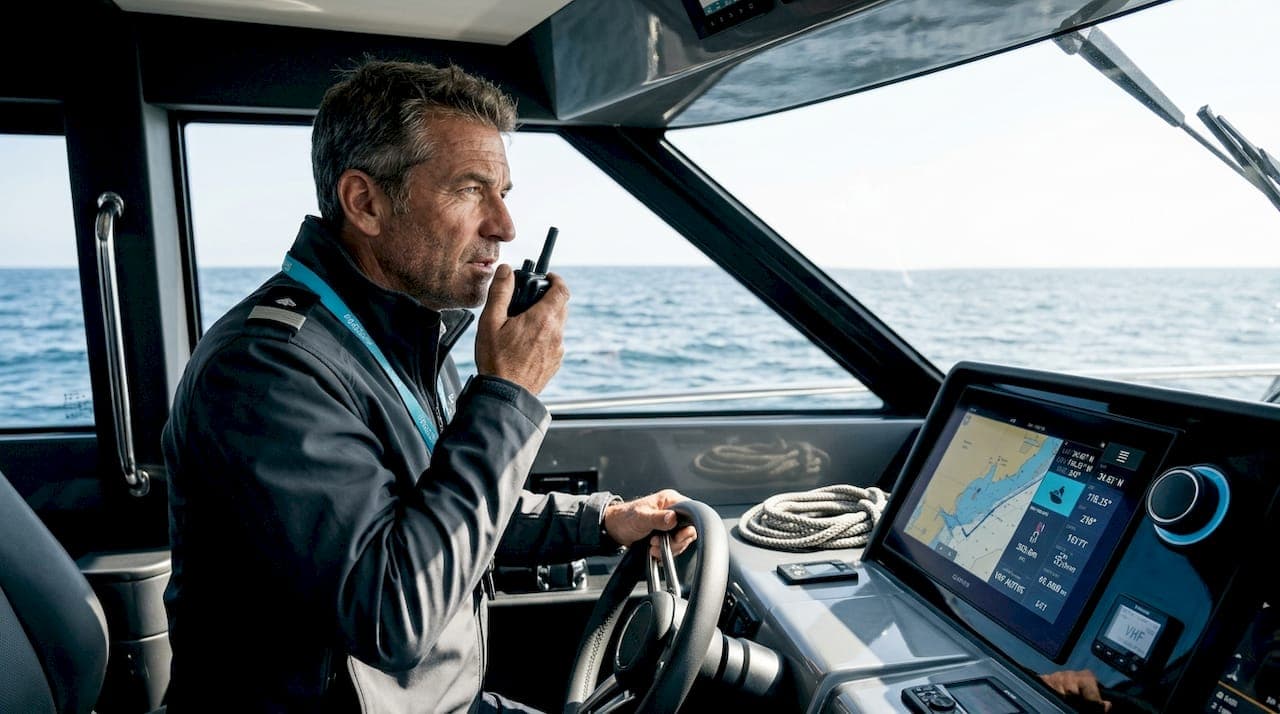
When you're out on the water and something goes wrong, reaching for the radio should be second nature. Yet many boaters freeze at a critical moment because they aren't sure whether to call mayday or pan-pan. Getting it wrong doesn't just feel embarrassing. It can delay the right response, tie up emergency channels, or worse, leave you without the help you actually need. Knowing the difference between these two calls, and executing the correct one calmly and clearly, is one of the most practical safety skills you can build before you leave the dock.
Table of Contents
- What does pan-pan mean and when is it used?
- Breaking down the pan-pan radio procedure
- Structuring your pan-pan message: What information to include
- Scenarios: When to use pan-pan versus mayday
- The nuance most boaters miss about pan-pan
- Stay prepared with resources for safe sailing
- Frequently asked questions
Key Takeaways
| Point | Details |
|---|---|
| Pan-pan is for urgency | Use pan-pan when a situation is urgent but not an immediate threat to life or vessel. |
| Follow proper radio protocol | Send an urgency DSC message, then make a clear pan-pan voice call on Channel 16. |
| Structure your message clearly | Identify your vessel, state your position and urgency type, and specify requested assistance. |
| Know when to escalate | If a pan-pan situation worsens into real danger, upgrade to a mayday call without delay. |
What does pan-pan mean and when is it used?
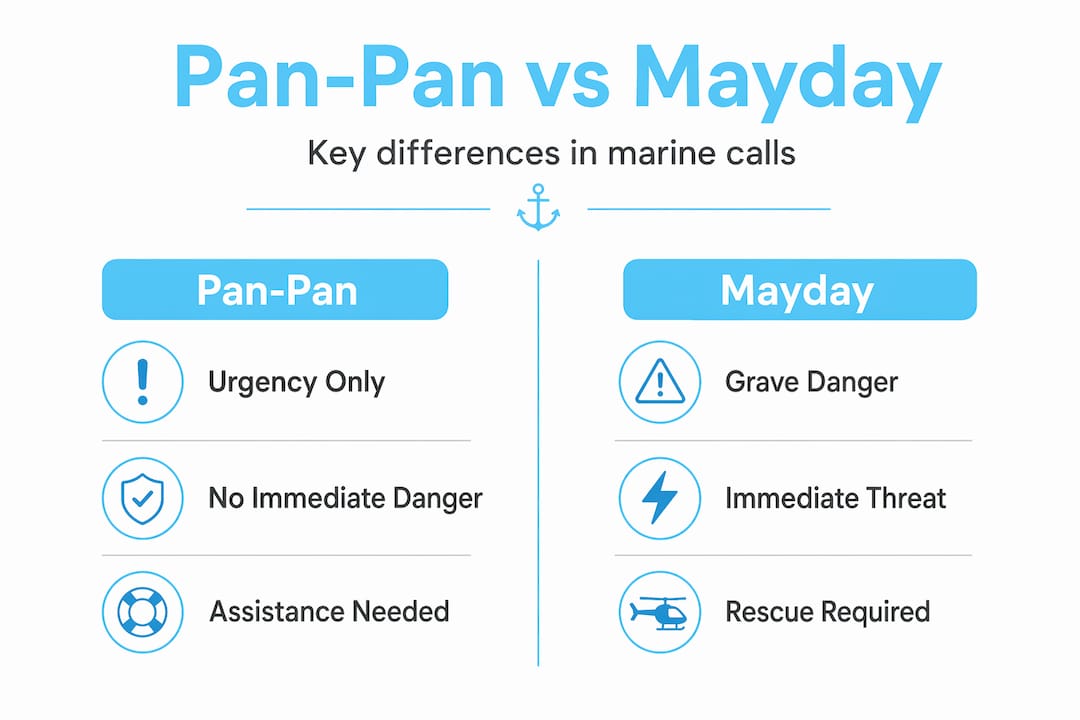
Pan-pan comes from the French word "panne," meaning breakdown or failure. Repeated three times ("pan-pan, pan-pan, pan-pan"), it's an internationally recognized signal that something is seriously wrong aboard your vessel, but lives are not yet in immediate danger. Think of it as a yellow alert rather than a red one.
RYA guidance defines it precisely: a "pan-pan" VHF call is used for an urgent situation at sea where there isn't a critical and imminent danger to life, which is exactly what distinguishes it from a mayday distress call. That distinction matters enormously for how coast guard and rescue services will prioritize and deploy resources.
Here are the kinds of situations where pan-pan is the correct choice:
- Engine failure with controlled drift and no immediate collision risk
- Taking on water slowly, with bilge pumps keeping pace
- Loss of steering in open water with sea room to spare
- A crew member with a non-life-threatening medical condition, such as a suspected broken bone or mild hypothermia
- Mechanical failure that leaves you unable to make progress but not in immediate peril
- Rigging failure that limits maneuverability without causing immediate danger
Common pan-pan scenarios include controllable situations such as water ingress without immediate life threat, loss of steering without imminent danger, a broken engine with controlled drift, or a non-serious medical condition. What all of these share is that you have time. Not unlimited time, but enough to communicate clearly and wait for assistance without someone dying in the next few minutes.
Contrast that with mayday, which is reserved for grave and immediate danger to life or the vessel. If your boat is sinking rapidly, someone has gone overboard, there's an onboard fire spreading fast, or a crew member is having a heart attack, you call mayday. The resource mobilization that follows is faster and heavier, precisely because every second counts.
"The distinction is not just semantic. Using mayday for a non-life-threatening situation can pull rescue assets away from a genuine emergency happening simultaneously."
Understanding pan-pan also means recognizing that it acts as an early warning. You're telling the maritime world: "I need help, and I need it soon, but I'm not dying right now." That honest, accurate framing helps the coast guard allocate the right level of response.
Breaking down the pan-pan radio procedure
Now that you know what pan-pan means, let's look at exactly how to make the call over the radio.
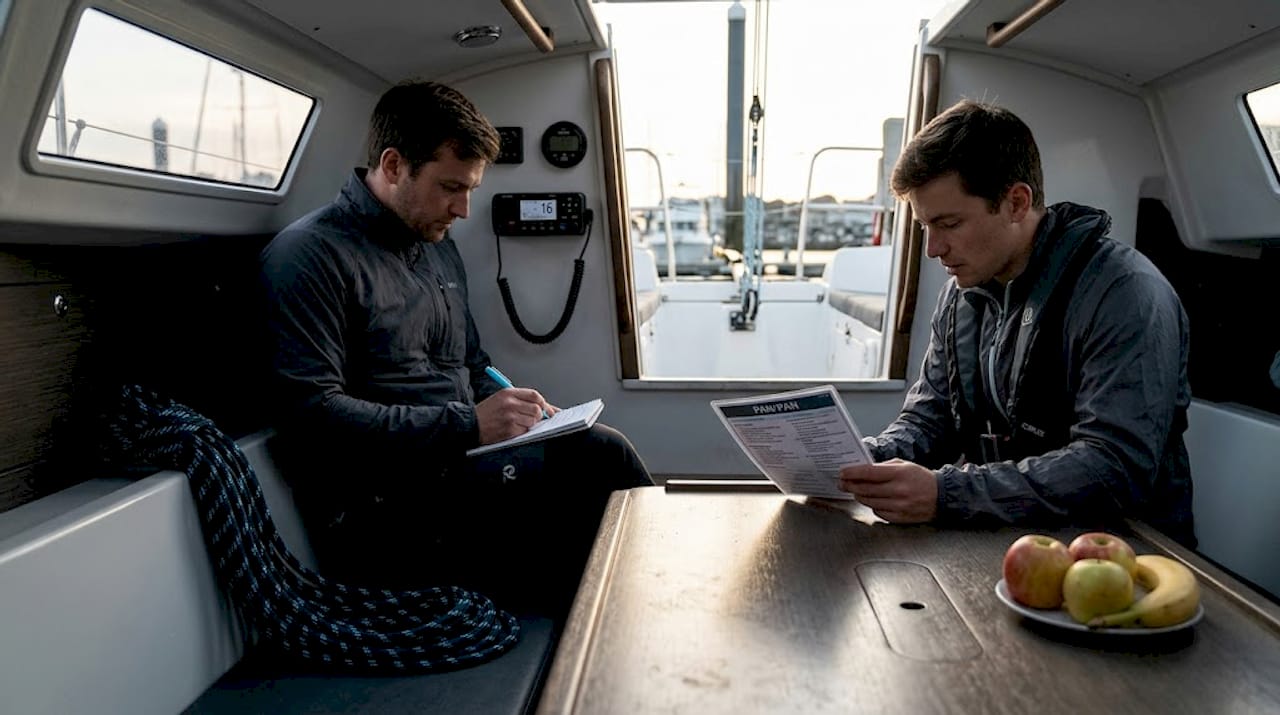
Modern VHF radios with Digital Selective Calling (DSC) capability change the process slightly, and this is where a critical mistake often happens. Many boaters assume the red distress button on their radio covers all emergencies. It does not. RYA states that when making a pan-pan call with VHF DSC, the red button distress function should not be used. Instead, you send an urgency DSC message, then follow up with the voice pan-pan message on Channel 16. The red button is strictly for mayday situations.
Here's the correct step-by-step procedure:
- On a DSC-capable radio: Navigate to the DSC menu, select "urgency" (not "distress"), and transmit the urgency call. Your MMSI number and GPS position will be included automatically if your radio is linked to a GPS.
- Switch to Channel 16: After the DSC transmission, immediately switch to Channel 16 for your voice call.
- Say pan-pan three times: Speak clearly and slowly: "Pan-pan, pan-pan, pan-pan."
- Identify who you're calling: "All stations" or specifically "Coast Guard" if you prefer.
- Identify your vessel: State your vessel name and callsign or MMSI.
- Give your position: Use coordinates, a bearing from a known landmark, or a waypoint reference.
- State the nature of the urgency: Be specific and factual.
- State the number of people aboard.
- State what assistance you need.
- End with "over" to indicate you're waiting for a response.
Channel 16 is one of the prioritized safety communication categories on VHF. The channel is reserved for distress, safety, and hailing communications, not routine chatter. Never use it to arrange a meeting with a buddy boat or to chat about anchorage conditions. Keeping it clear is both a legal obligation and a moral one.
Pro Tip: Practice this procedure before you need it. Get your crew to run through it on a calm afternoon at the dock. Muscle memory under stress is worth hours of reading.
If you don't have a DSC radio, you skip step one and go straight to Channel 16 with the voice call. The verbal structure remains the same.
Structuring your pan-pan message: What information to include
With the procedure in mind, here's how to make your message clear and effective.
A well-structured message does two things: it gets you help faster, and it reduces the cognitive load on the coast guard operator who is handling multiple calls. Clarity is kindness when someone else is doing triage on your behalf.
RYA notes that a pan-pan message should include key identity and position information similar to a mayday call, covering vessel name, callsign, and MMSI along with your location. The content should also state your intended action or type of assistance requested, rather than using language that implies immediate life-threatening danger.
Here's a sample message you can adapt:
"Pan-pan, pan-pan, pan-pan. All stations, all stations, all stations. This is [vessel name], [vessel name], [vessel name], MMSI [number]. My position is [coordinates or bearing]. I have [nature of urgency: e.g., loss of steering]. I have [number] persons on board. I require [specific assistance: e.g., a tow to the nearest harbor]. My vessel is [brief description: color, length, type]. I intend to [action: e.g., deploy anchor and await assistance]. Over."
Compare the key fields in a pan-pan message against a mayday:
| Field | Pan-pan | Mayday |
|---|---|---|
| Opening word | Pan-pan (x3) | Mayday (x3) |
| Urgency level | Serious but not life-threatening | Grave and imminent danger |
| Assistance language | "I require assistance" | "I require immediate assistance" |
| Action statement | State intended action | State immediate need |
| Tone | Calm, controlled | Urgent, immediate |
| DSC button used | Urgency message | Red distress button |
Pro Tip: Write a laminated card with your vessel name, MMSI, home port, and the message structure above. Keep it clipped near the radio. Under stress, even experienced sailors forget their boat's MMSI.
A few things to avoid in your pan-pan message:
- Vague language: "Something is wrong with the engine" tells the coast guard very little. "Engine failure, no propulsion, anchored in 8 meters" tells them everything they need.
- Unnecessary detail: Explain the problem concisely. You can elaborate after contact is established.
- Emotional language that inflates severity: Saying "we're in serious trouble" without context can push a pan-pan situation into unnecessary mayday territory.
Scenarios: When to use pan-pan versus mayday
To solidify your understanding, let's compare practical situations and see how the right call type can mean faster, more effective help.
| Situation | Correct call | Reason |
|---|---|---|
| Engine failure, drifting toward rocks 2 miles away | Pan-pan initially | Immediate danger not present, but threat exists |
| Crew member unconscious, not breathing | Mayday | Immediate danger to life |
| Slow water ingress, bilge pump managing it | Pan-pan | Controlled, non-life-threatening |
| Fire spreading rapidly in engine room | Mayday | Immediate danger to vessel and crew |
| Dismasted, no propulsion, open water | Pan-pan | Urgent but not immediately life-threatening |
| Person overboard, unable to recover | Mayday | Life at immediate risk |
| Suspected mild hypothermia, 4 hours from port | Pan-pan | Medical situation is urgent, not immediately fatal |
RYA guidance addresses the operational edge case directly: if a situation may escalate to a life-threatening condition, pan-pan can be used initially to alert authorities and others for urgent help. However, you should be prepared to upgrade to mayday if circumstances worsen.
Here's how an escalating scenario might unfold in practice:
- You notice water ingress faster than expected. You call pan-pan, state the situation, anchor, and report that the bilge pump is keeping up.
- Twenty minutes later, the bilge pump fails. Water levels are rising faster than you can bail.
- You immediately transmit: "Mayday, mayday, mayday. This is [vessel name]. I am upgrading my previous pan-pan. We are now taking on water rapidly and in danger of sinking."
- You provide updated position and crew count, and activate your EPIRB.
The upgrade should be immediate and decisive. Don't wait until water is at your knees to call mayday. If the situation has clearly crossed into life-threatening territory, make the call. Coast guard responders would far rather mobilize a full rescue that turns out to be precautionary than arrive too late because you hesitated.
A useful mental benchmark: if you're asking yourself "is this really a mayday?", it probably is. When genuine doubt exists about whether lives are at risk, lean toward mayday. You will never be penalized for honest escalation.
The nuance most boaters miss about pan-pan
Here's something that years of observing boaters in distress situations has made very clear: most people don't misuse pan-pan because they don't know the procedure. They misuse it because they're afraid of being judged for "overreacting."
That fear runs in both directions. Some boaters hold back from any distress call because they don't want to look dramatic. Others call mayday for a minor inconvenience because they're panicking. Both errors have real consequences for the maritime safety network.
The honest truth is that pan-pan exists precisely for the ambiguous middle ground, and using it correctly is a sign of competence, not weakness. It says: "I have a problem I can't solve alone, I'm not in immediate danger, and I'm communicating like a professional." That's exactly the kind of call that earns respect from coast guard operators.
Calm communication also matters more than most people realize. A clear, structured pan-pan call gives responders the information they need in the first transmission. A panicked, rambling call might take three exchanges to extract the same data, during which your situation could be changing. Calm is a skill you practice in advance, not something you summon under pressure.
Channel discipline is the third element most boaters overlook: keep Channel 16 clear for emergency and urgency traffic, and make non-emergency contact only on appropriate working channels so you do not degrade the availability of distress and urgency communications. Every time someone uses Channel 16 to chat, they're degrading a shared safety resource that the whole maritime community depends on. That's not a procedural nicety. It's a responsibility.
Build the habit now: monitor Channel 16 while underway, switch to a working channel for anything routine, and treat that frequency as sacred. It might be your lifeline one day, or someone else's.
Stay prepared with resources for safe sailing
Understanding pan-pan procedure is one part of a broader safety mindset that every boater should carry onto the water. Protocols, checklists, and regular practice transform theoretical knowledge into automatic responses when stress is high and time is short.

At Sailorix, we believe that informed, prepared boaters enjoy the water more and stay safer doing it. Whether you're chartering a yacht for a weekend coastal cruise or planning an offshore passage, having the right safety knowledge makes every trip better. Our platform connects you with vessels worldwide at transparent, low prices, so you spend more of your budget on experience and preparation rather than booking fees. Explore our guides, community resources, and booking tools to make your next voyage both safe and memorable.
Frequently asked questions
What is the difference between pan-pan and mayday?
Pan-pan signals an urgent but non-life-threatening situation, while mayday is used when there is immediate danger to life or the vessel and requires the fastest possible response.
Can I use the red DSC distress button for pan-pan calls?
No. The red button is reserved exclusively for mayday distress calls. For pan-pan, use the urgency DSC message function on your radio's menu.
What information must I provide in a pan-pan call?
You must state your vessel's name, position, nature of the urgency, number of persons aboard, and the specific assistance you require.
When should I escalate a pan-pan to a mayday?
Upgrade to mayday immediately if the situation becomes life-threatening or worsens beyond your ability to manage it safely. When in doubt, escalate.