
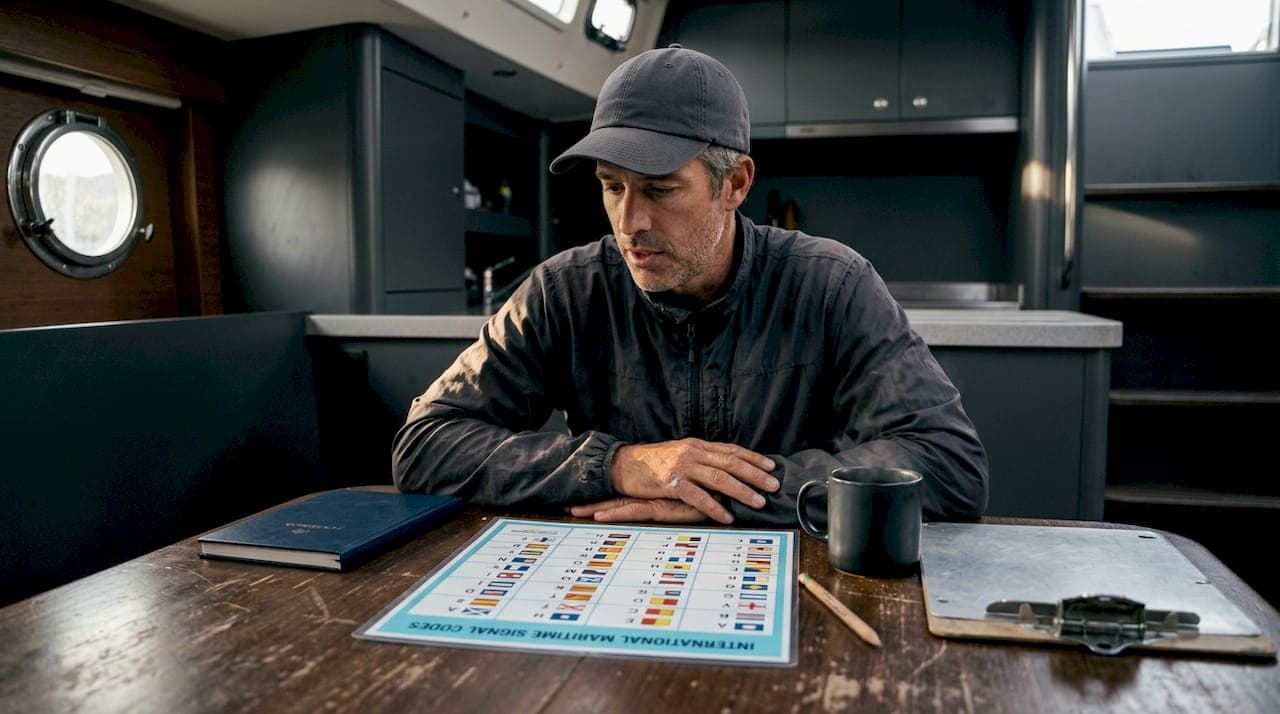
Most boaters are surprised the first time they see "Alfa" instead of "Alpha" in official maritime documents. That single letter difference is not a typo. It is a deliberate, internationally tested choice that reflects how seriously the marine world takes clear radio communication. The marine alphabet, formally known as the International Radiotelephony Spelling Alphabet, exists for one reason: to make sure that a word spoken over a crackling VHF radio in a storm is understood correctly, every single time. Get it wrong in an emergency, and the consequences can be severe.
Table of Contents
- What is the marine alphabet?
- Marine alphabet in detail: the letters and their words
- Why accuracy and clarity matter: real-world communication
- Flags, signals, and visual communication
- Practical tips for boaters: mastering the marine alphabet
- What most guides miss about the marine alphabet
- Ready to shore up your seamanship?
- Frequently asked questions
Key Takeaways
| Point | Details |
|---|---|
| Universal standard | The marine alphabet is used worldwide and ensures clear communication on the water. |
| Clarity saves lives | Precise pronunciation and slow spelling are crucial in emergencies and busy radio environments. |
| Practice matters | Regular use and routine drills help make the marine alphabet second nature. |
| Flags as backup | Signal flags offer vital visual communication if radios fail or for international regattas. |
What is the marine alphabet?
The marine alphabet is the system that replaces each letter of the standard alphabet with a specific spoken word. Instead of saying "B," you say "Bravo." Instead of "S," you say "Sierra." This removes any chance of mishearing similar-sounding letters, like B and D, or M and N, especially over noisy radio channels.
The system is formally called the International Radiotelephony Spelling Alphabet, and it is not just a boating thing. It is standardized by ICAO, adopted by ITU, IMO, and NATO, with words selected for acoustic distinctness, rhythm, and international pronounceability after rigorous 1950s testing. The goal was to find words that people from different language backgrounds could say and understand without confusion.
Here is why that matters on the water:
- Radio signals can degrade quickly due to weather, distance, or interference
- Accents vary widely among international crews and coast guard operators
- Emergency situations require fast, accurate information transfer
- Vessel names, coordinates, and call signs must be communicated without ambiguity
"The phonetic alphabet is not just a convention. It is a safety system built from decades of real-world communication failures and fixes."
The marine alphabet is used universally across marine, aviation, and emergency services. When you learn it for boating, you are learning the same system a pilot uses in the cockpit and a rescue coordinator uses in a crisis center.
Marine alphabet in detail: the letters and their words
Here is the full breakdown of every letter and its corresponding phonetic word, as defined by the NATO/ICAO standard:
| Letter | Word | Letter | Word |
|---|---|---|---|
| A | Alfa | N | November |
| B | Bravo | O | Oscar |
| C | Charlie | P | Papa |
| D | Delta | Q | Quebec |
| E | Echo | R | Romeo |
| F | Foxtrot | S | Sierra |
| G | Golf | T | Tango |
| H | Hotel | U | Uniform |
| I | India | V | Victor |
| J | Juliett | W | Whiskey |
| K | Kilo | X | Xray |
| L | Lima | Y | Yankee |
| M | Mike | Z | Zulu |
A few of these words deserve special attention. "Alfa" is spelled without the "ph" that English speakers expect. This is intentional. The "ph" combination is not intuitive in many European and Asian languages, so dropping it ensures that speakers of French, Spanish, German, Portuguese, and other languages will pronounce it correctly. The same logic applies to "Juliett," which carries two t's at the end. In French, a single final "t" is often silent, so the double "t" signals to French speakers that the final consonant should be voiced.
"Xray" is written as one word, not two, to avoid any confusion about whether it is a compound term. "Quebec" retains its French spelling because the word is widely recognized internationally and its pronunciation is consistent enough across accents.
Pro Tip: When you are learning the alphabet, do not just read the words. Say them out loud in sequence, then practice spelling your boat's name using only the phonetic words. That single exercise builds muscle memory faster than any flashcard system.
The pronunciation consistency across maritime and aviation contexts is remarkable. A sailor calling into a marina in Greece and a pilot contacting an airport in Brazil are using the exact same word list with the same intended sounds. That level of standardization is rare and powerful.
Why accuracy and clarity matter: real-world communication
Knowing the words is only half the job. Knowing how to use them correctly is what separates a confident radio operator from a confused one.
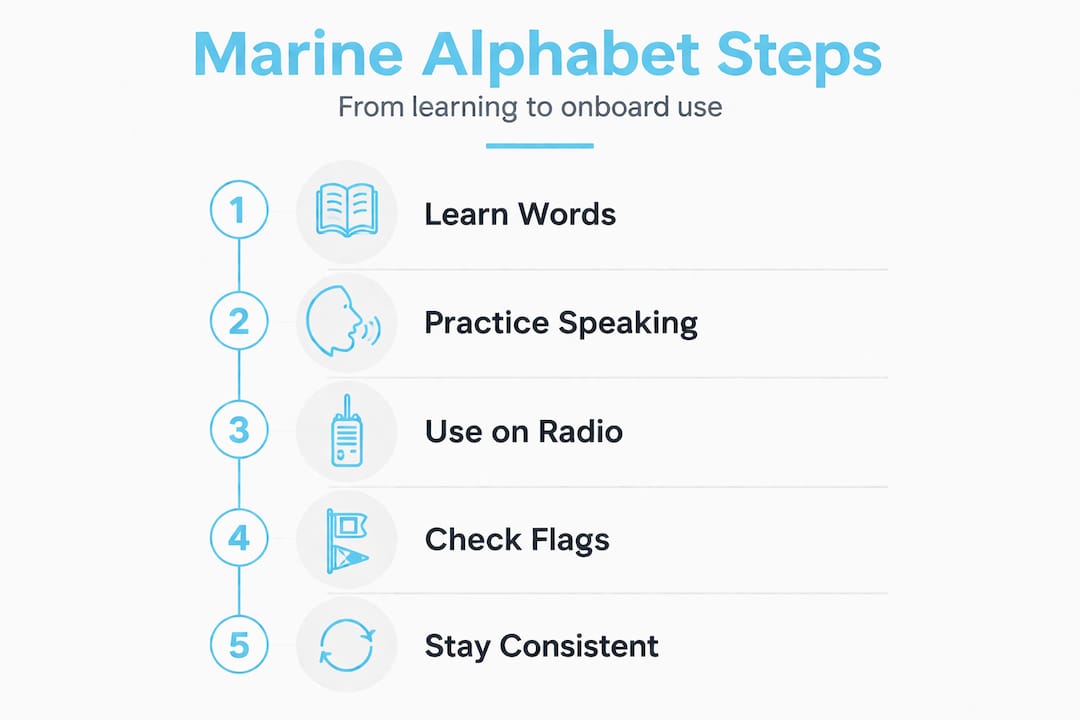
Follow these steps every time you spell something over the radio:
- State your vessel name or call sign first
- Say "I spell" to signal that phonetic spelling is coming
- Speak each word clearly and at a slower pace than normal conversation
- Pause briefly between each word
- Repeat the full spelling if there is any doubt about reception
- Confirm understanding with the other party
A real-world example from Drive Boat USA's phonetic guide looks like this: "This is Sea Eagle, Sierra Echo Alfa space Eagle." The word "space" indicates a gap between words in the vessel name. This protocol is required for emergencies, position reports, and vessel names under IMO and ITU regulations.
Numbers follow their own special pronunciation rules. These are not optional quirks. They are standardized for the same reason the words are:
- 0: Zero ("ZEE-ro")
- 3: Tree (not "three," to avoid confusion with "free")
- 5: Fife (not "five," which can sound like "fine" in poor conditions)
- 9: Niner (not "nine," which can be confused with the German "nein" meaning "no")
As Boatmaster's VHF alphabet resource explains, these number substitutions were chosen to resist accent-related confusion and noise interference. The word "niner" in particular is a classic example of how the system anticipates real problems before they happen.
Statistic callout: Search and rescue operations depend on accurate position reporting. A single misheard coordinate digit can shift a search area by miles. The phonetic alphabet and number system exist specifically to eliminate that kind of error.
Pro Tip: Practice your number pronunciation just as much as your letter words. "Tree" for 3 and "fife" for 5 feel awkward at first, but they become natural quickly. Run through your boat's registration number or marina slip number in phonetic form as a daily warmup.
Flags, signals, and visual communication
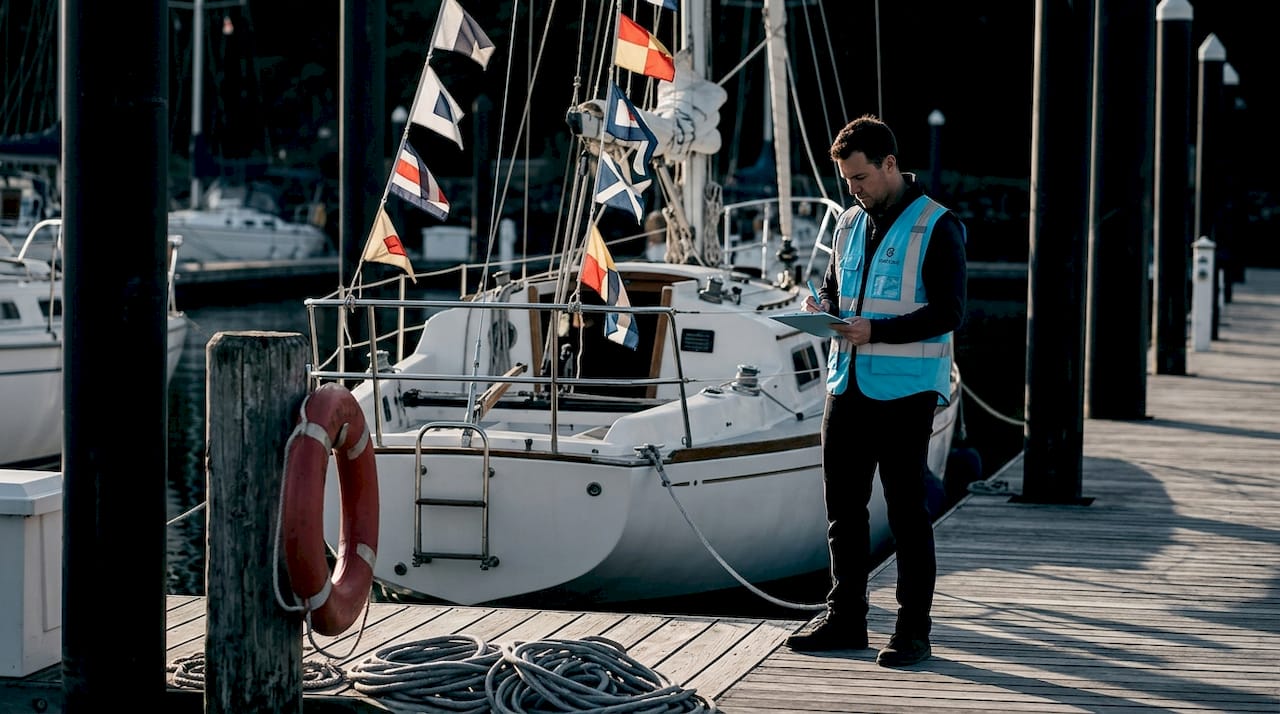
Radio is the primary communication tool on modern vessels, but it is not the only one. Signal flags have been used for centuries, and they remain a vital backup when radio fails or when visual communication is faster and clearer.
Every letter in the marine alphabet has a corresponding signal flag. These flags are part of the International Code of Signals (ICS), and they carry both spelling functions and standalone meanings. As HandWiki's maritime signal flags reference outlines, several single flags carry critical meanings:
- Bravo (B): Vessel is carrying dangerous goods or handling explosives
- Charlie (C): Affirmative, or "Yes"
- November (N): Negative, or "No"
- NC flown together: International distress signal
| Flag | Letter | Standalone meaning |
|---|---|---|
| Bravo | B | Dangerous cargo on board |
| Charlie | C | Yes / Affirmative |
| November | N | No / Negative |
| Oscar | O | Man overboard |
| Papa | P | Vessel about to depart |
| Quebec | Q | Request for customs clearance |
When a letter needs to be repeated in a signal, substitute flags are used so the same flag does not appear twice in sequence. This keeps signals readable and unambiguous from a distance.
"Signal flags are the original phonetic alphabet. Each one carries a clear, internationally agreed meaning that crosses every language barrier without a single spoken word."
Flags are especially important during international regattas, where vessels from many countries compete in close proximity and radio channels can become crowded. Knowing the flag for "Oscar" (man overboard) or "Bravo" (dangerous goods) could be the fastest way to communicate a critical situation when radio is unavailable or delayed.
Practical tips for boaters: mastering the marine alphabet
Knowing the theory is great. Applying it consistently is what actually keeps you and others safe on the water. Here is how to build real competence:
- Spell your vessel name daily. Every time you think about your boat, run through its name in phonetic words. If your boat is named "Coral Dawn," practice saying "Charlie Oscar Romeo Alfa Lima space Delta Alfa Whiskey November" until it flows naturally.
- Use it during routine radio checks. When you do a radio check with a marina or another vessel, spell your boat name phonetically. This is low-stakes practice that pays off in high-stakes moments.
- Learn the critical flags. You do not need to memorize all 40 signal flags, but Bravo, Charlie, November, Oscar, and NC should be instantly recognizable to any recreational boater.
- Practice position reports. Latitude and longitude coordinates are the most common source of miscommunication in marine radio. Practice saying them phonetically with the correct number pronunciations.
- Use it when contacting the Coast Guard. As American Sailing's NATO phonetic guide emphasizes, phonetic spelling is essential for USCG contact and marina hails, where accuracy is non-negotiable.
Pro Tip: Record yourself spelling your vessel name and a sample position report on your phone. Play it back. You will immediately notice where you rush, mumble, or revert to normal letter names. This simple self-audit is more effective than any quiz app.
Repetition in calm, non-emergency situations is the whole game. The marine alphabet is not difficult. What is difficult is accessing it clearly and calmly when you are stressed, tired, or dealing with a real emergency. The only way to make that possible is to practice so often that the words become automatic.
What most guides miss about the marine alphabet
Most articles on this topic treat the marine alphabet as a memorization challenge. Learn the 26 words, pass a quiz, done. That framing misses the deeper point entirely.
The real challenge is not remembering that "F" is "Foxtrot." The real challenge is staying calm and methodical on a VHF radio when your engine has failed, visibility is near zero, and you need to communicate your position accurately to a rescue coordinator who may be dealing with multiple calls at once.
The ITU's international standard for maritime communication recommends using the phonetic alphabet alongside Standard Marine Communication Phrases (SMCP). That combination is what professional mariners use. The alphabet handles spelling. The SMCP phrases handle structure. Together they create a communication system that works even when everything else is going wrong.
What we have seen time and again is that boaters who practice the alphabet in relaxed, everyday settings perform dramatically better in emergencies. It is the same principle as fire drills. The drill feels unnecessary until the moment it is not. The marine alphabet works the same way.
There is also a confidence dimension that nobody talks about. When you use the phonetic alphabet correctly on a radio call, other mariners and coast guard operators immediately recognize you as someone who knows what they are doing. That credibility matters. It affects how quickly your call is prioritized and how clearly the other party communicates back to you.
The marine alphabet is one small, powerful tool. Used consistently, it makes every radio interaction safer, faster, and more professional.
Ready to shore up your seamanship?
Mastering the marine alphabet is a meaningful step toward becoming a more capable, confident boater. But it is just one piece of a larger picture.
At SAILORIX, we believe that great boating experiences start with great knowledge. Whether you are planning your first charter or your fiftieth, the right preparation makes all the difference. When you are ready to enhance your boating skills and explore the world's waters with confidence, SAILORIX connects you to a global network of yachts and boats at the lowest market prices. Our €100 annual membership unlocks exclusive access with service fees as low as 1%, so you spend more time on the water and less on booking fees. Your next adventure is closer than you think.
Frequently asked questions
Why does the marine alphabet use 'Alfa' and 'Juliett' instead of normal spelling?
"Alfa" and "Juliett" are spelled for international clarity, ensuring that non-English speakers pronounce them correctly. The "ph" in "Alpha" is not intuitive in many languages, and a single "t" at the end of "Juliet" is often silent in French.
Do aviation and maritime use the same alphabet?
Yes, both follow the ICAO/ITU standard with only minor spelling distinctions. As Boatmaster confirms, there are no major maritime versus aviation differences, and the ICAO spelling is preferred in maritime contexts.
When should I use the marine alphabet on the water?
Use it whenever you communicate vessel names, locations, or important details over radio. Drive Boat USA's protocol guide specifies it is required for emergencies, position reports, and vessel name identification under IMO and ITU regulations.
What are the most important signal flags to know as a recreational boater?
Bravo (dangerous cargo), November (No), Charlie (Yes), and NC flown together (distress) are the most critical. HandWiki's signal flags reference also highlights Oscar (man overboard) as essential knowledge for any boater.
How should I practice the marine alphabet for real-world boating?
Spell your vessel name and location during routine radio checks and everyday conversations about your boat. American Sailing recommends making phonetic spelling a habit during marina hails and USCG contacts so it becomes second nature before you ever need it in a real emergency.