

If you've priced out boat ownership recently, you already know the numbers are brutal. A membership boat booking guide cuts through the confusion by showing you exactly how boat clubs work, what they cost, and how to book time on the water without committing to a six-figure purchase. Whether you're planning family boat trips, weekend getaways, or yacht charters, membership boating services offer a way to access quality vessels at a fraction of ownership costs. This guide gives you everything you need to make a confident, well-informed decision.
Table of Contents
- Key takeaways
- Your membership boat booking guide starts here
- Understanding membership costs and pricing
- How to book boats through a membership club
- Common mistakes new members make
- The real benefits of boat membership
- My honest take on membership boating
- Start boating smarter with Sailorix
- FAQ
Key takeaways
| Point | Details |
|---|---|
| Membership beats ownership costs | Initiation fees and monthly dues are far less than buying, insuring, and maintaining a boat. |
| Booking requires planning ahead | Reservation systems reward members who book early, especially during peak season. |
| Location affects your price | Coastal markets like Florida cost significantly more than inland or seasonal locations. |
| Training is often mandatory | Most clubs require a safety course before your first boat use, which is included with membership. |
| Sailorix slashes service fees | Sailorix's ~1% service fee model saves serious money compared to the industry standard of 10–20%. |
Your membership boat booking guide starts here
A boat club membership works by giving you shared access to a fleet of vessels in exchange for an upfront initiation fee and recurring monthly dues. You don't own any single boat. Instead, you book time on whichever vessel fits your plans, show up, and go. The club handles everything else.
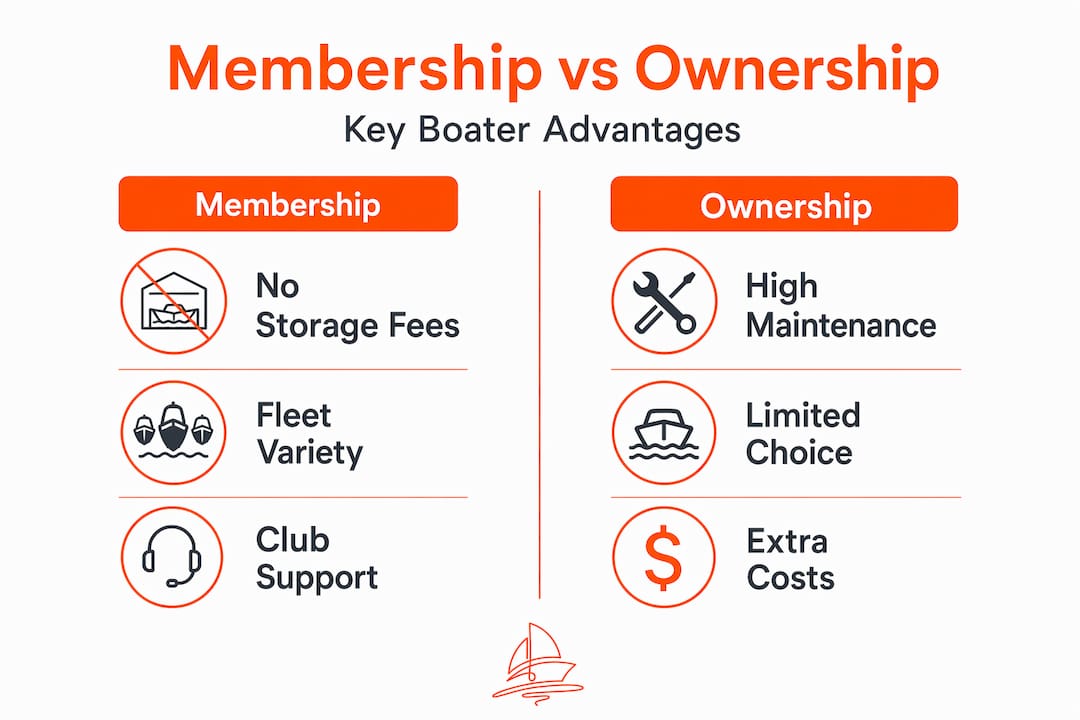
This model flips the traditional ownership equation. With ownership, you pay to store, insure, fuel, clean, and repair a boat that sits unused roughly 90% of the year. With a membership, maintenance, cleaning, and fuel are handled by the club's staff. Your only job is to show up and enjoy the time on the water.
Most clubs structure their offerings in tiers. A basic tier might give you access to smaller bowriders or pontoon boats during weekdays. A premium tier opens up larger vessels, weekend availability, and reciprocal access at other club locations nationwide. Memberships generally include free boating training, dock assistance, and a booking app or website where you manage all your reservations.
One thing that surprises most newcomers: boat clubs rarely offer day passes. This isn't a rental service where you pay per trip. You're joining a community with ongoing access. That distinction matters when you're comparing options, because the value only compounds the more you use it.
The benefits of boat membership become clear once you factor in what you're not paying for. No storage fees. No winterization bills. No unexpected repair costs after an engine issue. For families who want to get on the water several times a season without the burden of ownership, membership boating services are a genuinely practical solution.
Pro Tip: Before you commit to any club, ask specifically which boats are available at your tier level and whether access to those boats is guaranteed or subject to a wait list. The marketing brochure and the reality of Saturday morning availability can differ significantly.
Understanding membership costs and pricing
The financial commitment of a boat rental membership breaks down into two main categories: what you pay to join and what you pay to stay. Both numbers vary considerably based on where you live and which tier you select.
Initiation fees typically range from $3,000 to $8,000, and monthly dues run between $300 and $600. At premium tiers with access to larger or luxury vessels, those numbers climb sharply. Some premium memberships carry initiation fees up to $25,000 and monthly dues of $2,500. Those figures are the exception, not the rule, but they're worth knowing if you're eyeing a yacht charter experience through a club.

Geography plays a bigger role in pricing than most people expect. High-demand coastal markets like Miami, Tampa, and Naples push initiation fees toward the top of that range. Inland locations like Chicago or Seattle tend to sit lower, partly because of shorter boating seasons and reduced year-round demand.
Here's a breakdown of what typical membership tiers look like side by side:
| Tier | Initiation fee | Monthly dues | Typical access |
|---|---|---|---|
| Basic | $3,000–$4,500 | $300–$400 | Weekdays, smaller vessels |
| Standard | $4,500–$6,500 | $400–$500 | Weekdays and weekends, mid-size boats |
| Premium | $6,500–$8,000+ | $500–$600+ | Full fleet, priority booking, reciprocal locations |
| Luxury/Yacht | $10,000–$25,000 | $1,000–$2,500 | Sailboats, yachts, multi-location access |
When you run these numbers against actual boat ownership (which carries average annual costs of $5,000 to $10,000 or more once you include storage, insurance, maintenance, and depreciation), a mid-tier membership often wins on pure math. The breakeven point depends heavily on how many days per year you actually use the water.
Pro Tip: If you're on the fence about cost, ask the club for a trial day or a guest pass. You want to experience the booking process, the dock staff, and the actual boats before you hand over an initiation fee.
How to book boats through a membership club
The booking experience is where a good membership pays off and where a poorly run club frustrates its members. Here's how the process typically works from start to finish.
- Create your account. Once your membership is active, you'll get access to the club's app or website. Most modern clubs use dedicated booking platforms that show real-time availability by boat type, date, and location.
- Complete mandatory training. Members must often complete required training before accessing boats for the first time. This safety course is included in your membership and usually takes a half day. Do it immediately after joining so you're ready when the weather is good.
- Browse and reserve. Select your date, time window, and preferred vessel. Most systems let you book anywhere from a few hours to a full day. Lead times matter here. Popular weekend slots can fill up days or even weeks in advance during summer.
- Confirm and prepare. You'll receive a confirmation with details on where to dock, what to bring, and any rules specific to that vessel. Read this carefully. Fuel and cleaning are handled by staff, but showing up late or returning the boat in poor condition can affect your standing.
- Return and log off. Dock the boat as instructed, check in with staff, and complete any return checklist in the app. Simple and clean when you follow the process.
On cancellations, the rules vary by club but follow a similar pattern:
- Cancellations made 48 or more hours in advance typically carry no penalty.
- Late cancellations (under 24 hours) often result in a forfeited booking or a small fee.
- No-shows without notice can trigger membership strikes at clubs with usage conduct policies.
Cancellation policies often allow online cancellation with conditions, so read the fine print before you book a slot you're not certain about.
To get the best booking experience, plan your boating calendar at the start of each month rather than booking day by day. High-demand slots on Friday afternoons and Sunday mornings go fast. Members who treat the reservation system like restaurant reservations and book in advance consistently get better access.
Common mistakes new members make
Joining a boat club and not using it well is more common than you'd think. These are the mistakes that cost members the most time and money.
- Joining without checking availability. Waiting lists exist at high-demand locations, particularly in coastal Florida and popular marina markets. Before paying an initiation fee, ask directly how long the average wait is for a weekend reservation.
- Skipping the training course. Some members delay their mandatory orientation and then wonder why they can't book. The training isn't optional. Complete it during your first week so you have full access when you want it.
- Ignoring usage caps. Many tiers come with monthly or annual usage limits measured in days or hours. Members who don't track their usage can burn through their allocation in summer and have nothing left for fall.
- Booking during peak times without a backup plan. If you're planning a family boat trip for the Fourth of July weekend, book it in May. Waiting until a week out in peak season is a recipe for disappointment.
- Not reading the cancellation policy. Late cancellations hit your wallet and sometimes your membership status. Know the exact cutoff time before you book.
- Assuming all locations are equal. If your club advertises reciprocal access at other locations, verify that your tier actually includes it. Promotional materials often highlight the best locations, not the ones available at your price point.
The real benefits of boat membership
Access to a diverse fleet without carrying ownership costs is the headline benefit, but the full picture is more interesting than that. The average private boat owner uses their vessel fewer than 20 days per year, yet pays year-round to keep it. A membership flips that math. You pay for access proportional to how often you actually use it.
The flexibility factor is significant too. Members can choose different boat types for different occasions. A pontoon for a relaxed family afternoon, a bowrider for watersports, a sailboat for an overnight trip. Ownership typically locks you into one vessel type. Membership boating services give you an entire garage.
Clubs also handle every operational headache. Fuel, cleaning, routine maintenance, and dock staff assistance are built in. You arrive at a ready boat and leave without touching a hose or a fuel pump. For anyone who has owned a boat and knows the Saturday morning ritual of prepping before you can even leave the dock, this is a genuinely meaningful difference.
The community and lifestyle access that comes with some clubs rounds things out. Member events, discounts on gear, and access to branded locations in multiple cities give frequent boaters a network that goes beyond any single marina.
My honest take on membership boating
I've watched a lot of people approach boat memberships the wrong way. They join based on price alone, pick the cheapest tier, and then resent the club when they can't get the boat they want on a Saturday in July. That's not a club problem. That's a planning problem.
What I've seen work consistently is treating your membership like a gym membership you actually intend to use. Build your schedule around it. Know your tier's rules cold. And pick a club whose fleet genuinely matches what you want to do on the water, not just the closest one to home.
The value I find most compelling is what I'd call the "zero infrastructure" advantage. No trailer. No storage yard. No annual haul-out. For family boat trips especially, eliminating all that friction means you actually go, instead of finding reasons not to.
If you're choosing between membership tiers, I'd spend up to get weekend access in your first year. You can always downgrade after you understand your actual usage patterns. Undershooting your tier and then feeling blocked on weekends will sour you on the whole experience faster than anything else.
— Sailorix
Start boating smarter with Sailorix
If you're ready to move from reading about membership boat booking to actually getting on the water, Sailorix makes that step straightforward and affordable.

Sailorix is a global platform where you can explore boat rentals and yacht charters worldwide, all locked behind a single annual membership of just €100. That membership gives you access to bookings with roughly 1% in service fees, compared to the 10–20% that most booking platforms charge. You pay less to book more. The platform shows real-time availability across locations, so you can plan family boat trips, weekend outings, or extended charters without guessing what's actually open. If affordable boat booking and genuine flexibility matter to you, Sailorix is worth a look before you commit to anything else.
FAQ
What is a boat club membership?
A boat club membership gives you shared access to a fleet of boats for a recurring fee, without the costs of ownership. You pay an initiation fee and monthly dues, then book boats through an app or website whenever you want to go out.
How much does a boat club membership cost?
Initiation fees typically range from $3,000 to $8,000, with monthly dues between $300 and $600. Premium tiers with larger vessels can reach $25,000 to join with monthly dues up to $2,500.
Do boat clubs require any training before you can book?
Yes. Most boat clubs require members to complete a mandatory safety and orientation course before their first booking. This training is included with membership and typically takes half a day to complete.
How far in advance should you book a boat?
Weekend slots at popular locations can fill up days or weeks ahead during peak season. Booking at least one to two weeks in advance for weekend use gives you the best chance of securing the boat type you want.
Is Sailorix a boat club membership service?
Sailorix is a global boat booking platform with an annual membership of €100 that unlocks access to yacht and boat rentals worldwide at roughly 1% in service fees. It operates differently from traditional boat clubs by offering flexible, on-demand booking without initiation fees in the thousands.