
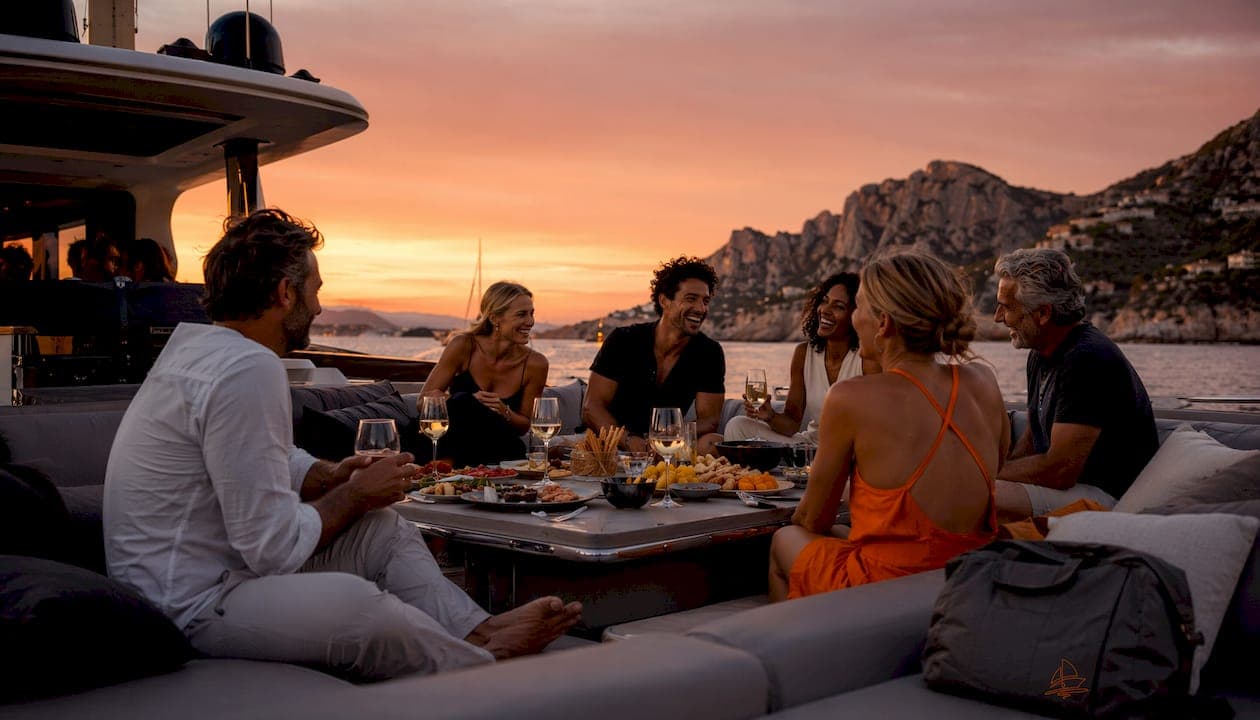
A group yacht charter is the most effective way to combine adventure, bonding, and total freedom into a single vacation. Whether you are planning a reunion with old friends or a multigenerational family getaway, the right group yacht trip ideas make the difference between a trip people talk about for years and one that falls apart by day three. The key is pairing creative activities with solid logistics before you ever leave the dock. This guide gives you both.
1. What are the best group yacht trip ideas for size and yacht type?
The foundation of any successful group sailing adventure is matching your headcount to the right vessel. The ideal group size is typically 6, 8, or 10 people. Exceeding 10 almost always leads to cabin conflicts and cramped common spaces.
Six people on a 40-foot monohull is comfortable but costs more per person. Eight people on a catamaran hits the sweet spot for value and space. Ten is the practical maximum, and only works if everyone agrees to tighter conditions upfront.
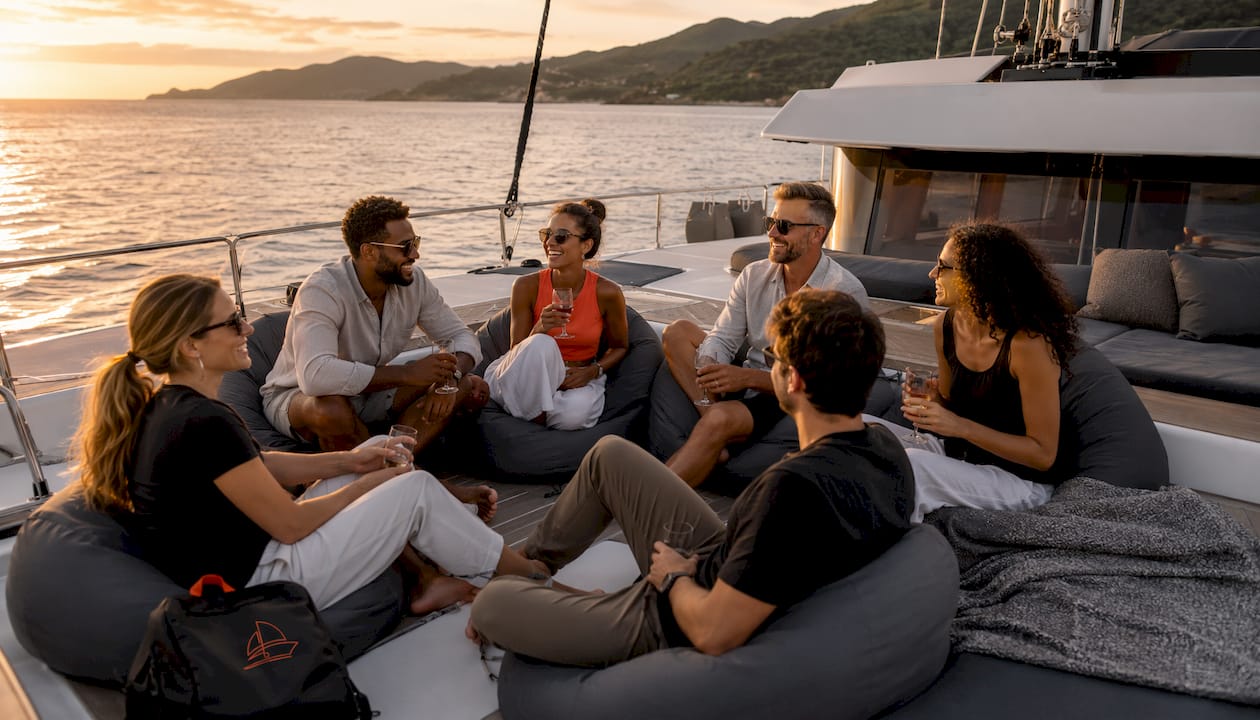
Monohull vs. catamaran is the first real decision your group faces. Monohulls are more affordable and easier to handle under sail. Catamarans offer more deck space, wider cabins, and a steadier platform, which matters a lot if anyone in your group gets seasick. For groups prioritizing social space and comfort, a catamaran is the stronger choice.
Always book one more cabin than you think you need. A group of eight sharing four cabins feels relaxed. That same group in three cabins creates friction by day two.
2. On-board and on-shore activities that make the trip memorable
The best yacht trips for friends are built around a mix of shared experiences, not just sailing from port to port. Activity variety keeps energy high and prevents the "what do we do now?" slump that hits around day three.
Water sports are the easiest win. Snorkeling, kayaking, and paddleboarding require minimal gear and work for almost every fitness level. Most charter yachts carry at least basic water sports equipment, so confirm what is included before you book.
On-board social activities create the moments people remember longest. Cocktail hours at anchor, group cooking nights, and sunset trivia games cost nothing and build real connection. A rotating cooking schedule, where two people plan and prepare each dinner, turns a chore into a highlight.
Pro Tip: Collect everyone's top three "must-do" experiences before the trip using a shared Google Doc. You will spot overlaps fast, and no one feels ignored when the itinerary takes shape.
On shore, prioritize experiences that are hard to reach by land. Secluded bays, small fishing villages, and local markets accessible only by dinghy give your group stories that no hotel vacation can match. One well-chosen culinary experience, like a cooking class in a coastal town, anchors the whole trip in memory.
3. How to plan itineraries that keep everyone happy
Rigid itineraries are the single biggest mistake groups make. Expert planners recommend planning five days loosely and leaving two days completely open. Wind, mood, and a local tip from the harbor master can redirect your whole week in the best possible way.
A practical itinerary framework for a seven-day trip looks like this:
- Day 1: Arrive, provision, and do a short shakedown sail to your first anchorage.
- Day 2: Sail to a main destination. Explore ashore in the afternoon.
- Day 3: Structured activity day. Water sports, a guided tour, or a group cooking challenge.
- Day 4: Free day. Anchor somewhere beautiful and do nothing on purpose.
- Day 5: Longer sail to a new region. Evening in a marina town.
- Day 6: Open. Let the group vote on the morning of this day.
- Day 7: Return passage. Slow sail back with a final group dinner at anchor.
Daily sailing distances should stay between 15 and 25 nautical miles. Groups that push beyond 25 NM per day spend most of their time sailing and almost none of it enjoying where they are. The goal is destinations, not distance.
Use a shared document to track the itinerary, provisioning lists, and group preferences. When everyone can see the plan, small disagreements get resolved before they become arguments.
4. Top budgeting and logistics tips for group yacht trips
Money is the fastest way to ruin a group trip. Splitting all costs equally upfront through one designated group payment tool prevents the awkward "you owe me" conversations that linger long after the trip ends.
Typical charter costs include the yacht fee, a skipper fee of roughly €150–200 per day, fuel, marina fees of €30–100 per night, provisioning, and a cleaning fee. Provisioning food costs run approximately €10–15 per person per day for onboard meals. Budget separately for dinners ashore, which will cost more.
Pro Tip: Collect equal deposits of 50% from every group member at least three months before departure. This filters out anyone who is not truly committed and gives you real budget clarity early.
Assign provisioning duties to two specific people. They own the shopping list, the market run, and the onboard pantry. Assigning provisioning roles prevents the silent frustration that builds when the same person always handles logistics while others relax. Rotate cooking duties so the same two people are not cooking every night.
Book your yacht and skipper at least 6–8 months ahead for peak summer seasons in the Mediterranean or Caribbean. The best boats go first. Waiting until spring for a july departure means settling for whatever is left. Check how to find yacht deals early in your planning process to lock in the best rates.
Agree on a cancellation and replacement policy before anyone pays a deposit. If one person drops out, the group needs a clear plan for covering their share or finding a replacement.
5. Handling cabin assignments without conflict
Cabin inequality is a real problem on monohulls, and ignoring it creates resentment. Aft cabins are larger and more stable than bow cabins, which are smaller and feel more motion at sea. The proven solution is a pricing difference of around 10%. Aft cabin occupants pay 10% more; bow cabin occupants pay 10% less.
On longer trips, a mid-week cabin rotation works well. Couples who started in the bow get the aft cabin for the second half. This approach requires agreement before departure, not a negotiation at sea.
Catamarans largely solve this problem. All four cabins on a standard catamaran are roughly equal in size and stability. If cabin equity matters to your group, a catamaran is worth the extra cost. For affordable yachting destinations where catamarans are widely available, the price gap between monohull and catamaran charters narrows considerably.
6. Team bonding activities that work specifically at sea
A yacht creates a natural team environment. The confined space and shared routines accelerate bonding faster than any land-based retreat. The trick is channeling that energy into activities that feel fun, not forced.
Sailing watch rotations give everyone a role. Assign helm shifts, navigation duties, and sail trimming responsibilities. Even non-sailors can handle the helm in calm conditions with a skipper nearby. People who feel useful on a boat feel connected to the group.
Sunset cocktail competitions work brilliantly as a team bonding yacht experience. Each couple or pair creates a signature drink using whatever is in the galley. The group votes. The winners pick the next anchorage. It costs nothing and produces a genuinely memorable evening.
A group photography challenge, where each person documents one "hidden gem" per day, creates a shared visual record of the trip. Compile the photos into a shared album at the end. Groups that do this consistently report that the album becomes one of their most valued keepsakes.
7. Choosing between a bareboat and crewed charter for groups
A bareboat charter means your group sails the yacht yourselves. A crewed charter includes a professional skipper and, often, a cook or hostess. For most friend groups and families, a crewed charter is the better choice.
Multi-year group trips fail most often due to logistical fragmentation. When one person handles all the navigation, provisioning, and mechanical issues, they stop enjoying the trip. A professional skipper absorbs all of that friction. The group relaxes. The trip succeeds.
Crewed charters cost more upfront. But when you factor in the skipper fee of €150–200 per day split across eight people, the per-person cost is modest. For a first-time group trip especially, the investment pays for itself in reduced stress alone.
If your group has experienced sailors, a bareboat charter gives you total freedom. Read the first-timer's charter guide before committing to either option. Knowing what questions to ask before you sign a charter agreement saves real money and avoids surprises.
Key takeaways
The most successful group yacht trips combine a matched vessel size, flexible itineraries, and upfront cost agreements that remove financial friction before it starts.
| Point | Details |
|---|---|
| Match group size to yacht type | Groups of 8 on a catamaran get the best balance of value and comfort. |
| Keep daily sailing distances short | Stay within 15–25 nautical miles per day to maximize anchoring and activity time. |
| Split costs equally and early | Collect 50% deposits three months out to confirm commitment and clarify the budget. |
| Assign roles before departure | Designate provisioning leads and a cooking rotation to prevent burnout and resentment. |
| Leave two days unplanned | Open days allow the group to follow wind, mood, and local tips for the best discoveries. |
What I have learned from years of watching group trips succeed and fail
The groups that have the best trips are almost never the ones with the most detailed itineraries. They are the ones who sorted out the uncomfortable conversations before they left the dock.
Cabin assignments, cost splits, and dietary preferences sound like small details. On a 45-foot boat with eight people for seven days, they are not small. They are the difference between a trip that ends with everyone booking next year's dates and one that ends with a group chat going quiet.
My strongest recommendation is to choose a crewed yacht for your first group charter. The skipper does not just handle the sailing. A good skipper reads the group's energy, suggests the right anchorage when the wind shifts, and quietly solves problems before the group notices them. That invisible competence is worth every euro of the daily fee.
The second thing I would tell any group is to resist the urge to fill every hour. The moments that get retold at dinner parties ten years later are almost always the unplanned ones. The afternoon you stumbled into a tiny village festival. The morning everyone swam to a rock and sat there for two hours doing nothing. Build those gaps into your plan on purpose.
— Sailorix
Plan your group charter with Sailorix
Sailorix makes booking a group yacht charter straightforward and affordable. Through a €100 annual membership, you access yacht bookings worldwide with service fees of around 1%, far below the 10–20% that most booking platforms charge.

Whether your group wants a crewed catamaran in the Greek islands or a bareboat monohull in Croatia, Sailorix lists real-time availability across hundreds of destinations. The pricing is transparent, the selection is wide, and the membership pays for itself on a single booking. Book your group charter through Sailorix and put the savings toward the experiences that actually matter.
FAQ
What is the ideal group size for a yacht charter?
The ideal group size is 6, 8, or 10 people. Eight guests on a catamaran delivers the best balance of comfort and cost per person.
How far should a group sail each day?
Groups should target 15–25 nautical miles per day. Exceeding 25 NM reduces anchoring time and cuts into activity and relaxation hours.
Should a group book a bareboat or crewed charter?
First-time groups benefit most from a crewed charter. A professional skipper handles navigation and logistics, which keeps the group relaxed and the trip on track.
How do you handle unequal cabin sizes fairly?
Charge aft cabin occupants roughly 10% more and bow cabin occupants 10% less. On longer trips, a mid-week cabin rotation keeps the arrangement fair for everyone.
When should a group book a yacht charter?
Book at least 6–8 months before departure for peak summer seasons. The best yachts and skippers fill up fast, and early booking secures better rates.