
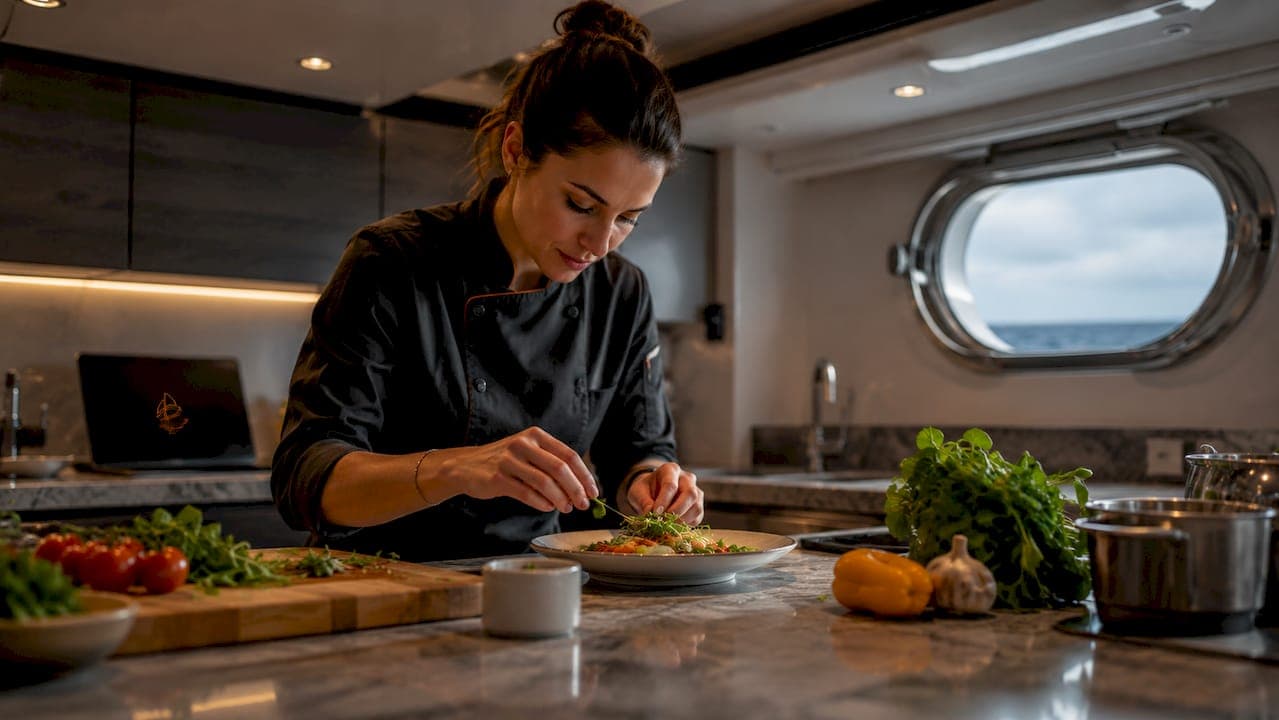
Yacht recipes are meals specifically designed to balance ease of preparation, galley constraints, and bold flavor so every bite tastes as good as the view. Cooking onboard means working with limited counter space, a two-burner stove, and ingredients that must survive days at sea. The best recipes for sailing prioritize make-ahead components, temperature-forgiving sides, and flexible ingredient lists that adapt to whatever your last port had on offer. Get these fundamentals right, and yacht dining becomes one of the most memorable parts of any sailing trip.
1. What makes a great yacht recipe?
Great yacht recipes share three qualities: they require minimal last-minute cooking, they hold well at room temperature, and they use ingredients that store without a full-size refrigerator. Temperature-forgiving accompaniments like roasted vegetables, grain salads, and cold sauces are easier to serve than last-minute hot plates. That single principle eliminates most of the stress from galley cooking. When a dish can sit for 20 minutes without suffering, you can focus on your guests instead of the stove.
2. No-oven yogurt flatbread
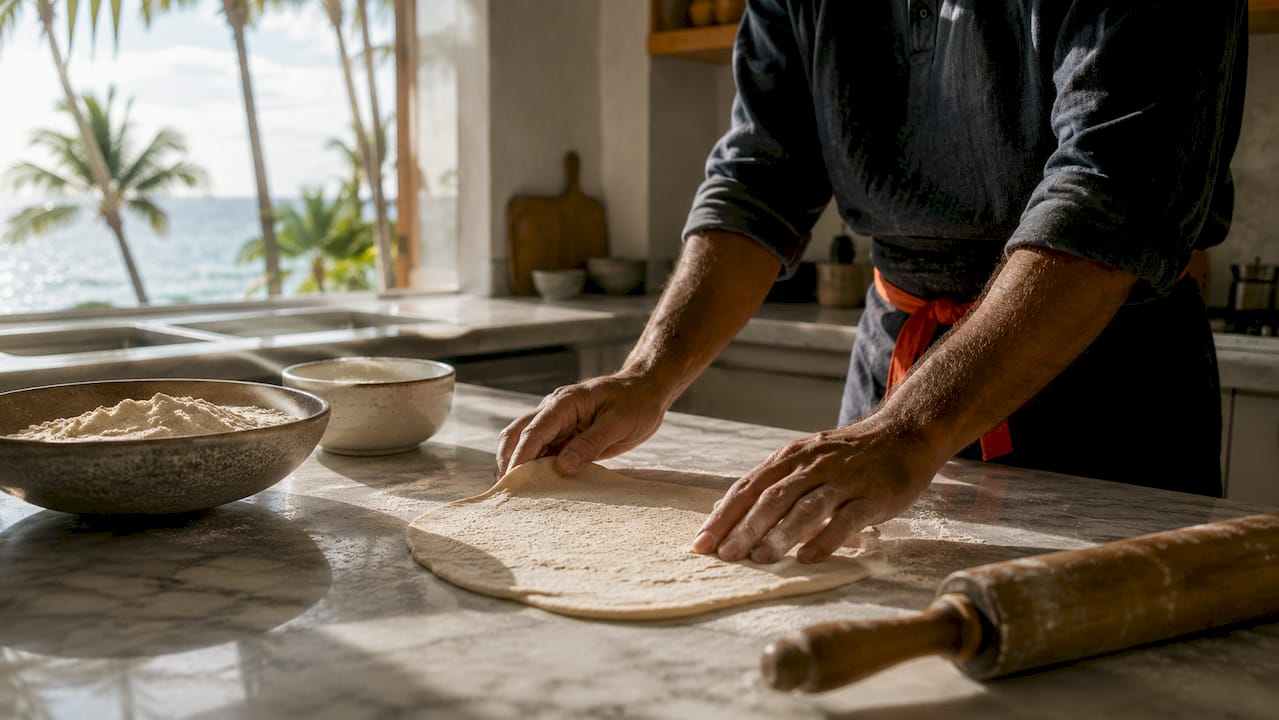
Flatbread is the single most useful bread recipe for any galley. The yogurt flatbread ratio is 2 cups of all-purpose flour to 1 cup of yogurt, producing about 8 hand-sized portions per batch. That ratio means no yeast, no proofing time, and no oven. Cook each round in a dry skillet for 2–3 minutes per side. Serve with hummus, olive oil, or smoked salmon for a complete starter that takes under 15 minutes from mixing bowl to plate.
3. Quick-pickle Banh Mi bowl
Quick pickles transform basic vegetables into something bright and complex without any canning equipment. The standard brine ratio is 2 parts water to 1 part rice vinegar, with 1 teaspoon each of salt and sugar, heated until dissolved. Pour it over sliced daikon, carrots, or cucumbers and refrigerate for at least 30 minutes. Build the bowl with rice, a protein of your choice, fresh herbs, and a drizzle of sriracha mayo. The pickles keep for several days, so one batch of brine serves multiple meals across the trip.
Pro Tip: Make the brine the night before departure and pickle your vegetables while you motor out of the marina. By the time you anchor, lunch is already assembled.
4. Coconut curry with rice
Paul's curry and coconut rice is a boat-friendly adaptable meal that stretches to feed a full crew using common spices and coconut milk. Start with a base of onion, garlic, and ginger, then add your spice blend, chicken or chickpeas, and one can of coconut milk. Slow cook until the sauce thickens. Serve over rice cooked in a second pot. The dish reheats perfectly the next day, making it one of the most efficient yacht dining ideas for multi-day passages.
5. Grain salad with roasted vegetables
Grain salads are the workhorse of smart galley cooking. Cook farro, quinoa, or bulgur wheat at the dock before departure, then toss with roasted vegetables, feta, and a lemon vinaigrette. The salad holds at room temperature for hours without losing texture or flavor. Add canned chickpeas or leftover chicken to turn it into a full meal. This approach follows the principle that cold or room-temperature sides are far easier to manage than coordinating multiple hot dishes during service.
6. Sous-vide proteins for gourmet meals on a yacht
Sous-vide is the most reliable cooking method for a moving galley. Sous-vide and terrine preparations are preferred in yacht cooking because they withstand sea swell and service timing pressures without quality loss. Cook proteins like salmon, chicken breast, or beef tenderloin in vacuum-sealed bags at precise temperatures before the trip. Onboard, a quick sear in a hot pan finishes the dish in under 3 minutes. The result is restaurant-quality protein with almost zero galley stress during service.
7. Terrine and charcuterie board
A terrine prepared before departure is one of the most elegant easy yacht meals you can serve. Slice it cold, arrange it on a board with cornichons, mustard, and crusty bread, and you have a starter that requires zero cooking onboard. Terrines made from chicken liver, pork, or smoked fish hold well in a cooler for 3–4 days. Pair with a grain salad from item 5 for a complete lunch that feels far more refined than its effort level suggests.
8. Smoked salmon bagels and quick breakfasts
Breakfast onboard should require no cooking at all on active sailing days. Smoked salmon bagels with cream cheese, capers, and red onion assemble in under 5 minutes. Pair with sliced fruit, yogurt, and granola for a spread that satisfies a full crew without touching the stove. Keep a bag of mixed nuts, dried fruit, and dark chocolate squares as a backup snack for long watches. These quick boat snacks require no refrigeration and deliver sustained energy during active sailing.
9. Route-based seafood with Aegean herbs
Route-based provisioning means buying whatever is freshest at each port rather than carrying all ingredients from home. In the Aegean, that means fresh octopus, local oregano, and Greek cheeses. In the Caribbean, it means mahi-mahi, limes, and scotch bonnet peppers. Grill or pan-sear the catch of the day with local herbs and serve alongside the grain salad or flatbread already in your rotation. This approach produces the most memorable meals of any sailing trip because the food tells the story of where you have been.
Pro Tip: Ask dock staff or local fishermen what is in season before you shop. They will point you to the best product at the lowest price, and you will eat better than any restaurant in the marina.
10. Make-ahead chocolate pots de crème
Dessert on a yacht should be made entirely in advance. Chocolate pots de crème, set in individual jars with lids, travel perfectly in a cooler and serve straight from cold. Melt dark chocolate with cream, whisk in egg yolks and sugar, pour into jars, and bake in a water bath before departure. Seal and refrigerate. Onboard, top with a spoonful of whipped cream or sea salt flakes. This is the kind of dessert that makes guests ask who catered the trip.
How to provision and manage ingredients for yacht cooking
Provisioning is where most galley failures begin. The solution is route-based planning, which adapts your menu to what is available at each port rather than locking you into a rigid shopping list from home. Build your base pantry before departure: canned legumes, grains, coconut milk, spice blends, olive oil, and vinegar. Then fill in fresh proteins and produce at each stop.
Maximize perishables by using the most delicate items first. Leafy greens go on day one, hardier vegetables like carrots and cabbage last through day four or five. Quick pickles extend the life of vegetables that are starting to soften. For a well-organized provisioning strategy, rotate stock so older items stay at the front of every storage bin.
- Use vacuum-sealed proteins for the first 2–3 days, then switch to canned or dried sources
- Store grains and legumes in airtight containers to prevent moisture damage
- Bring a small selection of long-life condiments: soy sauce, fish sauce, tahini, and hot sauce
- Label everything with the date it was opened or cooked
Pro Tip: Write two versions of every dinner menu: one for calm conditions and one for rough seas. When the boat is rolling, you want a meal that requires one pot and no knife work.
Galley management and cooking techniques onboard
A well-organized galley is faster and safer than a large one. The luxury yacht vacation guide from Sailorix notes that storage discipline is the single biggest factor in galley efficiency on extended trips. Keep your most-used tools within arm's reach of the stove and secure everything that can roll or slide.
"Yacht galleys are high-motion environments. Chefs mitigate risk and maintain quality by selecting cooking methods and dishes resilient to sea swell and service timing. The goal is never to fight the boat. It is to work with it."
For dinner service, seat no more than 70% of rated capacity to maintain comfort and movement around the table. Crowded seating kills the atmosphere of an otherwise excellent meal. Use dedicated coolers for beverages rather than the galley refrigerator. Constant fridge door opening compromises temperature control and wastes the limited cold storage you need for proteins and dairy.
- Set up a prep station with a damp towel under your cutting board to prevent sliding
- Cook all heat-intensive components before guests arrive or before conditions deteriorate
- Use lids and fiddle rails on the stovetop when underway
- Plate cold dishes first so hot components are the last thing you touch before service
Easy snacks and quick meals for sailing days
Active sailing days call for food that requires no cooking and minimal cleanup. The best quick boat snacks are assembled, not cooked. Keep these options stocked at all times:
- Smoked salmon bagels with cream cheese and capers
- Nut and dried fruit mix with dark chocolate for watch snacks
- Olives, sliced cheese, and crackers for cockpit grazing
- Fruit-forward breakfasts with yogurt, granola, and sliced mango or berries
- Pita with hummus and roasted red peppers for a no-cook lunch
The key is portability. Everything on this list can be eaten with one hand while the other holds a line. For longer passages, pre-portion snacks into small bags the night before so crew members can grab and go without opening every storage bin.
Key takeaways
The most effective yacht recipes combine make-ahead preparation, temperature-forgiving components, and route-based ingredient sourcing to produce great food under real galley constraints.
| Point | Details |
|---|---|
| Prioritize make-ahead dishes | Cook proteins, grains, and desserts before departure to reduce onboard stress. |
| Use temperature-forgiving sides | Grain salads, roasted vegetables, and cold sauces hold quality without last-minute effort. |
| Plan provisioning by route | Buy fresh proteins and produce at each port to maximize flavor and minimize waste. |
| Apply sous-vide and terrine methods | These techniques deliver consistent quality even when the boat is moving. |
| Seat guests at 70% capacity | Limiting seating to 70% of rated capacity keeps service comfortable and conversation easy. |
The real secret to great food at sea
Sailorix has worked with sailors across dozens of routes, and the pattern is always the same. The crews who eat best are not the ones with the biggest galleys or the most expensive provisions. They are the ones who planned two menus instead of one, bought something unexpected at a small port market, and turned a simple grain salad into a story about the village where they found the cheese.
The galley forces a kind of creativity that a full kitchen never demands. You cannot hide behind equipment. Every dish has to work with what you have, where you are, and how the sea is behaving that day. That constraint produces some of the most satisfying cooking you will ever do. Guests who eat a terrine you made the night before departure, paired with olives from a Greek market and flatbread cooked in a dry pan, remember that meal longer than any restaurant dinner. The food carries the context of the trip. That is something no shore-based kitchen can replicate.
The chefs who thrive in yacht galleys share one habit: they treat the menu as a living document. They arrive with a plan and revise it every morning based on what is fresh, what the weather is doing, and what the crew actually wants. Flexibility is not a compromise. It is the method.
— Sailorix
Plan your next sailing trip with Sailorix
Sailorix connects culinary enthusiasts with the right vessel for their next outing, whether that means a day sail with a simple cockpit spread or a week-long passage with full gourmet meals on a yacht.

Through Sailorix's membership model, you pay €100 per year and access yacht bookings worldwide with service fees of approximately 1%, far below the 10–20% typical of standard booking platforms. That savings goes directly into better provisions, finer ingredients, and more time at anchor. Browse available vessels and plan your next culinary sailing adventure at Sailorix.
FAQ
What are the best recipes for sailing?
The best recipes for sailing are make-ahead dishes like grain salads, coconut curry, terrines, and yogurt flatbread. These hold well at room temperature and require minimal last-minute cooking.
How do I make no-oven bread on a yacht?
Mix 2 cups of all-purpose flour with 1 cup of yogurt to produce about 8 portions of flatbread. Cook each round in a dry skillet for 2–3 minutes per side.
What snacks work best for long sailing days?
Smoked salmon bagels, nut and dried fruit mixes, olives, crackers with cheese, and pre-portioned pita with hummus all require no cooking and can be eaten with one hand.
How should I provision for a multi-day yacht trip?
Use route-based provisioning: carry a dry pantry base from home and buy fresh proteins and produce at each port. Use the most perishable items first and extend vegetables with quick pickles.
How many guests should I seat for a yacht dinner?
Seat no more than 70% of the vessel's rated passenger capacity. That limit keeps movement comfortable and allows proper service flow around the table.