
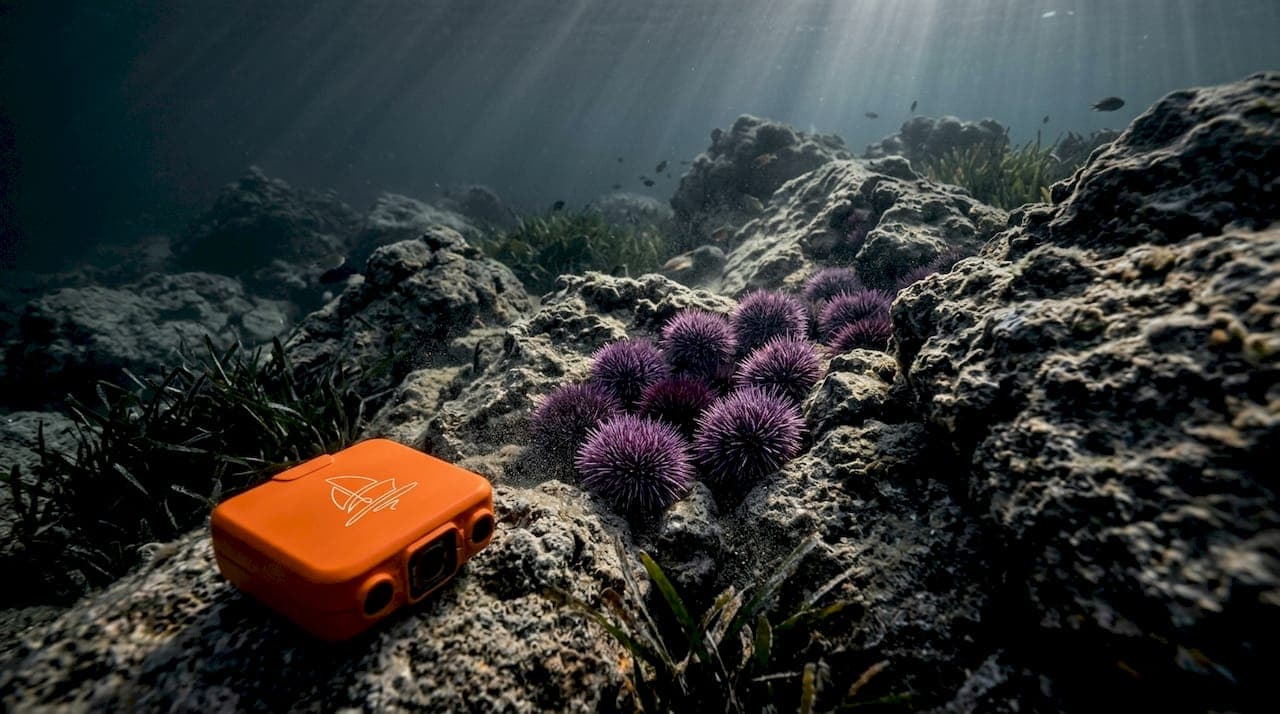
Sea urchins in Croatia are among the most ecologically significant and culinarily prized creatures in the Adriatic Sea. Known scientifically as Paracentrotus lividus, the purple sea urchin dominates Croatia's rocky coastline from Istria to Dubrovnik, forming a critical part of Croatian marine ecosystems. Whether you're snorkeling the crystal waters of the Kornati Islands, sampling fresh roe at a seaside konoba, or studying Adriatic sea life, understanding these spiny animals changes how you see the coast entirely.
1. Sea urchins in Croatia: what they are and why they matter
Paracentrotus lividus is the dominant sea urchin species in Croatia and across the broader Mediterranean. It grows up to 7 centimeters in diameter, sports dark purple to brown spines, and lives attached to rocky substrates in shallow coastal waters. The species is not just a curiosity for divers. It functions as a keystone grazer in Croatian marine ecosystems, controlling algae growth and shaping the structure of underwater communities.
Croatia's Adriatic coastline provides near-ideal conditions for sea urchins: clear, oligotrophic water, abundant rocky reef, and relatively low industrial pollution compared to other Mediterranean coasts. Their presence signals a healthy reef. Where sea urchin populations collapse, algae often overgrow and smother other marine life. That ecological role makes their conservation a matter of broader reef health, not just species protection.
2. Where to find sea urchins in Croatia's rocky habitats
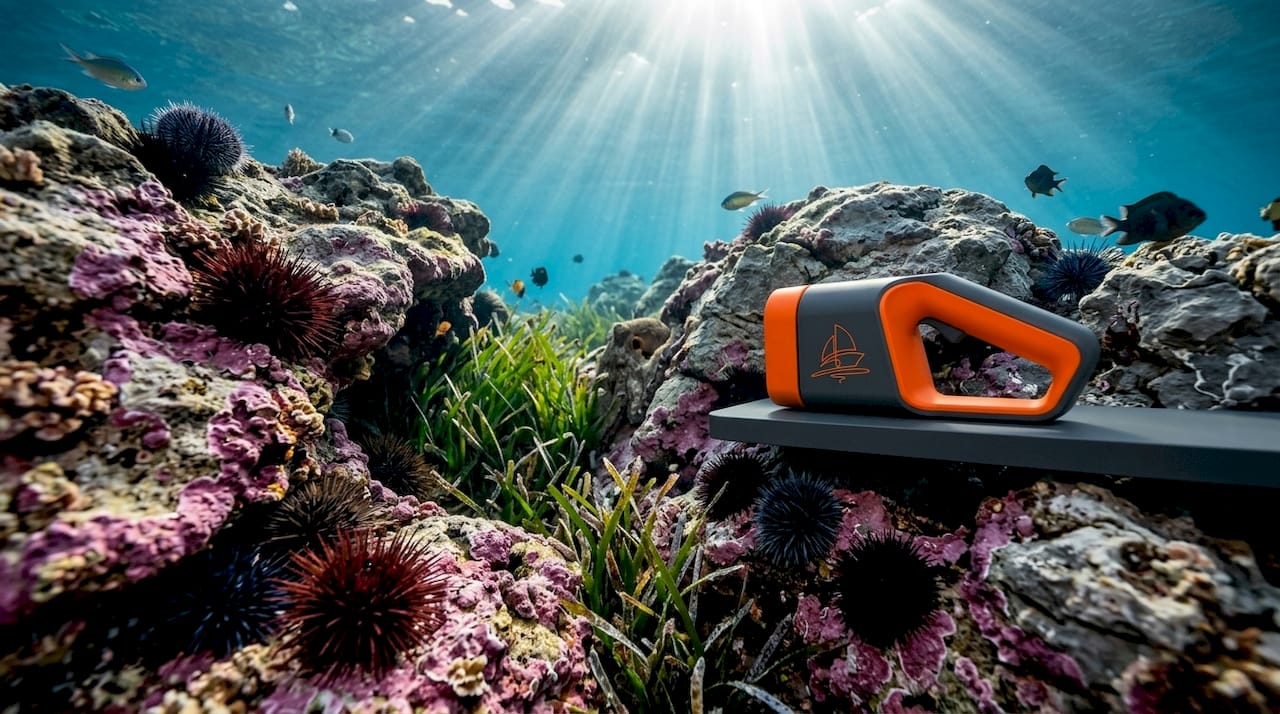
Sea urchins in Croatia inhabit rocky coastal and reef areas almost exclusively, favoring hard substrates where they can anchor their tube feet and graze on encrusting algae. You'll find the highest densities in water between 0.5 and 10 meters deep, particularly where wave action keeps the water oxygenated and clear. Sandy or muddy bottoms hold almost none.
The best places to find sea urchins in Croatia include:
- Kornati National Park: Dense populations on submerged limestone walls and reef shelves
- Mljet National Park: Rocky shallows around the saltwater lakes and outer coast
- Vis Island: Clear, low-traffic waters with intact reef communities
- Hvar and Brač coastlines: Accessible rocky entries popular with snorkelers
- Rovinj (Istria): Shallow reef areas around the old town peninsula
Croatia's underwater scenery in these locations combines sea urchins with posidonia seagrass meadows, octopus, and grouper, making any snorkel or dive genuinely rewarding. Sea urchin diving in Croatia is informal by nature. You don't need a guide to observe them, but you do need to know where to look and how to move safely.
Pro Tip: Wear water shoes whenever you wade or enter the water from rocky shores in Croatia. A sea urchin spine through the foot is painful and difficult to remove. Closed-toe water shoes rated for rocky entry eliminate the risk entirely.
3. What sea urchins eat in Croatia's Adriatic waters
Sea urchins are grazers. What sea urchins eat in Croatia is primarily encrusting coralline algae, macroalgae like Cystoseira species, and organic detritus on rocky surfaces. Their feeding apparatus, called Aristotle's lantern, is a five-part jaw structure capable of scraping algae directly off stone. This grazing keeps reef surfaces clear and prevents any single algae species from monopolizing space.
In Croatia's Adriatic, Paracentrotus lividus also consumes posidonia seagrass leaves when algae is scarce. Overgrazing by dense urchin populations can create "urchin barrens," zones where all vegetation is stripped and biodiversity collapses. This dynamic is well-documented in the Mediterranean and represents one reason why both overharvesting and underharvesting of sea urchins create ecological problems. Balance matters more than maximum population.
4. The edible part of a sea urchin and when to harvest it
The edible portion of a sea urchin is the reproductive gonad, commonly called roe or "uni" in Japanese culinary tradition. The gonad is the orange or yellow lobe found inside the shell, and its quality depends entirely on the animal's reproductive cycle. Outside of spawning season, the gonad is full, firm, and intensely flavored. During and after spawning, it becomes thin, watery, and unpalatable.
Here's how the harvest cycle works for Croatian sea urchins:
- Late autumn: Gonads begin filling as water temperatures drop and days shorten
- December through February: Peak gonad fullness. This is the prime culinary window
- March: Spawning begins for Paracentrotus lividus in Croatia, which shows a singular annual spawning period unlike some Mediterranean populations with two cycles
- April through September: Post-spawn recovery. Gonads are thin and not worth harvesting
- October: Gonads begin rebuilding as the cycle restarts
This single spawning period in Croatia is significant. In Catalonia, for example, roe harvesting peaks in January through March, aligning with a similar winter window. Croatia's season follows comparable timing, though local water temperature and latitude create slight regional variation even within the Croatian coast.
"Sea urchin spawning and harvest seasons vary regionally, so fixed periods are management variables rather than universal dates, particularly for Paracentrotus lividus in the Mediterranean."
5. Sea urchins in Croatian cuisine: tradition and taste
Raw sea urchin roe eaten directly from the shell, with nothing but a squeeze of lemon and a piece of bread, is the traditional Croatian preparation. Fishermen along the Dalmatian coast have eaten them this way for generations. The flavor is briny, sweet, and intensely oceanic. Nothing about the preparation is complicated, which is exactly the point.
Sea urchin features in Croatian coastal cuisine in several ways:
- Raw on the half shell: The classic preparation, served immediately after opening
- Pasta with sea urchin roe: A growing restaurant dish in Split, Dubrovnik, and Hvar, inspired by Italian spaghetti ai ricci di mare
- Bruschetta with roe: Served as an appetizer in upscale coastal restaurants
- Paired with local white wine: Pošip or Grk from Korčula Island complement the brininess well
Coastal festivals in Croatia occasionally feature sea urchins as a seasonal delicacy, though nothing on the scale of Catalonia's La Garoinada festival, which draws thousands of visitors specifically for sea urchin tasting menus. Croatian culinary culture keeps the tradition more local and informal, which arguably preserves its authenticity. Growing restaurant demand in tourist-heavy areas like Dubrovnik and Split does create pressure on local populations, making sustainable harvesting practices more urgent each year.
6. Conservation laws and the challenge of protecting Croatian sea urchins
Croatia has a legal framework for marine species protection that covers sea urchins under fisheries regulations. Collecting sea urchins requires permits, and commercial transport requires documentation proving legal origin. The system exists on paper. Enforcement is where it breaks down.
A 2022 case near Trogir illustrates the problem clearly. A seizure of 300 kg of live sea urchins transported without documentation resulted in a misdemeanor fine of HRK 19,500 and a criminal indictment of 16 people for wildlife trafficking. The final verdict came in March 2025. That three-year timeline from seizure to verdict reflects the complexity of prosecuting cases where fisheries law and wildlife trafficking law overlap. Paperwork and licensing proved decisive to the outcome.
A 2025 civil society analysis found that enforcement inefficiency controlling illegal fishing makes protected marine areas vulnerable to biodiversity loss, despite Croatia's relatively solid legal framework. This gap between law and practice is the central conservation challenge. Rangers and inspectors cover enormous stretches of coastline with limited resources, and illegal collection often happens at night or in remote coves.
Sustainable sea urchin aquaculture requires ecological surveys and permitting to avoid overharvesting, and Croatia has not yet developed the regulatory infrastructure to support managed urchin farming at scale. Without that framework, wild populations absorb all commercial and recreational pressure.
Pro Tip: If you want to collect sea urchins legally in Croatia, check current regulations with the Croatian Ministry of Agriculture before your trip. Rules on personal collection limits and permitted zones change seasonally and by region. Ignorance of the rules does not reduce your fine.
| Point | Details |
|---|---|
| Legal collection | Permits and documentation are required for commercial sea urchin transport in Croatia |
| Enforcement gap | Croatia's marine laws are solid, but enforcement capacity leaves protected areas exposed |
| Trafficking cases | The 2022 Trogir case shows criminal prosecution is possible but slow under overlapping laws |
| Ecological risk | Unregulated harvesting removes a keystone grazer and can trigger algae overgrowth on reefs |
Key takeaways
Sea urchins in Croatia are ecologically vital, culinarily prized, and legally protected, but enforcement gaps and growing demand make sustainable interaction the responsibility of every visitor.
| Point | Details |
|---|---|
| Prime habitat | Rocky Adriatic reefs between 0.5 and 10 meters deep hold the highest sea urchin densities |
| Harvest season | December through February is the peak culinary window before the annual spawning period begins |
| Single spawning cycle | Croatian Paracentrotus lividus spawns once annually, making population recovery slower than in dual-spawning regions |
| Legal framework | Commercial collection requires permits; unauthorized transport can result in criminal trafficking charges |
| Safety first | Water shoes eliminate the primary injury risk when entering rocky coastal water in Croatia |
What Sailorix has learned from Croatia's underwater world
Croatia's coastline looks spectacular from a boat deck. It looks completely different from one meter underwater. After years of helping sailors and travelers explore the Adriatic, the pattern Sailorix sees repeatedly is this: the people who get the most from Croatia's coast are the ones who slow down, get in the water, and pay attention to what lives there.
Sea urchins are a good test case. Most tourists treat them as a hazard to avoid. The more interesting response is to understand them as an indicator species. Dense, healthy urchin populations in a cove tell you the reef is intact, the water is clean, and the ecosystem is functioning. That's worth knowing before you anchor.
The conservation picture is genuinely concerning. Croatia has the laws. It does not yet have the enforcement capacity to match them, and coastal excursion planning that ignores ecological context adds to the pressure. Sailorix believes responsible marine tourism means understanding what you're looking at, not just photographing it. If you eat sea urchin roe at a Dalmatian restaurant in January, ask where it came from. That question, asked enough times, changes supply chains.
The Adriatic is one of the most biodiverse seas in Europe. Keeping it that way requires visitors who are curious enough to learn and honest enough to act on what they find out.
— Sailorix
Explore Croatia's coast by boat with Sailorix
Croatia's sea urchin habitats are best reached by water. The rocky coves of Vis, the reef walls of Kornati, and the clear shallows around Mljet are all accessible by boat and largely inaccessible by road.

Sailorix gives you access to yacht and boat rentals across Croatia at the lowest market prices, with membership fees of €100 per year and service fees of around 1%, compared to the 10 to 20% charged by most booking platforms. Whether you want to snorkel Adriatic reefs, explore Croatia's most beautiful places, or simply anchor in a quiet cove and watch the underwater world from the surface, Sailorix makes the logistics simple and affordable. Book your Croatian boat rental and get closer to the coast that matters.
FAQ
What sea urchin species lives in Croatia?
Paracentrotus lividus, the purple sea urchin, is the dominant species along Croatia's Adriatic coast. It inhabits rocky reef areas from the surface down to around 30 meters.
Are sea urchins in Croatia safe to eat?
Yes, when harvested legally during the winter season (December through February), Croatian sea urchin roe is safe and considered a delicacy. Avoid consuming urchins collected outside permitted zones or outside the harvest season.
When is sea urchin season in Croatia?
The peak culinary season runs from December through February, when the gonads are fullest before the annual spawning period begins in spring. Croatian Paracentrotus lividus spawns once per year, making this window shorter than in some other Mediterranean regions.
Is it illegal to collect sea urchins in Croatia?
Commercial collection without permits is illegal, and unauthorized transport can result in criminal charges. Personal collection rules vary by region and season, so checking current regulations before collecting is the only safe approach.
How do I avoid sea urchin injuries while swimming in Croatia?
Water shoes are the single most effective protection against sea urchin spine injuries when entering rocky coastal water. Avoid stepping on or near dark patches on submerged rocks, which are often dense urchin clusters.