

Yes, you can rent a boat for weeks or even months at a time. Long-term boat rentals bundle discounted multi-week or monthly rates with dock delivery, routine maintenance, and often a skipper option. The main differences from a weekend hire come down to pricing structure, deposits, and contract terms. Start by confirming availability, inclusions, and cancellation rules before you sign.
TL;DR:
- Long-term rentals often include delivery, maintenance, and insurance in the rate, with discounts for extended durations like monthly or multi-month leases.
- Costs decrease with longer commitments, but mandatory deposits, slip fees, and fuel charges can significantly affect total expenses.
- Booking requires confirming availability, clear inclusion details, and inspecting contracts, with requirements varying by vessel size and experience.
- Adding a skipper usually raises rental costs but can simplify licensing and reduce insurance risks for renters without experience.
- Negotiating off-season, early, or multiple-week bookings can lead to substantial savings, especially on membership-based platforms that offer transparent fee structures.
Table of Contents
- What counts as a long term boat rental?
- What's included in a long term boat rental?
- How much does a long term boat rental cost?
- How do you book a long term boat rental?
- Living aboard: what extended stays actually involve
- Sailorix's take on making extended rentals simple
- What qualifications do you need to rent long term?
- Can you negotiate a long term boat rental agreement?
- Who's responsible for what during a long term rental?
- Who handles maintenance and emergencies during your rental?
- What insurance do you need for a long term rental?
- Where's the line between short-term and long-term?
- The gap between how long term rentals are marketed and how they actually work
- Ready to book your extended rental with Sailorix?
- Sources
What counts as a long term boat rental?
The term covers a range of setups, and the right one depends on what you're actually trying to do. A weekly rental usually means a boat delivered to your dock for seven days, with cleaning and light maintenance built in. Monthly rentals extend that same structure, often at a lower daily rate, and are common among seasonal residents who want a boat for a summer without owning one.
Sabbatical or multi-month charters go further still, typically three to six months, and attract remote workers or retirees testing out life afloat before committing to a purchase. Some markets also offer fractional or membership-style access, where you pay for a slice of usage rights rather than a single rental period. Fractional lease and membership programs commonly bundle moorage, scheduled maintenance, and insurance into one predictable arrangement.
Vacationers tend to gravitate toward the rolling weekly plan since it's flexible and easy to extend. Month-to-month leases suit people who want a boat available on demand for an entire season without locking into a year. Multi-month charters fit anyone genuinely exploring whether boat ownership makes sense for their lifestyle.
What's included in a long term boat rental?
Most operators build a handful of core services into their monthly rates rather than charging piecemeal. Dock delivery, routine maintenance, and cleaning are standard parts of many long-term plans, which is the biggest practical difference from a day charter where you show up at a marina and hope the boat is in decent shape.
Here's what typically comes bundled in:
- Delivery to and pickup from your dock or a nearby marina
- Scheduled maintenance checks and bottom cleaning during the rental period
- Basic liability insurance, with upgraded coverage available for an added cost
- Access to on-call support if something breaks mid-rental
Skipper and crew options change both the cost and the insurance math. Adding a licensed skipper usually raises the weekly rate but can lower your insurance deductible, since the operator assumes more operational responsibility. Add-ons that typically cost extra include fuel, provisioning, marina slip fees beyond the home dock, and gear like paddleboards, fishing equipment, or linens for overnight stays.
Pro Tip: Ask for an itemized inclusions list before booking. "Maintenance included" can mean anything from a full detailing every week to a single oil check per month.
How much does a long term boat rental cost?
Pricing almost always scales down as duration goes up. Boat rental costs generally decrease as the rental duration increases, with weekly and monthly rates typically lower than paying for individual days separately. The discount curve rewards commitment, which is exactly why serious long-term renters negotiate rather than accept the first quote.
Total cost involves more than the headline rate:
- Security deposit, often refundable and separate from the rental fee
- Cleaning fee charged at drop-off, especially for boats used for overnight stays
- Marina or slip fees if you're not returning to a home dock
- Fuel, which is rarely included and billed based on usage
Membership programs change the math substantially. Sailorix's model charges a €100 annual fee for access to bookings with roughly 1% service fees, compared with the 10% to 20% service fees typical of standard booking platforms. On a $10,000 month-long charter, that difference alone can save close to $1,000 in fees, which more than covers the membership cost on a single booking.
A rough worked example: a mid-size center console running $400/day might total around $2,200 to $2,600 for a full month with delivery and maintenance included, before fuel and slip fees. Stretching a rental to three months may bring further discounts, lowering the effective daily rate compared to shorter monthly rentals.
How do you book a long term boat rental?
Booking a boat for weeks or months involves more paperwork than a weekend rental, but the process still follows a predictable sequence.
- Search real-time availability for your dates and location, since multi-day and monthly slots are commonly shown through live booking calendars rather than static listings.
- Confirm exactly what's included in writing, covering delivery, maintenance frequency, and insurance level.
- Review the contract for permitted use, engine hour limits, fuel policy, and damage liability before signing anything.
- Pay the deposit and lock in your delivery window.
- Schedule delivery and confirm who inspects the boat at handoff.
Most U.S. operators require renters to be at least 18, though some set the minimum at 21 or 25 for larger vessels. Boating license requirements vary by state, and many require proof of a boating safety course for anyone born after a certain year. If you don't have documented experience, adding a skipper solves the licensing question entirely and is worth budgeting for on longer rentals. Bring proof of insurance, a government ID, and any boating certification before pickup so delivery doesn't stall at the dock.
Living aboard: what extended stays actually involve
Renting a boat for a month or more starts to resemble a lifestyle decision rather than a vacation booking. Freshwater tank capacity and holding tank size determine how often you'll need to resupply or pump out, and that cadence shapes your whole week. Most boats in the 30 to 45 foot range need a resupply run every four to seven days for a couple aboard full time.
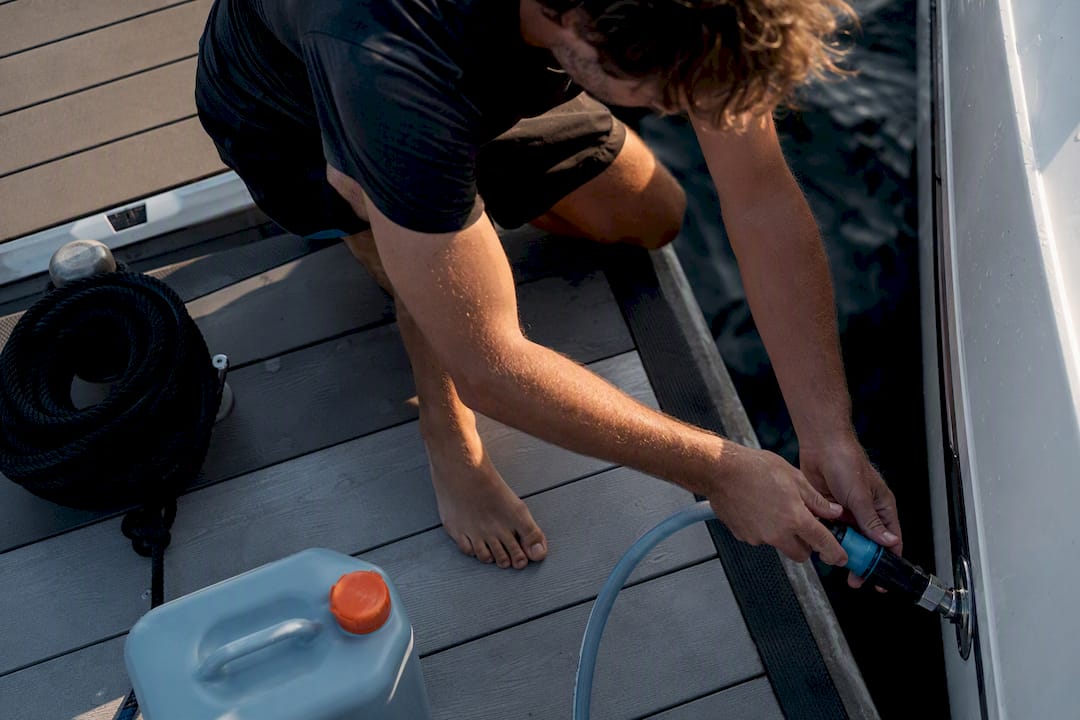
Marina slips offer shore power, water hookups, and easy provisioning but come with fees that vary by region and boat length. Anchoring saves money but adds complexity around waste handling and battery management. Budgeting for slip costs matters here, since marina and slip fees can rival the rental rate itself in expensive harbor towns.
A few practical habits make extended stays workable:
- Plan grocery runs around tide and dinghy access, not just calendar days
- Handle laundry and trash on a fixed schedule rather than waiting until it's a problem
- Confirm cell signal and marina Wi-Fi before committing to a spot for remote work
Pro Tip: Set up mail forwarding to the marina office before you arrive. Most marinas that host long-term guests will hold packages, but they need advance notice.
Sailorix's take on making extended rentals simple
Long-term rentals only feel complicated when the fee structure is opaque. Sailorix built its membership around fixing exactly that: a €100 annual fee unlocks roughly 1% service fees on bookings, instead of the 10% to 20% cut most platforms take. On a multi-week or multi-month rental, that gap compounds fast.
The practical advice we give members books after book: lock your dates early, since extended availability disappears faster than day charters. Ask operators directly about maintenance windows so a scheduled service visit doesn't eat into your rental days. And confirm delivery windows in writing rather than verbally, since dock delivery timing is the single most common source of first-day friction.
Members who avoid surprise charges tend to do one thing consistently: they request a full cost breakdown, including slip and fuel estimates, before the deposit goes down.
What qualifications do you need to rent long term?
Requirements scale with rental length and boat size, but they're rarely a dealbreaker. Most U.S. operators ask for a valid government ID, proof of boating insurance or a willingness to purchase a policy through the rental company, and a minimum renter age between 18 and 25 depending on the vessel.
Boating experience requirements vary more than people expect. Smaller boats under 26 feet often require nothing more than a boater safety certificate, which many states mandate anyway for anyone operating a motorized vessel. Larger vessels, and especially sailboats over 30 feet, may require documented experience or a sailing certification like an ASA (American Sailing Association) credential.
If you lack formal certification, adding a skipper is the standard workaround, and it's common enough that most long-term operators list it as a simple add-on rather than treating it as an exception. Some programs also accept a demonstrated sailing resume in place of formal paperwork, particularly for renters who've chartered similar boats before.
Expect to submit proof of insurance or accept the operator's coverage, a signed liability waiver, and in some cases a security deposit sized to the boat's value. Renters with prior long-term rental history sometimes see reduced deposit requirements, since operators use past behavior as a proxy for risk.
Can you negotiate a long term boat rental agreement?
Negotiating room exists more often than renters assume, especially once you're booking multiple weeks or months rather than a single weekend. Operators would rather lock in guaranteed revenue for an extended period than leave a boat sitting idle between shorter bookings, and that gives you leverage.
Ask directly about multi-week discounts even if none are advertised. Off-peak timing helps too: booking a month that starts in early spring or late fall, rather than peak summer, often unlocks a better rate simply because demand is thinner.
Flexible terms are worth requesting even when the price doesn't move. Ask whether the deposit can be reduced for repeat renters, whether the cancellation window can be extended, or whether maintenance visits can be scheduled around your travel plans instead of the operator's default calendar. Membership-based platforms change the negotiation entirely, since the service fee is fixed and transparent rather than something to haggle over line by line.
The strongest negotiating position comes from booking early and in the off-season, and from being upfront about the exact dates and duration you want. Vague inquiries get vague answers. Specific requests get specific numbers.
Who's responsible for what during a long term rental?
Once the keys change hands, the liability picture shifts more than most first-time long-term renters expect. You're generally responsible for the boat's condition throughout the rental period, meaning any damage from misuse, grounding, or neglect falls on you, not the operator.
Routine wear is usually covered by the operator, but anything caused by operator error, like exceeding stated engine hour limits or ignoring posted no-wake zones, typically triggers a deduction from your deposit or a direct bill. Contracts nearly always specify who pays for what, so read the damage liability clause closely before signing.
You're also on the hook for day-to-day operational responsibilities: fueling correctly, following local boating regulations, keeping the vessel secured at your dock or slip overnight, and reporting mechanical issues promptly rather than trying to fix them yourself. Waiting to report a problem is one of the fastest ways to turn a minor issue into a liability dispute at the end of the rental.
Insurance responsibility splits depending on your contract. Some operators include basic liability coverage in the rental price, while others require you to carry your own policy or purchase coverage through them. Either way, confirm exactly what's covered, what your deductible looks like, and whether coverage extends to guests aboard the boat, not just you as the primary renter.
Who handles maintenance and emergencies during your rental?
Extended rentals put more wear on a boat than a single weekend trip, so most operators build maintenance visits directly into the rental schedule rather than waiting for something to break. Routine items like engine checks, bilge pump testing, and hull cleaning are typically handled on a set cadence, often weekly or biweekly depending on usage.
You're generally expected to handle light day-to-day upkeep yourself: wiping down surfaces, rinsing salt off after use, and keeping the interior reasonably clean between scheduled services. Anything mechanical, from engine trouble to electrical faults, should go straight to the operator's support line rather than a DIY repair attempt, since unauthorized repairs can void your damage coverage.
Emergency support varies by operator, so ask specifically what's available before you commit to a multi-week or multi-month booking. Some companies offer 24/7 phone support with a technician who can talk you through a fix or dispatch help to your location. Others limit support to business hours, which matters a lot if you're anchored somewhere remote on a Sunday night.
Get the emergency contact number, response time expectations, and after-hours protocol in writing before delivery. A verbal promise of "we'll get someone out to you" means very little at 9 p.m. with a dead battery and a full week of rental left.
What insurance do you need for a long term rental?
Insurance coverage on long-term rentals looks different from a single-day hire, mostly because the exposure window is so much longer. Most operators offer a baseline liability policy included in the rental price, but that baseline often carries a higher deductible or lower coverage cap than serious renters want for a multi-week commitment.
Ask specifically about coverage for hull damage, liability to third parties, and personal property aboard the boat, since these are frequently priced and covered separately. Fractional and membership-style programs often bundle a more complete insurance package directly into the fee structure, giving renters predictable protection without shopping for a separate policy.
If you're renting for a month or longer, consider whether your homeowner's or personal umbrella policy offers any supplemental coverage, though most standard policies exclude watercraft entirely. A dedicated short-term marine policy, purchased separately, can fill gaps that the operator's baseline coverage doesn't reach, particularly for higher-value vessels.
Skipper and crew arrangements shift the insurance calculus again. When a licensed skipper is operating the boat, some operators reduce the renter's liability exposure since professional responsibility now sits with an insured, credentialed operator rather than an unlicensed renter. Confirm this explicitly in the contract, since assumptions about who's covered when things go wrong are one of the most common sources of post-rental disputes.
Where's the line between short-term and long-term?
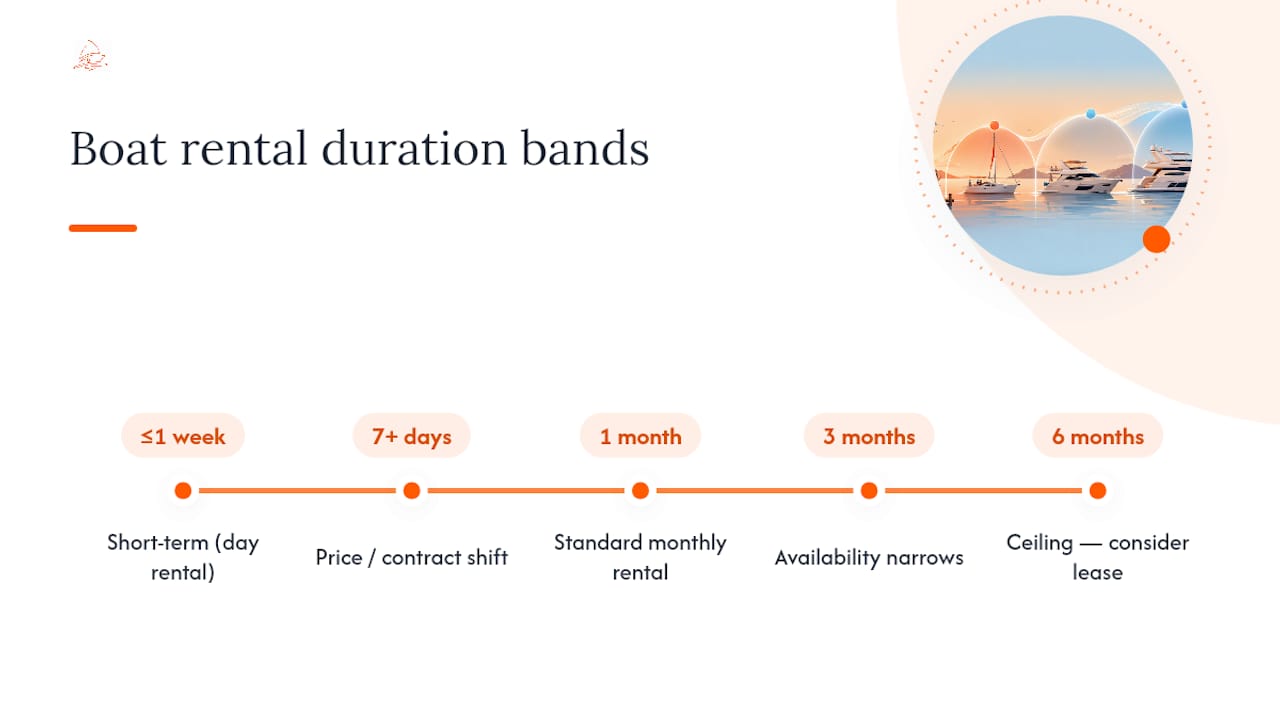
There's no single legal definition of "long term" in boat rentals, but the market has settled into practical boundaries. Anything under a week is generally treated as a short-term or day rental, priced and contracted like a vacation activity. Once you cross into seven-plus consecutive days, most operators shift you into a different pricing tier and contract structure entirely, with discounted rates and more detailed maintenance provisions.
The upper boundary is fuzzier. Monthly rentals are common and well-supported across most markets, and multi-day to month-long booking slots are a standard, supported product rather than a special-request arrangement. Beyond three months, availability narrows, since fewer operators want to commit a vessel that long without a fractional or lease-style agreement.
Six months tends to be the practical ceiling for a straight rental before it makes more sense to shift into a lease or membership structure with different terms entirely. At that duration, the cost trade-off between renting and owning starts to favor a lease arrangement, since it avoids the capital outlay of a purchase while still delivering the predictable monthly cost renters want. If you're weighing a six-month-plus commitment, ask operators directly whether they offer a lease conversion rather than assuming a standard rental contract will stretch that far.
The gap between how long term rentals are marketed and how they actually work
Most marketing around extended boat rentals leans hard on the freedom angle, weeks on the water, no ownership hassle, cancel anytime. What it glosses over is that the real value of a long-term rental shows up in the fee structure, not the marketing copy. A renter comparing two identical boats at similar daily rates can end up paying wildly different totals depending on service fees, deposit terms, and how transparently maintenance windows get scheduled.
The conventional advice to "just compare daily rates" misses the point entirely. That's the math renters should run first, not last.
What actually matters, based on how these rentals play out in practice, is locking down the fee structure and inclusion list before comparing headline prices at all. A slightly higher daily rate with transparent fees and included maintenance usually beats a lower rate buried under add-on charges. Prioritize the contract terms over the sticker price, every time.
— SAILORIX
Ready to book your extended rental with Sailorix?
Sailorix cuts the cost that eats into most long-term rentals: the service fee. Where standard platforms charge 10% to 20% per booking, Sailorix members pay roughly 1%, after a €100 annual membership, which on a month-long charter can mean saving close to what a weekend rental would cost elsewhere.

Getting started takes three steps. Sign up for membership, then search real-time availability for your destination and dates, filtering for extended-stay listings with dock delivery included. From there, you can request an optional skipper, add insurance coverage, and lock in a delivery window directly through the platform. Every listing shows transparent pricing upfront, so there's no guessing what a month or a season actually costs before you commit. If you're weighing your options, comparing rental prices and fee structures before booking is worth the ten minutes it takes. Start your search today at Sailorix and see what a month on the water actually costs when the fees are honest.
Sources
- FareHarbor booking embed for Overnight Boat Rentals
- Sail Puget Sound boat lease / fractional membership program
- Is it cheaper to rent or own a boat? — RecNation Storage blog