

Expect to pay roughly $100–$400 per hour, $400–$1,200 for a full day, and considerably less per day if you book for the week. Boat type is the biggest swing factor, followed by whether you hire a captain and how the operator handles fuel. A pontoon for eight people and a center console for two sit at opposite ends of that range, and SAILORIX breaks down exactly why below.
TL;DR:
- Boat type and size significantly affect rental prices, with larger and more feature-rich vessels costing substantially more than basic pontoons.
- Longer durations, such as full-day or weekly rentals, offer lower per-hour costs compared to hourly bookings, especially when multiple days are involved.
- Extra fees like fuel, deposits, cleaning, and insurance are rarely included in the headline rate and can add 10 to 20 percent to the final cost.
- Booking during off-peak times, on weekdays, and reserving early can help reduce overall expenses and avoid last-minute surcharges.
- Asking detailed questions about fuel policies, deposit refunds, and additional charges before booking prevents unexpected costs at checkout.
Table of Contents
- What Affects Boat Rental Prices Before You Book
- Typical Rates by Duration: Hourly, Half-Day, Full-Day, and Weekly
- Price Ranges by Boat Type and Who Each One Fits
- Additional Fees and Hidden Costs Renters Often Miss
- How to Estimate Your Total Cost and Save Money
- Why This Boat Rental Pricing Guide Is Worth Trusting
- Why Most Price Guides Undersell the Real Variable
- Book Smarter With Lower Fees on Every Rental
- Sources
What Affects Boat Rental Prices Before You Book
Every rate quote hides a set of variables, and the operator rarely explains them until you're already reading the fine print. Knowing them upfront means fewer surprises at pickup.
- Boat type and size: A 20-foot pontoon and a 40-foot yacht aren't in the same pricing universe. More capacity, more horsepower, and extras like water slides or wake towers all push the base rate up.
- Duration: Hourly rentals carry a premium per hour because the operator still has to clean, fuel, and prep the boat for a short trip. Full-day and weekly rentals spread that overhead across more hours, which is why the per-hour cost drops the longer you commit.
- Location and season: Peak summer weekends and holidays can push rates well above off-season pricing, sometimes more than double the mid-season rate at the same marina. Weekday bookings are almost always cheaper than Saturday afternoons.
- Fuel policy: Some operators hand you the boat with a full tank and expect it back full; others charge by the gallon used. Ask which one applies before you assume fuel is baked into the quote.
- Captain or skipper: Renting bareboat (no captain) usually requires a boating license or proof of experience, plus a larger deposit. Adding a captain raises the rate but removes the licensing hurdle entirely.
- Insurance, deposits, and cleaning fees: These rarely appear in the headline price, but they show up on the final invoice almost every time.
Typical Rates by Duration: Hourly, Half-Day, Full-Day, and Weekly
Rate structures reward longer bookings, and the math behind that is worth understanding before you pick a duration.
- Hourly rentals start around $100–$200 for smaller boats and climb to $400 or more for larger craft or anything requiring a captain, based on marina rate listings across multiple boat classes. Most operators set a two- or three-hour minimum, so a "quick hour on the water" rarely prices out the way you'd expect.
- Half-day rentals (typically 3–4 hours) run $500–$800 for a standard pontoon, with larger party barges landing between $700 and $1,200 for the same window. The jump from hourly to half-day pricing reflects lower per-hour overhead, not a discount exactly, just better math.
- Full-day rentals (6–8 hours) commonly fall between several hundred dollars and over $1,000, depending on boat class. Some lake marinas publish clean tables showing full-day pontoon and sport-boat rates in the $420–$720 range, excluding fuel and deposit.
- Weekly charters become the better deal once you're booking six or more days, since operators typically shave the effective daily rate to reward the longer commitment. This is where sailboats and yachts shift from a "per-day" mindset to a "per-week" one, and where the savings versus daily rates get real.
Adding a captain typically adds a flat daily fee or a percentage on top of the base rate, and fuel can add another 10 to 20 percent on longer or faster outings, depending on the boat's engine size.
Price Ranges by Boat Type and Who Each One Fits
Not every boat serves the same trip, and matching your group size and goals to the right boat type is where most people either overspend or underspend.
- Pontoon and party barges: The most budget-friendly option for groups. Half-day rates of $500–$800, and up to $1,200 for larger barges, split easily across six to ten people, making the per-person cost drop fast as your group grows.
- Deck boats and powerboats: Priced a step above pontoons, these suit families who want more speed for water sports without committing to a full performance boat. Expect daily rates in the mid-hundreds range and up.
- Center-console and fishing boats: Lower base rates than pontoons in some markets, but budget separately for fuel and rental gear like rods, coolers, and bait. These boats tend to run efficiently, which helps offset the added gear cost.
- Ski and wake boats: Command some of the highest hourly rates because of the specialized towing equipment and higher fuel burn. Renters chasing wakeboarding or tubing pay for that capability directly.
- Sailboats: Bareboat charters (no crew) cost less than skippered ones, but require sailing credentials. Day rates and weekly rates differ significantly by season, and availability tightens fast during peak sailing months.
- Catamarans and yachts: Priced at charter level, meaning crew, provisioning, and port fees often sit on top of the base rate. This is the category where weekly pricing genuinely changes the economics, since crewed multi-day charters are built around week-long bookings rather than single days.
Additional Fees and Hidden Costs Renters Often Miss
The quoted rate is rarely the final number. Operators structure their pricing this way deliberately, since a clean headline rate books faster than one weighed down with line items.
- Fuel: Many rate pages explicitly exclude fuel and taxes from the base price. A small center-console burns noticeably less fuel per hour than a larger V-hull or performance boat, so estimate fuel cost by boat class before you finalize a budget.
- Security deposits: Bareboat rentals without a captain often require a deposit between $500 and $1,000, refunded after a damage-free return.
- Cleaning, docking, and launch fees: Some marinas fold these into the rate; others itemize them separately. Always ask which applies.
- Insurance and waivers: Optional damage waivers reduce your deposit liability but add a flat fee. Understanding what charter insurance actually covers before you decline it saves headaches later.
- Cancellation penalties: Late cancellations or no-shows frequently forfeit part or all of the deposit, so confirm the refund window before you book.
Pro Tip: Call the operator and ask two questions before booking: "Is fuel included?" and "What's refundable if I cancel?" Those two answers alone eliminate most of the invoice surprises renters report.
How to Estimate Your Total Cost and Save Money
A reliable estimate takes three steps: add the base rental rate, estimated fuel cost, and mandatory fees (deposit, insurance, taxes) together, then divide by your group size if you're splitting the cost.
- Base rate: Pick your boat type and duration from the ranges above.
- Estimated fuel: Budget 10 to 20 percent of the base rate for a half-day trip on a mid-size boat, more for performance boats.
- Mandatory fees: Add the security deposit (even though it's refundable, budget for it upfront), insurance if you're buying it, and any local taxes.
For example, an $650 half-day pontoon rental split among eight people, plus roughly $80 in fuel and a $500 refundable deposit, works out to about $91 per person in actual spend, once the deposit comes back. That's the kind of per-person savings group-splitting delivers on larger boats.
To cut costs further: book weekdays instead of weekends, reserve early rather than last-minute (though some operators offer short-notice discounts of 10 to 25 percent), split larger boats across bigger groups, and ask about package deals bundling fuel or gear into one price.
| Question to ask before booking | Why it matters |
|---|---|
| Is fuel included or billed separately? | Prevents a surprise charge on return |
| What's the deposit and refund policy? | Protects your budget if plans change |
| Is a captain required or optional? | Changes both cost and licensing needs |
| Are cleaning or docking fees separate? | Avoids underestimating the total |
| What's the cancellation window? | Determines how much flexibility you have |
Why This Boat Rental Pricing Guide Is Worth Trusting
SAILORIX built this guide from real marina rate pages and charter pricing patterns across multiple boat categories, not guesswork. That matters because SAILORIX's own membership model charges roughly 1% in service fees for members, well under the 10 to 20 percent many booking platforms add on top of the boat's base rate.
SAILORIX publishes detailed breakdowns on charter fees, hidden costs, and booking standards so renters can compare quotes with real numbers instead of marketing language. For live availability and current rates by destination, check current listings.
Why Most Price Guides Undersell the Real Variable
The conventional advice on boat rental pricing focuses almost entirely on boat type, as if a pontoon versus a yacht explains the whole invoice. It doesn't. The bigger swing factor is usually the fee structure sitting on top of the base rate, and most renters never see it clearly until checkout.
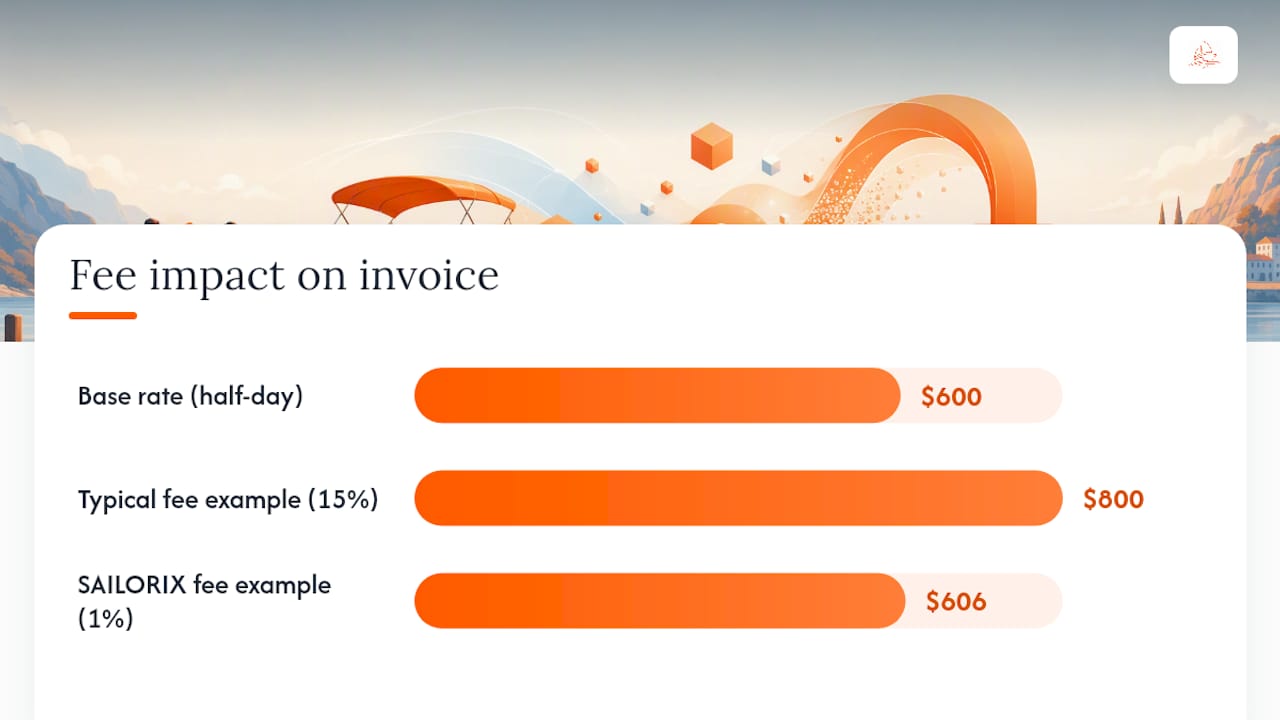
A $600 half-day rental with a 15% service fee and a poorly explained fuel policy can quietly become an $800 outing. A $600 rental with a 1% fee and a clear fuel-included policy stays close to $600. Same boat, same hours on the water, wildly different final cost.
If there's one thing worth prioritizing over boat type or even season, it's asking exactly how the fee is calculated and what's included before comparing any two quotes side by side. Renters who skip that step are comparing numbers that were never actually comparable.
— SAILORIX
Book Smarter With Lower Fees on Every Rental
Most booking platforms build their profit into a service fee of 10 to 20 percent, which means the "deal" you see on the search results page often isn't the number you pay at checkout. SAILORIX flips that structure: a $100 annual membership unlocks roughly 1% service fees on every booking, so the price you compare is much closer to the price you actually pay.
That difference matters most on exactly the bookings this guide covers, weekly charters, yacht rentals, and multi-day trips where a 15% fee gap can mean hundreds of dollars. SAILORIX shows real-time availability by destination and boat type, and lets you add a captain, insurance, or equipment directly during booking instead of negotiating extras after the fact. If you're planning a trip and want to see what a specific boat actually costs with fees included, check available boats and rates for your dates now.
Sources
- How Much to Rent a Boat for the Ultimate Day on Lake Travis?
- Boat Rental Rates - Blue Water Power Boat Rentals
- Day Boat Rentals at Harbor Landing
- Austin Boat Rental Pricing - See Our Prices & Boats