

The mast is the backbone of any sailing experience, yet most sailors treat it as an afterthought until something goes wrong. Every mast yacht decision you make, from material to mounting style to rig configuration, directly shapes how your boat handles, how much maintenance you face, and how much pleasure you get on the water. This guide cuts through the confusion around yacht mast types, mounting options, and rig choices so you can make decisions grounded in real performance trade-offs rather than guesswork.
Table of Contents
- Key takeaways
- Mast yacht basics: what your mast actually does
- Yacht mast types: materials and what they cost you
- Deck-stepped vs keel-stepped masts
- Masthead rig vs fractional rig
- Yacht mast maintenance: how to keep it standing
- Choosing the right mast for your sailing goals
- My take on mast selection after years on the water
- Ready to put your knowledge to use on the water?
- FAQ
Key takeaways
| Point | Details |
|---|---|
| Mast material changes everything | Carbon fiber saves weight and sharpens performance; aluminum balances cost and durability for most leisure sailors. |
| Mounting style affects your interior | Deck-stepped masts keep cabins dry; keel-stepped masts offer more structural rigidity for offshore conditions. |
| Rig type drives sail handling | Masthead rigs suit upwind cruising; fractional rigs give racers and performance sailors more control over sail shape. |
| Maintenance prevents costly failures | Regular alignment checks and moisture management are the two biggest factors in mast longevity. |
| Rig and mast must match | Upgrading furling systems or reefing gear requires checking compatibility with your existing mast profile first. |
Mast yacht basics: what your mast actually does
Most sailors understand, at a surface level, that the mast holds the sails up. What gets overlooked is how much more it does. A mast supports sails, navigation lights), radar, wind instruments, and communications equipment. It also acts as the aerodynamic leading edge of the entire sail plan, meaning its shape and alignment affect airflow across the mainsail and jib in ways that directly determine boat speed.
Think of the mast as a tunable structure. The bend you dial into it through standing rigging adjustments changes the draft and power of your mainsail. A mast with too much side bend kills upwind performance. One with too little pre-bend creates a full, powered-up sail that overpowers the boat in a breeze. This level of interaction between mast geometry and sail shape is why your mast choice deserves serious thought before you ever step aboard.
Advanced mast profiles, like the teardrop and rotating wing mast shapes), go even further by influencing how cleanly air flows onto the sail, a consideration worth knowing even if you are sailing for leisure rather than racing.
Yacht mast types: materials and what they cost you
Wood: beautiful but demanding
Wooden masts defined sailing for centuries. Sitka spruce was the gold standard, combining low weight with reasonable stiffness. Today, wooden masts are rare on production boats, but some classic yacht owners still restore or install them for authenticity. The trade-off is significant: wood requires annual varnishing or painting, is prone to checking and rot if moisture gets in, and demands skilled craftspeople to repair properly. For a leisure sailor who wants low maintenance, wood is a passion project, not a practical choice.
Aluminum: the everyday standard
Modern aluminum masts are lighter and slimmer) than their wooden predecessors, which improves performance and virtually eliminates rot. Aluminum masts handle most offshore and coastal conditions well, cost a fraction of carbon alternatives, and are straightforward to repair at most boatyards. Anodized and painted finishes hold up for years with basic care. For the majority of leisure and adventure sailors, aluminum remains the right call.
- Pros: Affordable, widely available, simple to repair, excellent corrosion resistance with proper treatment
- Cons: Heavier than carbon fiber, requires checking for corrosion at spreader bases and under fittings
- Best for: Cruising sailors, charter boats, mid-range coastal and offshore yachts
Manufacturers like Seldén Mast AB produce custom aluminum sections tuned for specific boat designs, so off-the-shelf does not mean one-size-fits-all in this category.
Carbon fiber: performance at a price
Carbon fiber masts offer the best strength-to-weight ratio available, and carbon masts provide precise rig tuning advantages that matter both racing and in serious performance cruising. A lighter mast lowers the center of gravity of the entire rig, which reduces heeling and allows the boat to carry sail longer in building breeze. The downside is cost and repairability. Carbon damage from a rigging failure or an accidental gybe can require specialized repair that most boatyards cannot handle.
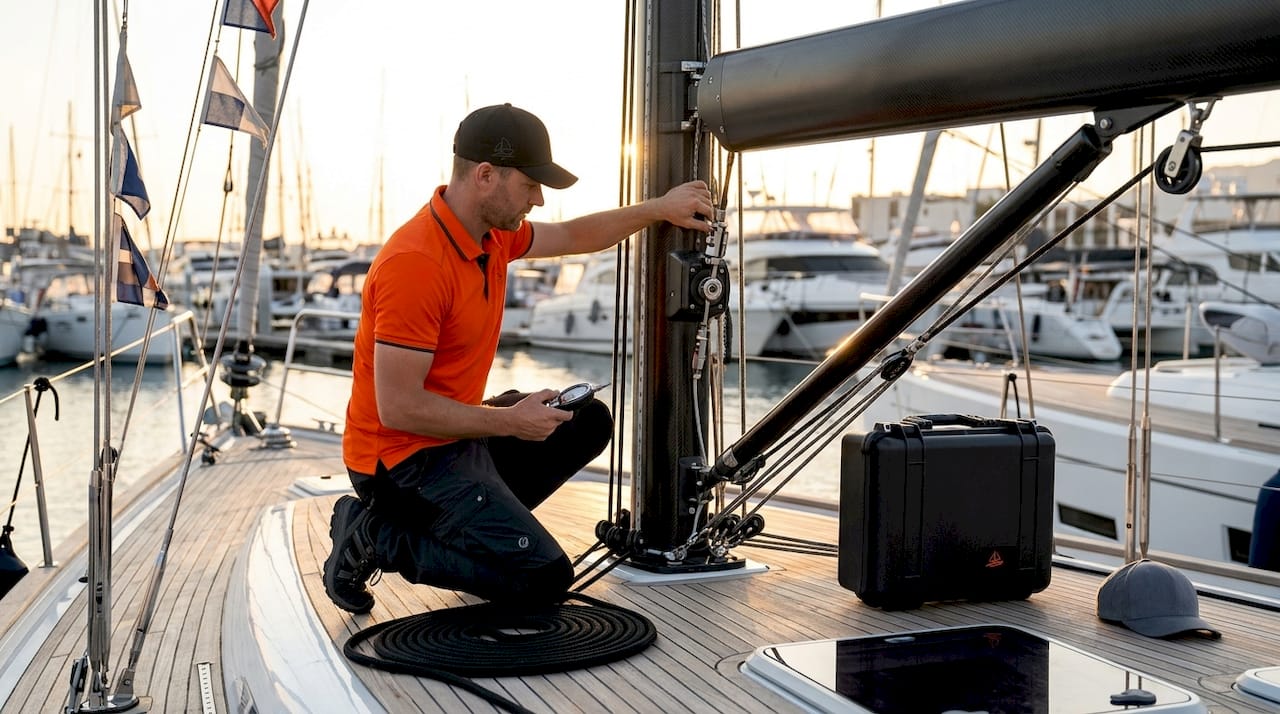
Pro Tip: If you are considering a carbon mast for a leisure cruiser, factor in the total cost of ownership, not just the purchase price. Repair costs after a rig incident can exceed the original cost difference between carbon and aluminum.
Steel: the underrated option
Steel masts are heavy but offer a smaller diameter relative to their strength in specific applications. Steel masts can reduce airflow turbulence) due to their slimmer profile, which is a niche benefit for certain designs. They suit traditional and working boat designs where weight aloft is less critical. Steel is rarely seen on modern leisure yachts, but it remains an option for sailors rebuilding classic vessels.
For deeper guidance on matching material choices to your specific needs, the boat mast maintenance guide on the Sailorix blog covers material trade-offs in detail.
Deck-stepped vs keel-stepped masts
The way your mast connects to the boat is a bigger decision than most buyers realize. Both styles are common, and each carries distinct advantages depending on where and how you sail.
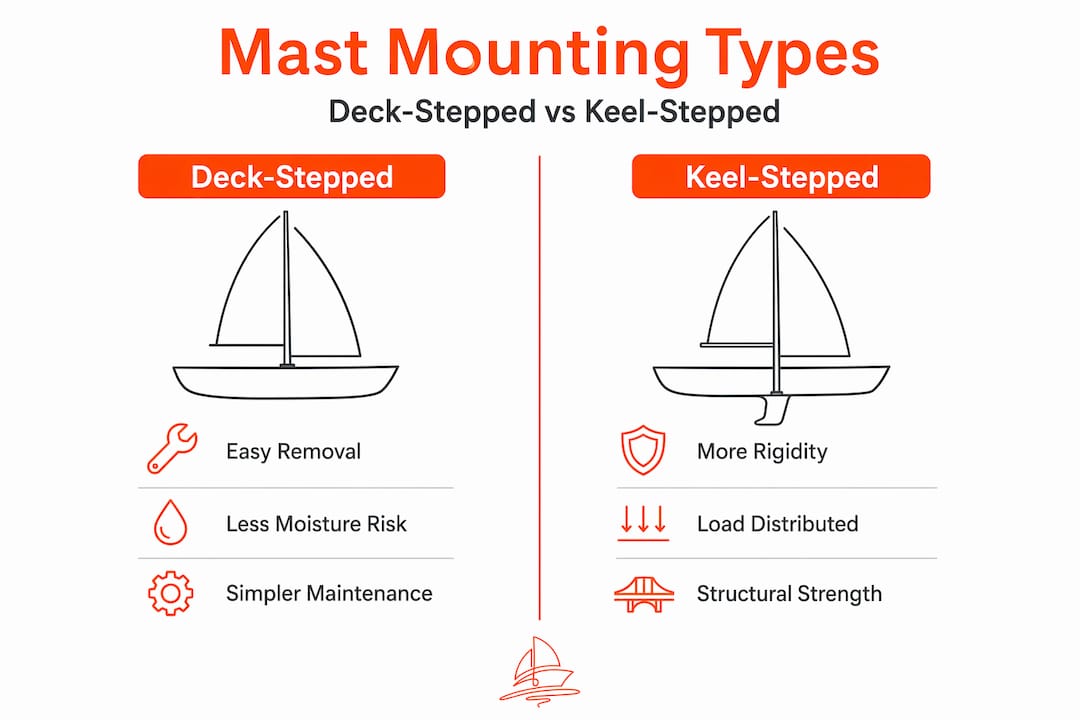
| Feature | Deck-stepped | Keel-stepped |
|---|---|---|
| Load transfer | Compression through deck fitting | Propped cantilever to keel structure |
| Interior impact | No penetration, cleaner cabin | Passes through cabin sole or saloon |
| Moisture management | Dry below deck | Requires mast boot maintenance |
| Structural rigidity | Depends on shroud tension | Inherently more rigid |
| Maintenance access | Easier to remove and step | Requires crane for most unstepping |
| Best use case | Coastal cruising, charter fleets | Offshore, bluewater, performance sailing |
Deck-stepped masts avoid moisture ingress and simplify the removal process, which matters when it comes time for annual inspections or repair. They are easier to handle at a boatyard and keep the interior cleaner. The trade-off is that they depend more heavily on rigging tension for lateral stability.
Keel-stepped masts, by contrast, act as a propped cantilever structure, giving inherently more rigidity. This makes mast bend easier to control and provides a safety margin if rigging fails. However, water ingress at the mast boot is a chronic maintenance issue. Letting moisture sit unchecked at the base leads to structural rot in wooden boats and corrosion in aluminum ones.
Pro Tip: If you own a keel-stepped mast, inspect the mast boot and internal drainage every season without exception. A small weep hole at the mast base inside the bilge prevents major moisture damage with zero cost.
The choice between these two systems should come down to your operational priorities, not what looks better in a brochure. Ease and dryness favor deck-stepped; rigidity and offshore performance favor keel-stepped.
Masthead rig vs fractional rig
Rig configuration is where the mast yacht conversation gets technical fast. The two dominant options you will encounter on modern monohull yachts are the masthead rig and the fractional rig. Each has a fundamentally different sail plan and performance character.
Masthead rigs
In a masthead setup, the forestay and backstay attach at the top of the mast, which allows a larger genoa or jib to be flown. This generates excellent upwind drive and suits coastal cruisers who want maximum sail area without fussing over constant adjustments. The price is a stronger hull requirement and more complexity in sail handling.
- Larger headsail area boosts light-air performance significantly
- Backstay and forestay loads are higher, demanding more from chainplates and hull structure
- Masthead rigs require a large jib, which makes reefing more involved. Roller furling is the standard solution on cruising boats.
- Best suited for: Comfortable ocean cruisers, charter yachts, sailors who prioritize stability and ease over outright speed
Fractional rigs
A fractional rig attaches the forestay somewhere below the masthead, typically between 7/8 and 15/16 of the mast height. This allows mast bend for sail shape control through backstay tension adjustments. Flattening the main in a gust is fast and intuitive. Fractional rigs are the dominant choice in racing and performance cruising because they let the sailor actively manage power.
- Mast bend controls mainsail draft in real time
- Smaller headsail reduces foredeck work and simplifies tacking
- Requires more active tuning attention, especially in variable breeze
- Best suited for: Racing sailors, performance cruisers, sailors willing to invest time in learning rig tuning
Understanding how Adriatic winds and other regional conditions interact with rig choice helps you apply this knowledge to actual sailing destinations.
Yacht mast maintenance: how to keep it standing
A well-maintained rig lasts 20 years or more. A neglected one fails at the worst possible moment. Here is the maintenance sequence that actually matters for leisure sailors.
-
Inspect aloft at least once per season. Climb the mast or hire a rigger with a bosun's chair. Look for cracks at spreader roots, corrosion under swaged terminals, cracks in the mast extrusion around cleats, and chafe on halyards and sheave pins. Most rig failures start with small visible signs that get missed.
-
Check rig tension after the first sail of the season. Rigging stretches as it settles. A well-tuned sloop rig can point within 30 degrees of true wind; loose, unbalanced shrouds cost you pointing angle and accelerate wear on the mast itself.
-
Manage mast alignment. Maintaining straight, properly aligned masts) is the single biggest factor in consistent sail shape. Sight up the sail track from the gooseneck. Any visible curve from side to side means your shroud tensions need adjustment.
-
Lubricate moving parts. Sheave pins, gooseneck fittings, and furling bearings all benefit from annual lubrication with a marine-grade product. Saltwater and UV exposure destroy unprotected metal in two to three seasons.
-
Check compatibility before upgrading. Upgrading rigging or reefing systems requires checking that new hardware is compatible with your mast profile and mounting style, particularly when fitting in-mast furling or full-length battens.
Pro Tip: When evaluating standing rigging age, the general industry guideline is replacement every 10 years for cruising boats. But wire rigging remains favored over synthetic Dyneema for most cruisers due to its proven durability and easier inspection at boatyards worldwide.
Choosing the right mast for your sailing goals
Pulling all of this together into an actual buying or upgrading decision requires honest answers to a few key questions. Here is a practical checklist to work through before committing.
- Where will you sail most? Coastal cruising tolerates deck-stepped aluminum. Offshore passagemaking benefits from keel-stepped construction and robust aluminum or carbon sections.
- How much crew do you have? A larger jib on a masthead rig is physically demanding to tack. Short-handed sailors often find fractional rigs with a small self-tacking jib far more manageable.
- What is your maintenance commitment? Carbon saves weight but demands specialist care. Aluminum is forgiving and serviceable almost anywhere in the world.
- Do you plan to race, cruise, or both? A sloop with a Bermuda rig dominates small to medium yacht performance upwind. Racing sailors gain more from a fractional rig; relaxed cruisers do better with a masthead setup.
- What does resale look like? Boats with well-documented, recently serviced rigs command higher prices and sell faster. A yacht mast replacement guide or service record adds real monetary value when selling.
- Are upgrades on your horizon? Matching mast design with sail furling systems is non-negotiable before purchasing an in-mast furling unit or adding full-length battens.
For further insight on how rig choice and yacht customization can enhance both performance and long-term value, it is worth exploring what specialist marine outfitters recommend based on your hull type and intended use.
My take on mast selection after years on the water
I've watched sailors spend enormous sums on new sails while their rig sat neglected and misaligned. The sails did nothing. What I've learned after years working with yacht owners across different sailing styles is that the mast is where performance actually lives.
My personal preference for leisure cruising is aluminum keel-stepped, full stop. Yes, the mast boot needs attention every season. But the structural confidence that comes from a keel-stepped mast in a blow offshore is worth that minor annual task. I've seen deck-stepped setups work beautifully in benign coastal conditions, and I recommend them freely for marina-based sailors who prioritize ease. But if your ambitions extend to overnight passages or open water, the keel-stepped system earns its keep.
On materials, I think the carbon fiber trend is oversold for leisure sailors. Unless you are pushing boat speed as a genuine priority and have access to a specialist rigger, the cost and repairability gap between carbon and aluminum is hard to justify. I've seen plenty of aluminum rigs on 30-year-old boats still standing perfectly because the owner was diligent. I've also seen carbon masts sidelined for months waiting on repair parts.
The single biggest mistake I observe is sailors ignoring rig tuning once they leave the boatyard. Tuning is not a one-time event. It is a seasonal conversation between you, your sails, and the conditions you sail in. Learn it. It changes your sailing experience more than almost any other upgrade you can make.
— Sailorix
Ready to put your knowledge to use on the water?
Knowing how to choose, tune, and maintain your mast yacht setup is step one. Getting out on the water is where it all comes together.

Sailorix gives you access to a global fleet of sailing yachts at prices that make sense. For €100 a year, you unlock bookings with service fees around 1%, compared to the 10 to 20 percent charged by most booking platforms. Whether you want to test a fractional-rigged performance cruiser or spend a week on a classic masthead sloop in the Mediterranean, Sailorix puts the right boat within reach. Browse available yachts and find your next sailing adventure today.
FAQ
What is a keel-stepped mast?
A keel-stepped mast passes through the deck and rests on the keel structure, acting as a propped cantilever that provides greater rigidity and offshore stability compared to a deck-stepped system.
What are the best materials for yacht masts?
Aluminum is the best all-around choice for most leisure sailors, balancing cost, durability, and ease of repair. Carbon fiber offers better performance but at significantly higher cost and repair complexity.
How often should you replace standing rigging?
The standard guideline for cruising boats is standing rigging replacement every 10 years, though age, usage intensity, and visible wear signs can all shorten that interval.
What is the difference between a masthead and a fractional rig?
A masthead rig attaches the forestay at the top of the mast for maximum sail area, while a fractional rig attaches it below the top to allow mast bend and active sail shape control.
How do you know if your mast needs adjustment?
Sight up the sail track from the base of the mast. If the track curves to one side, your shroud tensions are uneven and the mast needs re-tuning to restore straight alignment and proper sail shape.