
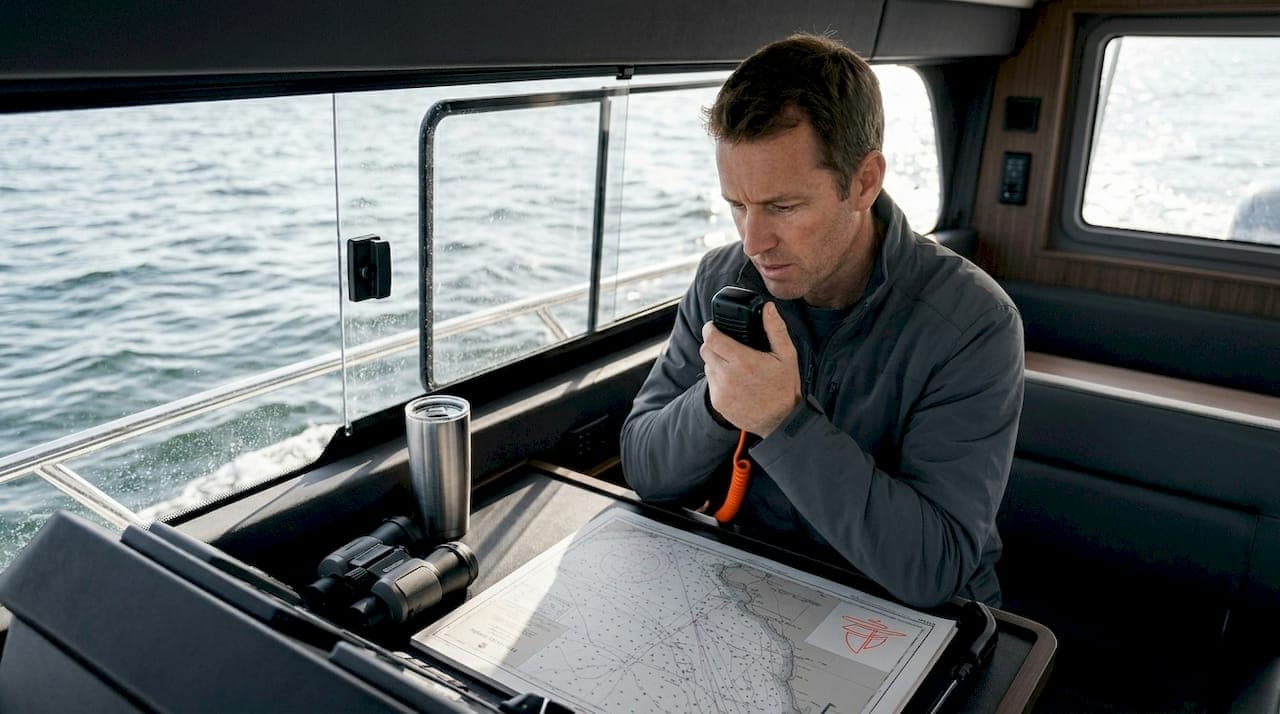
Most mariners know to shout "Mayday" when their life is on the line. Far fewer know what to say when the situation is serious but not yet fatal. That gap in knowledge is where accidents escalate. The pan pan call, officially the international radiotelephony urgency signal, exists precisely for that middle ground: urgent help is needed, but life and vessel are not in immediate danger. Understanding when and how to use it correctly is one of the most practical safety skills you can carry on the water.
Table of Contents
- Key takeaways
- What a pan pan call actually means
- When to use pan pan vs. Mayday
- How to correctly issue a pan pan call
- Common mistakes that cost time
- Real situations where pan pan applies
- My perspective on how mariners actually use this
- Plan your next voyage with Sailorix
- FAQ
Key takeaways
| Point | Details |
|---|---|
| Pan pan vs. Mayday | Pan pan signals an urgent situation; Mayday signals immediate threat to life or vessel. |
| Repeat three times | Always transmit "PAN PAN" three times to reduce miscommunication under stress. |
| Start on Channel 16 | Broadcast your initial pan pan call on VHF Channel 16, the international distress channel. |
| Upgrade when conditions worsen | Treat pan pan as a dynamic status and escalate to Mayday without hesitation if danger increases. |
| Position accuracy matters | Give coordinates or clear landmark references every time to prevent delays in response. |
What a pan pan call actually means
The phrase comes from the French word "panne," meaning breakdown or failure. When the International Telecommunication Union (ITU) and the International Maritime Organization (IMO) standardized maritime radio procedures, they adopted "pan pan" as the formal urgency prefix. It sits one level below Mayday in the hierarchy of marine distress signals and one level above the safety signal "Sécurité."
Here is the key distinction you need to internalize. A pan pan call tells all stations: I have a serious problem and I need help, but no one is about to die right now. A Mayday tells stations: Lives are in immediate danger and full emergency response is required.
The urgency signal PAN-PAN alerts rescuers and nearby vessels to a developing situation without triggering a full-scale rescue deployment. That matters enormously. Coast guards and rescue services allocate resources based on declared urgency. Using the correct signal means you get the right level of response, faster.
"Pan pan calls alert nearby vessels and coast guard but do not immediately demand rescue, allowing responders to prepare appropriately." — Vanemar Boating Blog
The three-part structure of the signal is deliberate. Transmitting "PAN PAN" three times before your message is not a formality. The three-time repetition reduces miscommunication under stress by clearly signaling your urgency level to any station that catches only part of the transmission.
When to use pan pan vs. Mayday
This is where most boaters get confused, so let's draw the line clearly.
Pan pan is appropriate when:
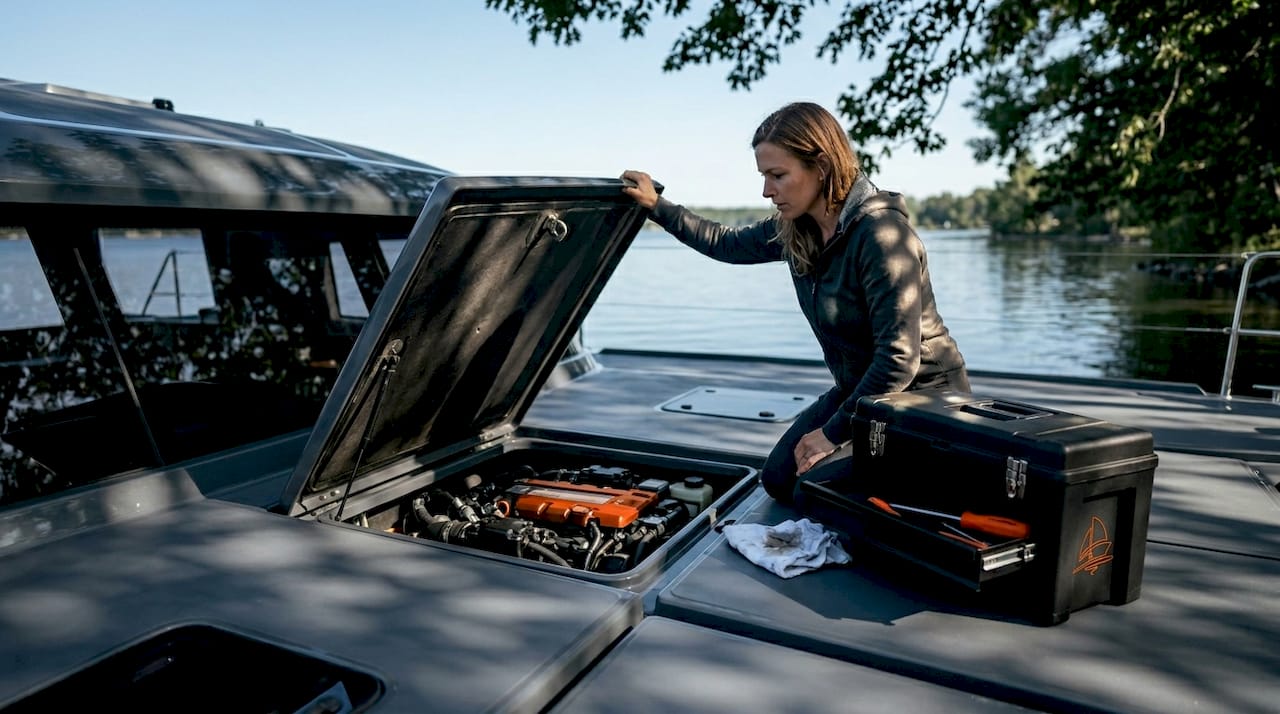
- Your engine has failed and you are drifting but not in immediate danger from weather or traffic.
- You have a steering problem that limits your ability to maneuver safely.
- A crew member has a non-life-threatening medical issue that requires advice or assistance.
- You are lost or uncertain of your position in conditions that are not immediately threatening.
- You have a significant equipment failure that compromises your ability to continue safely.
Mayday is required when:
- A person is in the water and at risk of drowning.
- Your vessel is sinking, on fire, or structurally compromised.
- A medical emergency is life-threatening right now.
- Any situation where death or total loss of the vessel is imminent.
The third signal worth knowing is "Sécurité" (pronounced "say-CURE-ee-tay"). You use it to broadcast safety information to other mariners, such as a navigational hazard or severe weather. It is not a call for help at all. It is a heads-up.
The correct use of pan pan in early-stage emergencies, like a mechanical breakdown before you start drifting into a shipping lane, gives authorities time to prepare a response before the situation worsens. That early warning window is genuinely valuable.
Pro Tip: If you transmit a pan pan call and conditions deteriorate, do not hesitate. Upgrade your call to Mayday immediately. Authorities treat the urgency level based on what you declare, so timely escalation is critical to getting the right response.
How to correctly issue a pan pan call
Knowing the signal exists means nothing if you fumble the transmission when it counts. Here is the exact procedure, broken down so you can rehearse it before you ever need it.
The verbal format
Your message must follow this structure, every time:
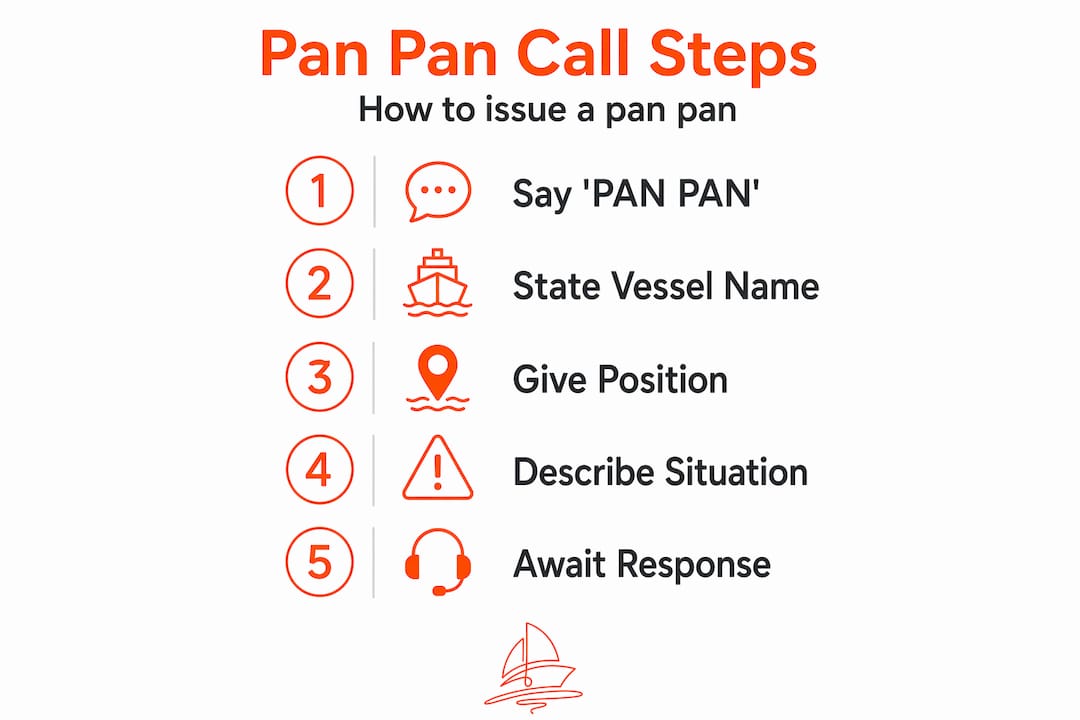
- Say "PAN PAN, PAN PAN, PAN PAN" clearly.
- Say "All stations" or the name of a specific coast guard station if you know it.
- State your vessel name and call sign.
- Give your position using GPS coordinates or a clear bearing and distance from a known landmark.
- Describe the nature of your problem in plain language.
- State the assistance you need.
- Give the number of people on board.
- End with your vessel name again.
Accurate position reporting using coordinates or bearings from landmarks is one of the most critical factors in effective assistance. Vague information like "somewhere off the coast" wastes resources and creates dangerous delays.
Transmission procedure
| Step | Action | Channel/Method |
|---|---|---|
| 1 | Broadcast initial pan pan voice call | VHF Channel 16 |
| 2 | Coast guard responds and may direct you to a working channel | As directed |
| 3 | If DSC-equipped, send DSC urgency alert first | VHF Channel 70 |
| 4 | Follow DSC alert with voice message | Channel 16 |
| 5 | Monitor Channel 16 and await instructions | VHF Channel 16 |
Channel 16 is the international distress channel where initial calls are made. Keep your message concise. Long, rambling transmissions create confusion and tie up a channel that other mariners may need.
If your VHF radio is DSC-equipped (part of the Global Maritime Distress and Safety System, or GMDSS), the DSC urgency procedure is a two-step process: first send a DSC alert on Channel 70, then transmit your voice message on Channel 16. Many operators overlook this two-step requirement and go straight to voice only, which bypasses the automated alert system.
Pro Tip: Program your vessel's MMSI number into your DSC radio before you leave the dock. Without it, your DSC alert carries no vessel identification, which slows down the response significantly.
Common mistakes that cost time
Knowing the correct protocol is only half the battle. Mariners regularly undermine their own safety through predictable errors.
The biggest one is hesitation. Many boaters wait too long before issuing a pan pan, treating it as an admission of failure rather than a standard safety tool. That hesitation is dangerous. By the time they transmit, the situation has often worsened and they are behind the response curve.
A second common mistake is using the wrong call entirely. Boaters sometimes transmit Mayday for situations that do not yet meet that threshold, which ties up emergency resources unnecessarily. Others go the opposite direction and say nothing when they should have issued a pan pan, hoping the situation resolves itself.
The third critical error involves position reporting. Saying "I'm about ten miles offshore" is not good enough. You need precise coordinates or a clear bearing from a fixed, named landmark. Every minute responders spend locating you is a minute they are not helping you.
"Vague position information wastes resources and hampers response." — HandWiki on Distress Signals
Finally, many mariners forget that a pan pan call is not permanent. You issued it for a reason. If your engine restarts, say so. If the medical situation stabilizes, inform the coast guard. If conditions deteriorate, upgrade to Mayday. The call is a live status report, not a one-and-done broadcast.
Real situations where pan pan applies
Walking through concrete scenarios builds the mental muscle memory that serves you under pressure.
-
Engine failure in calm conditions. Your motor cuts out two miles from the harbor. No immediate threat, but you cannot power home. A pan pan call alerts the coast guard and nearby vessels. You get a tow offer within 15 minutes instead of drifting for hours.
-
Crew member chest pain. A crew member reports chest discomfort. It may be nothing, or it may be serious. A pan pan call connects you with coast guard medical advice while they also prepare a response if things escalate.
-
Lost in fog with GPS failure. You lose GPS and your charts are unclear. You know roughly where you are but not precisely. A pan pan call establishes contact so that if visibility drops further, someone already knows your approximate position.
-
Man overboard, person recovered. Crew goes overboard but is pulled back aboard immediately, shaken but uninjured. A pan pan call notifies nearby vessels and the coast guard of a recent incident, and allows medical personnel to advise whether the person needs further evaluation.
-
Pan pan escalating to Mayday. That same engine failure scenario, but then a weather front moves in fast and seas build rapidly. Your situation becomes life-threatening. You immediately upgrade: transmit Mayday, Mayday, Mayday. Escalating urgently when conditions worsen is both protocol and common sense.
For a deeper breakdown of how these call types interact, the marine safety emergency guide from Sailorix covers the full spectrum of situations with specific language templates.
My perspective on how mariners actually use this
I've spent enough time around mariners, their stories, and their near-misses to recognize a pattern. The people who handle urgency situations well are not the ones who studied the protocol once and filed it away. They are the ones who treated that protocol like a reflex.
What I've learned is that the biggest obstacle is psychological, not procedural. Issuing a pan pan call feels like admitting you're in trouble, and many sailors tie their pride to self-sufficiency. So they wait. They troubleshoot. They tell themselves it will probably be fine. And sometimes it is. But the times it is not are the times they needed that early call.
My take is this: early communication is never the wrong move. A pan pan call does not commit you to a rescue. It does not mean you failed. It means you are using the system correctly. The coast guard would far rather hear from you at the pan pan stage than scramble a full response for a preventable Mayday two hours later.
What I've also found is that calm, clear position reporting is the single most controllable factor in how fast you get help. Practice reading your coordinates out loud. Know what landmarks are visible from your typical sailing area. That thirty seconds of preparation before a trip pays off in ways that no amount of gear can replace.
Treat the pan pan call as a live conversation, not a one-way broadcast. Monitor the channel. Respond when hailed. Update the situation as it changes. And if it gets worse, upgrade without hesitation. That is the mindset that keeps people safe.
— Sailorix
Plan your next voyage with Sailorix
Understanding your emergency radio procedures is part of being a prepared, confident mariner. Sailorix is built for exactly that kind of boater.

Whether you are renting a yacht for a coastal passage or booking a bareboat charter through our low-fee boat platform, Sailorix gives you access to resources, tools, and real-time booking at prices that make getting on the water genuinely accessible. For €100 per year, our members pay roughly 1% in service fees instead of the industry standard 10 to 20%. Spend more time learning to sail safely and less time paying middlemen. Explore our marine alphabet guide for more communication essentials that belong in every boater's toolkit.
FAQ
What is a pan pan call used for?
A pan pan call is the international urgency signal used when a vessel or person faces a serious situation that requires assistance but is not in immediate danger of death or total loss. It sits below Mayday in the distress hierarchy.
How many times do you say pan pan?
You always transmit "PAN PAN" three times before your message. The three-time repetition reduces miscommunication under stress and clearly signals your urgency level to any station that receives only part of the transmission.
What channel do you use for a pan pan call?
Broadcast your initial call on VHF Channel 16, the international calling and distress channel. If your radio has DSC capability, send a DSC alert on Channel 70 first, then follow with your voice message on Channel 16.
When should you upgrade a pan pan to Mayday?
Upgrade to Mayday immediately if your situation escalates to an immediate threat to life or vessel. Authorities respond based on the urgency level you declare, so timely escalation is critical.
What is the difference between pan pan and Mayday?
Pan pan signals a serious but non-life-threatening urgency; Mayday signals imminent danger to life or vessel and triggers full emergency rescue. Using the correct signal gets you the right level of response without misusing emergency resources.