
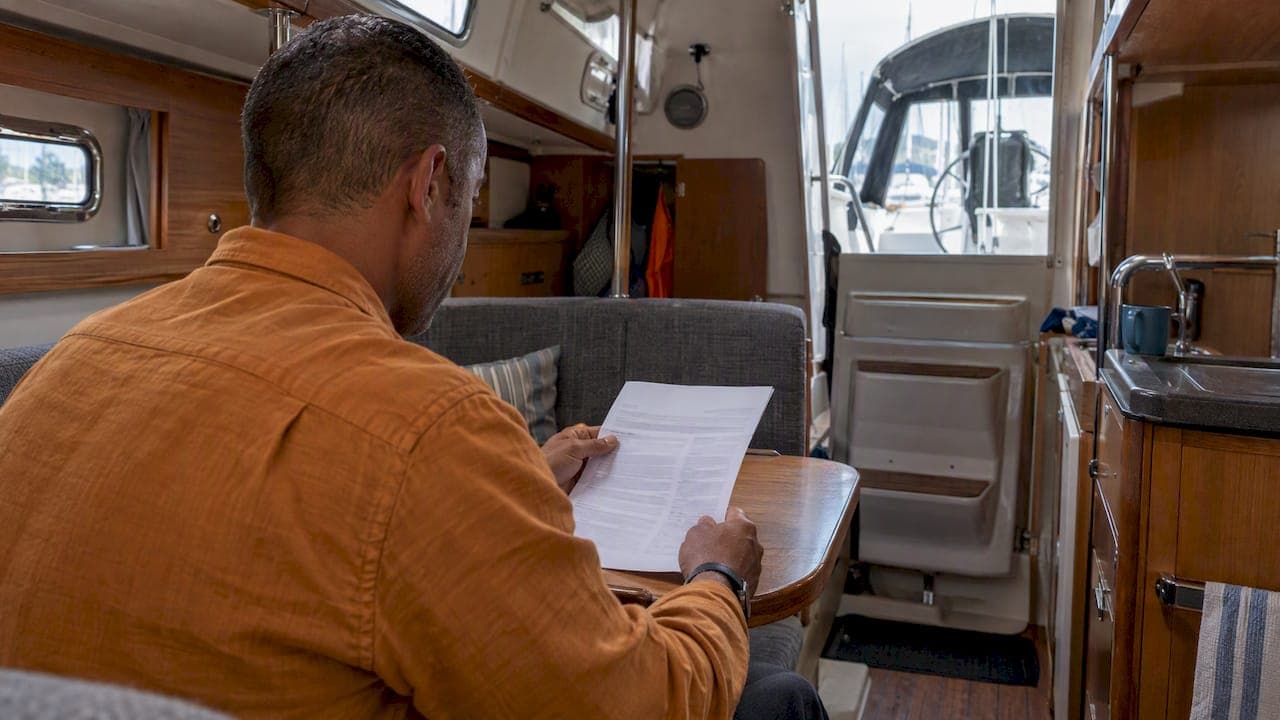
Skipper liability insurance pays when someone says you caused injury or damage while you were in command of a boat. That someone could be a guest, another boater, a marina or the boat's owner. It is not hull insurance, and it is not the same as accident cover for the skipper. Whether you need it depends on who you are on the trip: a professional skipper, a charterer who will take the helm, or a renter who hires a captain. This guide covers each case, what the policies typically include, what to check in the wording, and what US readers can expect to pay.
TL;DR
- Skipper liability responds to claims that you caused injury or damage. Hull insurance covers damage to the boat itself, and skipper accident insurance covers the skipper's own injuries.
- Charterers' liability policies can protect the charterer, immediate family and guests. Limits and exclusions vary, so the policy schedule matters more than the label.
- No single US law requires every renter to buy a policy. The charter contract, the owner or operator, and in some states the for-hire rules decide what you must carry.
- One US charterers' liability program quotes a premium of 2–5% of the total charter cost. Operator-level marine liability for charter boats runs far higher and is underwritten case by case.
- Disclose exactly how the boat will be used, including bareboat or crewed charter, because commercial use is commonly excluded unless endorsed.
Table of Contents
- What skipper liability insurance is
- Who actually needs it
- What charterers' liability usually covers
- Is it required? US law and charter contracts
- What to check in the wording
- Disclose the use, every time
- What it costs in the United States
- How to get the right cover
- Our perspective
- Booking with the numbers in front of you
- FAQ
- Sources
What skipper liability insurance is
It is personal liability cover for someone who skippers a boat that is not their own, whether a chartered yacht or another person's vessel. According to NauticAssure's guide, depending on the policy it can respond to personal injury, property damage and financial loss. The policy follows you, the person in command, rather than the boat.
Three products get confused, so here is the split.
| Policy | What it protects | Typical question it answers |
|---|---|---|
| Skipper liability | Your legal liability to others | A guest is hurt, or you damage a neighboring yacht. Who pays the claim? |
| Hull insurance | The boat itself | The yacht hits a rock. Who pays for repairs? |
| Skipper accident insurance | The skipper's own injuries | You break an arm at the helm. Who covers your disability or costs? |
NauticAssure points out that hull insurance covers damage to the charter yacht, while skipper liability addresses your insured personal liability and does not automatically work as hull cover. Some professional skipper policies do add cover for property damage to the boat you are skippering, but that is a feature of a specific policy, not a rule.
Accident cover is a different thing again. YACHT-POOL describes skipper accident insurance as protection that applies regardless of fault, including accident-related disability and temporary accident costs. A liability policy only responds when a covered claim alleges that you caused the harm.
Who actually needs it
Professional and freelance skippers
If you are paid to run other people's boats, liability cover is the policy that stands between a lawsuit and your savings. Some platforms and fleets make it a condition of work. One US program page dated 2026 sells mariner liability for captains with a $2,000,000 license-protection and defense limit, $10,000 for fines and penalties and $100,000 of civil legal liability. That is professional captain cover. It is not the same as a charterer's personal liability policy, so read what each one pays before you assume it replaces the other.
Charterers who will skipper themselves
On a bareboat charter, you are the captain in the eyes of the owner and the insurer. The owner's hull policy usually covers the yacht, subject to a deductible you may owe. Your personal exposure sits on top: injuries to guests, damage to other vessels, port fines, pollution. This is where charterers' liability comes in.

Renters who hire a skipper
With a professional skipper aboard, the risk shifts but does not vanish. The skipper's own policy, the operator's policy and the charter contract all matter. Ask who the insured parties are before you sail. Our guide to what a skipper costs and how to avoid layered fees covers the money side of that choice.
What charterers' liability usually covers
Charterers' liability is the product most renters mean when they search for boat rental or yacht charter liability insurance. Marsh McLennan Agency describes it as protection against liabilities assumed by the charterer, immediate family members and guests, along with third-party claims. Depending on the policy, it may also include hull damage, crew liability, fines and environmental damage, and limits can be customized.
The same guide gives concrete examples of claims this cover is built for:
- A guest on a jet ski injures a swimmer.
- A family member injures a member of the crew.
- A port fine is passed through to the charterer.
GIA, a US program, says its charterers' liability cover can be written for an individual, corporation or trust and is meant to help satisfy standard AYCA contract conditions. If your charter agreement asks for proof of cover, it is worth checking whether the policy is written to that contract.
At the operator end, protection and indemnity (P&I) is a broader product. Suncoast Insurance lists passenger and third-party bodily injury, third-party property damage, pollution, wreck removal, towage, salvage and collision liabilities as things it can respond to. That is for people running a charter business, not for a family on a week's vacation.
Is it required? US law and charter contracts
There is no single federal rule that obliges every boat renter to buy their own liability policy. The requirement usually comes from one of three places.
- The charter agreement. Many contracts require the charterer to carry liability cover or to pay for a policy the owner arranges. Read the insurance clause and the deposit clause together. Our explainers on key charter terms and on what a US charter agreement can hide walk through the wording.
- State rules for for-hire operators. California, for example, requires every for-hire vessel company to procure and maintain adequate protection against legally imposed liability for bodily injury, death and property damage resulting from its services. That obligation falls on the operator. Rules in other states differ.
- The marina or the lender. Marinas and marine lenders often ask for proof of liability cover on boats they host or finance. That mostly concerns owners, but it can touch a charter that docks at a private marina.
Maritime attorney David Weil, writing in The Log, says that insurance questions depend on the facts and the jurisdiction and should be reviewed with a marine broker and a maritime attorney. He also warns that a California attorney's discussion may not apply elsewhere. That is the right instinct: treat any general guide, this one included, as a map for your questions rather than legal advice for your trip.
What to check in the wording
Two policies with the same name can respond very differently. Before you buy or sign, check these points.
Charter form and command
Underwriters treat crewed charter and bareboat charter as different risks. Steamship Mutual's 2026 yacht liability terms illustrate it: they cover declared and accepted charterers other than bareboat charterers, and only when the charter is fully crewed and under the command of the assured's professionally qualified master. That is one insurer's wording, but it shows why you must match the policy to the way you will actually charter. A policy built for a crewed charter may not respond if you take the helm yourself.
Who counts as an insured person
Steamship Mutual's charterers' liability wording says covered persons can include the assured's beneficial owner, immediate family members, guests and specified crew liabilities, subject to policy terms, exclusions and claims arising during the policy period. Ask whether your guests are named or included by definition, and whether paid crew are covered.
Limits and sublimits
A headline limit is not the whole story. GIA's client brochure states a combined single limit from $5,000,000 to $50,000,000 for any one accident or occurrence. A UK-written yacht wording from Keane Specialty, by contrast, caps a cited liability section at US$1,000,000 per incident or series of incidents in the stated circumstances. The point is not which is better. Territorial wording and sublimits in the schedule control what you actually have, so read them.
Passenger and crew claims
The Log's guidance says to check whether the marine policy covers passenger claims and Jones Act claims for paid crew, and whether the insurer requires a licensed captain. If you hire crew or a skipper directly, this matters.
Fines, pollution and hull
Some policies include fines and environmental damage, some do not. Hull damage may be inside the policy, in a separate hull policy, or in the owner's cover with your deductible. Ask in writing which is which.
Disclose the use, every time
The most expensive mistake in this field is an undisclosed use. Weil notes that marine policies commonly exclude commercial operations unless specifically endorsed, and that charter operations should be disclosed honestly to the insurer and broker, including bareboat charters. If you own a boat and sometimes charter it out, your private policy may not respond to a charter claim. If you rent and skipper, tell the insurer that too.
How a boat looks and is marked is part of how it is used, and it is one more reason to be straightforward about its role. This guide to boat graphics and safety visibility is a good companion for owners who are deciding how a boat should present itself on the water.
What it costs in the United States
There is no one price, and anyone quoting a flat figure for all cases is guessing. Here is what the published US figures show.
| Cover | Published figure | What it is |
|---|---|---|
| Charterers' liability program | 2–5% of total charter cost, per GIA's brochure | Per-charter cover for the person renting |
| Mariner liability for captains | $490 full-pay premium displayed on a 2026 program page | Professional captain and license protection |
| P&I for charter boats | $3,000–$25,000 a year, per Suncoast | Operator cover for a charter business |
A worked example using the percentage: on a week's charter costing $10,000, 2–5% would be $200 to $500. That is arithmetic on a published range, not a quote. Suncoast says pricing is driven by operation, vessel size, crew, navigation territory, passenger capacity and loss history, so treat any estimate as a starting point and ask a broker for a real quote.
How to get the right cover
- Read the charter agreement first. Find the insurance clause, the deductible and any minimum liability limit the owner requires.
- Write down the facts. Boat type and length, cruising area, number of guests, whether you or a hired skipper will be in command, and how many days.
- Ask the owner or operator what is already covered. Get the answer in writing, including who the insured parties are.
- Compare with a marine broker. Give each insurer the same facts so the quotes can be compared on limits, exclusions and deductibles.
- Match the product to the role. Charterers need charterers' liability. Professional skippers need mariner or skipper liability. Owners who charter need an endorsement or an operator policy.
- Keep the paperwork aboard. Carry the certificate and the policy schedule, and send a copy to the charter company.
Our longer piece on what charterers actually need to buy goes deeper on the charterer side, and the guide on charter guest rights helps if you are a guest rather than the person signing.
Our perspective

Most people who ask us about liability cover are not worried about a rare disaster. They are worried about a paragraph in a contract they do not fully understand. In our experience the problems start earlier than the accident: a renter assumes the owner's hull policy covers everything, a skipper assumes a private policy covers paid work, or a group assumes guests are automatically protected.
So we push for three habits. Compare the full cost of a charter, including fees and insurance, before you compare boats. Ask for the insurance terms before you pay a deposit. And match the policy to the real arrangement: who is at the helm, whether the trip is crewed, and who is aboard. A low headline price that hides a thin policy is not low at all. That is also why we built Sailorix around a transparent model, with a flat annual membership and a service fee of around 1% on bookings rather than the 10–20% fees we see elsewhere.
— SAILORIX
Booking with the numbers in front of you
If you are planning a charter and want to see the full picture before you commit, a Sailorix membership costs €100 per year. It gives you access to bookings with a service fee of around 1%, real-time availability by destination and boat type, and optional add-ons such as a skipper and insurance options. You can see how it works on the membership information page and browse boats in our fleet. Check what each booking's insurance includes before you pay.
FAQ
Does boat rental liability insurance come with the rental?
Sometimes, in part. The owner's policy often covers the yacht, but your personal liability to guests or third parties may not be included, and you may owe a deductible. Ask the owner or operator in writing what is covered and who the insured parties are.
Do I need skipper liability insurance if I hire a skipper?
Not always, because the skipper or operator may carry cover. Ask who is insured, whether your guests are included and what the limits are. If you will take the helm at any point, tell the insurer, since cover can depend on who is in command.
Is liability insurance for a yacht charter the same as hull insurance?
No. Hull insurance covers damage to the yacht. Liability insurance covers claims from other people for injury or damage you are held responsible for. Some charterers' liability policies add hull damage, but only if the wording says so.
How much does charter liability insurance cost?
One US charterers' liability program quotes 2–5% of the total charter cost. Operator-level P&I for charter boats is priced differently, with Suncoast giving annual ranges of $3,000 to $25,000. Real quotes depend on the boat, crew, area and claims history.
Sources
- Skipper liability insurance: when you need it (NauticAssure)
- Comprehensive Charter Skipper Insurance (YACHT-POOL)
- Mariner Liability Insurance (Concept Special Risks)
- Yacht liability exposures to consider before setting sail (Marsh McLennan Agency)
- About Charterer's Liability Insurance (GIA)
- Charterers' Liability Insurance brochure (GIA)
- Protection & Indemnity Insurance (Suncoast Insurance)
- California Harbors and Navigation Code section 759.2 (Justia)
- Ask A Maritime Attorney: Do I need a bareboat policy (The Log)
- Yacht Liability Terms and Conditions 2026 (Steamship Mutual)
- Yacht Charterers' Liability terms (Steamship Mutual)
- Yacht clauses (Keane Specialty)
- Boat Graphics and Safety Visibility: Owner's Guide