
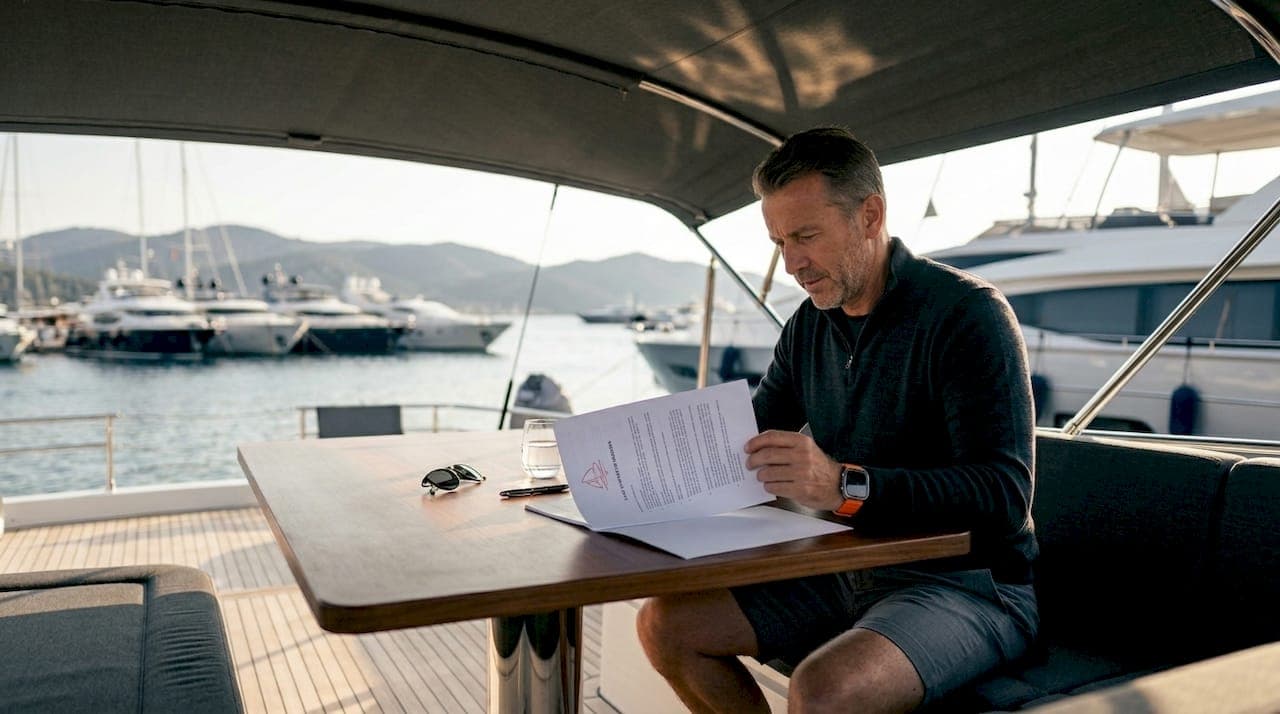
Charter guest rights are the legal protections, safety entitlements, and behavioral responsibilities that apply to every person who books or boards a yacht charter. These rights are not informal courtesies. They are grounded in U.S. Coast Guard regulations, contract law, and operator licensing requirements that directly affect your safety and your money. Before you step aboard, you have the right to verify a valid Certificate of Inspection, confirm the operator holds a Merchant Mariner Credential, and review the full charter agreement. Understanding these protections is what separates a smooth sailing experience from a costly, potentially dangerous one.
What are charter guest rights and why do they matter?
Charter guest rights define the legal and practical entitlements guests hold during a yacht charter, covering everything from safety verification to cancellation remedies. Most guests assume their rights begin and end with the booking confirmation. They do not. Your rights start the moment you evaluate an operator and extend through every hour you spend onboard.
The core framework includes three categories. First, safety rights: the legal guarantee that the vessel and operator meet regulatory standards. Second, contractual rights: the payment, refund, and cancellation terms written into your charter agreement. Third, behavioral rights and responsibilities: the mutual obligations that keep everyone safe and comfortable onboard. All three categories interact, and ignoring any one of them creates real exposure.
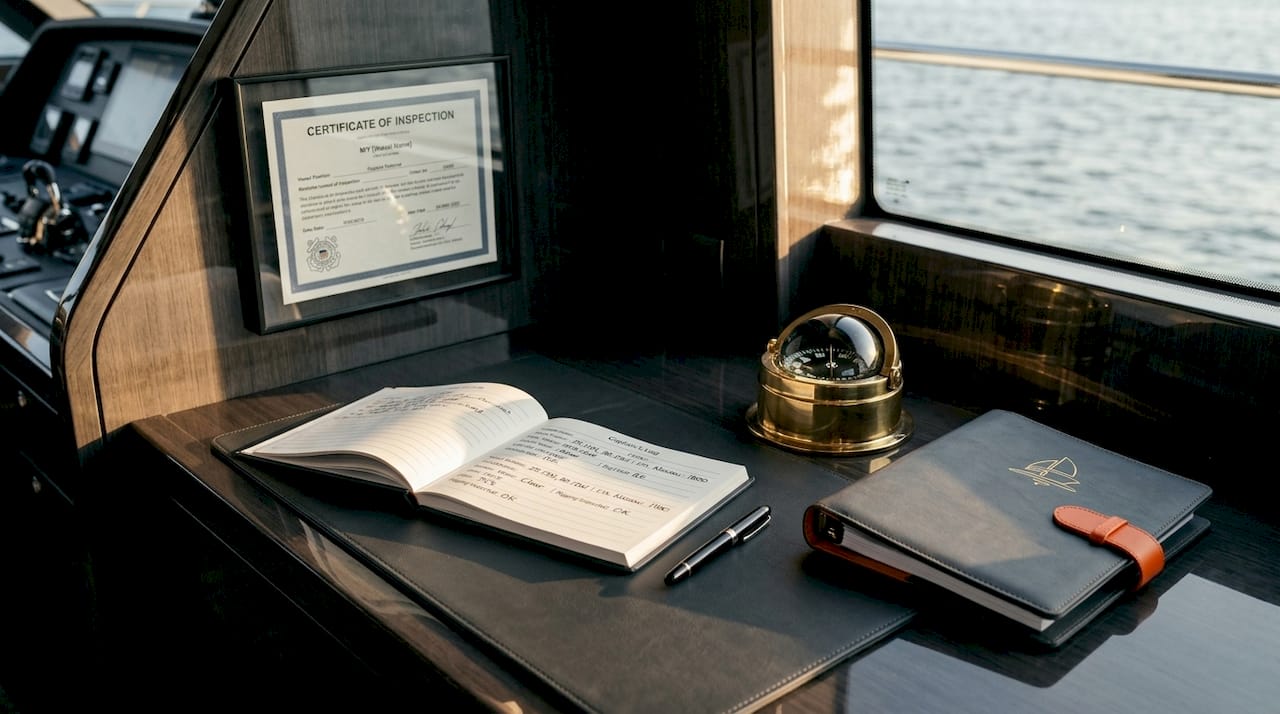
Yacht charter rights are not uniform across every destination. U.S.-flagged vessels operating in American waters fall under U.S. Coast Guard jurisdiction, which sets some of the most detailed passenger vessel requirements in the world. Guests chartering in the Mediterranean or Caribbean may encounter different flag-state rules, which is why reading your specific charter agreement carefully is non-negotiable.
What legal safety credentials must a charter yacht have?
The U.S. Coast Guard requires that any vessel carrying more than six paying passengers hold a Certificate of Inspection. Failure to produce this certificate can result in civil penalties up to $5,996 and, more critically, puts every guest at risk on a vessel that has not passed federal safety standards. That number matters because it signals how seriously regulators treat this requirement.
Operators must also hold a valid Merchant Mariner Credential along with enrollment in a drug and alcohol program. Missing documentation can trigger penalties up to $20,468 per violation. These are not bureaucratic formalities. They are the baseline proof that the person steering your vessel is qualified and sober.
The U.S. Coast Guard strongly advises passengers not to board any vessel whose operator cannot produce required credentials or a safety plan on request. This is one of the most direct pieces of official guidance available to charter guests, and most guests never ask for it.
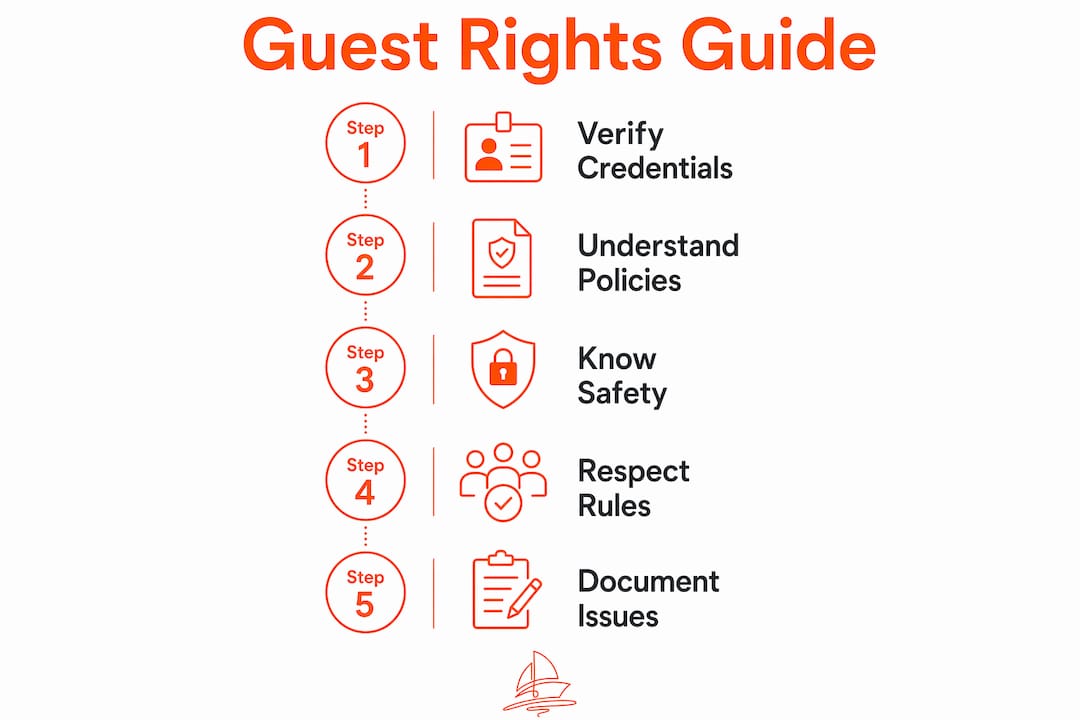
Here is what to verify before boarding any charter vessel:
- Certificate of Inspection (required for vessels carrying more than six passengers)
- Merchant Mariner Credential for the captain or operator
- Drug and alcohol program enrollment documentation
- Vessel safety plan, including emergency procedures and life-saving equipment locations
- Insurance documentation confirming the vessel is covered for passenger operations
Pro Tip: Ask the charter company to email you copies of the Certificate of Inspection and the captain's Merchant Mariner Credential before your departure date. Legitimate operators will send these without hesitation. Hesitation itself is a red flag.
For a deeper look at how vessel compliance standards apply to charter operations, the framework is more detailed than most guests realize.
What guest responsibilities and behaviors are expected onboard?
Guest responsibilities on charters are not optional suggestions. They are conditions of your charter agreement, and violating them can end your trip early or expose you to liability. Understanding these expectations is part of exercising your rights, because a guest who respects the rules is also a guest who can hold the operator accountable when something goes wrong.
Proper onboard etiquette prevents accidents and maintains harmony for everyone aboard. The captain's authority is absolute on a vessel at sea. This is maritime law, not a preference. When the captain issues a safety instruction, compliance is required regardless of your personal comfort level.
Follow these responsibilities to protect yourself and others:
- Follow all captain and crew safety instructions without delay, especially during docking, anchoring, and weather changes.
- Respect galley and equipment access rules. Most charter yachts restrict unsupervised use of the galley, navigation equipment, and mechanical systems.
- Observe smoking, alcohol, and noise policies. These vary by vessel and are always specified in the charter agreement.
- Arrive on time for departure. Late arrivals can forfeit charter time without refund, depending on contract terms.
- Report any damage or incidents immediately. Concealing damage increases your liability and complicates insurance claims.
Pro Tip: Read the onboard rules document the night before your charter, not the morning of. You will absorb the details better and arrive with specific questions rather than last-minute surprises.
How do payment terms and cancellation policies affect your rights?
Payment terms in charter agreements define when you owe money, how much you can recover if plans change, and what happens when the operator cancels. Most guests focus on the total price and overlook the timing clauses that determine their actual financial exposure.
Charter cancellation remedies typically include three options: a full or partial refund, a future credit for a rescheduled sailing, or an alternative vessel or date. Which option applies to you depends entirely on the contract language and when the cancellation occurs. Operators who cancel due to mechanical failure or weather generally offer different remedies than those who cancel for commercial reasons.
Exact contract wording and timestamps determine refund percentages and penalty structures. A cancellation submitted 48 hours before departure may recover 50% of your deposit. The same cancellation submitted 47 hours before departure may recover nothing. This is not a hypothetical. It is how most charter contracts are written.
| Scenario | Typical guest remedy |
|---|---|
| Operator cancels due to mechanical failure | Full refund or alternative sailing offered |
| Guest cancels 30+ days before departure | Partial refund or future credit, per contract |
| Guest cancels within 7 days of departure | Deposit forfeited in most standard agreements |
| Operator cancels for commercial reasons | Full refund plus possible compensation |
| Weather cancellation (force majeure) | Future credit or partial refund, rarely full cash refund |
Understanding service fee structures in your booking also matters here, since some fees are non-refundable regardless of who initiates the cancellation.
What charter guest policies should you review before booking?
Charter guest policies govern who can board, what they can bring, and what they are financially responsible for if something goes wrong. These policies are written into the charter agreement, and guests who skip this section often discover the rules only after they have already violated them.
Passenger capacity is the most regulated policy area. The 12-guest rule and U.S. Coast Guard passenger limits exist to protect safety and comfort, and exceeding the licensed passenger count is an illegal charter operation, not just a policy violation. Guests who knowingly board an overcrowded vessel share legal exposure with the operator.
Key policies to review and clarify before signing any charter agreement:
- Passenger limits: Confirm the vessel's licensed capacity and whether your group size complies.
- Children and pets: Many charter yachts restrict children under a certain age or prohibit pets entirely. Confirm in writing.
- Alcohol consumption: Some vessels prohibit alcohol entirely; others allow it with restrictions. Crew-served alcohol policies differ from guest-supplied alcohol policies.
- Smoking: Nearly all modern charter yachts prohibit smoking below deck. Some prohibit it entirely.
- Security deposits: Most charters require a refundable security deposit held against damage. Review the security deposit terms carefully, including what qualifies as damage versus normal wear.
- Damage liability: Understand your financial ceiling if equipment is damaged or lost during your charter.
How can guests protect themselves and assert their rights?
Protecting your rights as a charter guest requires preparation before you board, not improvisation after something goes wrong. Most disputes that end badly for guests share a common cause: the guest had no documentation and no clear understanding of the contract terms.
Follow these steps to protect yourself throughout the charter process:
- Verify credentials before booking. Request the Certificate of Inspection and Merchant Mariner Credential in writing. Illegal charter operations have been terminated by the Coast Guard mid-voyage, leaving guests stranded. Do not assume compliance.
- Keep every document. Save your booking confirmation, payment receipts, charter agreement, and all email correspondence. Store copies in a cloud service you can access from your phone.
- Photograph the vessel before departure. Document the condition of cabins, equipment, and any pre-existing damage. This protects you against unfair security deposit deductions.
- Know your reporting channels. In U.S. waters, safety violations can be reported to the U.S. Coast Guard directly. For contractual disputes, your first step is a written complaint to the operator with a clear resolution deadline.
- Act within contract deadlines. Timing clauses in contracts are strictly enforced. If you have a refund claim, submit it the same day you become eligible, not the day before the deadline.
Pro Tip: Screenshot the operator's website listing, including the vessel description and any promises about amenities, before you book. Websites change. Your screenshot does not.
Key takeaways
Charter guest rights protect you only when you know them, verify them, and document everything before and during your voyage.
| Point | Details |
|---|---|
| Verify safety credentials | Request the Certificate of Inspection and Merchant Mariner Credential before boarding any charter vessel. |
| Know your cancellation window | Contract timing clauses determine your refund eligibility. Submit cancellation requests immediately when eligible. |
| Understand passenger limits | Exceeding the licensed passenger count is an illegal operation, not just a policy breach. |
| Document everything | Save receipts, contracts, and photos of the vessel to protect against disputes and unfair deposit claims. |
| Guest responsibilities are binding | Following captain instructions and respecting onboard rules is a legal and contractual obligation, not optional etiquette. |
What Sailorix has learned about charter rights after thousands of bookings
Most guests who run into problems on a charter did not have a bad operator. They had an incomplete picture of what they agreed to. The charter agreement is the single most underread document in the entire booking process, and it is also the document that determines nearly every outcome when something goes wrong.
The credential verification step is where guests consistently underperform. Asking to see a Certificate of Inspection feels awkward. It feels like you are accusing the operator of something. You are not. You are exercising a right that the U.S. Coast Guard explicitly recommends. Operators who run legal, safe charters welcome the question. The ones who do not are telling you something important.
One pattern that stands out: guests who photograph the vessel before departure almost never lose security deposit disputes. Guests who do not photograph the vessel almost always lose them, regardless of whether they caused the damage. Documentation is not paranoia. It is the difference between a resolved dispute and an expensive lesson.
The guests who enjoy the best charters are not the ones who know the most rules. They are the ones who read the agreement, asked two or three specific questions before boarding, and arrived ready to follow the captain's lead. Rights and responsibilities on a charter are two sides of the same coin. Honor both, and the experience takes care of itself.
— Sailorix
Book your next charter with confidence through Sailorix

Sailorix lists verified yacht charters worldwide, giving you access to vessel details, transparent pricing, and booking support before you commit to anything. Every listing on the platform is searchable by vessel type, capacity, and location, so you can match your group size to a properly licensed yacht from the start. With a Sailorix membership at €100 per year, you pay roughly 1% in service fees compared to the 10 to 20% charged by most charter booking platforms. That savings goes directly toward your experience, not a middleman. Browse available yachts and book with the documentation and pricing clarity that charter guests deserve.
FAQ
What is a Certificate of Inspection for charter yachts?
A Certificate of Inspection is a U.S. Coast Guard document required for any vessel carrying more than six paying passengers. It confirms the vessel has passed federal safety standards and is legally authorized to operate as a charter.
Can I refuse to board a charter vessel if the operator has no credentials?
Yes. The U.S. Coast Guard advises passengers not to board any vessel whose operator cannot produce required credentials or a safety plan. Refusing to board is your right and the safest course of action.
What happens to my deposit if the charter is canceled?
Refund eligibility depends entirely on the contract terms and when the cancellation occurs. Most agreements specify tiered refund percentages based on how far in advance the cancellation is submitted.
How many guests can legally board a charter yacht?
Passenger capacity is set by the vessel's license. Many charter yachts are capped at 12 guests under standard licensing rules, though the exact limit varies by vessel type and applicable regulations.
What should I do if I have a dispute with a charter operator?
Document all communications in writing, reference the specific contract terms that apply to your situation, and submit your complaint with a clear resolution deadline. In cases involving safety violations on U.S. waters, you can report directly to the U.S. Coast Guard.