
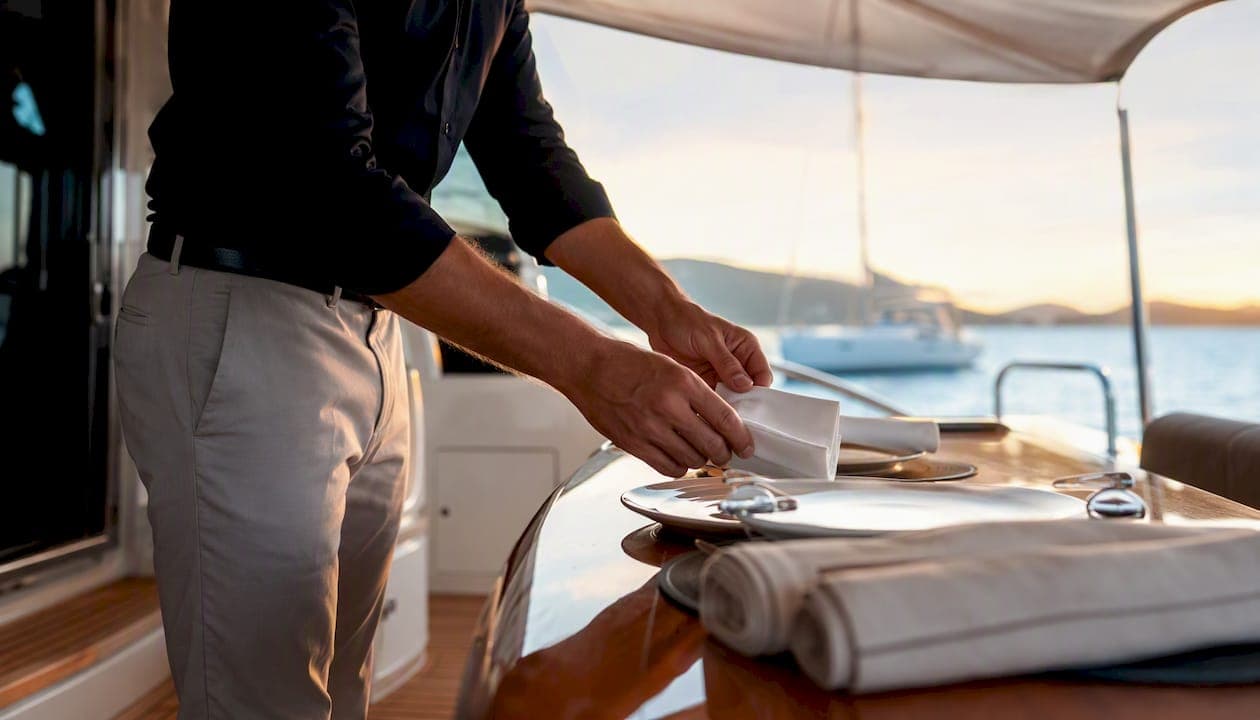
A bespoke yacht charter is a fully personalized, professionally crewed yacht rental where every element of the trip — from vessel selection and provisioning to onshore experiences — is tailored to your exact preferences. Unlike booking a cabin on a shared itinerary or renting a bareboat and figuring it out yourself, a bespoke charter puts a dedicated team to work on your specific vision before you ever step aboard. According to The Seafarer's complete charter guide, charters typically run one week, with costs ranging from roughly €2,000 per week for a modest bareboat in low season to over €300,000 per week for a fully crewed superyacht.
Here's what that means in practice:
- Who it's for: Affluent travelers, families celebrating milestones, corporate groups, couples planning destination weddings, and prospective yacht buyers who want to trial a vessel before committing.
- What's typically included: A customized itinerary, dedicated crew (captain, chef, hostess, deckhands), gourmet provisioning matched to your dietary preferences, water toys, and curated onshore experiences from private restaurant reservations to guided cultural tours.
- How it differs: A bareboat charter gives you the keys and nothing else. A standard crewed charter adds professional operation and basic service. A bespoke charter goes further — concierge-level planning, pre-arranged exclusive access, and a crew briefed specifically on your group's priorities.
Key Takeaways
A bespoke yacht charter is the only charter format where every element — crew, provisioning, itinerary, and onshore experiences — is built around your group specifically, not adapted from a standard program.
| Point | Details |
|---|---|
| Definition | A bespoke charter is a fully personalized crewed yacht rental where itinerary, crew, and provisioning are tailored to the client. |
| Cost range | Base fees run from roughly €8,000 to €300,000+/week; add APA (20–30% of base fee) and crew gratuity (10–20%). |
| Planning timeline | Book 9–12 months ahead for peak-season superyachts; 4–8 weeks minimum for standard crewed charters. |
| Key contract term | MYBA contracts set deposit schedules and govern APA reconciliation and cancellation terms. |
| Sailorix advantage | Sailorix's €100/year membership unlocks approximately 1% service fees, making bespoke bookings significantly more cost-efficient than traditional broker routes. |
Table of Contents
- What does a bespoke yacht charter actually include?
- How does a bespoke charter differ from other charter types?
- What does a bespoke yacht charter cost?
- How do you plan and book a bespoke charter?
- Sample itineraries for bespoke luxury charters
- Onboard etiquette, tipping, and house rules
- Safety, crew credentials, and what to verify before booking
- Broker vs. booking platform: which route fits your needs?
- How Sailorix supports bespoke charter bookings
- Why bespoke charters define what luxury travel actually means
- Ready to start your bespoke charter inquiry with Sailorix?
- Sources
What does a bespoke yacht charter actually include?
The word "bespoke" gets used loosely in luxury travel, so it's worth being specific about what you're actually purchasing.
Onboard services and crew
The crew composition on a bespoke charter is itself a customizable element. A 40-meter motor yacht might carry a captain, first officer, chef, two hostesses, and two deckhands — but the specific mix depends on your priorities. If you're traveling with young children, an additional steward focused on family logistics makes sense. If wellness is central to the trip, some operators can arrange a private yoga instructor or massage therapist to join for part of the voyage.
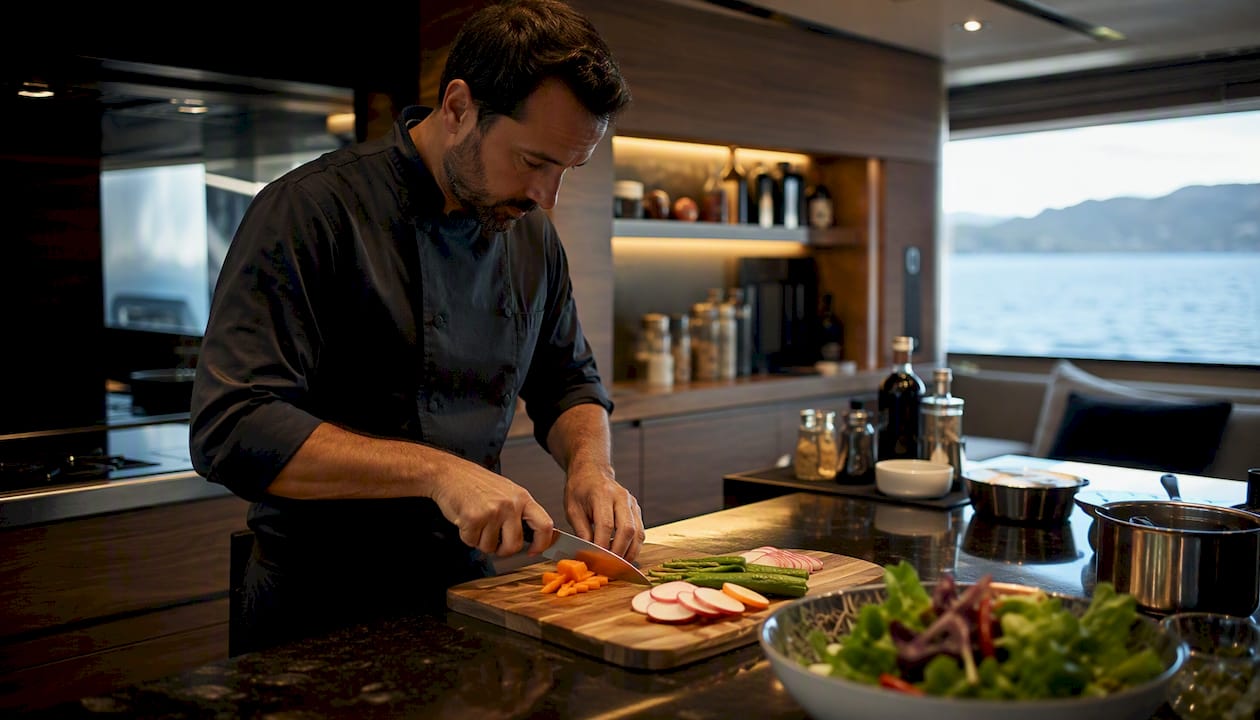
The chef is often where bespoke provisioning becomes most visible. Before departure, you'll typically complete a preference sheet covering dietary restrictions, allergies, favorite cuisines, preferred wines, and even the brands of spirits you drink. A skilled charter chef treats that document as a brief, not a suggestion.
Activities, water toys, and exclusive access
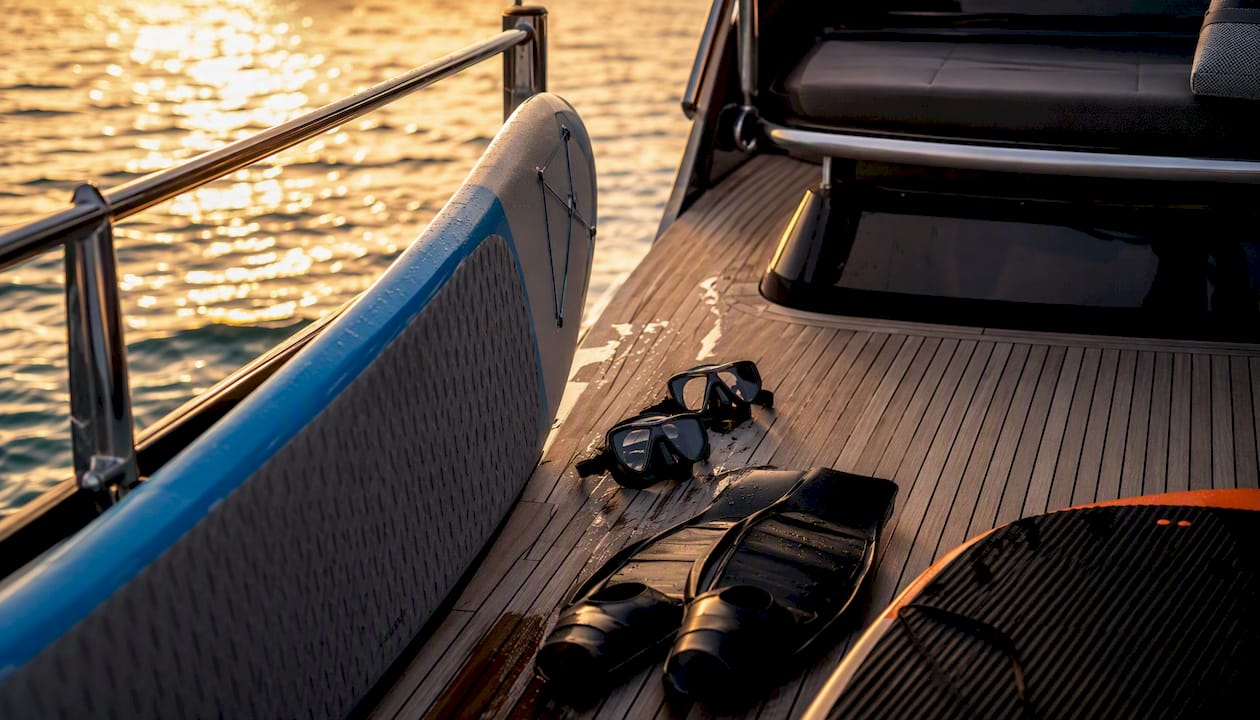
Most crewed yachts carry a standard toy package: paddleboards, kayaks, snorkeling gear, and a tender for shore transfers. Bespoke charters go further. Depending on the vessel and destination, you might arrange dedicated dive equipment with a certified dive master, a towed inflatable sports platform, jet skis, or a foiling board. For exclusive access beyond the waterline, the charter broker can pre-arrange private vineyard dinners, after-hours museum tours, helicopter transfers between islands, or seaplane excursions to otherwise unreachable anchorages.
Logistics and special events
Bespoke charters also handle the administrative layer that standard charters leave to the guest. Custom embarkation and disembarkation times, local cruising permits, marina reservations in high-demand ports, and event logistics for onboard celebrations all fall within the broker's scope. Planning a wedding at sea or a VIP corporate retreat? Those require coordination with local vendors, catering logistics, and sometimes local government permits — all of which a bespoke charter operator manages on your behalf.
Pro Tip: When briefing your broker, rank your priorities in four categories: sleeping arrangements and privacy, food and beverage quality, activity intensity, and security or VIP logistics. A clear hierarchy lets the broker allocate your budget where it genuinely matters to you rather than spreading it evenly across every line item.
How does a bespoke charter differ from other charter types?
The charter market offers several distinct service levels, and the differences are meaningful enough to affect both your experience and your budget. Yachting Experts' guide to charter types breaks the main categories down clearly:
- Bareboat: You rent the vessel and operate it yourself. This requires formal sailing qualifications — RYA Day Skipper or an ICC equivalent at minimum. You provision the boat, plan the route, and handle all navigation. Maximum autonomy, minimal support.
- Skippered charter: A professional captain handles navigation and boat handling. You get competent operation and basic safety, but provisioning is largely self-managed and shore experiences are your own to arrange.
- Cabin charter: You book one or two cabins on a yacht that's already running a fixed itinerary with other guests. Cost-effective, but the itinerary isn't yours, the spaces are shared, and personalization is essentially zero.
- Bespoke crewed charter: The entire yacht is yours. The crew is briefed on your group specifically. The itinerary is built around your preferences, the provisioning reflects your tastes, and every onshore experience is pre-arranged. This is the service level where the distinction between "vacation" and "curated experience" becomes real.
The gap between a standard crewed charter and a genuinely bespoke one often comes down to what happens before you board. Standard crewed charters deliver professional operation; bespoke charters deliver pre-departure planning that makes the week feel designed rather than assembled.
What does a bespoke yacht charter cost?
Budget expectations vary widely, and the range is wide enough that "luxury charter" can mean very different things depending on the vessel, destination, and season.
A week aboard a sailing catamaran in shoulder season can cost several thousand euros, while larger motor yachts in peak seasons and superyachts command increasingly higher charter fees, as The Seafarer's charter guide documents. Those figures are base charter fees only — the real budget includes several additional categories.
Understanding the Advance Provisioning Allowance (APA)
The APA is a separate fund, often calculated as a percentage of the base charter fee, paid in advance and held by the captain. It covers food, beverages, fuel, port fees, marina charges, and third-party bookings like helicopter transfers or private restaurant buyouts. At the end of the charter, the captain provides a full reconciliation and either refunds the unused balance or invoices for any overage. A well-managed APA reconciliation is one of the clearest trust signals between a client and an operator.
Deposit and payment structure
Most crewed charters use an industry-standard contract — the MYBA (Mediterranean Yacht Brokers Association) template is the most widely recognized — which sets out deposit schedules, cancellation terms, and APA handling. Deposits are commonly a substantial proportion of the base charter fee at signing, with the remaining balance due several weeks before embarkation.
| Cost category | Typical range (illustrative) |
|---|---|
| Base charter fee | €2,000–€300,000+/week |
| APA (provisioning fund) | 20–30% of base fee |
| Crew gratuity | a separate gratuity amount |
| Delivery/repositioning | Varies by route |
| Third-party experiences | Variable (helicopter, permits, events) |
For practical strategies on finding value within a charter budget, even at the luxury end, timing and flexibility on destination can shift the base fee meaningfully.
How do you plan and book a bespoke charter?
The planning timeline is one of the most underestimated parts of the process. A bespoke charter for a peak-season superyacht in popular regions usually requires many months of lead time, with specialist crew bookings potentially requiring even earlier arrangements.
Planning milestones
- 9–12 months out (peak season) / 4–8 weeks out (standard crewed): Initial inquiry and scoping. Define dates, guest count, destination region, and a rough budget bracket.
- 8–10 months out: Yacht selection and shortlisting. Review proposals from brokers or platforms, compare vessel specs, crew credentials, and charter fees.
- 7–9 months out: Contract review and signing. Read the MYBA contract carefully — pay attention to cancellation clauses, force majeure provisions, and how APA overages are handled. This is not legal advice; have a solicitor review if the sums are significant.
- 6–8 months out: Deposit payment (25–50% of base fee). Confirm crew composition and begin the preference sheet process.
- 4–6 months out: Finalize provisioning requests, dietary notes, activity preferences, and any special event logistics.
- 4–8 weeks out: Final balance payment. Submit the passenger manifest and confirm all travel documentation.
- 1–2 weeks out: Confirm embarkation logistics, port of departure, and any last-minute requests.
Documentation checklist
- Valid passports and any required visas for the cruising region
- Travel insurance with medical evacuation coverage
- Medical considerations and any prescription medications
- Signed waivers for high-intensity water sports or diving
- Dietary and allergy documentation for the chef
- Emergency contact information for all guests
Sample itineraries for bespoke luxury charters
The best way to understand what personalization actually looks like in practice is to see how it reshapes a standard route.
Mediterranean island-hopping (Greece or Croatia, June–September): Depart Dubrovnik or Athens. Day one anchors off a secluded cove for a private chef lunch. Day two includes a pre-arranged private vineyard dinner ashore with a local winemaker. Days three and four extend the anchorage at a quieter island specifically because your group prefers morning snorkeling over nightlife. The itinerary bends around your rhythm, not a fixed schedule.
Caribbean luxury retreat (BVI or St. Barts, December–April): Helicopter transfer from the airport directly to the yacht eliminates the tender logistics. A dedicated dive master joins for three days of guided reef diving. One evening features a private beach barbecue on a deserted island, arranged by the broker weeks in advance. The provisioning includes a specific rum selection and a custom cocktail menu built around the group's preferences.
Seychelles wellness and privacy focus (May–October): Extended anchorages at remote atolls with no other vessels in sight. A wellness practitioner joins for sunrise yoga and guided meditation. The chef focuses on plant-forward menus with local fish. Shore excursions are limited to two or three carefully chosen experiences — the point is stillness, not a packed schedule.
Key bespoke elements across all three:
- Extended anchorages at locations chosen for the group, not the standard tourist circuit
- Pre-arranged private shore events that require advance booking and local contacts
- Chef-driven menus built from the preference sheet, not a standard rotation
- Flexible daily schedules that adjust to weather, mood, and guest energy
Onboard etiquette, tipping, and house rules
Arriving informed about onboard norms makes the experience smoother for everyone, including the crew.
Common house rules:
- Non-smoking policies vary by vessel — confirm zones before boarding, as most yachts restrict smoking to specific outdoor areas only
- Weight limits apply to water toys and tenders; the captain enforces these for safety, not preference
- Noise restrictions in marinas are typically enforced after 11 PM and the captain is responsible for compliance
- Engine and generator schedules affect overnight anchoring — discuss preferences with the captain on day one
The APA does not typically cover gratuity — that's a separate cash or bank transfer at departure. It's discretionary, but in practice it's expected and the crew plans their income around it.
Guest responsibilities: Follow the safety briefing on day one without exception. Coordinate all shore excursions with the captain — not for control, but because tenders, tides, and local conditions affect timing in ways guests can't always see from the deck.
Pro Tip: For VIP guests who require privacy or security, brief the captain before departure rather than managing it ad hoc onboard. A crew that knows your privacy requirements in advance can handle media, other vessels, and marina interactions without any visible effort on your part.
Safety, crew credentials, and what to verify before booking
A bespoke charter is only as good as the crew running it. The vessel and the itinerary matter, but the people aboard matter more.
Crew credentials to verify:
- Valid captain's license appropriate to the vessel size and cruising area (MCA, USCG, or equivalent)
- STCW (Standards of Training, Certification and Watchkeeping) certificates for all professional crew
- Documented experience on similar vessel types and in the specific cruising region
- Recent vessel safety certificates, including life raft servicing and fire suppression systems
- Hull and P&I (Protection and Indemnity) insurance documentation
Platform and broker trust signals:
- Transparent contract templates (MYBA or equivalent) with clear cancellation and APA terms
- Verified reviews or references from previous charter clients
- Documented local agent support in the cruising region
- Clear escalation process for emergencies, including medevac access and local SAR (search and rescue) coordination
Questions to ask before signing:
- What is the emergency protocol if a guest requires medical evacuation?
- Which local SAR authority covers the primary cruising area?
- Is the vessel's insurance current and does it cover the full charter period and guest activities?
- When was the last full safety inspection and where is the documentation?
Broker vs. booking platform: which route fits your needs?
The procurement route shapes the experience as much as the yacht itself. Platforms that combine transparent pricing with concierge options tend to offer the best balance for clients who want both control and expert logistics.
When a full-service broker makes sense:
- Your request involves complex logistics: multiple destinations, special permits, celebrity chef sourcing, or a large-scale event
- Privacy and discretion are paramount and you prefer a single point of contact who manages everything
- You're chartering a superyacht above €100,000/week where negotiation and relationship access matter
When a booking platform makes sense:
- You want real-time availability and transparent pricing without a back-and-forth proposal process
- Your charter is relatively straightforward — a defined destination, a clear guest count, standard add-ons
- You value membership discounts and lower service fees over high-touch negotiation
8 questions to ask in your initial discovery call:
- Can you arrange special cruising permits for the destinations I have in mind?
- What's included in the base charter fee versus the APA?
- Can you source specialist crew — a specific chef profile, a certified dive master, a wellness practitioner?
- What is the cancellation policy and how does force majeure affect it?
- How is the APA reconciled and what happens if we underspend or overspend?
- What insurance covers guests during water sports and onshore activities?
- How do you handle last-minute itinerary changes due to weather?
- Do you have references from clients who've chartered in this specific region?
How Sailorix supports bespoke charter bookings
Sailorix operates as a global boat booking platform built around a membership model that directly addresses one of the biggest friction points in luxury charter: opaque pricing and high service fees. On a €50,000 charter, that difference is material.
The platform's capabilities extend beyond price transparency. Real-time availability search across a global fleet, custom add-on booking (skipper, early check-in, specialist equipment), and integrated insurance options mean that many of the components of a bespoke charter can be assembled without the extended back-and-forth of a traditional broker engagement. Sailorix's luxury yacht vacation guide for affluent travelers reflects the platform's depth of knowledge in designing itineraries for high-net-worth clients.
Pro Tip: For straightforward bespoke requests — a defined destination, a clear guest count, standard crew and provisioning — Sailorix's self-serve booking handles it efficiently. For complex multi-destination itineraries with specialist crew or event logistics, contact the Sailorix team directly to discuss a concierge-level approach.
The membership model also changes the economics of repeat chartering. Clients who charter more than once a year recover the annual fee on the first booking and benefit from lower fees on every subsequent one.
Why bespoke charters define what luxury travel actually means
The charter industry has spent decades selling the idea that a bigger yacht equals a better experience. That's a convenient simplification, and it's mostly wrong.
What actually separates a memorable charter from a forgettable one is the degree to which the experience reflects the specific people aboard. A 35-meter motor yacht with a chef who has memorized your dietary preferences, an itinerary that builds in the long morning anchorages your group actually wants, and a broker who pre-arranged the private vineyard dinner you mentioned in passing — that outperforms a 60-meter superyacht running a generic weekly program every time.
Bespoke charters also tend to hold their value with repeat clients in a way that standard luxury travel doesn't. The novelty of a new destination fades; the memory of an experience that felt designed for you specifically does not. That's why the most experienced charterers — people who've done this ten or fifteen times — almost always migrate toward bespoke arrangements, even when they could afford any vessel on the market. They've learned that the personalization is the product.
Ready to start your bespoke charter inquiry with Sailorix?
The most common mistake in planning a bespoke charter is starting too late. The best vessels, the most sought-after cruising windows, and the specialist crew who make the difference between a good trip and an exceptional one get committed months in advance.

Sailorix makes the starting point straightforward. From there, you can search real-time availability by destination and vessel type, add a skipper or specialist equipment, and select insurance coverage, all within a single booking flow. For more complex bespoke requests, the Sailorix team works with you directly to scope the itinerary, crew requirements, and APA structure before you commit to anything.
Have your dates, guest count, destination preference, and a rough budget bracket ready when you reach out. Those four pieces of information are what a charter consultant needs to move from inquiry to a concrete proposal. Start your bespoke charter search on Sailorix and see what's available for your dates.
Sources
These resources offer additional depth on charter planning, budgeting, and platform selection: