
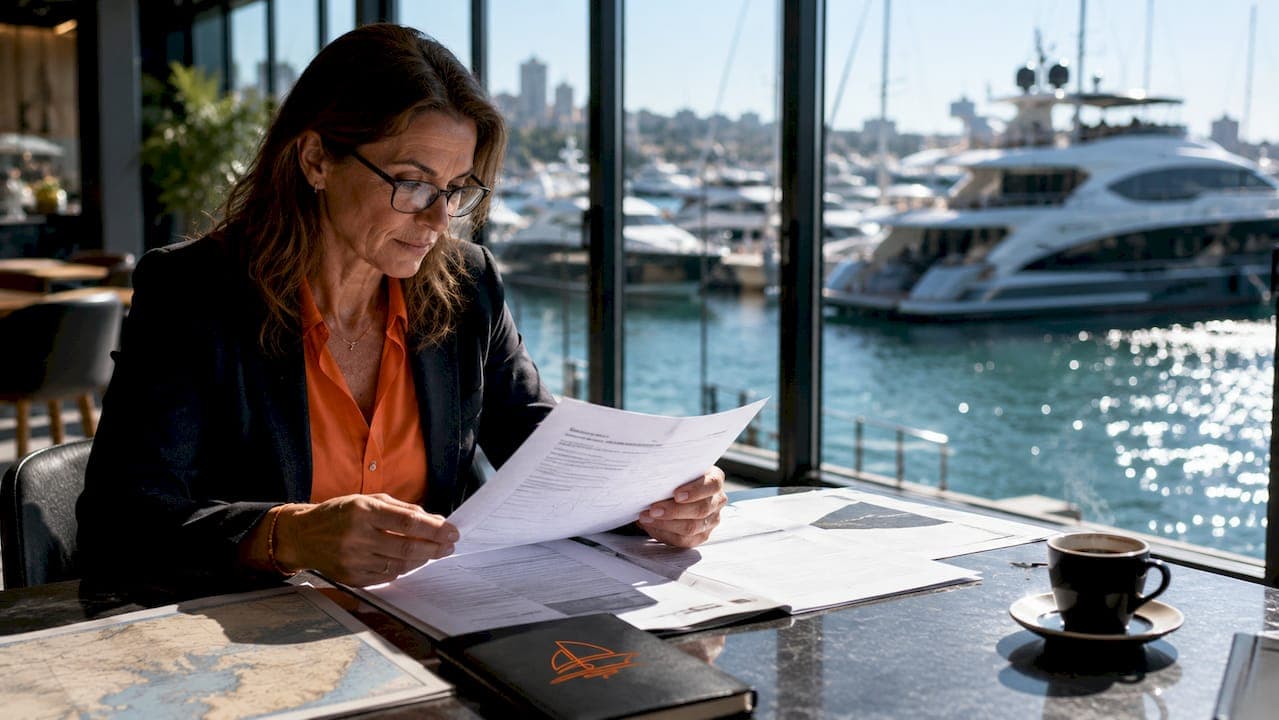
Yacht rental standards are defined as the mandatory legal certifications, crew qualifications, safety equipment requirements, and guest service expectations that govern every commercial charter operation. Regulatory frameworks like the UK Maritime and Coastguard Agency's Large Yacht Code (LY3) and the International Maritime Organization's SOLAS convention set the formal baseline. These standards exist to protect you as a renter, not just the vessel owner. Understanding them before you book separates a safe, memorable charter from a costly and potentially dangerous mistake.
What are yacht rental standards and why do they matter?
Yacht rental standards cover four core dimensions: legal compliance, vessel certification, crew qualifications, and onboard service quality. Each dimension is governed by a mix of international maritime law, flag state regulations, and industry codes. Together, they determine whether a yacht can legally carry paying passengers and whether your experience will meet a professional threshold.
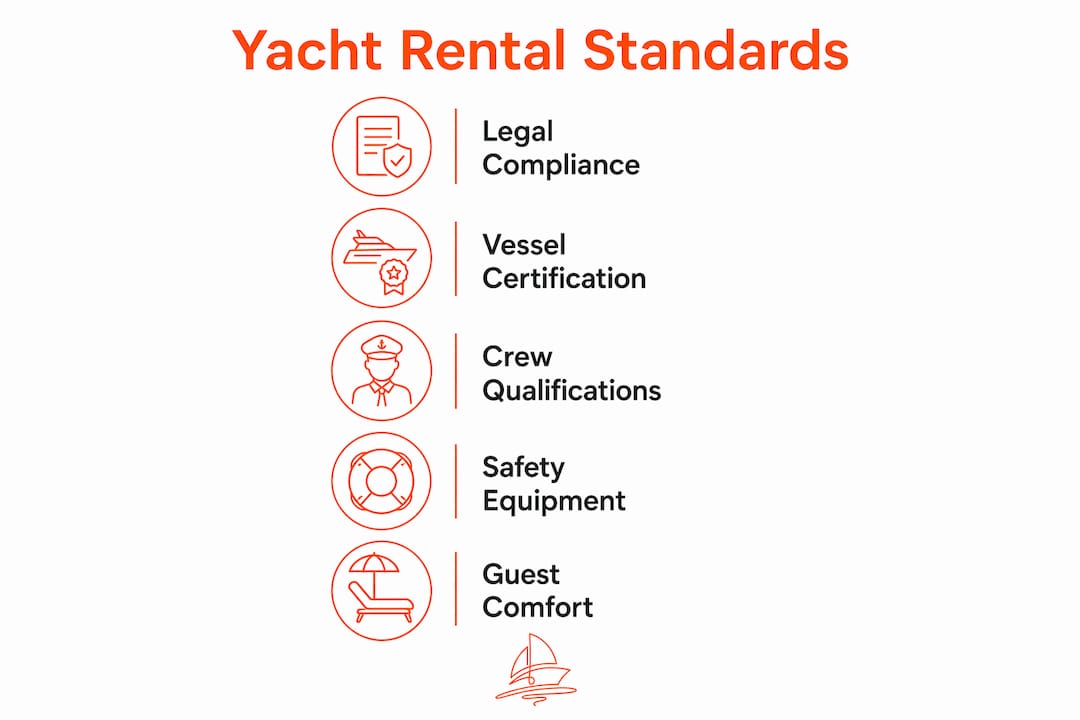
The LY3 code, published by the UK MCA, is the most widely referenced framework for large commercial yachts. SOLAS sets the international baseline for safety equipment and emergency procedures. When a yacht meets both, you have strong evidence it is genuinely charter-ready, not just attractively listed online.
Most renters focus on price and photos. The renters who get the best outcomes focus on certificates first.
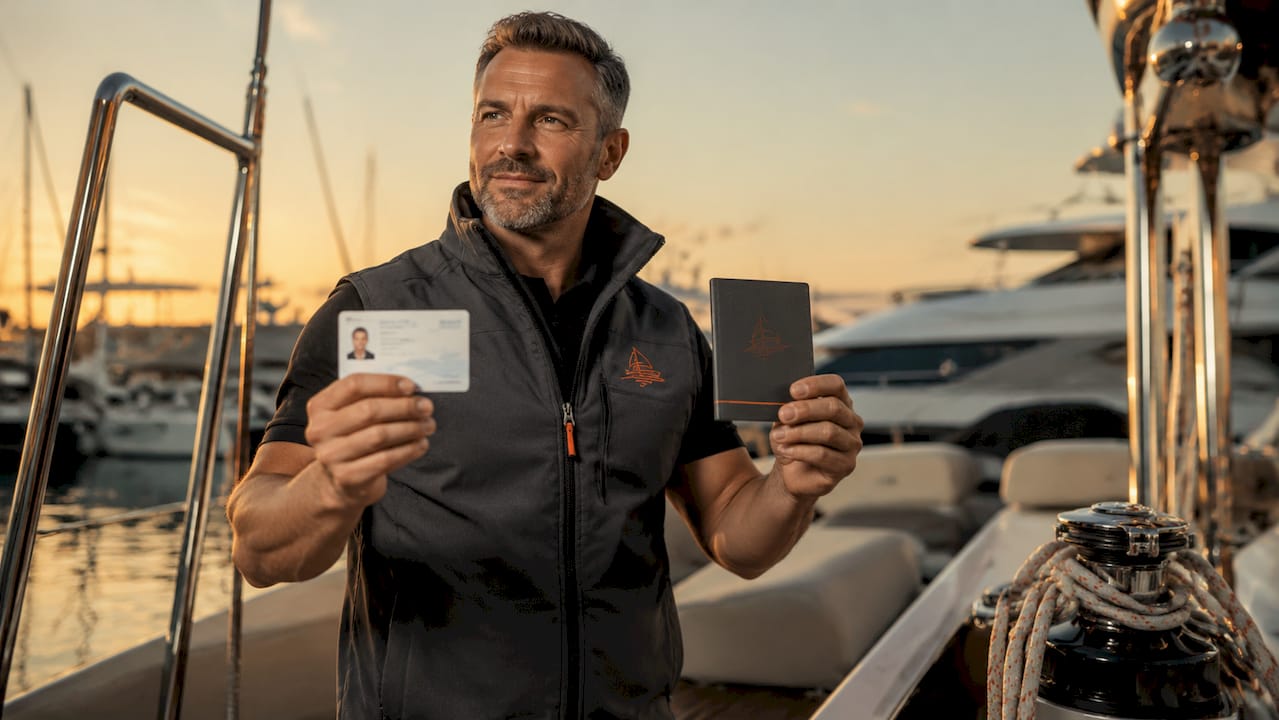
Legal and certification requirements for charter-ready yachts
Commercial certification is not optional. Yachts 24 meters or longer must hold valid commercial compliance certifications, including a pre-charter survey, to legally carry paying passengers. Smaller yachts face fewer formal obligations, but flag state rules still apply in most jurisdictions.
A pre-charter survey is an independent inspection that confirms the vessel's structural condition, safety equipment, and regulatory compliance. Standard pre-charter inspections should be arranged 60–90 days before the charter start date. That window gives the owner time to correct any deficiencies and update insurance before you board.
Passenger limits are a critical threshold. Charter yachts carrying more than 12 passengers trigger more complex and costly compliance obligations under LY3 and SOLAS. Most private charter yachts are certified for a maximum of 12 guests precisely to avoid those additional requirements. If a listing advertises more than 12 guests, ask for the specific certification tier that covers it.
Insurance requirements also shift when a yacht moves from private to commercial use. The owner must hold commercial marine insurance, not a standard private policy. You should confirm this before signing any contract.
The difference between bareboat and crewed charters matters here too:
- Bareboat charters place the operational responsibility on you as the renter. The yacht must still meet flag state requirements, but the certification burden shifts partly to your own qualifications.
- Crewed charters require the owner and crew to hold all commercial certifications. Your responsibility is to verify those certificates exist.
- Pre-charter surveys apply to both types but are especially critical for bareboat renters who will operate the vessel themselves.
- Insurance endorsements for commercial use must be confirmed in writing before departure.
Pro Tip: Ask the charter operator for a copy of the vessel's commercial certification and the most recent survey report before you pay a deposit. A reputable operator will share these without hesitation.
What crew qualifications should you expect on a charter yacht?
Crew standards are the most overlooked dimension of yacht rental quality. Crew on commercial yachts must hold appropriate licenses and complete training in safety procedures, guest service, and technical operations under LY3 and flag state rules. A captain with only a recreational license is not legally qualified to command a commercial charter.
For crewed charters, the skipper typically holds a Yacht Master Offshore or equivalent commercial endorsement. Deck crew and stewards on larger yachts must complete STCW (Standards of Training, Certification, and Watchkeeping) basic safety training. STCW is the international minimum, covering firefighting, first aid, sea survival, and personal safety.
For bareboat charters, the qualification burden falls on you. Bareboat renters must prove recognized sailing competence, such as RYA or ASA certifications, and hold a VHF radio license. If you want to understand exactly what licenses apply to your situation, the sailing license requirements vary by country and vessel size.
Operational readiness goes beyond paper qualifications. A well-run charter yacht maintains:
- Regular maintenance logs and engine service records
- Backup navigation systems and redundant power sources
- Safety drill protocols conducted before departure
- Clear crew roles for emergency scenarios
- Guest briefings on safety equipment locations and procedures
Yacht rental readiness involves not only certifications but also operational excellence, including guest comfort, maintenance schedules, and reliable backup systems. A yacht that checks every legal box but has a poorly maintained engine or an undertrained crew still fails the standard that matters most to you.
How should you plan your booking timeline and budget?
Booking a charter yacht requires more financial planning than most first-time renters expect. Peak season charters should be booked 6–12 months in advance, with typical add-ons including an Advance Provisioning Allowance (APA) at 25–35% of the base rate, VAT ranging from 0–22% depending on the flag state and cruising area, and gratuities between 5–15% of the base rate. That means a charter listed at $10,000 per week can realistically cost $14,000–$17,000 all in.
The APA is a deposit held by the captain to cover fuel, provisioning, marina fees, and other running costs during the trip. Any unspent APA is returned to you at the end of the charter. It is not a fee. Renters who misunderstand this often feel overcharged when they see the initial total.
The MYBA charter agreement is the industry standard contract for crewed yacht charters, typically 8–14 pages long and widely used across the Mediterranean and Caribbean markets. Always request the MYBA agreement or an equivalent formal contract. A charter offered without a written contract is a red flag.
Cancellation policies vary significantly across operators. Some brokers offer full refunds for cancellations made 7 or more days in advance, while others apply tiered penalties. Charter cancellation insurance, which typically costs 1–4% of the total trip value, protects you against unexpected cancellations due to illness, weather, or operator failure.
| Budget item | Typical range |
|---|---|
| Base charter rate | Varies by vessel and season |
| Advance Provisioning Allowance (APA) | 25–35% of base rate |
| VAT | 0–22% depending on jurisdiction |
| Crew gratuity | 5–15% of base rate |
| Charter cancellation insurance | 1–4% of total trip value |
Pro Tip: Use the yacht booking savings guide to understand which fees are negotiable and which are fixed before you enter any price discussion with an operator.
Key safety and quality standards to expect onboard
A charter-ready yacht meets a specific set of onboard safety and comfort benchmarks. These are not optional extras. They are the baseline you should verify before departure using a pre-charter checklist.
Safety equipment standards under SOLAS and LY3 require:
- Life rafts sized for the maximum number of guests and crew onboard
- EPIRBs (Emergency Position Indicating Radio Beacons) registered and activated
- Fire extinguishers in the galley, engine room, and guest cabins
- Flares, life rings, and personal flotation devices for every person onboard
- First aid kit stocked to commercial maritime standards
Guest accommodation standards on a quality charter yacht include properly ventilated cabins, functioning air conditioning or heating depending on the destination, clean linens, and working heads (bathrooms). These are not luxury additions. They are part of what separates a certified charter vessel from a private boat rented informally.
Navigation and power systems must be reliable. A charter yacht should carry redundant GPS, a functioning VHF radio, and a backup power source for critical systems. Renters heading to remote destinations should also confirm the yacht carries a satellite communication device.
Crew attentiveness is a quality standard too. A professional crew briefs guests on safety procedures before departure, responds to requests promptly, and maintains clear communication throughout the trip. If a crew member cannot explain where the life raft is or how to use the EPIRB, that is a compliance failure, not just a service lapse.
Key Takeaways
Yacht rental standards combine legal certification, crew licensing, safety equipment, and service quality into a single framework that protects every renter who books a commercial charter.
| Point | Details |
|---|---|
| Legal certification is mandatory | Yachts 24m+ must hold LY3 compliance and a valid pre-charter survey to carry paying guests. |
| Passenger limits change the rules | Carrying more than 12 passengers triggers significantly more complex regulatory obligations. |
| Budget beyond the base rate | APA, VAT, and gratuity typically add 30–50% to the listed charter price. |
| Crew qualifications vary by charter type | Crewed charters require STCW-trained crew; bareboat renters must hold RYA or ASA certification. |
| Use the MYBA contract | The MYBA agreement is the industry standard for crewed charters and provides clear legal protection. |
The part most renters get wrong about charter standards
Most renters treat certification as the operator's problem. That is a mistake. When you board a yacht without verifying its commercial certification, you are accepting legal and physical risk that no amount of trip insurance fully covers.
At Sailorix, we have seen renters arrive at a marina to find a yacht that looks perfect but carries only a private registration. The owner may be charming and the boat may be beautiful. But without a valid commercial certificate and a current survey, that charter is illegal in most jurisdictions. If something goes wrong, your insurance claim may be denied and the owner may face fines that end the trip immediately.
The second mistake is underestimating add-on costs. Renters who budget only for the base rate consistently feel blindsided by APA, VAT, and gratuity. These are not hidden fees. They are disclosed in every MYBA contract. Read the contract before you sign it, not after.
The third mistake is skipping charter cancellation insurance. A 1–4% premium feels unnecessary until a medical emergency or a sudden weather event cancels your trip. Operators are not obligated to refund you outside the terms of your contract. Insurance is the only reliable backstop.
The renters who have the best charter experiences are the ones who ask hard questions early: Show me the survey report. Show me the crew's STCW certificates. Show me the commercial insurance policy. A legitimate operator answers all three without hesitation.
— Sailorix
Certified yacht rentals, transparent pricing, and real support
Sailorix lists yachts that meet commercial charter requirements, so you can book with confidence rather than guesswork about legal compliance.

Every listing on Sailorix is accessible through a membership model that costs €100 per year and reduces service fees to approximately 1%, well below the 10–20% typical of standard booking channels. That pricing structure means you spend more of your budget on the actual charter and less on platform markups. First-time renters also get access to transparent pricing breakdowns that reflect real yacht charter guidelines, including APA, VAT, and gratuity norms, so there are no surprises when the final invoice arrives.
FAQ
What are the basic yacht rental requirements for a commercial charter?
A commercially chartered yacht must hold valid flag state certifications, a current pre-charter survey, and commercial marine insurance. Yachts 24 meters or longer must also comply with the LY3 code.
Is yacht insurance necessary when renting a charter yacht?
Yes. The operator must carry commercial marine insurance, and renters should purchase charter cancellation insurance, which typically costs 1–4% of the total trip value, to protect against unexpected cancellations.
What qualifications do I need for a bareboat charter?
Bareboat renters must hold a recognized sailing certification such as RYA or ASA and a VHF radio license. Some flag states and operators require additional documentation depending on the cruising area.
How far in advance should I book a peak season yacht charter?
Peak season charters should be booked 6–12 months in advance to secure preferred vessels and dates, particularly in high-demand destinations like the Mediterranean and Caribbean.
What does APA mean in a yacht charter contract?
APA stands for Advance Provisioning Allowance. It is a deposit, typically 25–35% of the base charter rate, held by the captain to cover fuel, provisioning, and marina fees during the trip. Any unspent amount is returned at the end of the charter.