

Yacht crew roles fall into four departments: Deck, Engineering, Interior, and Galley, all reporting up to the Captain. Each department has its own rank ladder, from entry-level deckhand or junior steward to department head, and each rung comes with specific duties, certification requirements, and a salary range. This guide breaks down who does what, what paperwork you need to get hired, and how pay and career progression actually work.
TL;DR:
- The deck department includes roles like deckhand, bosun, and chief officer, with responsibilities ranging from navigation to exterior maintenance and guest watersports.
- Certifications such as STCW and ENG1 are mandatory, with additional qualifications like RYA Powerboat Level 2 or Food Safety certifications enhancing job prospects and pay.
- Salaries vary significantly by role, vessel size, and region, with captains earning between $100,000 and $220,000 annually, and specialized skills commanding higher wages.
- Entry-level candidates should focus on a single department, gather key documents, and work in yachting hubs to increase hiring chances and career progression.
- Crew quality and proper certification are critical for charter clients, and a focused, role-specific CV greatly improves the likelihood of landing a yacht job.
Table of Contents
- What Are the Four Departments in Yacht Crew Hierarchy?
- Yacht Crew Positions by Department: Who Does What
- What Certifications Do You Need for Yacht Crew Jobs?
- How Much Do Yacht Crew Members Get Paid?
- How to Land Your First Yacht Crew Job and Move Up
- Why Crew Composition Matters for Charters
- A Realistic Look at the Yachting Career Path
- Sources
- FAQ
What Are the Four Departments in Yacht Crew Hierarchy?
Every yacht crew, from a 100-foot charter boat to a 300 foot superyacht, splits work across four departments. The Captain sits above all four, holding legal and operational responsibility for the vessel, the guests, and the crew.
- Deck (Bridge): Navigation, exterior maintenance, anchoring, tender operations, and running guest watersports. The Chief Officer (also called First Mate) manages the deck team day to day.
- Engineering: Propulsion, generators, air conditioning, plumbing, and every technical safety system onboard. On larger yachts, an Electro Technical Officer (ETO) handles electronics and IT separately from the Chief Engineer's mechanical work.
- Interior: Guest service, housekeeping, laundry, provisioning, and administrative tasks. The Chief Stewardess job description covers everything from wardrobe management to coordinating the guest schedule, and her team executes it.
- Galley: Menu planning, provisioning, food safety, and every meal service onboard, run by the Head Chef.
On yachts under roughly 100 feet, these lines blur. A single stewardess might also cook, and a deckhand might double as the engineer's assistant. Larger yachts run each department as its own chain of command, with department heads reporting directly to the Captain, who coordinates the whole operation and answers to the owner or management company.
Yacht Crew Positions by Department: Who Does What
Job titles on a yacht carry specific duties and a specific place in the hierarchy. Here's how the ranks break down.
- Captain. Runs the vessel end to end: navigation, safety, crew management, budgets, and guest relations. Holds the highest maritime license aboard and answers directly to the owner or management company. Best for experienced deck officers who've logged years of sea time and want ultimate responsibility.
- Chief Officer / First Mate. Second in command on deck, covering navigation watches, safety drills, and crew scheduling when the Captain steps back. A natural stepping stone toward a captaincy.
- Bosun / Lead Deckhand. Runs the deck crew's daily maintenance schedule, tender launches, and exterior upkeep. Good fit for a deckhand with three or more seasons who wants to supervise rather than just execute.
- Deckhand. Entry-level deck role: washdowns, line handling, tender driving, and guest watersports support. The typical starting point for anyone entering the deck department.
- Tender Driver. Sometimes a dedicated role on larger yachts, ferrying guests and handling watersports equipment. Requires a powerboat qualification and steady hands around guests.
- Chief Engineer. Owns every mechanical and technical system onboard, from engines to air conditioning to safety compliance. Demands formal marine engineering certification and years of hands on experience.
- 2nd / 3rd Engineer. Assists with maintenance, monitoring, and repairs under the Chief Engineer, gaining the sea time needed to sit engineering exams.
- ETO / Electrician. Handles electronics, navigation systems, and IT infrastructure, a specialized track that's grown as yachts add more onboard technology.
- Chief Steward/Stewardess. Manages the entire interior team, guest service standards, and household logistics. Suits candidates from five-star hotel or private household backgrounds.
- 2nd / 3rd Steward/Stewardess. Handles cabin service, laundry, and table service under the chief's direction. The standard entry point into interior.
- Purser. Manages accounts, guest documentation, and administrative logistics on larger yachts where interior duties expand beyond service.
- Solo Stewardess. Runs the entire interior single handed on smaller yachts, requiring versatility across housekeeping, service, and sometimes cooking.
- Head Chef / Sous Chef / Crew Chef. The Head Chef designs menus and manages provisioning; a Sous Chef assists on larger galleys; a Crew Chef cooks exclusively for crew on bigger vessels with separate galleys.
- Specialists. Dive instructors, nannies, massage therapists, and personal trainers get hired on larger yachts for specific guest experiences, often commanding pay premiums for niche qualifications.
What Certifications Do You Need for Yacht Crew Jobs?
Two documents open the door to almost every commercial yacht job. STCW Basic Safety Training, covering firefighting, first aid, sea survival, and personal safety, is the baseline requirement across the industry. An ENG1 medical certificate, or your country's equivalent, confirms you're fit to work at sea and gets checked before any offer becomes final.
Beyond those two, the certificates you need depend on your department:
- PDSD (Proficiency in Designated Security Duties) for most crew positions.
- RYA Powerboat Level 2 for deckhands and tender drivers.
- Food Safety/HACCP certification for galley and interior crew handling food service.
- VHF/SRC radio operator certificate for deck department roles.
Get STCW and ENG1 first. Most training centers issue both within a week, and STCW plus ENG1 is the accepted starting sequence that recruiters expect to see before they'll even discuss a specific role with you.
Pro Tip: List your certificates by expiration date at the top of your CV, not buried in a paragraph. Crew agents scan for STCW and ENG1 validity in seconds, and an expired ENG1 can knock you out of consideration before anyone reads your experience.
How Much Do Yacht Crew Members Get Paid?
Pay depends heavily on yacht size, region, and role, but published guides give a useful benchmark. A 2024 salary guide for the Florida and Bahamas charter market put Captain pay between $100,000 and $220,000 annually, with chief engineers, chief stewardesses, and bosuns each landing in their own bands below that, scaled to vessel size and experience.
Regional differences matter as much as rank. The Mediterranean charter season and the Caribbean winter season pay differently, and crew who work both often chase the stronger season on each side of the Atlantic. Contract type changes the math too: full-time crew earn a steady salary with health coverage built in on larger operations, while seasonal charter crew often supplement base pay with guest tips and overtime during peak weeks.
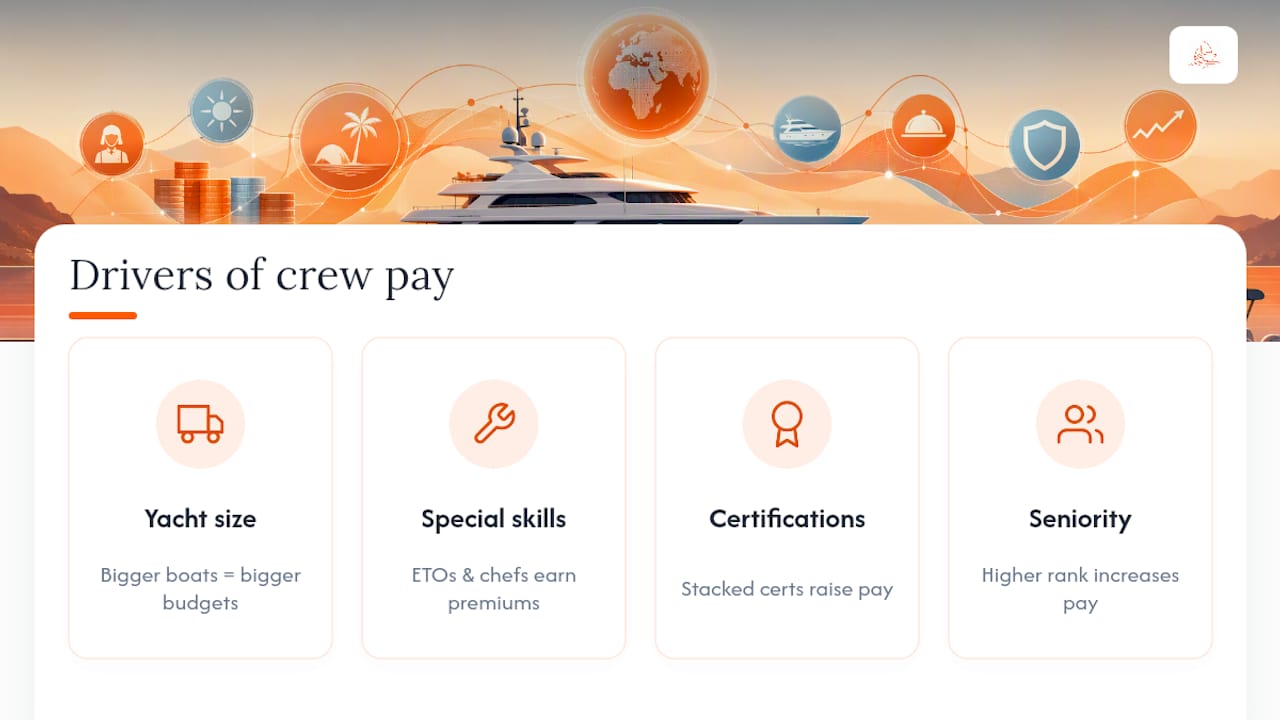
Four factors reliably push pay higher: yacht size (bigger boats, bigger budgets), specialized skills (ETOs and trained chefs earn premiums), stacked certifications, and seniority. A third officer with an ETO ticket will usually out-earn a third officer without one, even at the same rank.
How to Land Your First Yacht Crew Job and Move Up
- Pick one department. Deck, interior, engineering, or galley. Tailor your CV to that lane instead of presenting yourself as a generalist.
- Assemble your paperwork. A valid passport, a professional headshot, written references, your STCW certificate, and your ENG1 medical. Recruiters and captains scan applications for these documents before they read anything else.
- Go where the jobs are. Specialist crew recruiters, dedicated crew job boards, and dock-walking in yachting hubs like Antibes or Fort Lauderdale during the hiring season still work better than cold applications from home.
- Build toward the next rank. Cross-train in a second skill, chase a specialist certificate, and find a mentor in your department. Most crew move from entry-level to a supervisory rank within two to four seasons if they stay consistent.
Pro Tip: If you're coming from hospitality, a hotel, or private household service, say so explicitly. Interior recruiters actively look for that background because it maps directly onto guest service standards onboard.
Why Crew Composition Matters for Charters
Charter operations across global fleets rely heavily on crew quality, which is often the difference between a good trip and a forgettable one. A skilled Deck team keeps you safe on the water; a well-run Interior team is what actually makes a charter feel five star.
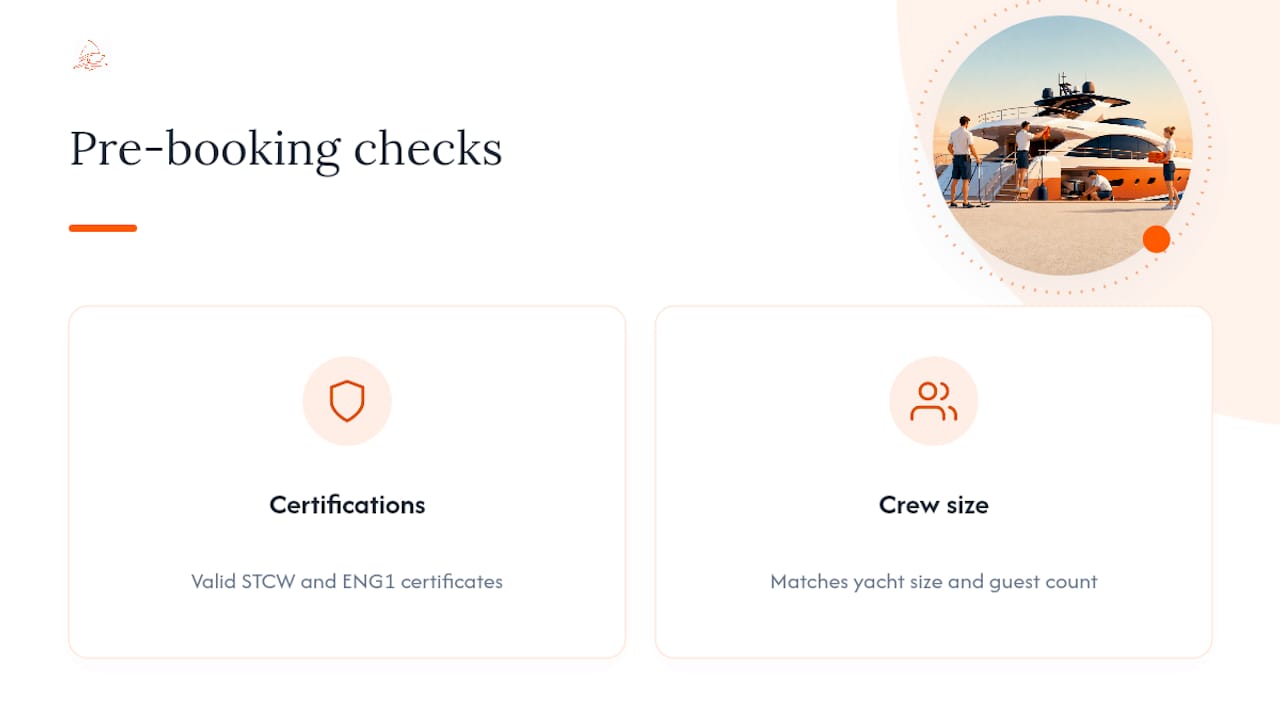
Before booking, ask two things: does the crew hold valid STCW and ENG1 certificates, and does the crew size match the yacht and guest count? Our guide on what every renter should check before booking covers this in more detail, and members researching charter options can browse current fleet access through Sailorix's membership programs.
A Realistic Look at the Yachting Career Path
Yachting rewards people who genuinely like hospitality and hard physical work in equal measure. The travel and pay progression are real, but so are 12 hour days and shared crew cabins during a busy charter season. Get your STCW and ENG1 first, write a focused CV for one department, and expect your first season to be about proving reliability, not chasing rank.
— SAILORIX
Sources
FAQ
What Are the Different Ranks in a Yacht Crew?
Each department has its own ladder: Deck runs Captain, Chief Officer, Bosun, and Deckhand; Engineering runs Chief Engineer down through 2nd/3rd Engineer and ETO; Interior runs Chief Stewardess down through 2nd/3rd Stewardess and Purser; Galley runs Head Chef, Sous Chef, and Crew Chef. The Captain sits above all four departments.
Do Yacht Crew Members Make a Salary?
Yes, yacht crew earn a fixed salary plus benefits like accommodation, food, and often tips during charter seasons. A 2024 salary guide puts Captain pay between $100,000 and $220,000 in the Florida and Bahamas market, with other ranks scaled by yacht size, experience, and region.
Is It Hard to Get a Yacht Crew Job?
It's competitive but achievable with the right preparation. Candidates who hold STCW and ENG1, choose one department, and present a focused, role-specific CV land jobs faster than generalists applying everywhere at once.
What Are the Different Roles in a Sailing Crew?
A sailing yacht crew mirrors the four core departments, though smaller sailing yachts often combine roles. A typical crew includes a Captain, one or two deckhands handling sail and line work, a stewardess covering interior service, and sometimes a chef, with engineering duties shared among the deck team on smaller boats.