
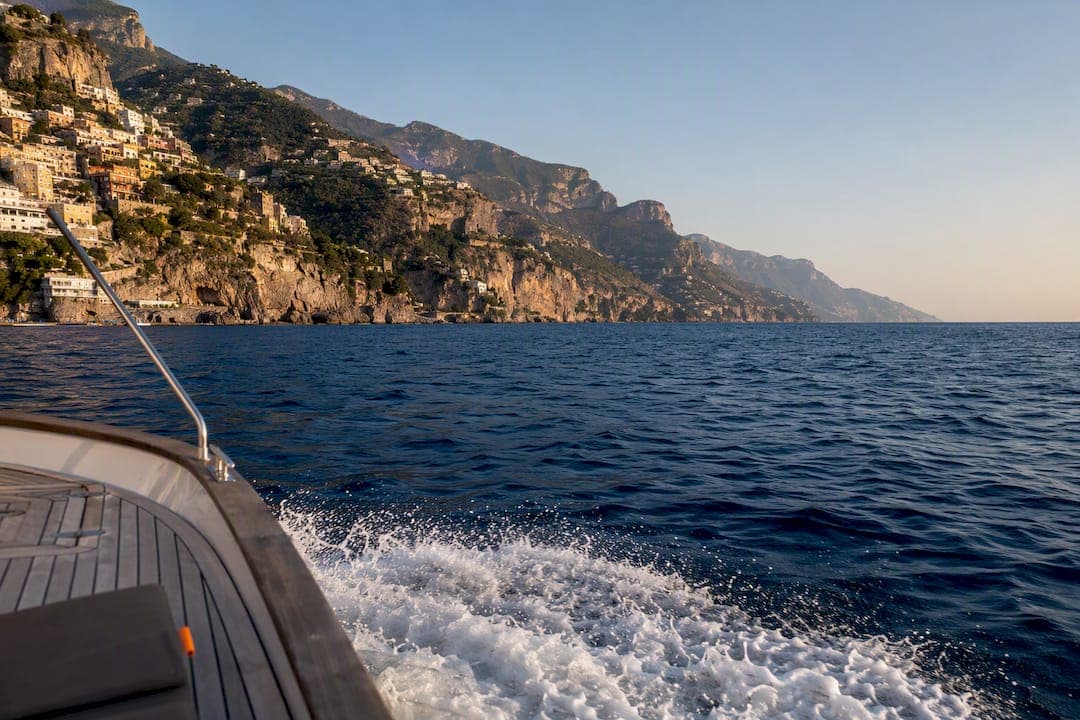
Most sailors do best with a 7-day loop or one-way run between Naples and Salerno, covering roughly 55 to 75 nautical miles at a relaxed 2 to 3 hours a day on the water. Short on time? A 5-day condensed version hits Capri, Positano, and Amalfi without the fluff. Got a week and a half? Extend to 9 to 12 days and add Ischia, Procida, or the Cilento coast. Whichever you pick, book berths early. July and August mooring balls in Capri and Positano vanish months out.
TL;DR:
- A one-way Naples to Salerno route covers about 65 nautical miles over 7 days, avoiding backtracking and saving at least half a day on long legs.
- The 7-day itinerary includes key stops at Procida, Ischia, Capri, Positano, and Amalfi, with daily sails averaging 2 to 3 hours.
- Booking berths early, especially for Capri and Positano, is crucial during peak months of July and August due to limited availability.
- Adding extensions like Cilento or Pontine Islands increases trip length, while a 5-day version omits smaller islands for a shorter experience.
- A mix of boat types is suitable, with catamarans favored for shallow anchorages and ease of mooring, but expect higher costs in peak season and limited last-minute availability.
Table of Contents
- Amalfi Coast Sailing Itinerary Options at a Glance
- Your 7-Day Amalfi Coast Sailing Itinerary, Day by Day
- How Do You Shorten or Extend the Amalfi Itinerary?
- Where Do You Start and Finish Your Charter?
- What Boat Type Fits an Amalfi Coast Sailing Route?
- What Does a 7-Day Amalfi Charter Cost?
- What Are the Key Safety Rules for Sailing This Coast?
- Marinas and Mooring: What You Need to Book in Advance
- What Are the Customs and Boating Rules Along This Coast?
- Where Should You Eat Along the Amalfi Coast?
- What Should You Pack for a Week Sailing This Coast?
- How Do You Avoid Crowds at Popular Stops?
- Booking Advice From SAILORIX's Amalfi Coast Experience
- A Publisher's Take on Pacing This Coast
- Ready to Book Your Amalfi Coast Charter?
- Sources
Amalfi Coast Sailing Itinerary Options at a Glance
The right length depends on what you're optimizing for: maximum coverage, minimum stress, or a lazy pace with long lunches. Here's how the four standard frameworks stack up.
- 5-day express (Naples round-trip or Sorrento to Positano loop): Roughly 35 to 45 nautical miles total, hitting Capri, Positano, and Amalfi in quick succession. Best for guests with limited vacation days who still want the postcard stops without rushing every leg.
- 7-day classic (Naples to Salerno one-way, or Salerno round-trip): The workhorse itinerary. A one-way run covers about 65 nautical miles total and avoids backtracking entirely, letting you add Procida and Ischia on the front end and two full nights at Capri without retracing your wake.
- 9 to 12-day extended (Naples to Salerno with Cilento or Pontine detour): Adds the quieter southern coastline past Salerno, or the Pontine Islands north of Naples, for sailors who want fewer ports per day and more time swimming.
- One-way Naples to Salerno: The most efficient use of a week. You start in the Bay of Naples, finish near the Cilento gateway, and never sail the same stretch of water twice.
The one-way structure matters more than most first-time charterers realize. A round-trip itinerary forces you to retrace at least one leg, usually the Capri to Sorrento stretch, which eats a half-day you could spend elsewhere. The Gulf of Naples and Phlegraean & Pontine Islands region actually splits into two distinct cruising pathways, and mixing them without planning your embarkation point correctly is how sailors end up with wasted days.
Your 7-Day Amalfi Coast Sailing Itinerary, Day by Day
This is the itinerary most charter brokers build around, and for good reason: it threads Naples' departure convenience with Salerno's easier exit toward Rome, hitting every headline stop along the way.
- Day 1: Naples to Procida (10 to 12 NM, about 2 hours). Leave Marina di Stabia or Mergellina by mid-morning and cross to Procida, the pastel-colored island most tourists skip in favor of Capri. Anchor in the Marina Corricella area or pick up a mooring near Chiaiolella. Spend the afternoon wandering the fishing village and eating dinner at one of the harborside trattorias before the crowds from mainland day-trippers arrive the next morning.
- Day 2: Procida to Ischia (6 to 8 NM, under 90 minutes). A short hop lets you spend most of the day ashore. Ischia's thermal spas (Poseidon Gardens or Negombo) are worth the entrance fee, and the Aragonese Castle at sunset is one of the most photographed spots in the Bay of Naples that somehow still isn't crowded by dinnertime.
- Day 3: Ischia to Capri (18 to 20 NM, roughly 3.5 hours). This is your longest open-water leg, so leave by 8 or 9 AM. Head straight for the Blue Grotto if sea conditions allow. Entry is weather-dependent and limited to daylight hours with calm seas, so build in flexibility. Overnight at Marina Grande, stern-to if space allows, or anchor off Marina Piccola on the quieter south side.
Statistic check: a 7-day classic itinerary typically runs 55 to 75 nautical miles total with average daily sails of just 2 to 3 hours, which is exactly why Day 3's longer crossing feels manageable rather than punishing.
- Day 4: Capri, second night (0 NM, full day ashore). Skip the boat entirely today. Ride the Monte Solaro chairlift from Anacapri early, before 10 AM, to beat both the heat and the line. Come back to the harbor by late afternoon when the day-boat traffic from Sorrento and Naples thins out; anchoring or mooring near Marina Piccola in the evening is noticeably calmer than midday.
- Day 5: Capri to Positano (17 NM, about 3 hours). Cross the Bay toward the Sorrentine Peninsula and into Positano's cliffside amphitheater. There's no proper marina here, only a buoy field, so call ahead on VHF or through a local mooring agent, especially in peak weeks. Dinghy ashore for dinner. Positano doesn't do budget dining, but the view is the point.
- Day 6: Positano to Amalfi via Furore and Conca dei Marini (12 to 14 NM, about 2.5 hours with stops). This is the highlight-dense day. Detour into the Fiordo di Furore, a narrow fjord-like inlet, then stop near Conca dei Marini for the Emerald Grotto. Entry is by small wooden rowboat and typically runs about €10 in cash, so keep small bills on board. Continue to Marina Coppola in Amalfi town for the night, one of the few full-service marinas on this stretch of coast.
- Day 7: Amalfi to Salerno via Ravello viewpoint and disembarkation (15 to 17 NM, about 3 hours). Sail past the base of Ravello, perched high on the cliffs. A quick shore stop here isn't practical by boat, so admire it from the water or plan a taxi excursion the night before from Amalfi. Finish at Marina d'Arechi in Salerno, where checkout and provisioning returns are straightforward and the marina staff handle turnovers daily.
How Do You Shorten or Extend the Amalfi Itinerary?
Trip length should follow your priorities, not the other way around. Here's how the trade-offs actually play out.
- 5-day compression: Cut Procida and Ischia and start directly at Capri. You'll lose the quieter islands but keep Capri, Positano, and Amalfi intact. Accept one longer sailing day (Capri to Amalfi direct, around 25 NM) instead of splitting it across two legs.
- 9 to 12-day extension: Add the Cilento coast south of Salerno for dramatic limestone cliffs and a fraction of the tourist traffic, or head north from Naples into the Pontine Islands (Ponza, Palmarola) for a slower, more remote pace before doubling back.
- Salerno start vs. Naples start: Salerno's Marina d'Arechi has a wider entrance channel and generally lower berthing fees, which suits catamarans better than Naples' tighter marinas. It also connects to Rome by Frecciarossa high-speed train in about 90 minutes, a real advantage if your group is flying into Fiumicino.
Where Do You Start and Finish Your Charter?
Your embarkation port shapes almost everything else about the trip, from which islands you can realistically fit in to how painful your final travel day feels.
Naples (Marina di Stabia or Mergellina) puts you closest to Procida and Ischia right out of the gate, which matters if those quieter islands are a priority. The airport is a short taxi ride away, making it the easier starting point for international arrivals.
Salerno (Marina d'Arechi) works better as a finish line, or a start if you're flying into Rome. The wider channel and lower fees make it a favorite for catamaran charters, and it sets up the Cilento extension perfectly if you've got extra days.
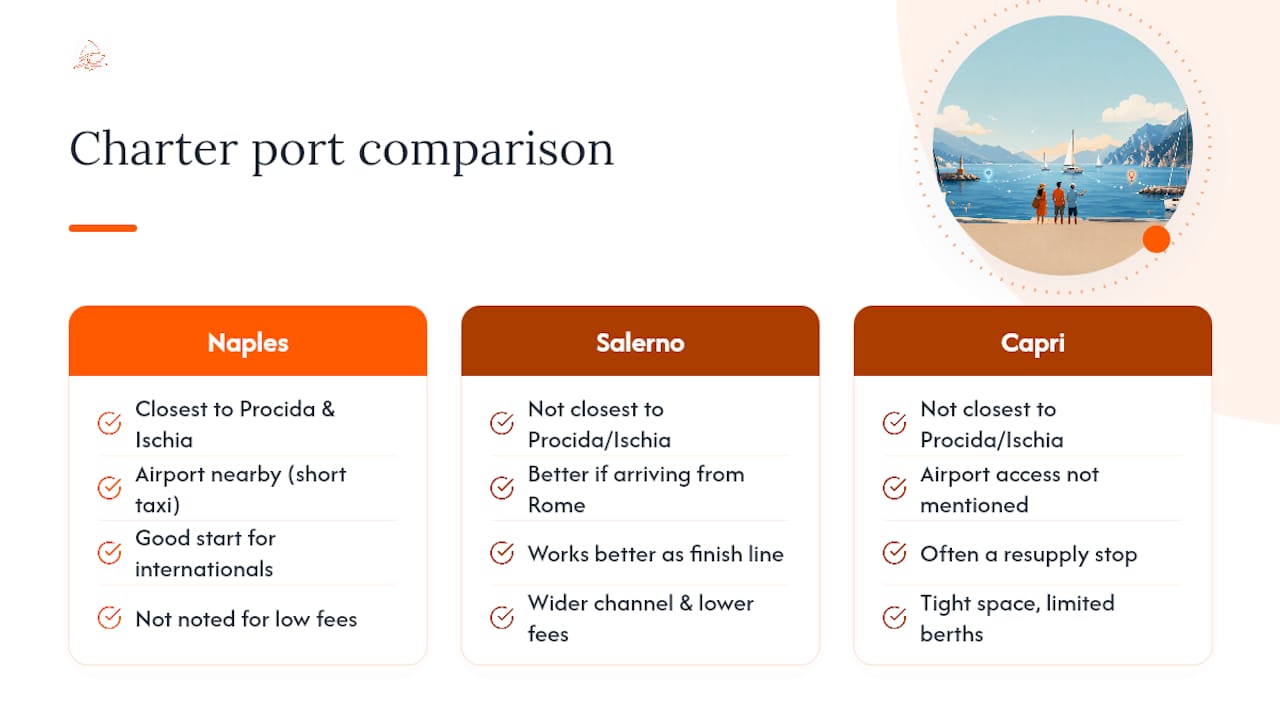
Capri (Marina Grande) occasionally serves as a mid-trip resupply point rather than an embarkation port, since space is tight and priority goes to overnight guests over new charters starting cold.
What Boat Type Fits an Amalfi Coast Sailing Route?
The coastline's geography, tight coves, shallow buoy fields, and a few genuinely narrow channels, makes boat choice more consequential here than on open-water routes.
- Catamarans draw less than five feet of water, letting them tuck into shallower anchorages near Furore and Conca dei Marini that deeper monohulls can't approach as closely. They're also more fuel-efficient over a week of daily hops.
- Motor yachts trade fuel economy for speed, useful if you want to cover the longer Ischia to Capri leg in half the time, but expect higher fuel and port costs across the week.
- Monohull sailing yachts split the difference: good sailing performance if wind cooperates, though most charterers here motor-sail most legs given the light, shifting coastal breezes.
- Crewed charters make sense for first-timers unfamiliar with Mediterranean mooring and buoy-field etiquette. Skippered charters suit confident sailors who want help with local knowledge. Bareboat only works if someone aboard has real Mediterranean coastal experience, since anchoring rules and marina protocols here differ from open-ocean sailing.
Groups of six to eight generally want a 40 to 45-foot catamaran with three or four cabins; larger groups should book well ahead, since summer availability for bigger boats disappears fastest.
What Does a 7-Day Amalfi Charter Cost?
Budgeting for this coast means accounting for more than the base charter rate, since local fees and provisioning add up fast in high season.
- APA (Advance Provisioning Allowance): Typically 20 to 30% of the charter fee, held separately to cover fuel, dockage, and provisioning, then reconciled at the end of the week with receipts.
- Fuel: Motor yachts burn noticeably more than catamarans over a week of coastal hops, particularly on longer legs like Ischia to Capri.
- Marina and mooring fees: Vary by port. Marina d'Arechi tends to run cheaper than tight, high-demand spots like Positano's buoy field or Marina Grande in Capri during peak weeks.
- VAT and local taxes: Applied to the base charter fee and vary by boat registration and charter agreement, so confirm what's included in your quote before comparing offers.
Budget snapshot for a 7-day charter: A modest sailing catamaran with a skipper runs at the lower end of the market; a crewed motor yacht with a full crew and premium provisioning sits at the top. The best value windows fall in late May, June, and early September, when rates soften and the coast is far less congested than peak Easter through October season.
Booking three to four months ahead, staying flexible on start dates, and avoiding the last two weeks of July generally saves the most money without sacrificing weather.
What Are the Key Safety Rules for Sailing This Coast?
The Amalfi Coast isn't rough water, but it is crowded water, and the risks here are mostly about traffic, not weather.
- Expect heavy hydrofoil and ferry traffic between Sorrento, Capri, and Positano, especially midday. Keep a dedicated lookout in approach channels and slow down well before you'd think necessary; ferry wakes here are sharper than they look from a distance.
- Summer afternoons often bring a building sea breeze from the west. Plan longer open crossings, like Ischia to Capri, for morning hours before it picks up.
- Blue Grotto and Emerald Grotto access both depend on calm seas and daylight hours. Neither allows large-yacht entry directly, so budget time and cash for tender transfers and local rowboat operators.
- If your group lacks Mediterranean mooring experience, insist on a local skipper for at least the Capri and Positano legs, and brief them clearly on which anchorages are non-negotiable fallbacks if a buoy field is full.
Pro Tip: Call ahead on VHF to local mooring services the morning you plan to arrive, not the night before. Buoy fields in Positano and Capri fill on a rolling basis, and an early radio call often secures a spot that a text message doesn't.
Marinas and Mooring: What You Need to Book in Advance
Berthing on this coast runs the gamut from full-service marinas to bare buoy fields with no facilities at all, and knowing which is which before you arrive saves a lot of circling.
- Marina d'Arechi (Salerno): The most spacious option, with a wide entrance channel that suits catamarans and larger yachts. Lower fees than the tourist-town marinas make it a common start or finish point.
- Marina Grande (Capri): Tight and in high demand. Stern-to berthing is common when space allows; otherwise plan to anchor off Marina Piccola on the island's south side.
- Marina Coppola (Amalfi): One of the few full-service marinas directly on the coast itself, useful for a comfortable overnight with shore power and provisioning access.
- Marina di Stabia / Mergellina (Naples): Standard embarkation points with easy airport access, though they can get congested at charter turnover times (Saturdays especially).
Anchoring works fine in open bays away from town centers, but the moment you're near a named tourist port, expect a managed buoy field instead. Booking mooring balls ahead becomes essential in July and August, when local buoy systems and private mooring services fill weeks before the actual sailing dates.
Pro Tip: Always keep one fallback anchorage in mind for each overnight stop. If Positano's buoy field is full, a quiet bay near Praiano a few miles west is usually your best backup without adding much sailing time.
What Are the Customs and Boating Rules Along This Coast?
Chartering in Italian waters means the boat's registration and VAT status, not your passport, determines most of the paperwork you'll deal with. If you're arriving from outside the European Union, standard passport and Schengen entry rules apply at your point of arrival, typically Naples or Rome, before you ever step aboard.
Once on the water, Italy enforces standard maritime rules around speed limits near swimming zones (usually a few hundred meters offshore), no-wake zones near marinas, and designated protected marine areas where anchoring is restricted, including parts of the Marine Protected Area around Punta Campanella near Sorrento. Your skipper or charter company should brief you on current restricted zones, since these shift seasonally based on marine conservation rules.
Fishing without a local permit is prohibited in most protected zones, and diving or snorkeling near shipping lanes and ferry approaches carries real risk given the traffic density discussed above. Discharge of waste is tightly regulated near the coast, and reputable charter operators handle holding tank pump-outs at marinas rather than at sea.
If you're on a bareboat charter, confirm which documents you need aboard, boat registration, insurance certificates, and the skipper's license if required for the vessel size, before leaving the dock. A skippered or crewed charter shifts this burden onto the crew, which is one more reason first-timers on this coast lean that direction.
Where Should You Eat Along the Amalfi Coast?
Provisioning covers breakfast and lunch on board, but dinner ashore is half the reason to sail this coast in the first place, and each stop has its own specialty worth planning around.
Procida and Ischia serve the freshest, least touristy seafood on the route, since both islands still run on local fishing fleets rather than imported supply chains. Order whatever the catch of the day is; menus here change based on what came off the boat that morning.
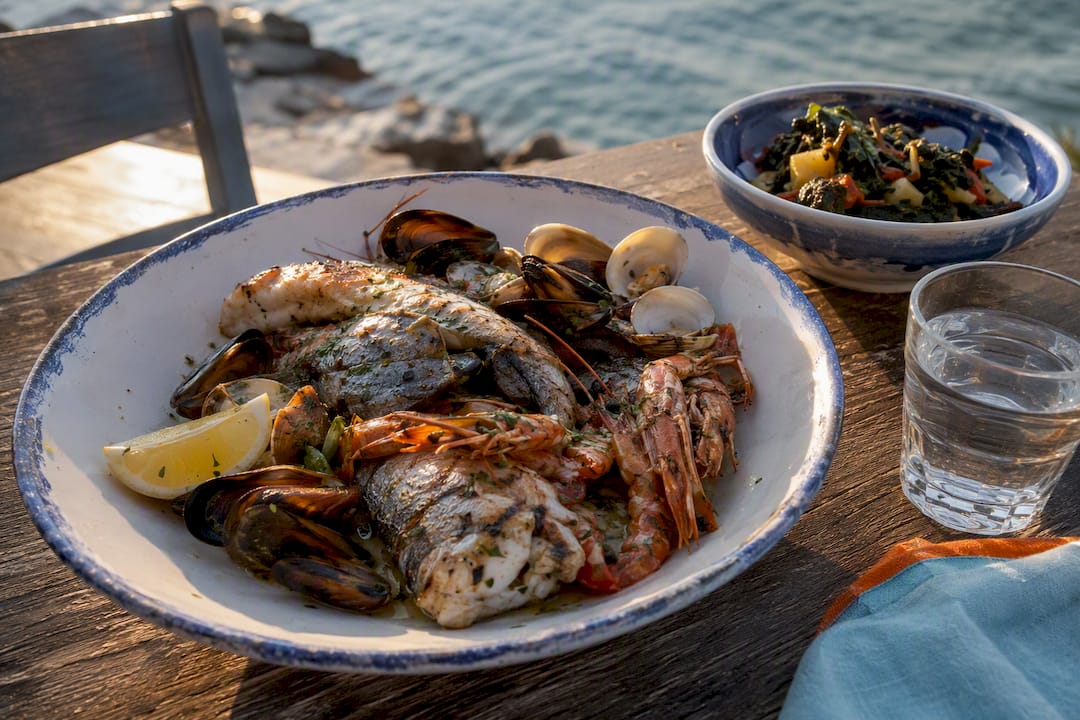
Capri's dining runs expensive and reservation-only in peak season, particularly around Piazzetta. Book ahead if you want a table with a view rather than settling for whatever's open when you dinghy ashore at 8 PM.
Positano and Amalfi both lean into lemon-based dishes, limoncello, lemon-glazed seafood, and the region's famous delizia al limone dessert, since the terraced lemon groves above both towns supply most of the coast. Ravello, visible from the water on Day 7, is known for slightly more refined, less crowded dining if you can arrange a shore excursion.
Cetara, a small fishing village between Amalfi and Salerno, makes colatura di alici, an anchovy extract that's been produced there for centuries and shows up in pasta dishes across the region. It's worth a detour if your schedule allows even a short stop.
What Should You Pack for a Week Sailing This Coast?
Gear needs here are shaped by the coast's mix of open crossings, tender transfers, and long days ashore in heat and sun.
Non-negotiables include soft-sided luggage (hard suitcases eat cabin storage), quick-dry clothing, reef-safe sunscreen, and a wide-brimmed hat that won't blow off in the cockpit breeze. Bring water shoes for grotto tender transfers and rocky anchorage entries, since dock ladders aren't always available.
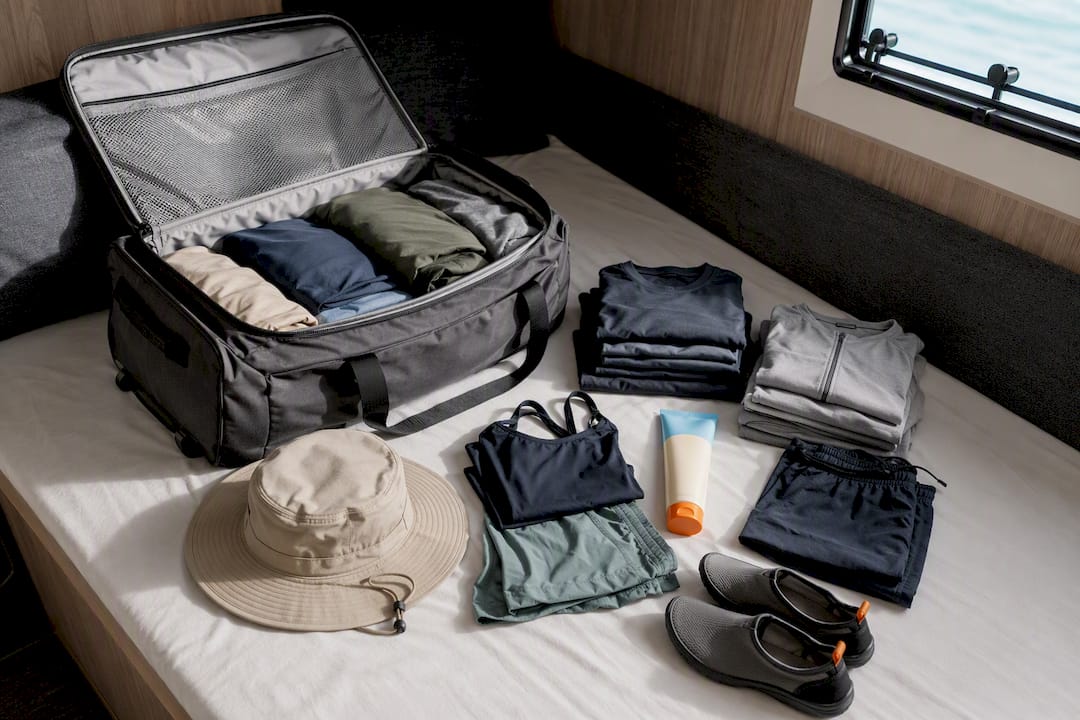
For safety and practicality, pack a dry bag for phones and cameras during tender rides, a portable battery pack for long shore days away from the boat's charging outlets, and a light rain shell even in summer since brief afternoon storms aren't rare. Cash matters more than you'd think: grotto entry fees, small trattorias, and some mooring services are cash-only, so keep small euro bills separate from your main funds.
Sailing-specific gear, life jackets, VHF radios, and safety equipment, is provided by the charter company, but confirm this in writing beforehand. A pre-charter checklist helps catch what the boat provides versus what you need to bring yourself.
How Do You Avoid Crowds at Popular Stops?
Crowding on this coast follows predictable patterns tied to day-trip boat schedules out of Naples and Sorrento, and timing your arrivals around them makes a real difference.
Capri sees the heaviest day-boat traffic between roughly 10 AM and 4 PM, when shared tours and Blue Grotto excursions arrive en masse from the mainland. Arriving by private charter the evening before, or staying two nights as outlined in the day-by-day plan above, lets you experience the island in the early morning and after 5 PM, when day-trippers have already left.
Positano's buoy field and beachfront get the busiest midday through late afternoon. Dinghy ashore for an early dinner around 7 PM rather than fighting for a table during the sunset rush that draws every day-tripper with a camera.
Amalfi town itself is smaller and less overwhelmed than Capri or Positano, but cruise ship days (check port schedules) can flood the main square for a few hours. If your dates coincide with a scheduled ship arrival, plan your walk to the cathedral either before 10 AM or after 4 PM.
Booking Advice From SAILORIX's Amalfi Coast Experience
A Sailorix membership cuts service fees to roughly 1%, which matters more on this coast than most, since peak-season base rates already run high before fees stack on top.
- Filter searches by embarkation port (Naples vs. Salerno), boat draft, and crew options first. It narrows results faster than scrolling generic listings.
- Confirm cabin count and draft against your actual anchorage plans, especially if Furore or Conca dei Marini are on your list.
- Have passports, sailing resumes (for bareboat), and deposit funds ready two to three months before July or August dates, since availability tightens fast.
A Publisher's Take on Pacing This Coast
We keep coming back to the same conclusion: a one-way Naples to Salerno run, or a Salerno start, just feels less rushed than the classic round-trip. No backtracking means every mile moves you forward. If you've got room for one under-the-radar stop, make it Cetara. It's smaller, quieter, and the anchovy pasta alone justifies the detour.
— SAILORIX
Ready to Book Your Amalfi Coast Charter?
Every itinerary in this guide only works if you can actually secure the boat, the berth, and the dates before someone else does. That's where most charter planning falls apart, not in the route, but in the booking friction: opaque fees, slow broker replies, and marinas that fill while you're still comparing quotes.

That fee difference alone can cover a night's marina berth or a decent chunk of your provisioning budget for the week. Compare a few quotes side by side, confirm Marina d'Arechi or Marina Coppola berth availability for your dates, and lock in your boat before peak-season weeks disappear. Head to Sailorix to check current Amalfi Coast availability and see what a membership saves on your specific dates.
Sources
For readers who want to dig deeper into specific legs, marina rules, or grotto timing before finalizing a route, these sources cover the operational details referenced throughout this guide:
- Amalfi Coast Yacht Charter Guide: Gulf of Naples, Capri & Twin Sailing Itineraries | WeBoating
- Amalfi Coast Sailing Itinerary: 7 Days Round-Trip from Salerno | Yacht Warriors
- Amalfi Coast: Boat and Snorkeling Tour listings — TripAdvisor