
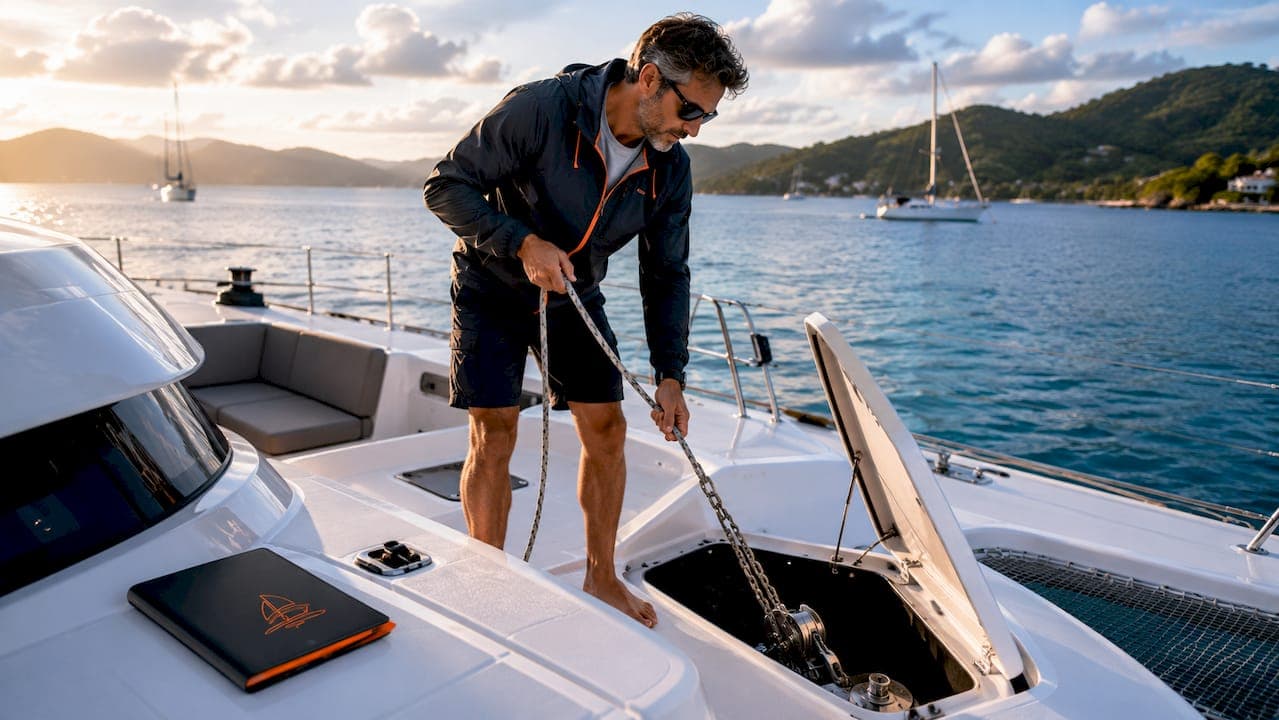
Proper anchoring is the single most important skill a sailor can master for safety at rest. The relationship between anchor and sailboat determines whether you sleep soundly or drag onto a reef at 2 a.m. Getting it right requires three things: the correct anchor type for your seabed, enough scope to maintain holding power, and a verified set before you shut off the engine. This guide covers every step, from choosing the right gear to picking a safe spot, using techniques trusted by experienced cruisers worldwide.
What anchor types work best for sailboats?
No single anchor type performs best in all seabed conditions. Selection depends on the ground you expect to encounter, whether sand, mud, rock, or weed. Carrying at least two anchors is the standard practice for any cruising sailor.
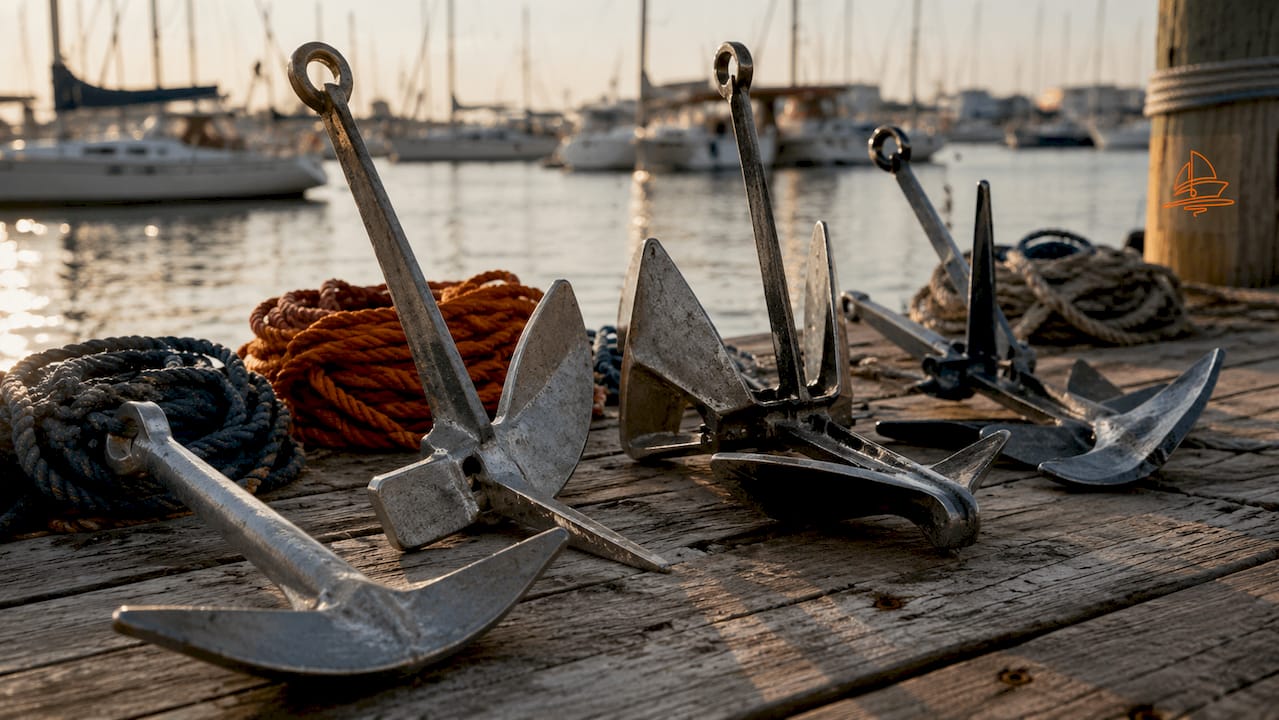
Common anchor designs and where they excel
The five anchor types you will encounter most often are:
- Scoop anchors (Rocna, Mantus style): New-generation scoop anchors set faster and reset better during wind shifts, making them the top choice for liveaboards and extended cruising. They perform well on sand, mud, and mixed bottoms.
- Plow anchors (CQR style): A proven design for mixed bottoms. Slower to set than modern scoops but widely available and reliable in moderate conditions.
- Fluke anchors (Danforth style): Exceptional holding power in soft sand and mud. Poor performers on rock or weed. Best used as a secondary or kedge anchor.
- Claw anchors (Bruce style): Good all-around performance and easy to reset. Holding power is lower than scoop designs in most conditions.
- Kedge anchors: A secondary anchor deployed to hold position in tight anchorages or to free a grounded boat. Every cruising sailor should carry one.
Cruising boats should carry two anchors: a primary new-generation scoop for most bottoms and a Danforth-style kedge for soft mud or sand. That two-anchor strategy covers the widest range of conditions you will realistically face.
Sizing your anchor correctly
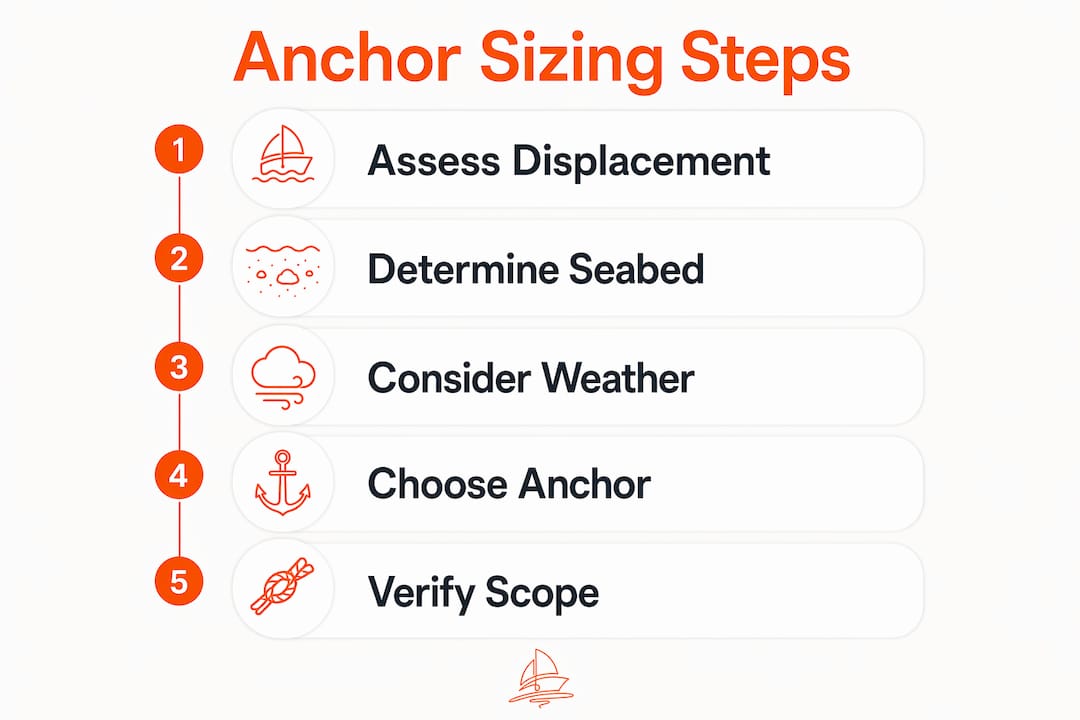
Anchor weight and size must match your boat's displacement and your cruising grounds. Upsizing anchors for severe weather is the standard recommendation for offshore cruisers. A day-trip anchor rated for calm conditions will fail in a 30-knot squall. When in doubt, go one size heavier than the manufacturer's minimum recommendation.
Pro Tip: If you plan to cruise in areas with strong tidal currents or frequent afternoon squalls, size your primary anchor for storm conditions, not average conditions. The weight penalty on the bow is worth the peace of mind.
How do you deploy and set a sailboat anchor?
Correct anchor deployment follows a specific sequence. Skipping any step increases the risk of dragging overnight.
- Choose your spot and approach into the wind or current. Slow the boat to near zero before dropping the anchor. Letting the anchor fall while moving forward piles chain on top of itself and prevents a clean set.
- Lower the anchor to the bottom. Do not throw it. Lower it hand over hand or use the windlass at low speed. Confirm it has touched the seabed before paying out rode.
- Pay out the correct scope. Maintain a scope of at least 6:1 for overnight anchoring. Scope is the ratio of rode length to water depth plus freeboard. In 4 meters of water with 1 meter of freeboard, you need at least 30 meters of rode. Holding capacity drops sharply when the lead angle at the seabed exceeds 8 degrees, which happens with shorter scope.
- Use chain rode for the first section. Chain's catenary effect keeps the pull angle low at the seabed. That low angle is what allows the anchor to dig in and hold. Synthetic rope alone cannot replicate this effect in deeper water or rough conditions.
- Back down slowly, then apply full reverse. Test the set with full reverse engine power to confirm holding strength. A gentle pull is not enough. Watch two fixed reference points ashore. If they stay aligned, the anchor is holding.
- Attach a snubber. A 10–12mm nylon snubber loop absorbs shock loads and reduces wear on the windlass. It also dampens the jerking motion that wakes you up at 3 a.m. in a chop.
Pro Tip: In crowded anchorages, short scope under 5:1 is sometimes unavoidable to limit your swing circle. If you must use short scope, choose a heavier anchor and check the set more frequently.
For a full step-by-step breakdown of the anchoring sequence, the yacht anchoring guide at Sailorix covers the process in detail.
How do you choose the right anchorage?
The anchorage you pick matters more than the anchor hardware you carry. Anchoring to leeward of the coast provides natural protection from waves and wind. That lee shore principle is the first filter for any anchorage decision.
Key factors for evaluating an anchorage
- Water depth: Safe anchoring depth is 3–5 meters with at least 1 meter clearance under the keel at low tide. Shallower than 2 meters risks grounding in a swell. Deeper than 8 meters requires very long scope and makes retrieval difficult.
- Seabed composition: Sand and mud hold well. Rock and weed are unreliable. Check the chart for bottom type before committing.
- Weather forecast: Check wind direction for the next 12–24 hours. An anchorage that is protected from the current wind may become exposed if the wind shifts overnight.
- Swing room: Calculate your full swing circle based on your scope. Confirm no other boats, rocks, or shoals fall within that circle.
| Condition | Recommended action |
|---|---|
| Sand or mud bottom | Primary scoop anchor, 6:1 scope minimum |
| Rock or weed bottom | Use kedge anchor; consider alternative site |
| Depth 3–5 meters | Standard setup with chain and snubber |
| Crowded anchorage | Reduce scope, use two anchors if needed |
| Forecast wind shift | Set a second anchor or reposition |
In tight or exposed conditions, deploying a second anchor in a V-pattern reduces swing and adds holding power. A kedge anchor set at 45 degrees from the primary is the standard technique for limiting movement in a narrow channel or bay.
How do you maintain and store your anchor gear?
Ground tackle fails when it is neglected. Regular inspection prevents the kind of failure that costs you a boat.
- Inspect chain links monthly. Look for elongated links, corrosion, and worn shackle pins. A single weak link can cause total failure under load.
- Check the anchor for cracks and bent flukes. Modern galvanized steel anchors are tough, but grounding events and rocky bottoms cause damage that is easy to miss.
- Rinse everything with fresh water after each use. Salt accelerates corrosion on chain, shackles, and the windlass drum. A 5-minute rinse extends the life of your ground tackle significantly.
- Inspect the snubber for chafe. Nylon degrades under UV exposure and abrasion. Replace the snubber at the first sign of fraying.
Pro Tip: Mark your chain at 10-meter intervals with colored paint or cable ties. Knowing exactly how much chain you have out removes the guesswork from scope calculations, especially at night.
Stow the anchor on the bow roller with the shank locked down and the chain secured in the locker. A loose anchor on the bow is a safety hazard in rough seas. The marine rope guide at Sailorix covers rode materials and how to select the right line for your anchor system.
Key takeaways
Proper sailboat anchoring requires the right anchor type, a scope of at least 6:1, a verified set under full reverse power, and a leeward anchorage with 3–5 meters of depth.
| Point | Details |
|---|---|
| Anchor selection | Carry two anchors: a scoop primary and a Danforth-style kedge for varied bottoms. |
| Scope ratio | Use at least 6:1 scope overnight to keep the lead angle under 8 degrees. |
| Set verification | Apply full reverse engine power and use shore transits to confirm the anchor is holding. |
| Anchorage choice | Anchor to leeward in 3–5 meters of water with 1 meter of keel clearance at low tide. |
| Maintenance | Inspect chain, shackles, and snubber monthly and rinse with fresh water after every use. |
What anchoring has actually taught me
The most common mistake I see from sailors new to anchoring is trusting the anchor without verifying the set. They drop the hook, pay out some rode, and assume it is holding. Then the wind picks up at midnight and the boat is 200 meters from where it started.
The second mistake is choosing an anchorage based on convenience rather than protection. A marina is nearby, the chart shows a flat bottom, and the water looks calm. But if the wind shifts northwest at 0200, that calm bay becomes a washing machine. The lee shore principle is not optional. It is the foundation of every anchoring decision.
What I have found after years of cruising is that anchor confidence comes from repetition and honest testing. Back down hard every single time. Use shore transits every single time. Do not skip the snubber because the night looks calm. The nights that look calm are exactly when sailors get complacent.
Anchor weight also matters more than most sailors admit. The instinct is to go lighter to save weight on the bow. The correct instinct is to go heavier and sleep better. A heavier anchor on a well-maintained chain is the cheapest insurance you can buy on a cruising boat.
— Sailorix
Plan your next sailing trip with Sailorix
Anchoring well starts before you leave the dock. Knowing your destination, the expected seabed, and the local weather gives you the information you need to anchor safely every time.

Sailorix is a global boat booking platform that connects sailors with yachts and boats worldwide at transparent prices. Members pay €100 per year and access bookings with only around 1% in service fees, far below the industry standard. Whether you are planning a coastal cruise or an offshore passage, browse available boats on Sailorix and get on the water without overpaying for the booking itself.
FAQ
What is the correct scope ratio for overnight anchoring?
The minimum scope for overnight anchoring is 6:1, meaning 6 meters of rode for every 1 meter of depth plus freeboard. Holding capacity drops sharply below this ratio as the lead angle at the seabed increases.
What is the best anchor type for a sailboat?
New-generation scoop anchors set faster and reset better during wind shifts than older designs, making them the best primary anchor for most cruising sailors. Carry a Danforth-style fluke anchor as a secondary for soft mud and sand.
How do you test if your anchor is holding?
Apply full reverse engine power after setting the anchor and watch two fixed reference points ashore. If the points stay aligned, the anchor is holding. A gentle pull test is not sufficient to confirm a secure set.
How deep should the water be when anchoring a sailboat?
Safe anchoring depth is 3–5 meters with at least 1 meter of clearance under the keel at low tide. Shallower water risks grounding in a swell; deeper water requires very long scope and makes retrieval harder.
Why should you use a snubber when anchored?
A nylon snubber loop absorbs shock loads from wind gusts and wave action, reducing strain on the windlass and chain. It also reduces the jerking motion on the boat, improving comfort during overnight stays.