
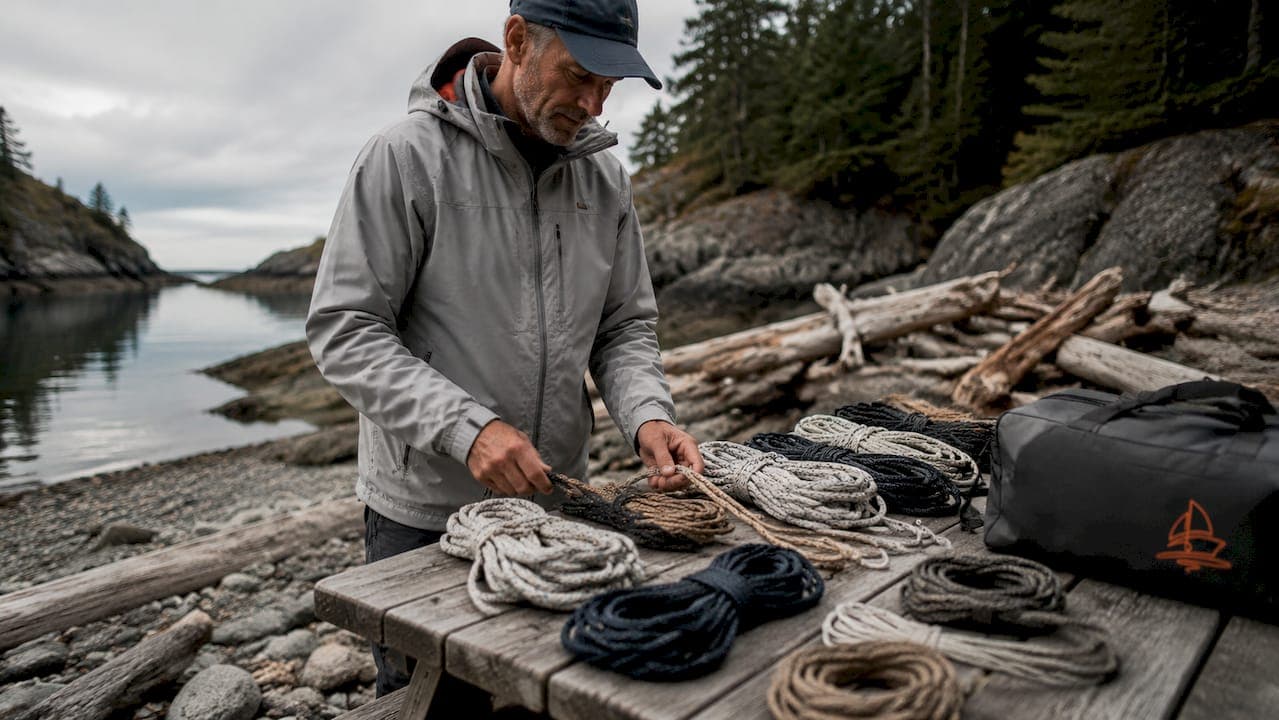
Marine rope is a synthetic line engineered to withstand saltwater, UV exposure, abrasion, and the constant dynamic loads that come with life on the water. Unlike general-purpose cordage, modern marine rope is built from synthetic fibers that resist rot and deliver consistent strength across wet and dry conditions. The right choice depends entirely on what you're doing aboard: mooring, anchoring, rigging, or towing each demands a different set of properties. Materials like nylon, polyester, polypropylene, and HMPE (sold commercially as Dyneema) cover the full range of those needs.
What are the main types of marine rope and their properties?
No single rope works for every task on a boat. The fiber and construction together determine how a line handles, how long it lasts, and whether it's safe for a given load point.
The four core synthetic fibers
Nylon is the go-to fiber for anchor warps and mooring lines that need to absorb shock. It stretches up to 25–30% under load, which acts like a built-in buffer against sudden jerks from waves or wind. The tradeoff is UV sensitivity. Nylon degrades faster in direct sunlight than polyester, so it works best in applications where the line spends time submerged or in the shade.
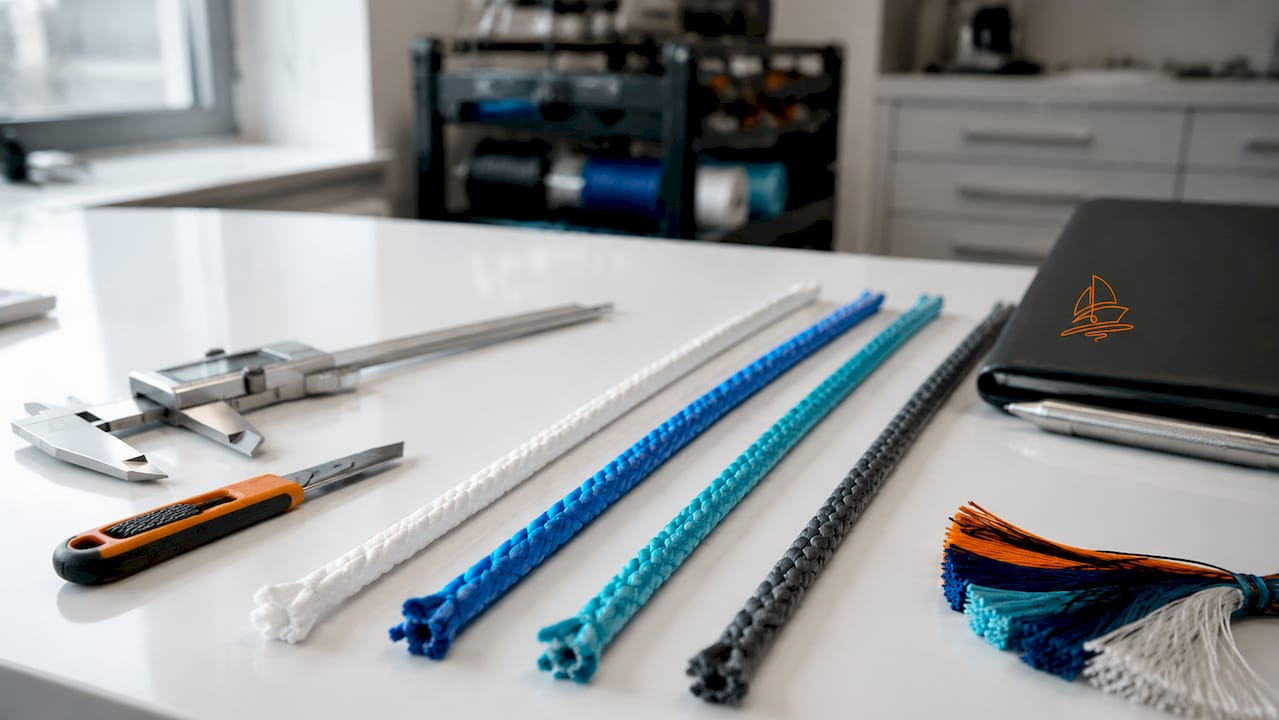
Polyester is the workhorse of general-purpose boating rope. It offers low stretch, strong UV resistance, and solid abrasion resistance, making it the default choice for dock lines, sheets, and halyards. A 24 mm polyester double braid dock line, for example, carries a breaking strength of 23,150 lb. That figure illustrates why polyester double braid is the standard for boats exposed to rough weather at the dock.
Polypropylene floats, which makes it useful for water ski tow lines, rescue lines, and any application where you need the rope to stay on the surface. It costs less than nylon or polyester. The weakness is UV degradation: polypropylene breaks down faster in sunlight than any other common marine fiber, so it's not the right pick for permanent rigging or long-term mooring.
HMPE (High-Modulus Polyethylene), marketed as Dyneema by DSM, delivers the highest strength-to-weight ratio of any synthetic fiber. It's used for high-load mooring on commercial vessels, wire rope replacement, and performance sailing applications where weight aloft matters. HMPE has almost zero stretch, which is an advantage in rigging but a liability in shock-absorbing applications like anchoring.
Construction types and how they affect performance
Rope construction shapes how a line handles and grips just as much as the fiber does. Three constructions dominate marine use.
3-strand twisted rope is the oldest and most recognizable form. It grips cleats and capstans well, splices easily, and holds up to abrasion. It's stiffer than braid, which some sailors find harder to handle on winches.
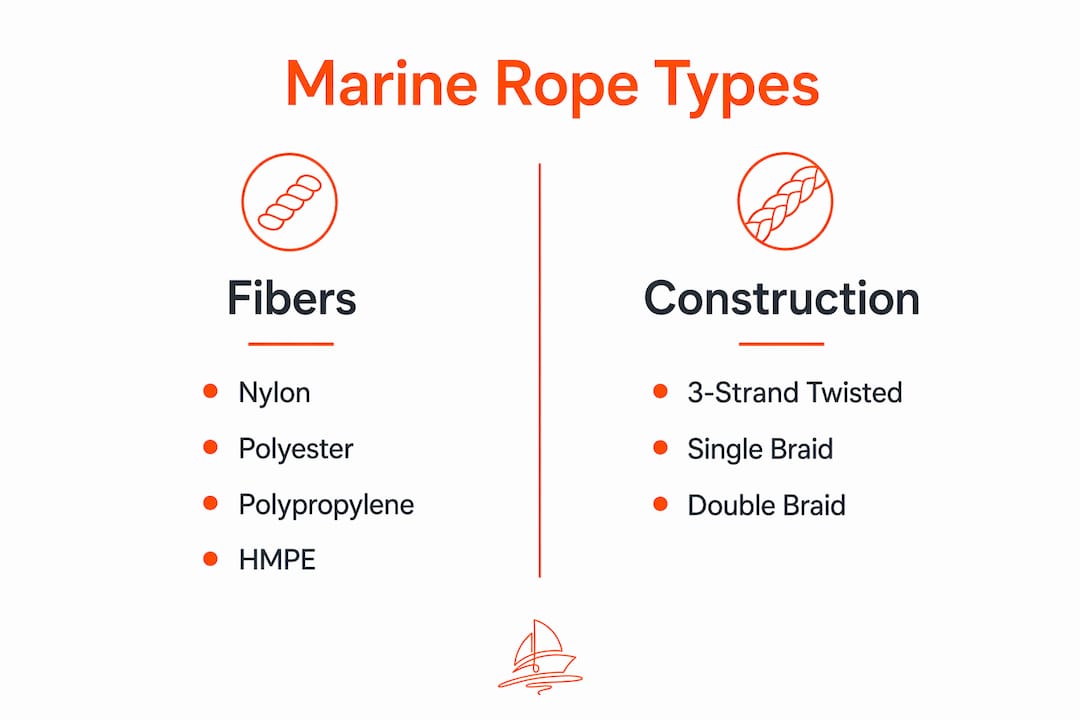
Single braid is soft, flexible, and easy to coil. It works well for light-duty applications and is popular for control lines on smaller boats.
Double braid (also called braid-on-braid) combines a braided core with a braided cover. This construction delivers the best combination of strength, flexibility, and abrasion resistance. It's the standard for dock lines, halyards, and sheets on cruising and racing sailboats.
| Fiber | Stretch | UV Resistance | Best Use |
|---|---|---|---|
| Nylon | High | Moderate | Anchor rode, mooring |
| Polyester | Low | High | Dock lines, sheets, halyards |
| Polypropylene | Low | Poor | Floating utility lines |
| HMPE/Dyneema | Near zero | High | High-load rigging, wire replacement |
| Construction | Flexibility | Grip | Strength |
| 3-strand twisted | Moderate | High | Good |
| Single braid | High | Low | Moderate |
| Double braid | High | Moderate | Excellent |
How do you choose boating rope for each application?
Diagnosing the problem comes before picking a rope. Most sailors replace lines because of stretch failure or wear, not because they want a different brand. Knowing why your current rope is failing tells you exactly what property to prioritize in the next one.
Mooring and dock lines
Mooring lines need thickness, elasticity, and abrasion resistance. Nylon and polyester blends work well here because they absorb the shock loads that come from wakes and weather. For yacht anchoring, nylon is the preferred fiber for the rope portion of an anchor rode because its elasticity cushions the boat against sudden pulls. Many anchor setups combine a nylon rope section with a length of chain at the bottom for abrasion protection near the seabed.
Rigging and sailing lines
Sheets and halyards require low stretch and compatibility with deck hardware like winches and clutches. Polyester double braid covers most cruising applications. Performance sailors often step up to HMPE or hybrid constructions that combine a Dyneema core with a polyester cover. For guidance on how rigging hardware interacts with line choice, the mast and deck hardware setup matters as much as the rope itself.
Towing lines
Towing puts extreme, unpredictable loads on a line. HMPE handles the strength requirement, but its near-zero stretch means shock loads transfer directly to the attachment points. Nylon's elasticity makes it a safer choice for recreational towing where load spikes are common. Many commercial operators use mixed-fiber lines that combine the strength of HMPE with the controlled stretch of nylon or polyester.
Common selection mistakes
- Buying the thinnest line that meets the minimum strength rating, ignoring abrasion wear over time
- Using polypropylene for permanent dock lines because it's cheap, then replacing it every season
- Choosing a line by breaking strength alone without checking elongation at break or wet-versus-dry strength stability
- Ignoring hardware compatibility, particularly on winches where the wrong construction causes uneven wear
Pro Tip: Before you replace a worn line, look at where it failed. Chafe at a chock or cleat means you need better abrasion resistance or a chafe guard. Stretch failure under load means you need a lower-elongation fiber. Failure at the knot means you need a splice.
What specifications and techniques actually matter for marine rope?
Breaking strength is the number printed on the label. Working load is the number you should actually use. The standard safety factor for marine applications is 5:1 to 10:1, meaning a line rated at 10,000 lb breaking strength should carry no more than 1,000–2,000 lb in regular use. That margin accounts for knots, wear, UV degradation, and dynamic shock loads.
Diameter, strength, and sizing
A common rule of thumb for dock lines is 1/8 inch of rope diameter for every 9 feet of boat length. A 36-foot boat needs roughly a 1/2-inch line as a minimum. That guideline applies to polyester and nylon lines under normal conditions. HMPE lines can go thinner for the same strength, which is why they're popular on racing boats where weight and windage matter.
Why splicing beats knots every time
Double-braid eye splices retain 90–100% of a rope's rated breaking strength. Knots typically reduce strength by 50% or more. That difference is not a minor technical detail. On a load-bearing attachment point like a mooring cleat or anchor shackle, a knot can cut your effective rope strength in half. An eye splice with a stainless steel thimble distributes the load evenly and prevents the rope from chafing against the hardware.
Splicing double braid takes practice, but the technique is learnable with a fid set and a good tutorial. The key steps are measuring the correct bury length for the core, tapering the splice to avoid a hard spot, and finishing the cover tightly so the splice locks under load.
| Spec | Example Value | What It Means |
|---|---|---|
| Diameter | 24 mm (15/16 in) | Suitable for large cruising boats |
| Breaking strength | 23,150 lb | Maximum load before failure |
| Elongation at break | ~18% | Stretch capacity under full load |
| Working load (5:1) | ~4,630 lb | Safe operational load limit |
| Construction | Double braid | High strength and flexibility |
Pro Tip: If your rope runs over a winch, choose a low-torque construction. Low-torque ropes are engineered to resist twisting under load, which reduces localized wear on the winch drum and gives you cleaner load control.
What environmental factors affect marine rope longevity?
UV exposure is the most underestimated enemy of synthetic rope. Nylon loses strength faster in direct sunlight than polyester does. If your lines sit in the sun year-round, polyester or UV-stabilized constructions will outlast nylon by a significant margin. Manufacturers now engineer UV stabilizers directly into the fiber, but no synthetic rope is immune to long-term sun exposure.
Saltwater affects all fibers, but synthetic ropes are specifically designed to resist the rot and degradation that destroyed natural fiber ropes like manila and hemp. Salt crystals can accumulate inside a rope's core over time, acting as an internal abrasive. Rinsing lines with fresh water after saltwater use extends their service life noticeably.
Dynamic loading is the factor most boaters overlook. Waves, wakes, and wind create repeated cycles of tension and release. Elongation at break and stable wet-versus-dry strength under cyclic loading are the specifications that matter most for mooring lines exposed to this kind of stress. A rope that tests well in a single-pull lab test may perform very differently after thousands of load cycles in a marina.
Key maintenance practices that extend rope life:
- Rinse lines with fresh water after saltwater exposure and let them dry before storage
- Inspect for core damage by untwisting or opening the braid at regular intervals
- Replace lines that show glazing, stiffness, or visible core damage, even if the cover looks intact
- Use chafe guards at contact points like chocks, cleats, and fairleads
- Store coiled lines away from direct sunlight when not in use
Key takeaways
Choosing the right marine rope means matching fiber and construction to the specific load, environment, and hardware of each application aboard your boat.
| Point | Details |
|---|---|
| Match fiber to function | Use nylon for shock absorption, polyester for general use, HMPE for high-load rigging. |
| Construction shapes handling | Double braid offers the best strength and flexibility for most cruising applications. |
| Splice instead of knot | Eye splices retain 90–100% of breaking strength; knots cut it by 50% or more. |
| Apply a safety factor | Use a 5:1 to 10:1 ratio between breaking strength and working load for safe operation. |
| Maintain proactively | Rinse, inspect, and replace lines based on wear indicators, not just visible cover damage. |
What Sailorix has learned about rope selection
Most boating enthusiasts overbuy on rope specs for non-critical lines and underbuy on the lines that actually matter. I've seen sailors run premium Dyneema halyards on a cruising boat that never races, while the dock lines holding that same boat in a storm are cheap polypropylene from a hardware store. The priorities are backwards.
The real skill in rope selection is not knowing which fiber has the highest tensile strength. It's knowing which lines on your specific boat carry the highest risk if they fail. Those are the lines worth spending money on and maintaining carefully. Everything else is a cost-versus-lifespan calculation.
Hardware compatibility is the detail that catches people off guard most often. A rope that performs perfectly on a cleat can destroy itself on a winch if the construction generates torque under load. Before you buy a new line for a winch application, check whether the manufacturer specifies low-torque construction. That one detail can double the working life of the line.
Wear indicators are your best maintenance tool. Glazing on the cover means heat damage from friction. Stiffness in a normally flexible line means salt crystal buildup or UV degradation in the core. A line that looks fine on the outside can be significantly weakened inside. The only way to know is to open it up and look.
— Sailorix
Find the right rope for your next voyage with Sailorix
Planning a sailing trip means getting every detail right, from the lines on your boat to the vessel itself. Sailorix connects boaters worldwide with yachts and boats at the lowest market prices through a straightforward membership model. For €100 per year, you get access to bookings with roughly 1% service fees, far below the 10–20% most platforms charge.
Whether you're chartering a cruising yacht that needs proper mooring lines or a performance sailboat where rigging specs matter, Sailorix gives you the tools to plan and book with confidence. Explore available vessels and get expert support for your next trip at Sailorix.
FAQ
What is marine rope made of?
Marine rope is made from synthetic fibers including nylon, polyester, polypropylene, and HMPE (Dyneema). Synthetic fibers outperform natural materials like manila in rot resistance, strength consistency, and durability in saltwater conditions.
What is the best rope for sailing halyards and sheets?
Polyester double braid is the standard choice for cruising halyards and sheets because it combines low stretch, UV resistance, and hardware compatibility. Performance sailors often use HMPE core lines for lower weight and near-zero stretch.
How do i know when to replace a marine line?
Replace a line when you see glazing on the cover, unusual stiffness, visible core damage, or consistent stretch beyond its rated elongation. Most sailors replace lines due to stretch failure or wear rather than a set time interval.
Why is splicing better than tying a knot on load points?
A properly executed eye splice retains 90–100% of the rope's breaking strength. Knots reduce strength by 50% or more, which creates a significant safety risk at high-load attachment points like mooring cleats and anchor shackles.
Does saltwater damage synthetic marine rope?
Saltwater does not rot synthetic rope the way it destroys natural fiber lines. However, salt crystals accumulate inside the braid over time and act as an internal abrasive. Rinsing lines with fresh water after saltwater use and drying them before storage significantly extends their service life.