
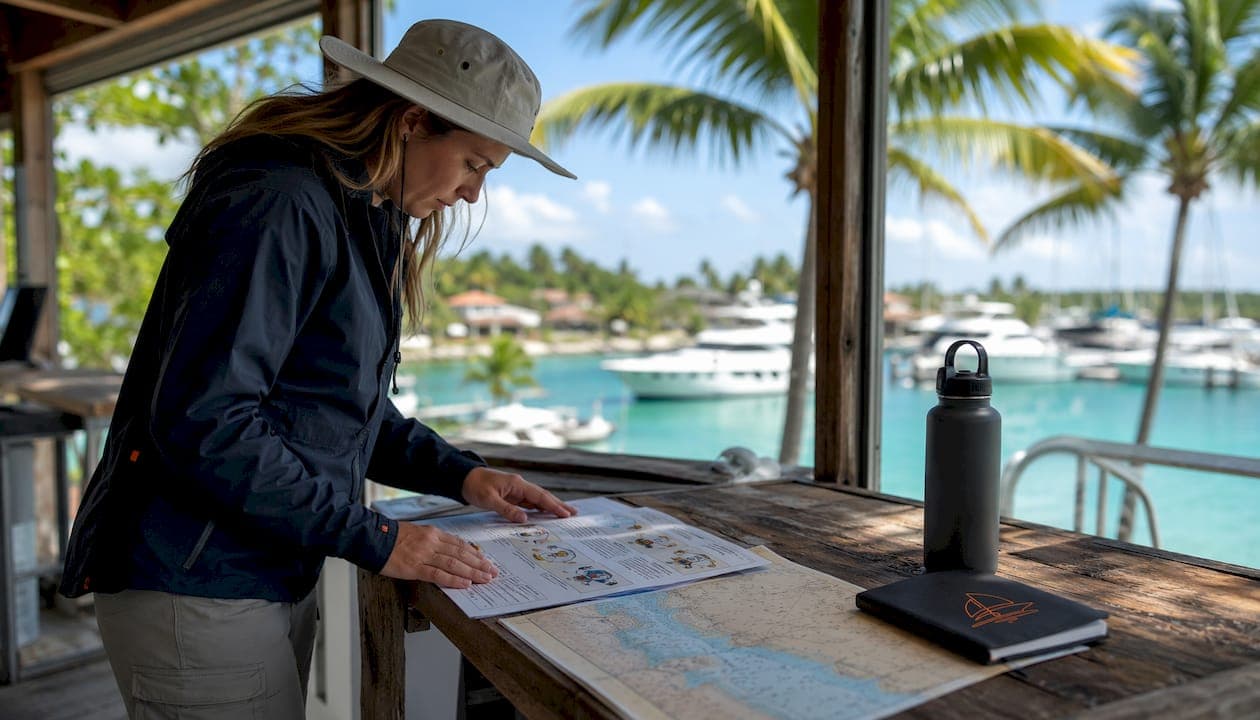
Haiti, Jamaica, Trinidad & Tobago, parts of the Bahamas, and Turks & Caicos are the Caribbean destinations most frequently flagged for elevated safety risk. Before booking any charter that touches these waters, pull the current U.S. State Department travel advisory for every planned stop and call the marina directly to ask about security. That two-step check takes 20 minutes and can save a trip.
By the numbers: The U.S. Government Accountability Office found that 73% of guns recovered and traced from Caribbean crime scenes between 2018 and 2022 originated in the United States. Of 7,399 firearms traced, 5,399 came from U.S. sources. That supply of weapons is a direct driver of the lethal gang violence that pushes homicide rates on certain islands far above regional norms.
Risk is rarely island-wide. The threat is almost always concentrated in specific urban districts, and tourist marinas tend to have better security than the surrounding city. The practical question for charterers is not "Is this island dangerous?" but "Is this marina, anchorage, and route safe for the days I plan to be there?"
Table of Contents
- Which Caribbean islands show the highest safety risks for charterers?
- Caribbean places commonly flagged as higher risk for travelers
- What elevated risk actually means when you're on the water
- Pre-charter safety checklist for Caribbean yacht trips
- What to do if safety deteriorates mid-charter
- How Sailorix helps you book safer Caribbean charters
- Key Takeaways
- A charterer's safety reality check
- Plan your Caribbean charter with Sailorix
- Useful sources to check before you book
Which Caribbean islands show the highest safety risks for charterers?
The U.S. State Department advisory system runs from Level 1 (Exercise Normal Precautions) to Level 4 (Do Not Travel). For charterers, the level is the fastest single signal to act on.
- Level 1: Normal precautions. Most of the Eastern Caribbean falls here.
- Level 2: Increased caution. Jamaica, Turks & Caicos, Dominican Republic, and Belize currently sit at this level.
- Level 3: Reconsider travel. Trinidad & Tobago carries a Level 3 designation due to gang violence, kidnapping, and homicide.
- Level 4: Do not travel. Haiti holds a Level 4 advisory, with kidnapping, gang control of territory, and severely limited U.S. consular capacity cited as primary reasons.
Other sources to check before booking: your embassy's alert feed, recent marina forums (Noonsite and Cruisers Forum both carry real-time incident reports), and local police social media accounts for the ports on your route.
When an island moves to Level 3, treat it as a trigger to reassess your route. Level 4 is a hard stop. A Level 4 advisory significantly limits the U.S. government's ability to evacuate or assist you, which also affects what your charter insurer will cover.
Pro Tip: For itineraries longer than 72 hours, set up a daily alert from the State Department's Smart Traveler Enrollment Program (STEP) for each country on your route. It takes five minutes to enroll and delivers real-time embassy alerts directly to your phone.
Caribbean places commonly flagged as higher risk for travelers
Most violence in the Caribbean is parochial in nature, meaning gangs are protecting territory rather than targeting tourists. That distinction matters operationally: a charterer who stays in established marina zones and avoids specific neighborhoods at night faces a very different risk profile than national homicide statistics suggest.
"Most gangs in the Caribbean are typically parochial, and focused instead on protecting their territory" — a 2024 United Nations report, as cited by BBC News. The same report named Jamaica, St. Lucia, and Trinidad as particular areas of concern for organized crime and lethal violence.
Here is how the most commonly flagged destinations break down for charterers:
- Haiti (Level 4): Nationwide gang control, kidnapping, and political collapse. No safe marina option exists for recreational charterers. Avoid entirely.
- Jamaica (Level 2): One of the region's highest homicide rates, recorded at 53.34 per 100,000 in 2022. Risk is concentrated in Kingston, Spanish Town, and parts of Montego Bay. Resort-adjacent marinas like those near Ocho Rios report fewer incidents.
- Trinidad & Tobago (Level 3): Specific Port of Spain neighborhoods (Laventille, Beetham, Sea Lots) carry serious gang and kidnapping risk. Tobago is considerably calmer than Trinidad. Night transits near Port of Spain are inadvisable.
- Turks & Caicos (Level 2): Recorded 48 homicides in 2024 against a population under 50,000, giving it one of the worst per-capita murder rates in the region. Most crime is concentrated in Providenciales. The territory experienced its first mass shooting in July 2024.
- Bahamas (Level 2): Nassau and parts of Grand Bahama carry elevated risk, particularly after dark. The Family Islands are generally much quieter.
- Saint Vincent & the Grenadines: Kingstown has a higher crime concentration; the Grenadines chain itself is among the most popular and relatively safer sailing grounds in the Caribbean.
Lower-risk options for comparison: the British Virgin Islands, St. Barts, Montserrat, Bonaire, and the Cayman Islands consistently appear on safer-destination lists and carry Level 1 advisories.
What elevated risk actually means when you're on the water
Country-level crime statistics describe what happens on shore. For charterers, the relevant threats are more specific.
At anchor and in marinas: Theft from unattended vessels is the most common incident type. Armed robbery at fuel docks and marina entrances has been reported in higher-risk ports. Avoid leaving the cockpit unattended at night in any anchorage outside a secured marina.
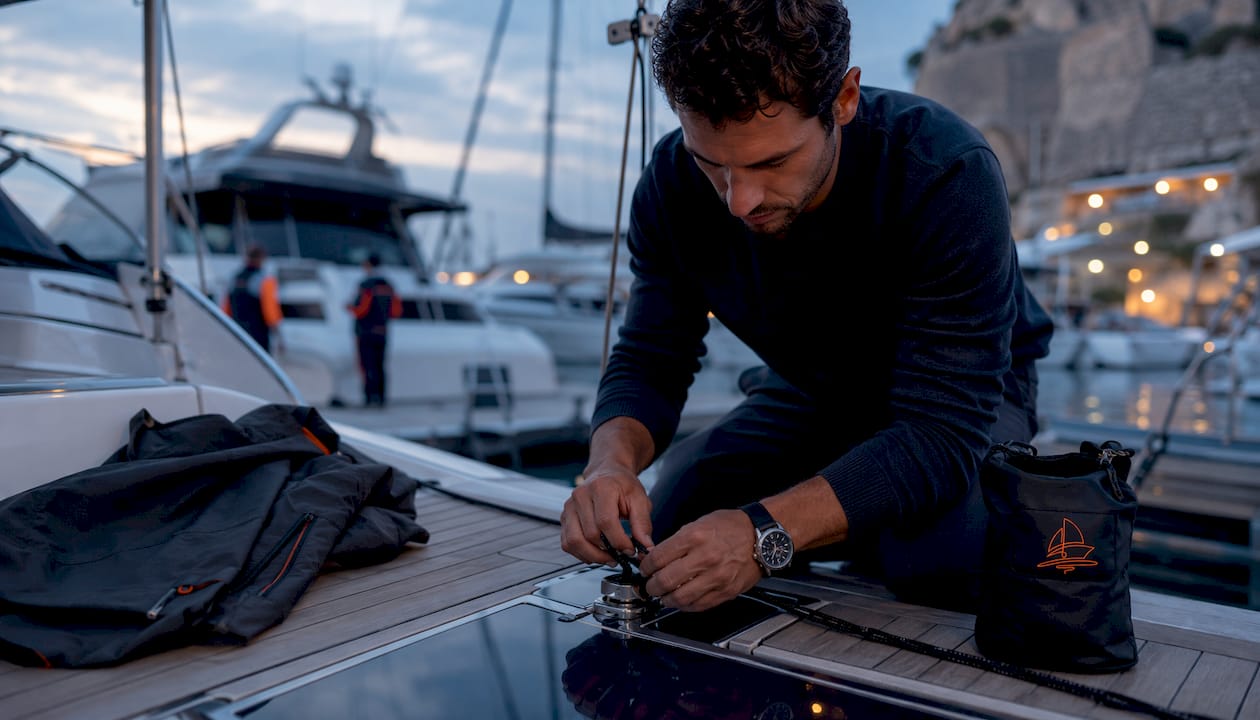
Night transits: Transiting through or near higher-risk ports after dark compounds every other risk. Reduced visibility limits your ability to identify approaching vessels, and local coast guard response times are slower at night in many territories.
Insurance and consular access: Charter insurance policies often exclude or limit coverage in Level 3 and Level 4 destinations. Confirm this in writing before departure. At Level 4, U.S. consular assistance is severely constrained.
Pro Tip: Carry redundant emergency communications: a functioning VHF on Channel 16, a personal satellite messenger (Garmin inReach or SPOT), and a waterproof backup battery. Store passports and cash in a locked, out-of-sight onboard safe.
If something goes wrong, contact in this order:
- Vessel skipper (if you are not the skipper)
- Marina manager at your current or nearest berth
- Charter company emergency line
- U.S. Embassy or nearest U.S. Consulate
- Local coast guard or maritime authority
Pre-charter safety checklist for Caribbean yacht trips
Use this before you book and again before you depart.
- Confirm advisory status for every planned stop at travel.state.gov.
- Call the marina directly. Ask about gated access, CCTV, overnight security patrols, and any recent incidents.
- Verify skipper credentials and local experience. Check licensing and references. Our guide on vetting boat rental operators covers the key questions to ask.
- Confirm insurance coverage for each port, especially any with Level 2+ advisories.
- Check onboard comms: VHF, EPIRB, satellite messenger, spare batteries.
- Plan daytime-only transits through higher-risk approaches. Review popular sailing routes for safer alternatives.
- Brief all crew and guests on night watch, shore rules, and what to do if local unrest begins.
- Store emergency contacts in three places: skipper's phone, chart table, and each guest's phone wallpaper.
| Risk signal to check | Action to take pre-booking |
|---|---|
| State Dept. advisory level | Check travel.state.gov for every stop; Level 3+ triggers route review |
| Recent violent incidents | Search marina name + "incident" on Noonsite and Cruisers Forum |
| Marina security features | Call marina directly; ask about gated access, patrols, CCTV |
| Local police capacity | Check embassy alerts and recent news for the port city |
Pro Tip: For hurricane season planning (June through November), check both weather advisories and port accessibility together. Storm damage can close marinas and reduce police presence simultaneously, compounding safety risk.
What to do if safety deteriorates mid-charter
Speed and clarity matter. Here is the sequence.
- Secure the vessel and account for everyone aboard.
- Move to a safer berth or get offshore if a transit is safe to make.
- Contact your skipper and charter operator immediately.
- Call the U.S. Embassy or nearest consulate. Save the number before you leave.
- Contact local coast guard or maritime authority on VHF Channel 16.
Follow-up steps once you are safe:
- Document the incident with photos, timestamps, and written notes.
- Preserve any physical evidence.
- Contact your charter insurer and open a claim.
- Notify family or travel agents of your status and location.
- File official reports with local police and the U.S. Embassy.
Familiarize yourself with pan-pan emergency call procedures before departure. Knowing the correct protocol under stress is the difference between a fast response and a delayed one.
How Sailorix helps you book safer Caribbean charters
Sailorix is built around giving charterers real choices, not just listings. When safety conditions change, the platform's low-friction rebooking and transparent operator records mean you can pivot quickly without absorbing a large service fee.
- Verified skipper add-ons: Book a credentialed local skipper directly through the platform, someone who knows which anchorages and marinas are currently operating safely.
- Location and marina filtering: Search by specific destination and boat type, so you can target marinas in lower-risk zones rather than defaulting to the nearest available berth.
- Transparent booking records: Full booking documentation supports insurance claims and emergency contacts if an incident occurs.
- Membership flexibility: The annual membership model (€100/year, ~1% service fees) keeps rebooking costs low when an advisory change forces a route adjustment.
Booking through a platform that maintains vetted operator relationships means you are not starting from zero when conditions shift. You already have a local contact, a documented charter agreement, and a support line.
Key Takeaways
The most effective approach to safer Caribbean chartering is to treat risk as localized, check official advisories for every stop, and book through vetted operators with rebooking flexibility.
| Point | Details |
|---|---|
| Check advisories for every stop | Use travel.state.gov before booking; Level 3+ should trigger a route reassessment. |
| Risk is localized, not island-wide | Urban districts carry most of the danger; established marinas are generally safer than national statistics suggest. |
| Carry redundant emergency comms | VHF on Channel 16, a satellite messenger, and pre-stored embassy contacts are non-negotiable gear. |
| Confirm insurance before departure | Charter policies may exclude Level 3+ destinations; verify coverage in writing. |
| Sailorix for flexible rebooking | The membership model keeps service fees near 1%, making itinerary changes affordable when advisories shift. |
A charterer's safety reality check
The conventional wisdom says "just avoid the dangerous islands." That is too blunt to be useful. Haiti is a genuine no-go. But writing off Jamaica, Trinidad, or the Bahamas entirely means missing some of the most rewarding sailing in the Western Hemisphere, based on a fear that applies to specific neighborhoods, not to the marinas where you will actually spend your time.
The smarter frame is operational: which berths are secure, which transits are daylight-only, and which routes keep you inside established tourist infrastructure? A charterer who answers those three questions before departure is far better positioned than one who simply picks "a safe island" without checking the marina's actual security posture.
Sudden spikes in violent incidents are rarely random. The GAO's firearms-trafficking data makes clear that supply-chain dynamics drive lethality in the region. When a port sees a spike, it is usually a signal of a structural shift, not a one-off event. That is why monitoring advisory changes throughout your trip matters as much as the pre-departure check.
Plan your Caribbean charter with Sailorix
Safer chartering starts with the right booking platform. Sailorix gives you access to a global fleet of vetted yachts and boats at roughly 1% service fees, far below the 10–20% typical elsewhere, so when an advisory changes and you need to rebook, the cost of pivoting stays low.
Add a verified local skipper at booking, filter by marina and destination to target lower-risk zones, and keep your charter documentation in one place for insurance and emergency use. Whether you are planning a week in the British Virgin Islands or a longer Eastern Caribbean loop, the platform's real-time availability search makes it straightforward to find a safer route that still delivers the trip you came for.
Search Caribbean charters on Sailorix and lock in your itinerary with the flexibility to adjust if conditions change.
Useful sources to check before you book
Conditions change fast. Bookmark these and check them within 48 hours of departure.
- U.S. State Department Travel Advisories — the authoritative Level 1–4 system for every Caribbean destination
- GAO: Caribbean firearms trafficking report — context on why homicide rates spike in specific territories
- BBC News: Turks & Caicos murder rate analysis — detailed reporting on localized crime spikes
- NJ.com: Haiti Level 4 advisory — current advisory language and consular limitations
- Statista: Caribbean crime statistics — regional homicide rate data by country
- Smart Traveler Enrollment Program (STEP) — free real-time embassy alerts for every country on your route
- Noonsite.com and Cruisers Forum — community-reported marina incidents and port conditions
Subscribe to STEP alerts for every island on your planned route. An advisory upgrade from Level 2 to Level 3 can happen with 24 hours' notice, and knowing before you arrive is the only way to respond in time.