
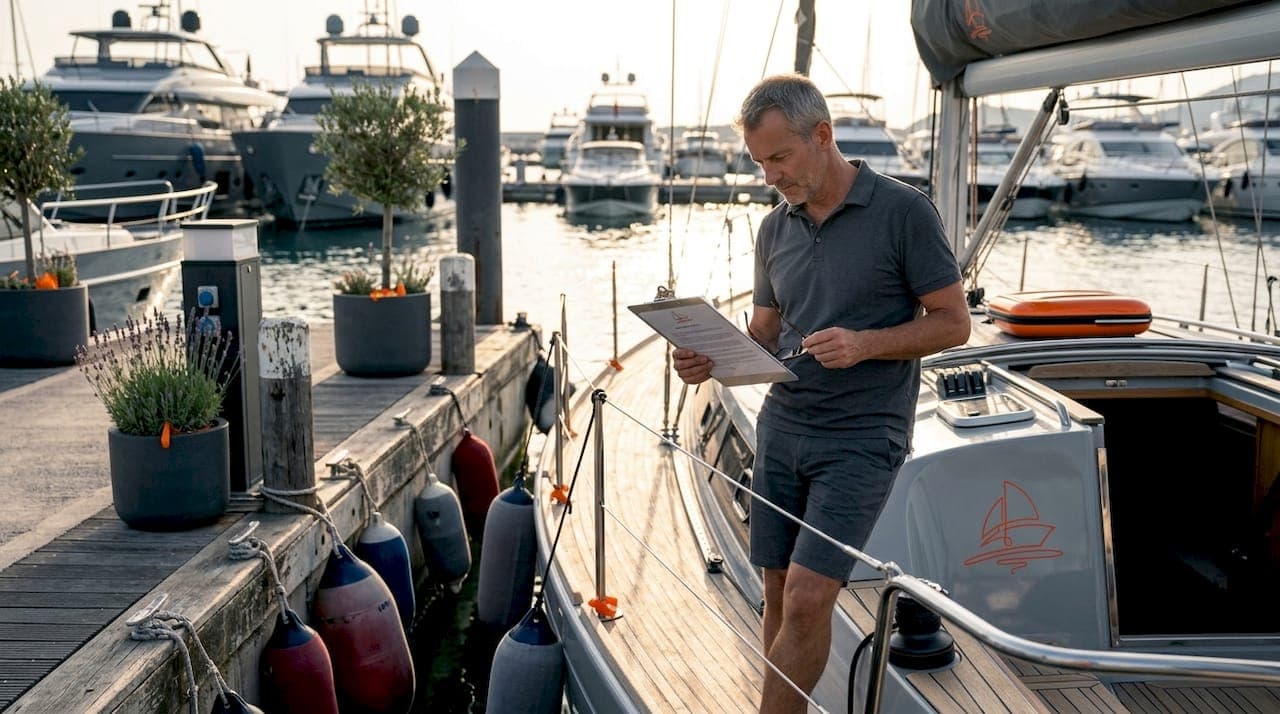
Renting a boat abroad is the process of booking and operating a vessel in a foreign country, requiring valid licenses, insurance coverage, knowledge of local regulations, and a clear understanding of rental logistics to keep your trip safe and legal. Done right, it gives you access to coastlines, islands, and anchorages that no tour bus or hotel ever reaches. This guide to renting boats abroad covers every step you need, from gathering the right paperwork before you fly to returning the boat without losing your deposit. Whether you want to charter a yacht in Croatia, rent a motorboat in Greece, or explore the Turkish Aegean, the process follows the same core framework.
What documents and licenses do you need to rent a boat overseas?
The International Certificate of Competence, known as the ICC, is the most widely recognized qualification for skippers renting boats in foreign countries. Issued by national sailing authorities such as the Royal Yachting Association in the UK or the United States Sailing Association, the ICC confirms that you meet a minimum competency standard. Many Mediterranean countries, including Greece, Croatia, and Turkey, require it by law before they hand you the keys. Some destinations also accept national licenses, but you should confirm this directly with your rental company before booking.
Beyond the ICC, local skipper certificates are sometimes mandatory, and language barriers can complicate the verification process. Always ask the rental base exactly which documents they accept, and get that confirmation in writing.
Here is what you typically need to have ready:
- ICC or recognized national sailing license valid for the vessel category and sailing area
- VHF SRC certificate, since marine VHF radio operation is often legally required and the Short Range Certificate proves you can handle emergency communications onboard
- Valid passport or government-issued ID for all adults on the rental agreement
- Signed rental agreement and credit card for the security deposit hold
- Crew list with full names, nationalities, and passport numbers for all passengers
- Logbook entries or sailing experience records, which some operators request to verify hours at sea
Pro Tip: Request the rental company's exact license requirements by email at least four weeks before departure. Some countries update their regulations seasonally, and a written response protects you if there is a dispute at check-in.
Age restrictions vary by country and boat type. In France, for example, motorboats under 6 meters and below 4.5 kW require no license at all, while larger vessels demand a coastal license. In contrast, Croatia requires an ICC plus a VHF certificate for virtually all charter vessels. Knowing the rules for your specific destination prevents last-minute scrambles.
How to select the right boat and manage rental agreements when booking abroad
Choosing the right vessel is where most first-time international renters make costly mistakes. The boat type should match your group size, experience level, and planned itinerary, not just your budget.
Follow this sequence when selecting and booking:
- Define your group size and comfort needs. A catamaran offers more deck space and stability for families, while a monohull sailboat suits experienced sailors who want performance. A motorboat or RIB works well for day trips along a coast.
- Match the boat to your route. Shallow-draft vessels are necessary for exploring Croatian islands or the Bahamas, where anchorages can be less than 1.5 meters deep.
- Read the fuel policy before signing. Returning fuel tanks at the same level as departure is standard practice. Operators who refuel on your behalf charge premium rates that can run 30 to 50 percent above harbor prices.
- Understand the deposit structure. Charter security deposits are pre-authorization holds on your credit card, typically between €3,000 and €8,000, released within 7 to 14 business days if no damage occurs. This is not a charge. It is a hold that reduces your available credit for the duration of the trip.
- Consider a damage waiver. Damage waivers like CDW cost roughly €150 to €300 per week but can reduce your maximum financial exposure to €300 or less. For most travelers, that math is straightforward.
- Check check-in and check-out times. Most Mediterranean charters operate on a Friday-to-Friday cycle. Late returns trigger penalty fees, so build buffer time into your last day.
Here is a quick comparison of the two most common deposit protection options:
| Option | Cost | Max liability |
|---|---|---|
| No damage waiver | €0 upfront | Full deposit (€3,000 to €8,000) |
| Standard CDW | ~€150 per week | Reduced to ~€1,500 |
| Premium CDW | ~€300 per week | Reduced to €300 or less |
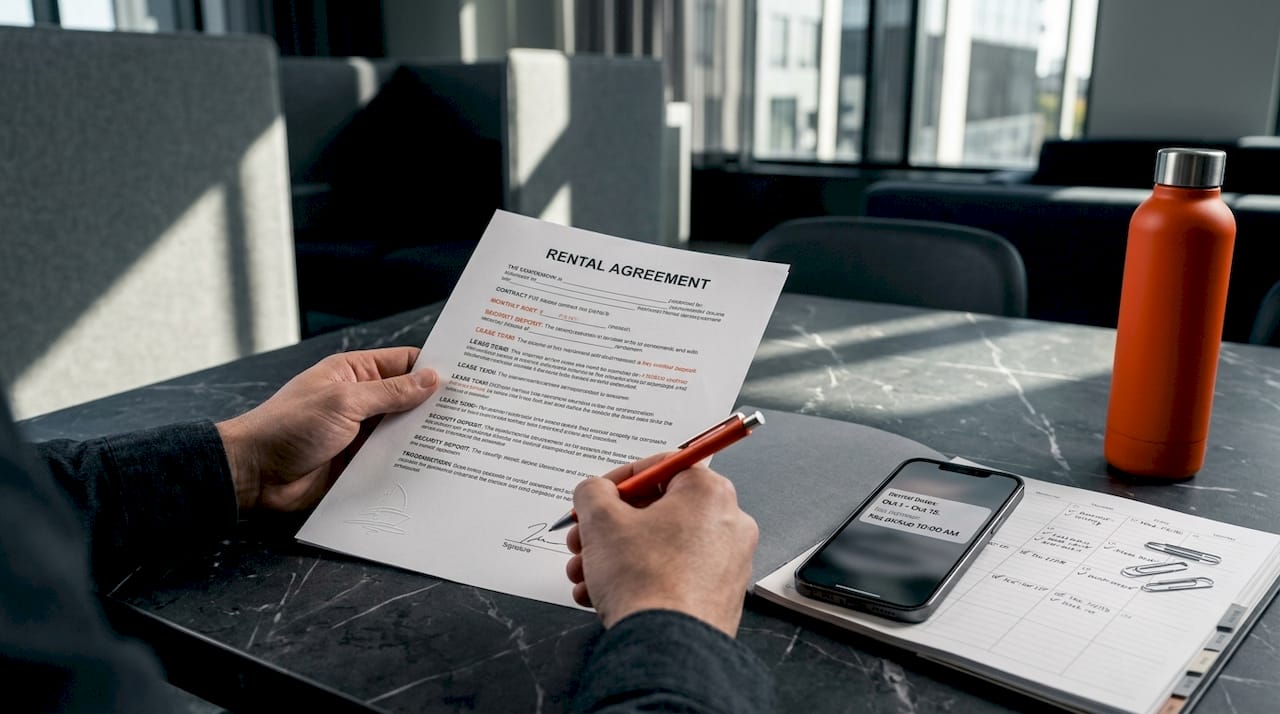
Pro Tip: Before signing the rental agreement, photograph every clause that mentions penalties, fuel policy, and restricted sailing zones. Store those photos in cloud storage so you can access them from the boat.
Review the common booking mistakes that renters make during the paperwork phase. Small oversights in contracts, like missing the clause about prohibited night sailing, can void your insurance entirely.
What local rules and conditions should you confirm before setting sail?
Local navigation rules are not optional reading. Ignoring local rules or sailing outside permitted zones voids your insurance coverage and can result in heavy fines or vessel seizure. Every country has its own framework, and it changes by season and protected area.
Before you cast off, confirm the following:
- Anchoring restrictions. Posidonia seagrass beds in Spain, Greece, and Croatia are legally protected. Anchoring on them carries fines of up to €3,000 per incident in some regions. Check the anchoring regulations for your specific sailing area before you leave the marina.
- Speed limits in harbors and near beaches. Most Mediterranean harbors enforce a 3-knot limit. Coastal zones near beaches often cap speeds at 5 knots within 200 meters of shore.
- Night sailing restrictions. Many charter insurance policies explicitly exclude night sailing unless you have a professional skipper onboard. Read your CDW terms carefully.
- Weather and wind limits. Operators in the Aegean often restrict sailing when the Meltemi wind exceeds Beaufort 6. Sailing in prohibited conditions voids coverage.
- Incident reporting requirements. Any collision or grounding must be reported to the rental base and local maritime authority within a specific window, often 24 hours. Missing that window can void your damage waiver.
Pro Tip: Download an offline copy of the local maritime authority's rules for your sailing area before departure. Apps like Navionics carry some of this data, but official PDFs from the country's coast guard are the authoritative source.
Language barriers are a real operational risk. In Turkey and Montenegro, base staff may conduct safety briefings primarily in their native language. Bring a translation app, and ask the base to provide written instructions in English if verbal communication is unclear.
What to expect during check-in, boat handover, and check-out
The handover process is where your deposit is won or lost. Treat it with the same attention you would give to a car rental inspection, then multiply that attention by three.
| Handover phase | Key tasks | Risk if skipped |
|---|---|---|
| Check-in inspection | Document hull, engine, sails, electronics, safety gear | Charged for pre-existing damage |
| Fuel gauge recording | Photograph gauge at departure | Overcharged on return |
| Safety briefing | Confirm radio, flares, life jackets, fire extinguisher | Safety incident with no protocol |
| Check-out return | Return by agreed time with full fuel tank | Late fees and premium refueling charges |
| Final inspection | Walk the boat with base staff | Disputed damage claims after departure |
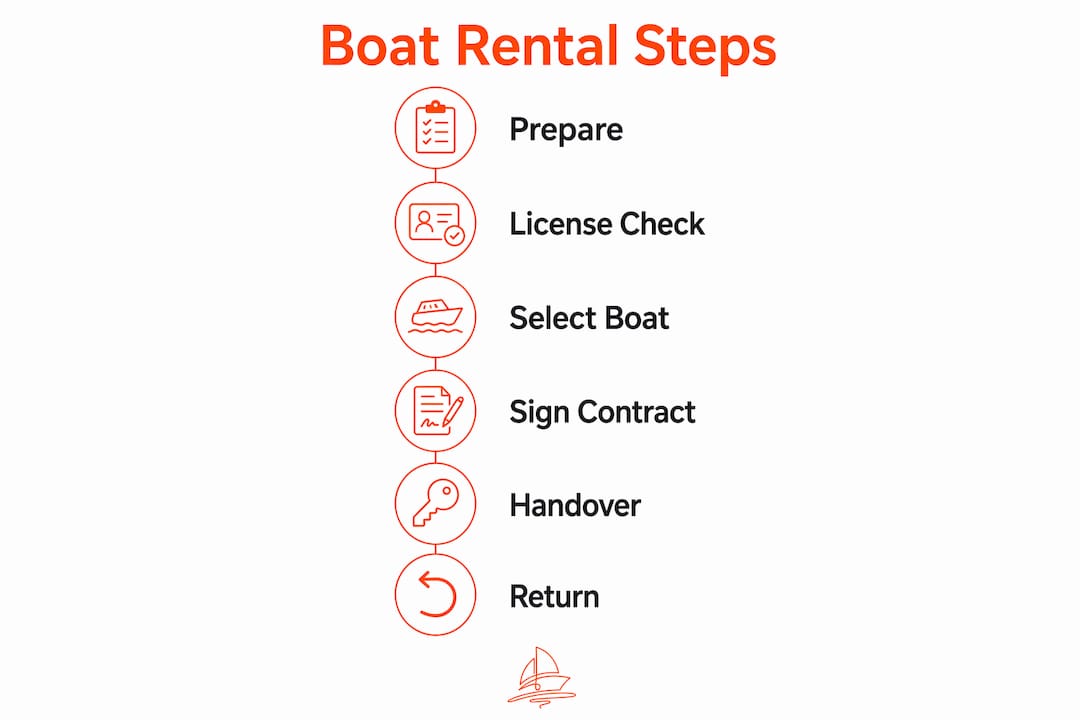
A thorough pre-boarding inspection covering the exterior hull, engine, safety gear, and electronics is your strongest defense against unwarranted damage claims. Photograph everything before you move the boat one meter.
Here is what to cover systematically at check-in:
- Hull exterior: scratches, dents, antifouling condition
- Engine compartment: oil level, bilge water, belt condition
- Safety equipment: flares within expiry date, life jackets for every person, fire extinguisher pressure
- Navigation electronics: chartplotter, VHF radio, depth sounder
- Interior: upholstery, galley equipment, toilet function, hatches
For check-out, the final day of a typical 7-day charter is best used for logistics rather than sightseeing. Refuel the day before to avoid long queues at the fuel dock on Friday morning. Return the boat by 18:00 on the final day, and schedule the formal inspection for the following morning when base staff have time to conduct it properly.
Key takeaways
Renting a boat abroad requires valid licensing, a clear understanding of deposit mechanics, and strict compliance with local navigation rules to protect both your safety and your security deposit.
| Point | Details |
|---|---|
| Licensing comes first | Secure your ICC and VHF SRC certificate before booking any international charter. |
| Deposits are credit holds | Security deposits of €3,000 to €8,000 reduce your available credit, not your cash balance. |
| Damage waivers pay off | Premium CDW at ~€300 per week caps your liability at €300, making it worth the cost. |
| Document everything at handover | Photograph hull, fuel gauge, and all equipment before and after the trip to protect your deposit. |
| Local rules override general advice | Anchoring zones, speed limits, and night sailing restrictions vary by country and void insurance if ignored. |
What renting boats internationally has taught us
Most travelers approach international boat rental the way they approach renting a car abroad. They assume the process is roughly the same everywhere, with minor paperwork differences. That assumption causes most of the problems we see.
The deposit mechanic alone surprises a significant number of first-time renters. A €6,000 hold on your credit card is not a charge, but it does mean your card needs a limit well above your actual trip cost. We have seen travelers arrive at a marina in Dubrovnik with a card that technically covers the deposit but leaves them unable to pay for fuel, marina fees, or provisioning for the week. The fix is simple: use a card with a limit at least €3,000 above your total trip budget, and notify your bank before departure.
The second thing most guides understate is the crew briefing. A careful crew briefing before departure reduces costly damage incidents caused by inexperience or misunderstandings. If one person on your boat does not know how to handle dock lines, that is a dented hull waiting to happen. Run a 20-minute briefing before you leave the marina. Assign roles. Confirm who handles the anchor, who manages fenders, and who communicates with the base by radio.
The third insight is about flexibility. Rigid itineraries are the enemy of good sailing. Weather in the Aegean, the Adriatic, and the Caribbean changes faster than any forecast predicts. The travelers who enjoy their charters most are the ones who plan three or four destination options per day and choose based on conditions. That mindset also keeps you inside permitted sailing zones, which protects your insurance coverage.
— Sailorix
Explore boats worldwide with Sailorix
Sailorix gives you access to vetted boats and yachts across the world's top sailing destinations, from the Greek islands to the Caribbean, with transparent pricing and real-time availability. The Sailorix membership model costs €100 per year and unlocks bookings with service fees of approximately 1 percent, compared to the 10 to 20 percent charged by most charter platforms. Every listing includes clear deposit terms, contract details, and local rule summaries so you know exactly what you are agreeing to before you pay. When you are ready to find your next boat, browse available charters and see what is available in your destination. You can also read more about how low service fees translate into real savings on your next rental.
FAQ
What license do I need to rent a boat abroad?
Most countries require an International Certificate of Competence (ICC) plus a VHF SRC radio certificate for independent skippers. Requirements vary by destination, so confirm with your rental company before booking.
How does a charter security deposit work?
The deposit is a pre-authorization hold on your credit card, typically €3,000 to €8,000, released within 7 to 14 business days after a damage-free return. It reduces your available credit but is not an actual charge.
Is a damage waiver worth buying for international boat rentals?
A premium CDW costs roughly €300 per week and reduces your maximum liability to €300 or less, compared to a full deposit exposure of up to €8,000. For most travelers, the math strongly favors buying it.
What happens if I sail outside permitted zones abroad?
Sailing outside permitted zones or violating local navigation rules voids your insurance coverage and can result in heavy fines or vessel seizure by local maritime authorities. Always verify restricted areas before departure.
How do I protect my deposit during the handover process?
Photograph the hull, fuel gauge, safety equipment, and all interior areas before moving the boat. Written documentation signed by base staff at check-in is the most reliable protection against disputed damage claims on return.