
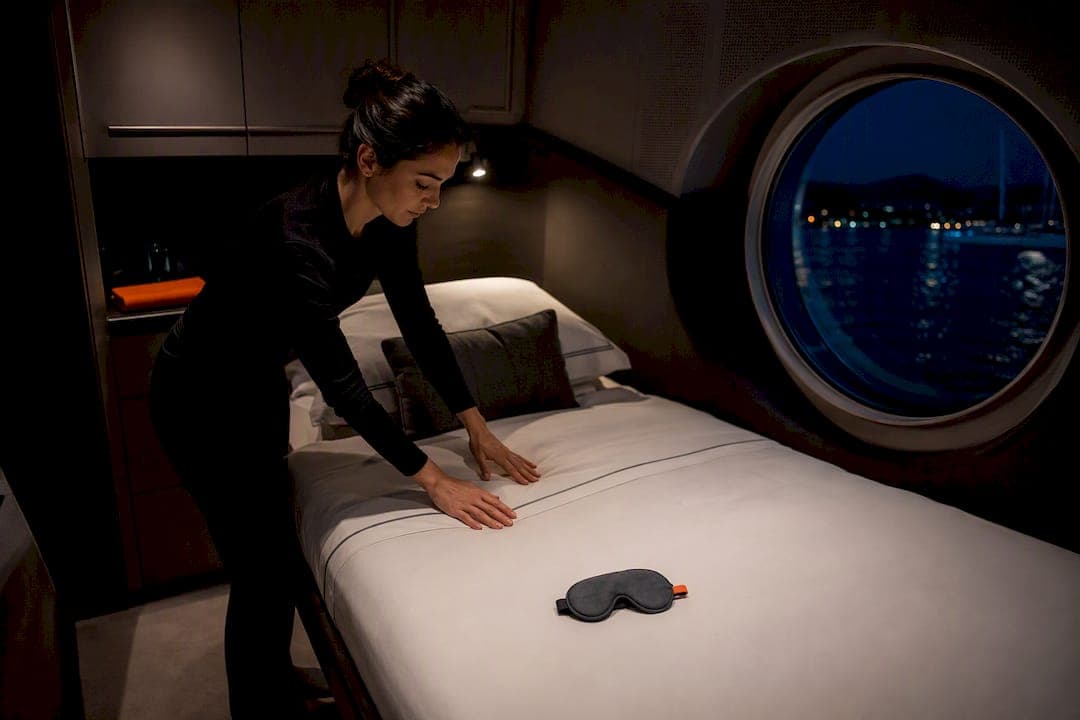
Yes, sleeping aboard is a standard part of yacht chartering, and it comes in two main forms: staying at anchor or in a marina overnight, or continuing to sail through the night while underway. For the most comfortable, low-effort version of this experience, a crewed overnight charter is the better choice over bareboat, which suits only experienced sailors. Expect cabins that feel like a boutique hotel room, but confirm noise, ventilation and provisioning details before you book.
TL;DR:
- Crewed overnight charters are recommended for comfort, as they handle navigation and safety, unlike bareboat options suited only for experienced sailors.
- Confirm whether your stay involves a marina or anchorage overnight, or a passage underway, since each has different provisions, noise levels, and safety protocols.
- Ensure your cabin has proper ventilation, blackout options, and is located away from engine noise for maximum comfort during multi-night stays.
- Obtain in advance a safety briefing covering life jackets, emergency procedures, anchoring, and overnight systems to avoid confusion or safety issues.
- Use a platform like SAILORIX to compare real-time availability, request safety checklists, and streamline booking while verifying all safety and comfort details upfront.
Table of Contents
- What a sleep-aboard charter actually means
- What makes a cabin comfortable enough for multiple nights
- Safety orientation and the checklist to confirm before departure
- What to expect for timing, inclusions and cost
- Essential questions to ask before you book
- Preparing for seasickness and other health considerations
- Etiquette for noise and the environment overnight
- How SAILORIX simplifies planning a sleep-aboard trip
- Booking your sleep-aboard charter through SAILORIX
- Where to verify safety and planning details
- Sources
- FAQ
What a sleep-aboard charter actually means
A sleep-aboard or overnight charter simply means you spend the night on the vessel rather than returning to shore. It can last one night, a weekend or a full week, and the format shapes the entire trip. Confirm which version you are booking, since a nightly stay and a week-long charter carry different provisioning needs, crew arrangements and costs.
The bigger distinction is between a marina or anchorage overnight and an overnight passage underway. According to Discover Boating, a typical overnight charter combines daytime cruising with stops for swimming, an evening stop at anchor or dockside, dinner aboard or ashore, and a private cabin for the night. A marina stay offers stability, shore power and easy access to land, while an anchorage overnight adds gentle motion and the sounds of wind and water. Sailing through the night is a different experience entirely: the boat keeps moving, someone stays on watch, and sleep happens in shifts unless you are a paying guest on a fully crewed passage.

Vessel type and layout matter just as much as the format. A sailing yacht, catamaran, motor yacht or gulet each handles motion differently, and layout determines how much privacy you actually get. Some charter yachts reserve an owner's suite with the best natural light and largest head, while others use a more uniform charter layout where cabins are similarly sized. Ask which layout applies before booking, since it affects storage space and how much you hear from neighboring cabins.
For comfort and safety, crewed charters are the recommended route for most travelers who want a relaxed overnight. A captain, and often a mate or chef, handles navigation, anchoring and onboard service, which removes the operational burden from guests. Bareboat charters put that responsibility on the charterer, which only makes sense for those with real sailing experience and confidence in night operations.
What makes a cabin comfortable enough for multiple nights
A yacht cabin can feel like a compact hotel room, but only if the systems behind it work as advertised. Before booking, confirm air conditioning coverage and whether it runs all night or only while the generator is on, ventilation and window screens for airflow without insects, mattress quality and linen type, and whether the cabin has an en suite shower and toilet or shares a head with other guests. Blackout options for hatches and portholes matter more than most guests expect, since early morning light on the water arrives fast and bright.

Hull type changes how the boat moves and sounds at night. A catamaran tends to feel more stable at anchor because of its wider beam, while a monohull motor yacht or sailing yacht can roll more in a swell or chop. Generator noise is another variable: some yachts run a generator through the night for air conditioning, and the hum can be noticeable in cabins closest to the engine room. Discover Boating notes that motion, noise, freshwater limits and early light are all normal variables worth discussing with the operator before you pay.
A few practical adjustments make a real difference. Choosing a cabin farther from the engine room or generator reduces noise, and a berth oriented fore-and-aft rather than across the beam tends to feel steadier in a swell. Packing earplugs and a sleep mask covers gaps that blackout hatches and quiet generators do not always close. If comfort is a priority, it is reasonable to request extra blankets, higher-thread-count linens, a mattress topper or a cabin fan for airflow when the air conditioning cycles off. Reviewing cabin layout options ahead of time helps you compare what different yachts actually offer before you commit to one.
Safety orientation and the checklist to confirm before departure
A proper safety briefing is not optional, and it should happen before the boat leaves the dock. Federal guidance on recreational boating requires U.S. Coast Guard–approved personal flotation devices along with throwable devices and minimum safety equipment aboard, and a competent crew will walk every guest through where these are stored. BoatUS recommends a formal safety brief covering running-light checks, flashlight placement, and clear night orders for anyone standing watch during an overnight passage.
Before you settle in for the night, expect or ask for a briefing that covers:
- Life jacket and throwable device locations, plus fire extinguisher placement.
- VHF radio procedures and emergency channel information.
- Emergency exits and what to do in a man overboard situation.
- Anchoring checks, including how the crew confirms the anchor is set and holding.
- Generator, shore power and battery rules for overnight use.
At anchor, an anchor watch may be recommended in crowded anchorages or forecasted wind shifts, even on a crewed boat, so ask whether the crew maintains one. For an overnight passage underway, night orders and a defined watch rotation protect both the vessel and your sleep, since a well-run watch system means off-duty guests are not woken for routine checks. Before departure, confirm the weather forecast, fuel and water levels, provisioning, the planned route and that someone ashore has your expected return time.
Pro Tip: Ask the captain to walk you through the safety brief on the first evening, not just at check-in, so the details are fresh before your first night aboard.
What to expect for timing, inclusions and cost
Boarding times and morning schedules catch more guests off guard than almost anything else about an overnight charter. Many operators use the overnight period for provisioning, cleaning or crew rest, so an advertised "overnight" does not automatically mean an early departure the next morning. Get boarding, briefing and departure times in writing before you pay, and ask directly what the first morning looks like.
Typical inclusions and common paid extras break down as follows:
- Usually included: crew salary, basic provisioning, standard fuel allowance and marina or anchorage fees for the booked itinerary.
- Common extras: a private chef, fuel beyond the standard allowance, additional dockage for detours, and specialty provisioning requests.
- Cost drivers: boat size, level of crewed service, distance covered in the itinerary, season and the marina fees at each stop.
Longer charters and larger yachts with fuller crews cost more, and peak season adds further pressure on both price and availability. Reviewing what standard inclusions typically cover before you compare quotes helps you spot which operator is actually offering more for the price.
Packing well protects both your comfort and the boat's trim. Use soft-sided luggage rather than hard suitcases, since it packs into tight storage lockers far more efficiently. Distribute weight low and central in the boat rather than concentrated in one cabin, and keep frequently used items, like sunscreen, a light jacket and chargers, somewhere easy to reach rather than buried at the bottom of a bag.

Essential questions to ask before you book
A short list of direct questions before payment prevents most of the mismatched expectations that turn a luxury overnight into a frustrating one.
- Is this a marina or anchorage overnight, or an overnight passage underway, and what is the confirmed morning departure time?
- What does "crewed" include specifically: captain only, or captain plus mate and chef, and what are their credentials and insurance coverage?
- How does air conditioning and generator power work overnight, and does every cabin have en suite access?
- What bedding and linen quality should I expect, and can I request upgrades?
- Can you send the formal safety checklist in advance, along with the fuel and provisioning policy?
- What is the cancellation and refund policy if weather forces a change of plan?
Getting these answers in writing, rather than verbally at check-in, gives you a reference point if the actual experience does not match what was promised.
Preparing for seasickness and other health considerations
Motion sickness is the most common health concern for first-time overnight guests, and it is worth addressing before departure rather than after symptoms start. Over-the-counter remedies work best when taken several hours before boarding, and acupressure wristbands offer a non-drug option for guests who prefer to avoid medication. Choosing a cabin at the yacht's center, where motion is least pronounced, and keeping your eyes on the horizon when you feel queasy both help in the moment.
Hydration and light meals matter more on a moving boat than on land, since dehydration and an empty stomach both worsen nausea. Pack any prescription medications in carry-on luggage rather than checked bags, and mention allergies or medical conditions to the crew during the initial briefing, not after a problem arises. Sun exposure is easy to underestimate on the water, where reflection off the surface intensifies UV exposure, so reapply sunscreen more often than you would ashore.
If you are prone to motion sickness, ask in advance whether the itinerary includes any extended open-water passages, since sheltered anchorages and short hops are far gentler than a long night underway. A quiet, well-ventilated cabin away from diesel fumes near the engine room also reduces the odds of a rough night.
Etiquette for noise and the environment overnight
Sound carries much farther over water than on land, and anchorages are often shared with other boats close enough to hear conversation and music. Keeping voices and speakers low after early evening respects neighboring crews who may be settling in for the night, and running a generator only as long as necessary limits both noise and fuel use.
Waste management aboard follows different rules than at home. Holding tanks need to be used correctly and pumped out at approved facilities rather than discharged in sensitive anchorages, and the crew can explain the specific system on your yacht during the safety briefing. Plastic and food waste should stay contained until it can be disposed of properly ashore, since marine wildlife and water quality in popular anchorages depend on guests treating the water as a shared space rather than a dumping ground.
Light discipline matters too. Excessive deck lighting after dark can disturb both neighboring boats and marine life, so using dimmed or red-filtered lights for late-night movement around the deck is a small habit that makes a noticeable difference to everyone sharing the anchorage.
How SAILORIX simplifies planning a sleep-aboard trip
A membership marketplace model removes some of the guesswork that usually comes with booking an overnight charter. Real-time availability search means you can compare marina overnight and underway options side by side rather than chasing quotes from multiple sources.
Consistent listings also help set expectations correctly before you pay: cabin layouts, amenity details and safety information described the same way across the platform reduce the chance of a mismatch between what was advertised and what you find at boarding. For readers who want to go deeper on cabin comfort or anchoring procedures before booking, the yacht anchoring guide and amenities checklist cover the technical details in full.
— SAILORIX
Booking your sleep-aboard charter through SAILORIX
Lower fees are only useful if the booking itself is straightforward, and that is where a membership platform earns its keep. Instead of negotiating separately with each operator, you search real-time availability, compare crewed and bareboat options, and add services like provisioning or a skipper directly through a single platform.

A practical next step looks like this:
- Search available sleep-aboard yachts by destination and vessel type on SAILORIX.
- Request the operator's formal safety checklist before confirming payment.
- Confirm air conditioning, bedding and en suite policies in writing.
- Add crew, a chef or extra provisioning through the membership programs if your itinerary calls for it.
Membership requires an annual fee, which unlocks access to reduced service fees on bookings made through the platform.
Where to verify safety and planning details
For deeper reading beyond this guide, the USCG federal requirements guide, Discover Boating's overnight cruising resource and BoatUS's safety brief guidance cover federal requirements and standard practice in full. Confirm any legal or safety specifics for your itinerary directly with these sources or your operator.
Sources
- Boater's Guide to Federal Requirements for Recreational Boats | USCG (Boating Safety Foundation)
- How To Give An Awesome Safety Brief | BoatUS
FAQ
Can you sleep on a yacht overnight?
Yes, sleeping aboard overnight is a standard charter option, available as either a stationary stay at a marina or anchorage, or as a passage while the boat continues moving through the night. Most guests choosing comfort over adventure opt for the stationary version.
What is the 12 person rule on a yacht?
This rule generally refers to passenger vessel regulations that treat vessels carrying many paying passengers as commercial passenger vessels subject to stricter inspection and licensing requirements. Charter yachts are typically configured to stay under this threshold specifically to avoid those additional commercial requirements.
What is the 10% rule for yachts?
Definitions vary depending on context, and no single source ties this figure specifically to overnight charter planning. If you have seen this referenced for a specific yacht or contract, confirm the exact meaning directly with that operator rather than relying on a general definition.
How much is a 3-day charter on a superyacht?
Pricing depends heavily on the size of the yacht, crew level, itinerary and season, and no fixed rate applies across the industry. Requesting a quote directly through a platform like SAILORIX, where service fees stay near 1%, is the most reliable way to get an accurate number for a specific yacht.
What should I pack for an overnight yacht charter?
Pack in soft-sided luggage rather than hard suitcases, since it stores far more easily in tight lockers, and keep frequently used items accessible rather than buried at the bottom of a bag. Distribute weight low and central in the boat to help maintain proper trim and stability overnight.