
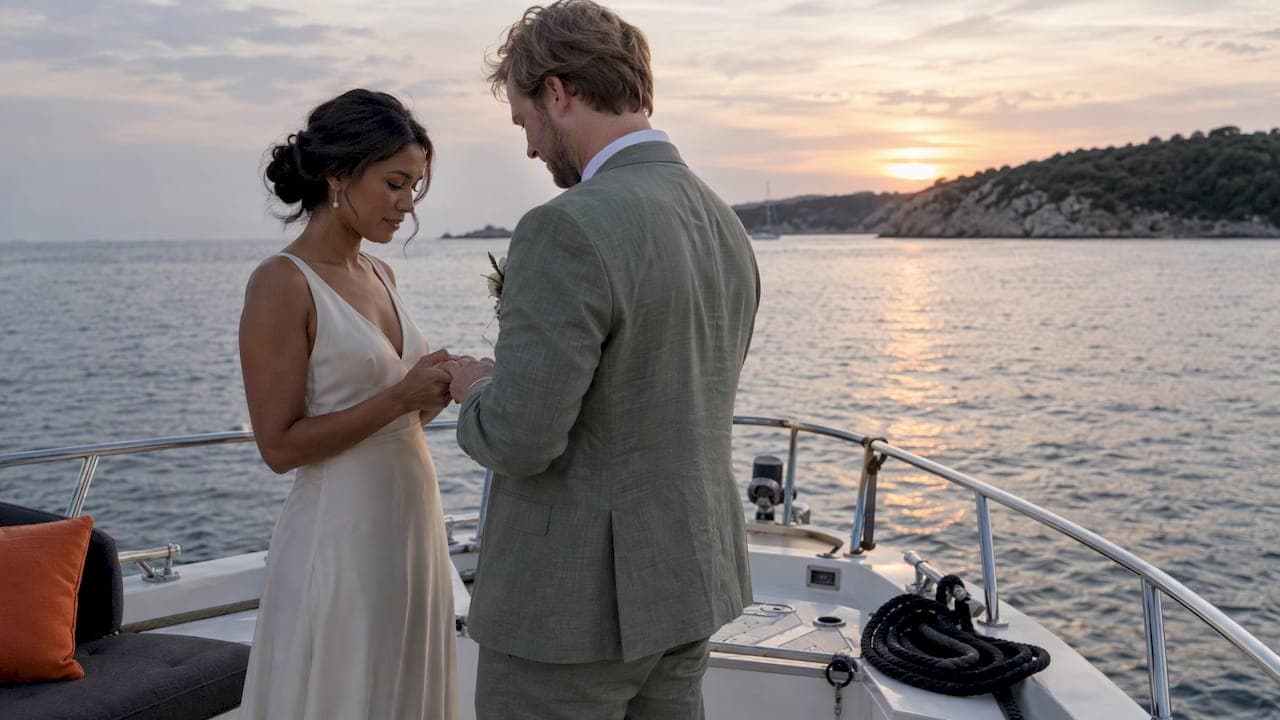
The best yacht wedding ideas work with the water instead of fighting it: a ceremony timed to golden hour, low and weighted décor that survives a breeze, food guests can eat standing on deck, and a vessel sized to your guest list. Below you will find ideas for every part of the day, then the practical checks (capacity, wind, life jackets, accessibility, contract questions) that keep a beautiful plan from falling apart at the dock.
TL;DR
- Pick the vessel first. Guest count, seating and accessibility decide everything else, and a boat that is too small cannot be fixed with décor.
- Design for wind and motion: low, weighted centerpieces, secured decorations, finger foods and sturdy serveware.
- Time the ceremony for golden hour and keep an indoor or covered backup for rain and wind.
- Children under 13 must wear a Coast Guard-approved life jacket while the boat is underway, so plan photos and outfits around it.
- Ask about capacity, captain licensing, insurance and overtime before you sign anything.
Table of Contents
- Start with the boat, not the theme
- Ceremony ideas
- Décor that survives wind and limited space
- Food and drink ideas for the deck
- Guest experience and entertainment ideas
- Guest comfort, safety and weather
- Advantages and drawbacks of a boat wedding
- Questions to ask before you book
- Our perspective: treat the charter as the real wedding budget
- Finding and booking a boat for your wedding
- FAQ
- Sources
Start with the boat, not the theme
Most couples start with a color palette and end up shopping for a boat. Reverse it. The vessel sets your guest limit, your ceremony layout and your menu format, and the theme can be built on top of any of them.
A simple way to match vessel to wedding, based on guidance from a boating-industry planning guide: use a commercial-class vessel for a large group, a smaller boat for an intimate event, or hold the ceremony dockside with guests seated on the dock. That dockside option is underrated. It lets 60 people watch the vows while the couple and a small party step aboard for the reception or sunset cruise.
| Wedding size | Vessel idea | Ceremony layout | Best for |
|---|---|---|---|
| Elopement or 2 to 6 guests | Motor yacht, sailing yacht or catamaran with a captain | Bow or sundeck, guests standing | Intimate vows and a private sunset sail |
| 10 to 30 guests | Larger motor yacht or crewed catamaran | Aft deck ceremony, short aisle | Micro-wedding with a seated dinner |
| 40 or more guests | Commercial passenger vessel | Dockside ceremony, reception aboard | Full reception with dancing |
Guest count is not only about space. In the U.S., the captain's license decides how many paying passengers a boat can legally carry: the common "six-pack" license covers up to six paying passengers on uninspected vessels, while a Master license covers seven or more on inspected vessels. If your guest list is bigger than six, you need an inspected vessel with the right certificate. Our guide to how the certificate of inspection sets your real guest limit walks through why that number matters for any group event, weddings included.
It also helps to understand the main charter formats before you shop. This overview of types of yacht charters explains how crewed and other formats differ, which matters when you are deciding between a private yacht and a larger vessel with a set capacity.
Ceremony ideas
Golden hour vows at the bow
The classic yacht ceremony is a sunset ceremony, and for good reason: the light is flattering, the temperature drops and the water goes quiet. Anchor or moor for the vows so the boat is steady, then cruise afterward. Ask the captain to time the ceremony around the actual sunset for your date and location, not a rule of thumb.
Dockside ceremony, reception aboard
Seat guests on the dock and have the couple exchange vows on deck or at the gangway. It solves capacity, gives older guests a stable surface, and still delivers the "we left on a boat" moment when the couple and guests step aboard afterward.
Make an entrance
Have the couple arrive by tender, or let guests board first and have the couple step aboard last to music. Keep this short and rehearsed: boarding is the riskiest moment of the day, and the crew should handle it.
Small, private elopement
For two to six people, a private crewed charter is the most flexible option. You choose the anchorage, the timing and the guest list. If you want the trip to continue, a honeymoon sail is a natural extension, and our guide to honeymoon yacht charter routes and pricing shows how 5 to 7 day trips are usually structured.
Let the vessel do the talking
Some of the strongest ceremony ideas cost almost nothing: signal flags spelling your initials, a ship's bell rung after the kiss, a knot-tying unity ritual with rope, or a captain who can legally and symbolically "officiate" the departure (check separately who is licensed to perform the marriage itself in your state; the captain is generally not). Your marriage license and officiant must meet the rules of the place where the vows happen.
Décor that survives wind and limited space
Yacht décor is a different discipline from ballroom décor. Space is tight, surfaces move and wind is constant. A wedding floral guide written for a Southern California yacht club venue advises low-profile, weighted arrangements, and decorations secured with heavy-duty tape or zip ties, avoiding tall, top-heavy pedestals and thin-stemmed glass vases.

The same guide points to hardy foliage such as monstera, magnolia and ruscus, and durable blooms such as ranunculus, protea and roses. Delicate petals shred in wind and salt air, so choose structure over fragility.
What works
- Low centerpieces in weighted bases. Short bud vases anchored in sand-filled or weighted containers look intentional and stay put.
- Rope and cleat details. Use natural rope wrapped around candle holders, napkin rings or the ceremony arch. It is thematic and functional.
- Wind-proof lighting. LED candles and string lights on a dimmer beat open flame, which most operators restrict anyway. Ask first.
- A dock welcome sign. A painted sign or a framed seating chart at the gangway sets the tone before anyone steps aboard and keeps guests moving.
- Compact fold-up tables. On a smaller deck, a few cocktail-height tables beat a banquet layout and encourage mingling.
- A restrained palette. White and navy, white and sage, or an all-white party look clean against sea and sky. Let the boat's teak, brass and water be the decoration.
What to skip
Avoid tall arches that act as sails, confetti and loose petals (many marinas and operators prohibit them, and they are bad for water), balloons, loose table runners that blow away, and anything that blocks walkways or the crew's access to lines.
Food and drink ideas for the deck
Sailing and dinner service do not always mix, and the best yacht menus are built around motion and limited galley space. A Miami yacht catering guide recommends story-driven menus, signature cocktails, interactive stations such as sushi, pasta or ceviche, passed mini-bites, plated dinners, casual-chic buffets and dessert stations, with vegan, gluten-free and allergy-friendly options clearly labeled. The same guide suggests weighted or compact serving dishes, easy finger foods for mingling and an indoor backup for wind or rain.
Three menu formats that work
- Passed bites plus stations. Best for standing receptions on open decks. Think mini crab cakes, tuna tartare spoons, caprese skewers and a raw-bar or ceviche station.
- Plated dinner in the salon or on a covered deck. Best for larger vessels with proper dining space. Keep the menu to two or three choices per course so service stays fast.
- Brunch or afternoon tea cruise. Cheaper, lighter and easier on the galley. Pastries, fruit, a mimosa bar and a late-morning ceremony are a relaxed alternative to an evening event.
Drinks
A signature cocktail named for the couple's story, or a sparkling toast at the moment of the vows, gives you a memorable beat without a full bar. If you plan a champagne toast with a showpiece bottle, a stable pouring method matters on a moving deck; this explanation of serving large-format wine shows how a cradle gives controlled pours from big bottles. Plan non-alcoholic options that look as festive as the cocktails, and confirm whether the vessel's operator allows outside alcohol or requires its own bar service.

If your plan is a self-catered small charter, our collection of galley-friendly yacht recipes shows what a small crew kitchen can realistically produce.
Guest experience and entertainment ideas
The point of a yacht wedding is that the setting is the entertainment. Add moments, not programming.
- Photographer and drone shots. Plan a short sailing-away sequence with a drone, and check with the captain on where and when drones can launch and land. Rules differ by marina and waterway.
- A sunset dance floor. Clear a section of the aft or upper deck and use a compact speaker or DJ setup suited to the deck.
- A white party or a theme. A Cape Cod, Riviera or all-white dress code gives guests an easy brief and makes group photos cohesive.
- A guest book that floats. A signed ship's wheel, life ring or framed chart, instead of a paper book that blows away.
- Welcome kits. Sunscreen, sunglasses, lip balm, motion-sickness wristbands and a printed timeline. This one earns its cost.
- Late-night send-off. Finish with sparklers at the dock only if the marina permits them, or choose a quiet lantern-lit return to shore.
For wider group ideas around the wedding weekend, such as a pre-wedding day sail for family, see our group yacht trip ideas. If you are proposing before you plan any of this, our proposal on a yacht guide covers costs and logistics.
Guest comfort, safety and weather
This is where yacht weddings are won or lost. Plan for guests who have never been on a boat, who wear heels, or who need a wheelchair.
Comfort and weather
A boating-industry planning guide suggests that guests bring comfortable shoes, sunglasses, sunscreen and a light jacket, and that couples plan a covered area or backup indoor venue for bad weather, and consider wheelchair access and restrooms. Put a line about shoes on the invitation: flat soles or wedges, no stilettos on teak or fiberglass decks. Many operators also ask for non-marking soles.
For seasickness, tell guests early. Choose protected waters, keep the route short, and keep the boat's motion minimal during the ceremony and dinner. A calm bay beats open ocean for a first-time guest list.
Accessibility
The same guide notes that many vessels have narrow corridors, steep staircases or high thresholds, so verify wheelchair accessibility before booking, not after. Ask the operator for a walk-through, and ask where the restrooms (heads) are in relation to the main deck. If any key guest has limited mobility, a dockside ceremony lets everyone take part.
Life jackets and children
Federal rules apply on your wedding day. Children under 13 must wear a U.S. Coast Guard-approved life jacket or buoyancy aid while the vessel is underway, except when below deck or in an enclosed cabin. Flower girls and ring bearers need a jacket during any cruise portion, so plan the photos before departure at the dock, when jackets can come off for a short shoot, and tell the parents ahead of time. Some states set stricter rules, so ask the operator what applies on your waterway.
Boarding and disembarking
Boating safety guidance says passengers should never jump from a moving boat, and the operator should make sure the engine is off before anyone boards or exits from the water. Build that into the timeline: a firm boarding window, a crew member at the gangway, and a rule that nobody climbs on bow rails for photos while the boat moves. Our guide to yacht rental standards explains what rules and briefings to expect from a reputable operator.
Advantages and drawbacks of a boat wedding
Advantages
- The venue is the view. You spend less on décor and photography backdrops.
- The guest list is naturally limited, which suits small weddings and elopements.
- Ceremony, reception and getaway can happen in one place.
- The experience is memorable for guests.
Drawbacks
- Capacity is hard-capped by the vessel and the captain's license.
- Weather can change the plan. You need a backup.
- Seasickness, accessibility and heels are real obstacles.
- Vendors may be unable to work onboard (a full band, large cake, tall florals).
- Time on the water is set by the charter; going over costs extra.
If guests dislike boats or the guest list is long and mixed in age, a dockside ceremony with a short cruise afterward keeps the idea and removes most of the risk.
Questions to ask before you book
Before you sign, ask the operator or owner in writing:
- What is the legal passenger capacity for my event, and what is it for a seated dinner versus a standing reception?
- Who is the captain, and what license or inspection certificate covers the trip? Ask for a copy.
- What insurance covers the event, and do I need an event policy or additional-insured certificate for the marina or dock?
- What does the price include? Crew, fuel, dockage, catering, bar, decorations, cleaning, gratuity, taxes.
- What happens in bad weather? Who decides, and are you refunded, rescheduled or credited?
- What is the overtime rate if the ceremony starts late or the sunset sail runs long?
- Can my vendors come aboard? Florist, photographer, DJ, caterer, and when can they load in?
- What are the restrictions on open flame, confetti, drones, music volume and outside alcohol?
- Where are the restrooms, and what is the accessibility for guests who use mobility aids?
Cost is the question most couples ask first, and the honest answer is that it depends on vessel size, season, location, crew and hours. Compare total quotes, not hourly rates. For a sense of how crew, fuel and fees build up on a private yacht, our crewed yacht cost breakdown shows worked totals.
Our perspective: treat the charter as the real wedding budget
At SAILORIX we see the same pattern in any special-occasion charter: couples spend weeks on décor and minutes on the booking terms. The terms are where the budget moves. Add-ons such as a skipper, early check-in or equipment change the total, and so do the service fees a platform adds on top of the boat's price. Most marketplaces charge a large cut for that service, and we built our membership around keeping it low, at around 1% per booking instead of the 10 to 20% we see elsewhere.
Our advice is to settle three things first, in this order: the vessel and its legal capacity, the date with a weather fallback, and the all-in price including add-ons. Only then choose flowers and menus. A wedding is the one event where you cannot reschedule the guests, so the boring decisions deserve the first hours of planning.
— SAILORIX
Finding and booking a boat for your wedding
If you want to charter a yacht or boat for a small wedding, elopement, rehearsal dinner or honeymoon sail, you can search real-time availability by destination and boat type on SAILORIX, from sailing yachts and catamarans to motor yachts and gulets, and add a skipper or other extras to the booking. Membership is €100 per year, and bookings carry a service fee of around 1%, which can make a real difference when the charter is the largest line in a small wedding budget. Check the terms, vessel capacity and whether the boat suits an event before you book, and see the available boats on SAILORIX.
FAQ
How much does a yacht wedding cost?
There is no single price, because it depends on the vessel, location, season, crew, catering and hours. A small private charter for an elopement costs far less than a large commercial vessel with a full reception. Request an all-in quote that lists crew, fuel, dockage, catering, taxes and overtime, and compare quotes on that basis.
How many guests can a yacht wedding hold?
The vessel's certificate and the captain's license set the limit. A common U.S. small-charter license covers up to six paying passengers, and larger groups need an inspected vessel. Ask for the legal capacity for your specific event format.
What do you do if it rains or the wind picks up?
Plan a covered deck or salon as a backup and agree in writing who makes the weather call and what happens to your payment. Choose low, secured décor and food that is easy to eat standing, so the plan adapts without a redesign.
Can children attend a boat wedding?
Yes, with preparation. Children under 13 must wear a Coast Guard-approved life jacket while the vessel is underway, except when below deck or in an enclosed cabin. Do photos at the dock beforehand and tell parents in advance.
What should guests wear on a yacht?
Comfortable flat or wedge shoes, a light jacket, sunglasses and sunscreen. Put the dress advice on the invitation, and ask the operator about shoe rules for the deck.
Sources
- Plan the Perfect Nautical Wedding With Tips from Captain Sandy (BoatMart)
- Types of USCG Captain's Licenses: How to Choose Yours
- Dana Point Yacht Club Wedding Floral Design Guide
- Yacht Wedding Catering: Delicious Menu Ideas
- 8 Tips for Planning a Wedding on a Boat (Discover Boating)
- Life Jacket Wear (U.S. Coast Guard boating safety)
- How to Plan a Boat Birthday Party (Discover Boating)