
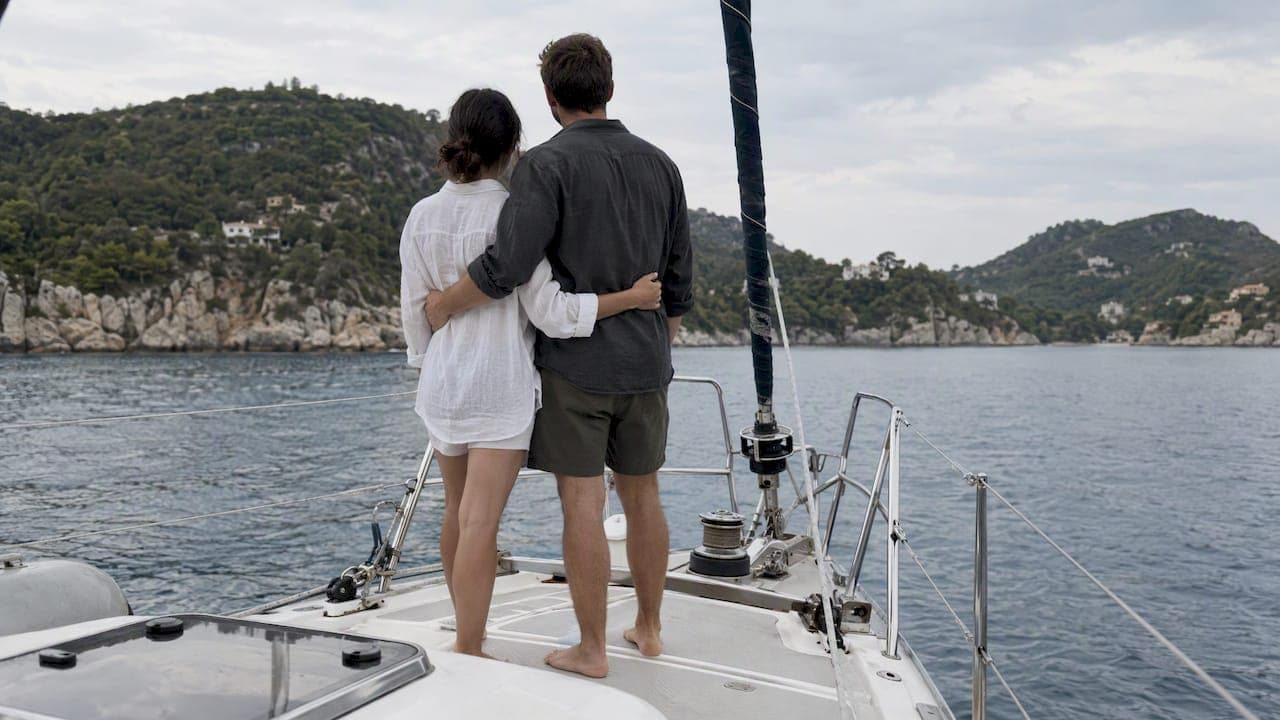
A crewed yacht charter can be a great honeymoon choice for privacy and tailor-made romance, whether you pick a motor yacht, a sailing yacht or a catamaran. Budget first: the published base rate is usually only about 60–65% of the total, so plan for roughly 1.55–1.7× the headline rate once APA, taxes and gratuities land.
TL;DR:
- Treat the listed rate as a starting point: APA usually takes 25–35% of the base rate, gratuity adds 10–20%, and taxes vary by route.
- Match the boat to your priorities: catamarans offer stability, motor yachts offer speed and larger suites, while sailing yachts provide quiet passages but compact cabins.
- For the Cyclades, choose late May, June, or September to avoid peak winds and crowds; the British Virgin Islands' dry season runs December through April.
- Before paying a deposit, get a written, itemized estimate covering contract type, APA, route taxes or permits, fuel, gratuity, berth plans, and cancellation deadlines.
- Check whether travel insurance covers yacht charters, medical evacuation, and trip interruption; tell the captain about allergies, medication, or health conditions before departure.
Table of Contents
- Which yacht type fits your honeymoon?
- Where should you go, and what does a week look like?
- What do you get on board?
- How do you turn a headline quote into an all-in budget?
- What should you know about contracts and booking timing?
- Why does a crewed charter beat a resort for a honeymoon?
- How do health and safety work on board?
- What belongs on your planning checklist?
- How do you make the trip feel like your honeymoon?
- One planner's note on avoiding surprises
- Book your honeymoon yacht with lower service fees
- FAQ
- Sources
Which yacht type fits your honeymoon?
The three families feel very different at anchor, so decide what matters most before you request quotes.
- Sailing yacht: classic romance, quiet passages under sail, and a slight heel that some couples love and others tire of. Cabins are usually compact.
- Catamaran: a stable ride, wide deck space and a big shaded cockpit for long dinners. It suits first-time sailors and shallow anchorages.
- Motor yacht: speed and polish, with larger suites, air conditioning and room for a sundeck lounge. It covers more ground in a short week.
Cabin layout decides how private your trip feels. Ask for an owner's suite or a two-cabin configuration with the master berth set away from the crew and any guest cabins. Catamaran cabins sit in separate hulls, which gives extra separation if you travel with friends or family. You can explore boats in our fleet before you enquire.
Pro Tip: Say "honeymoon, two guests, owner's suite" in your first message so brokers don't offer you a multi-cabin boat you'll pay to leave half empty.
Where should you go, and what does a week look like?
Honeymoon charter lists keep returning to Greece and the Cyclades, the wider Mediterranean, the Caribbean and British Virgin Islands, the Bahamas, and the Seychelles. Here are five route sketches you can adapt to 5–7 days.
- Cyclades, Greece: Athens (Lavrio) to Kea, Syros, Mykonos, Paros and Milos. White villages, sunset harbors and quiet coves. Go in late May, June or September to avoid peak winds and crowds.
- Amalfi Coast, Italy: Naples to Capri, Positano, Amalfi, Ponza and back. Cliff towns, lemon-scented lunches and lively port nights. June and September are the sweet spot.
- British Virgin Islands: Tortola to Norman Island, Jost Van Dyke, Virgin Gorda's Baths and Anegada. Short hops, sheltered water and beach bars. December to April is the dry season.
- Bahamas: Nassau or Abaco to the Exumas, with stops at swimming-pig beaches and empty sandbars. Clear, shallow water suits a catamaran. If you fly in, an on-demand regional flight such as Littlebird's Treasure Cay charters can shorten the transfer to your embarkation port.
- Seychelles: Mahé to Praslin, La Digue and the smaller granite islands. Powder beaches and few other boats. April, May, October and November are typically calmer.
For secluded anchoring, pick the Bahamas or Seychelles. For island-hopping with dinner ashore, pick the Cyclades or Amalfi.
What do you get on board?
A crewed charter means a small team looks after you. Know who does what.
- Captain: navigation, safety and itinerary changes when the weather shifts.
- Chef: menus built around your tastes, allergies and celebration dinners.
- Steward or stewardess: service, cabin turndown, and setting up romantic touches.
Confirm these private-suite details before you pay a deposit:
- Ensuite bathroom with a proper shower
- Walk-in or generous closet space
- Individual climate control
- Blackout curtains for sleeping in
Then check the toys and extras:
- Tender for beach landings
- Stand-up paddleboards and snorkeling gear
- A dining table on deck for candlelit meals
- Optional jacuzzi on larger motor yachts
Ask for the full list in writing. Toys vary by boat, and some cost extra.
How do you turn a headline quote into an all-in budget?
The base rate is only the start. Industry analysis puts it at about 60–65% of the final cost, with APA, VAT, fuel, dockage and gratuities making up the rest.
Plan for about 1.55× the published base rate to reach an all-in figure, according to Luxury Yacht Charter Cost 2026. Treat the quote as the floor, not the total.
Here is the logic, step by step:
- Base rate: the number in the listing, covering the boat and crew.
- APA: the Advance Provisioning Allowance, usually budgeted at 25–35% of the base rate. It covers fuel, food, drinks and dockage, and unspent funds are normally returned. Fuel is often its biggest driver on active itineraries, and premium berths in busy weeks can add a lot. Our guides on controlling APA costs and fuel budgeting go deeper.
- VAT and permits: Mediterranean charters usually carry VAT, while Caribbean charters often use a permit or cruising-fee regime. Ask which applies to your route.
- Gratuity: typically 10–20% of the base rate, paid at the end. See our gratuity guide.
A worked example, using the source's illustration: a $250,000 base-rate week in a Mediterranean shoulder-season scenario becomes a $387,500 all-in trip at 1.55×. For regional per-person math, our Mediterranean cost breakdown helps.
What should you know about contracts and booking timing?
Contract type changes how your budget behaves. MYBA contracts are the Mediterranean norm and use the APA model, so you fund provisions and fuel on top of the base rate. CYBA contracts are common in the Caribbean and often follow more all-in patterns, but you should still confirm what is included.
Book earlier for peak summer in Greece and Italy and for the winter season in the Caribbean. Shoulder months leave more choice and often calmer prices. Expect a deposit to secure the dates, with the balance due before embarkation.
Request these in writing before you pay anything:
- An itemized all-in estimate
- VAT or permit treatment for your route
- The APA assumption and expected spend
- The berth plan for each night
- Cancellation terms and deadlines
Pro Tip: Ask two brokers for the same itinerary with the same assumptions. If the all-in figures differ widely, the gap is usually in the APA or the fuel estimate.
Why does a crewed charter beat a resort for a honeymoon?
A resort gives you a room and a schedule built for hundreds of guests. A yacht gives you the whole boat, and the schedule is yours. Breakfast on deck, a swim before lunch, a new bay for dinner: you decide, and the captain adjusts.
Privacy is the biggest difference. No pool crowds, no shared restaurant queues, and no one watching your anniversary toast. When you want company, you step ashore into a harbor town and return to a quiet cabin.
The crew also matters. A chef who learns your tastes and a steward who sets up a surprise can make the service feel personal. Your route can change with the weather or your mood, so you never sit through a bad forecast in a fixed location.
The tradeoff is planning. A resort needs a booking; a yacht needs a budget framework and a written estimate. That is exactly what the rest of this guide gives you.

How do health and safety work on board?
Crewed yachts are small, controlled environments, and that helps. Your captain is responsible for safety, and professional crews run briefings on arrival: where life jackets are stored, how to use the tender, and what to do in an emergency. Listen closely, even if you've done it before.
Practical points for couples:
- Medical basics: tell the captain about allergies, medication and any condition before departure. Pack your prescriptions in carry-on luggage.
- Insurance: check that your travel policy covers a yacht charter, including medical evacuation and trip interruption. Many standard policies do not.
- Sun and sea: pack reef-safe sunscreen, motion-sickness remedies if you're prone, and non-slip shoes.
- Illness protocols: crews can adjust service, meals and ports if either of you feels unwell. Ask your broker whether the contract has any health-related cancellation terms, and get them in writing. Public-health rules, including any COVID-19 testing or entry requirements, vary by country and change, so confirm them for each island or port on your route before you travel.
Ask the crew about their safety certifications when you enquire. A good captain answers happily.
What belongs on your planning checklist?
Work backwards from your sailing date and keep the list short.
Early, well ahead of peak season:
- Choose region and month
- Set a budget using the 1.55–1.7× rule
- Shortlist yacht types and cabin layouts
Booking stage:
- Request a written all-in estimate that itemizes APA, VAT or permits, fuel and gratuity
- Confirm contract type (MYBA or CYBA) and cancellation windows
- Pay the deposit only after you've read the contract
Final weeks:
- Passports valid for the whole trip, plus any visas
- Travel insurance with medical and cancellation cover
- A preference sheet for the chef: favorite foods, allergies, drinks, celebration plans
- Flights and transfers booked around embarkation and disembarkation times
Our crewed yacht cost guide offers worked totals, and our post on hidden charter costs covers items that surprise first-timers.
How do you make the trip feel like your honeymoon?
The crew can build moments if you tell them early. Send a short note before you board with the details that matter to you.
- Decorations: flowers in the cabin, rose petals on the bed, candles at a deck table. Stewards can usually arrange these if you ask in advance.
- Meals: ask the chef for a tasting-style dinner on your first night, a beach picnic one afternoon, and a menu inspired by your favorite restaurant or the place you got engaged.
- Excursions: book a private tour of a hilltop village, a snorkeling trip at a quiet reef, or a sunrise paddleboard. A captain who knows the area can often arrange a table at a small harbor taverna that tourists miss.
- Surprises: one partner can quietly brief the crew. A champagne toast at sunset or a printed photo album on the pillow can feel personal.
Keep one day unplanned. The best honeymoon memories often come from the anchorage you didn't expect.
One planner's note on avoiding surprises
Do one thing before anything else: get a written all-in estimate that itemizes APA, VAT or permits and gratuities. Everything in this guide depends on that single document. Then talk to the chef and steward early, because honeymoon moments are built by the crew, not the brochure.
— SAILORIX
Book your honeymoon yacht with lower service fees
We built our membership for couples who want to compare real inventory without paying heavy platform markups. For €100 per year, you get access to bookings with a service fee of roughly 1%, versus the 10–20% typical elsewhere, plus real-time availability by destination and boat type.
- Search yachts by region and boat type
- Add a skipper, equipment or other extras to your booking
- Ask us for a written all-in estimate that spells out APA and VAT assumptions
Start by searching our fleet and membership options for your dates and route.
FAQ
How far ahead should we book a honeymoon yacht charter?
Book earlier for peak summer in the Mediterranean and for winter in the Caribbean. Shoulder-season trips leave more choice and flexibility.
Is the APA refundable?
Yes, unspent APA is normally returned at the end of the charter. It is a provisioning fund, not a fee, so ask for the itemized receipts.
What is the typical gratuity for the crew?
Gratuity is typically 10–20% of the base rate, paid at the end of the trip. Ask your broker what is customary for your route.
What should we pack for a yacht honeymoon?
Pack soft-sided luggage, non-slip shoes, reef-safe sunscreen, swimwear and a light layer for evenings. Hard suitcases are difficult to store in cabins.