

A boat rental deposit is a security hold placed on your payment method to cover potential damages or incidental costs during the rental period. Understanding boat rental deposits before you sign any agreement saves you from surprises at check-in, frozen bank funds, and disputes after you return the vessel. Deposits range from $300 for a jet ski to over $10,000 for a luxury yacht, and the rules governing their release vary by payment method, boat type, and rental platform. Sailorix publishes transparent deposit policies for every listing on its platform, so renters know exactly what to expect before they book.
What is a boat rental deposit and why is it required?
A boat rental deposit, also called a security deposit or charter security deposit, is a financial guarantee that protects the boat owner from the cost of damage, late returns, or unpaid fees. The owner does not profit from the deposit. Deposits are tools to encourage renters to operate the vessel responsibly and prevent costly repairs. Without this financial stake, incidents like high-speed turns near docks or ignoring no-wake zones become far more common.
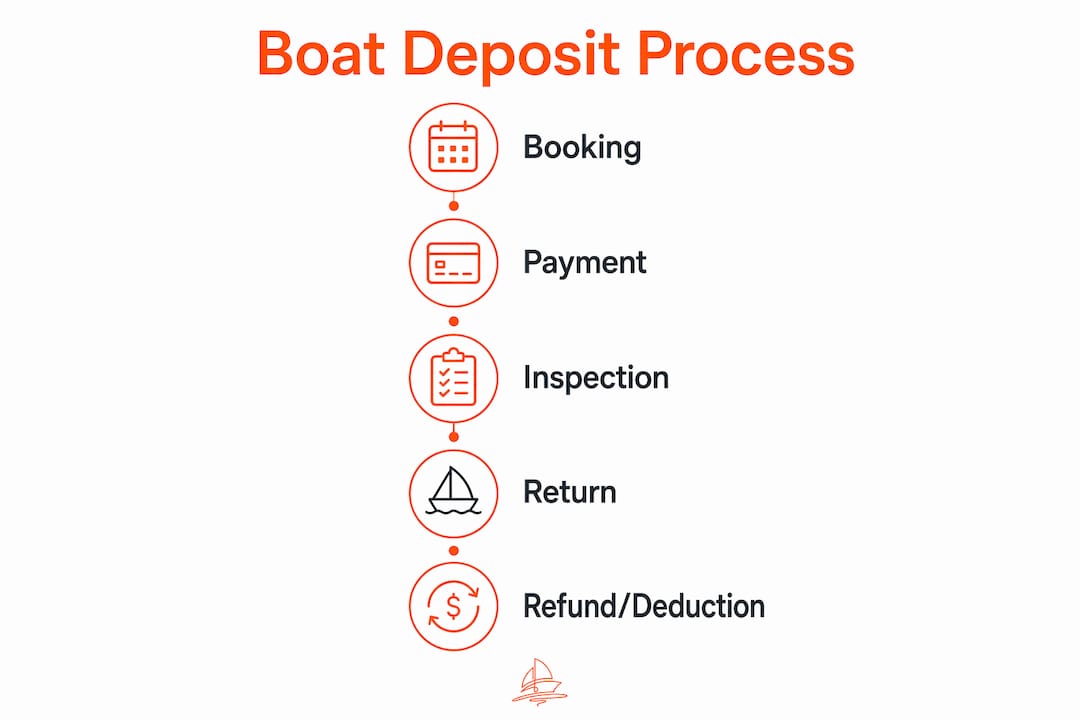
The deposit is typically collected at booking or at check-in, most often as a credit card pre-authorization. A pre-authorization is not a charge. It simply places a hold on a portion of your available credit. If you return the boat undamaged, the hold is released and no money leaves your account. The deposit only converts to an actual charge when the owner files a damage claim.

Most rental agreements pair the deposit with a check-in and check-out inspection. Both parties walk through the boat together, note existing damage, and sign off on the vessel's condition. That signed record is the foundation for any dispute resolution after the trip.
How much is a typical boat rental deposit?
Deposit amounts vary widely by vessel type, market value, and rental duration. A jet ski carries far less financial risk than a 50-foot sailing yacht, so the deposit scales accordingly. The table below shows typical deposit ranges by boat type in 2026.
| Boat type | Typical deposit range |
|---|---|
| Jet ski / PWC | $300–$500 |
| Fishing boat | $500–$1,000 |
| Pontoon | $500–$1,500 |
| Deck boat | $750–$1,500 |
| Sailboat | $1,000–$2,500 |
| Yacht | $2,000–$10,000+ |
Luxury yachts carry higher deposits because repair costs for hull damage, navigation systems, or interior fittings can run into tens of thousands of dollars. A single propeller strike on a 40-foot yacht can cost more than the entire rental fee to fix. Boat value is the single biggest factor affecting deposit size.
Rental duration also plays a role. A week-long charter on a sailboat exposes the owner to more risk than a four-hour afternoon trip, so some operators scale the deposit upward for longer bookings. Geographic location matters too. Marinas in high-traffic tourist areas or regions with strong seasonal demand often set higher deposits to offset the elevated wear on their fleets.
How are deposits handled during and after your rental?
The mechanics of a deposit hold differ significantly depending on whether you pay by credit card or debit card. Credit card pre-authorizations reduce your available credit but do not withdraw funds from your account. Debit card holds, by contrast, freeze actual cash in your checking account. That distinction matters if you plan to use the same card for fuel, food, or other expenses during your trip.
What to expect at check-in and check-out
At check-in, the owner or captain walks through the boat with you and documents its condition on a pre-rental inspection form. You should receive a copy of that form. At check-out, the same process repeats. If the boat comes back clean and undamaged, the owner releases the hold. Best practice calls for releasing the hold within 24–48 hours of a damage-free return, though your bank's processing time adds to that window.
Credit card holds typically release within 3–7 business days after an incident-free return. If the owner needs to review minor issues, that window extends to 7–14 business days. Active disputes can hold funds for up to 30 business days. Cash deposits are the exception: owners return cash the same day when no damage is found.
What triggers a deposit deduction
Common reasons an owner deducts from your deposit include physical damage to the hull, propeller, or interior, excessive cleaning fees from trash or stains, fuel shortfalls if the boat was returned with less fuel than it started with, and late returns that affect the next booking. Understanding these triggers before you rent helps you avoid them entirely.
- Physical damage: scratches, dents, propeller strikes, torn upholstery
- Cleaning fees: excessive mess beyond normal use
- Fuel shortfall: returning with less fuel than the agreed level
- Late return: causing scheduling conflicts for the owner
- Lost or broken equipment: missing life jackets, broken anchors, damaged electronics
Pro Tip: Photograph the hull, propeller, deck, and interior with your phone before you leave the dock. Enable location and timestamp data in your camera settings. Those images are your strongest defense against a wrongful damage claim.
Do damage waivers reduce your deposit liability?
A damage waiver, sometimes called a collision damage waiver (CDW), is an optional add-on that limits or eliminates your financial liability for accidental damage during the rental. Buying a waiver does not mean you can operate recklessly. Waivers typically exclude damage caused by gross negligence, intoxication, or operating outside agreed boundaries.
Damage waiver fees typically cost $30–$100 per day for smaller boats and a flat $300–$800 for larger yachts, which works out to roughly 5–7% of the total trip cost. That is a predictable, upfront expense compared to the unpredictable cost of an actual damage claim.
Weighing the pros and cons of a damage waiver
Reasons to buy a waiver:
- Caps your liability at the waiver fee rather than the full deposit amount
- Removes the stress of minor accidental damage during the trip
- Protects against costly repairs on high-value vessels
- Useful for first-time renters unfamiliar with handling a specific boat type
Reasons to skip a waiver:
- Adds cost to an already expensive rental
- Does not cover intentional damage or gross negligence
- Your personal boat insurance or travel insurance policy may already provide coverage
- Experienced sailors with a clean record may find the risk low enough to self-insure
Check your existing insurance policies before purchasing a waiver. Some credit cards also provide rental vehicle protection that extends to watercraft. Calling your insurer before the trip takes ten minutes and could save you $200 or more.
How to protect your deposit and navigate rental agreements
Reading the rental agreement is the single most effective way to protect your deposit. The "Damage and Liability" section defines what counts as damage versus normal wear, sets the process for filing claims, and specifies how disputes are resolved. Clear contract terms are the foundation of fair dispute resolution. Skipping this section is the most common mistake first-time renters make.
A step-by-step approach to protecting your deposit
- Read the full rental agreement before signing. Pay close attention to the damage policy, liability limits, and deposit release timeline.
- Photograph everything before departure. Document the hull, propeller, all four sides of the boat, and the interior. Use your phone's timestamp feature.
- Confirm the fuel level at check-in. Note it on the inspection form and photograph the gauge.
- Report any damage immediately. If something happens during the rental, contact the owner right away. Honesty prevents small issues from becoming expensive disputes.
- Return on time. Late returns trigger fees and can affect the owner's next booking.
- Photograph everything again at check-out. Repeat the same documentation process before you leave the dock.
- Get written confirmation of the check-out inspection. A signed form or a text message from the owner confirming clean return is your receipt.
Pro Tip: Use a credit card rather than a debit card for your deposit whenever possible. A credit card hold does not touch your actual cash, so your checking account stays fully accessible throughout the trip.
Reviewing the boat rental checklist before your trip covers every documentation step in detail. Renters who skip the pre-rental walkthrough are far more likely to face disputes, because there is no baseline record of the boat's condition before they took the helm.
Avoiding common booking mistakes also reduces deposit risk. Booking through a platform that publishes clear policies, provides inspection checklists, and offers dispute support puts you in a much stronger position than booking through informal channels with no paper trail.
Key takeaways
Boat rental deposits protect owners from financial loss and protect renters who document the vessel's condition thoroughly before and after every trip.
| Point | Details |
|---|---|
| Deposit ranges by vessel | Deposits run from $300 for a jet ski to over $10,000 for a luxury yacht. |
| Credit card vs. debit card | Credit card holds preserve your cash; debit card holds freeze actual funds in your account. |
| Release timeline | Incident-free returns typically release the hold within 3–7 business days. |
| Damage waivers | Waivers cost 5–7% of the trip and cap your liability for accidental damage. |
| Documentation is your defense | Timestamped photos of the hull, propeller, and interior protect you against wrongful claims. |
What the deposit conversation really reveals about renting a boat
Deposits reveal something most renters never consider: the rental agreement is a two-way contract, not just a formality you sign to get the keys. After seeing how deposit disputes unfold, the pattern is almost always the same. The renter skipped the pre-rental walkthrough, did not photograph the boat, and then faced a damage claim they could not disprove.
The uncomfortable truth is that deposits enforce accountability on both sides. They push renters to treat the vessel with care. They also push owners to maintain accurate inspection records, because a vague damage claim against a renter who has timestamped photos goes nowhere. The deposit system works best when both parties take it seriously.
The biggest myth about damage waivers is that buying one means you are covered for everything. Waivers exclude gross negligence and intentional damage in virtually every policy. A renter who buys a waiver and then drives at full speed through a no-wake zone is still liable. The waiver covers accidents, not carelessness.
At Sailorix, we see renters who treat the deposit as an obstacle and renters who treat it as a shared agreement. The second group almost never has a dispute. Read the agreement, document the boat, communicate openly with the owner, and the deposit process is straightforward every time.
— Sailorix
Rent with confidence on Sailorix
Sailorix lists thousands of yachts and boats worldwide with deposit amounts, rental terms, and inspection policies published clearly on every listing page. You see the full cost before you book, including the deposit hold amount, so there are no surprises at the marina.

Sailorix members pay just €100 per year for access to the platform, with service fees of approximately 1% per booking. That transparent pricing model extends to deposit information too. Every listing shows you exactly what hold will be placed on your card and when it will be released. Browse available boats and find a rental that fits your budget, your experience level, and your destination.
FAQ
What is a boat rental deposit?
A boat rental deposit is a security hold placed on your payment method at booking or check-in to cover potential damage or unpaid fees during the rental period. The hold is released after a damage-free return and inspection.
Are boat rental deposits refundable?
Deposits are fully refundable when you return the boat undamaged and on time. Deductions apply only when the owner documents damage, a fuel shortfall, excessive cleaning needs, or a late return.
How long does a deposit hold take to release?
Credit card holds release within 3–7 business days after an incident-free return in most cases, though some banks take up to 10–14 business days to process the release.
Should I use a credit card or debit card for a boat deposit?
Use a credit card. Credit card pre-authorizations reduce your available credit but do not withdraw cash, while debit card holds freeze actual funds and can limit your spending during the trip.
What does a damage waiver cover on a boat rental?
A damage waiver limits your financial liability for accidental damage during the rental, typically costing 5–7% of the total trip cost. Waivers do not cover gross negligence, intentional damage, or operating outside the agreed rental boundaries.