
APA stands for Advance Provisioning Allowance, a prepaid float charged on top of your base charter fee. Budget an extra roughly a quarter to a third of that base fee, with the full range varying depending on yacht type and itinerary. Underspend it and you get a refund; overspend it and you owe the difference. Plan your total charter cash around the higher number, not the lower one.
TL;DR:
- The APA percentage generally ranges from 20 to 35 percent of the base charter fee, with motor yachts tending toward the higher end.
- Fuel costs can account for up to half of the APA, especially on longer passages or busy itineraries involving distant islands.
- APA does not cover the base charter fee, crew gratuity, damages exceeding the security deposit, or owner-specific extras unless pre-cleared.
- A ring-fenced escrow account and clear, written agreement on APA percentage and spending ceilings are key to avoiding budget surprises.
- Active management involves detailed provisioning preferences, midpoint ledger reviews, and checking reconciliation receipts to control overall costs.
Table of Contents
- What Is APA on a Yacht Charter, and Why Does It Exist?
- What APA Covers, and What It Doesn't
- How APA Percentages and Payment Timing Actually Work
- Managing APA Once You're On the Water
- Mistakes, Negotiation Levers, and Red Flags
- How Sailorix Approaches APA Transparency
- Our Take: Budget for the Float, Then Manage It Actively
- Book Smarter With Lower Fees and Fewer Surprises
- Sources
- FAQ
What Is APA on a Yacht Charter, and Why Does It Exist?
APA isn't a markup or a hidden fee. It's a working float you hand over so the crew can pay real-time expenses without waiting for approval on every dock fee or fuel top-up. Think of it like a security deposit that actually gets spent, tracked, and settled at the end.
Most reputable charters run on MYBA terms, the standard contract framework used across the Mediterranean and increasingly worldwide. Under these terms, the APA amount and percentage are written directly into the charter agreement, not left to verbal promises. The captain holds fiduciary responsibility for the fund. That means tracking every purchase, keeping receipts, and producing an accounting at the end of the trip.
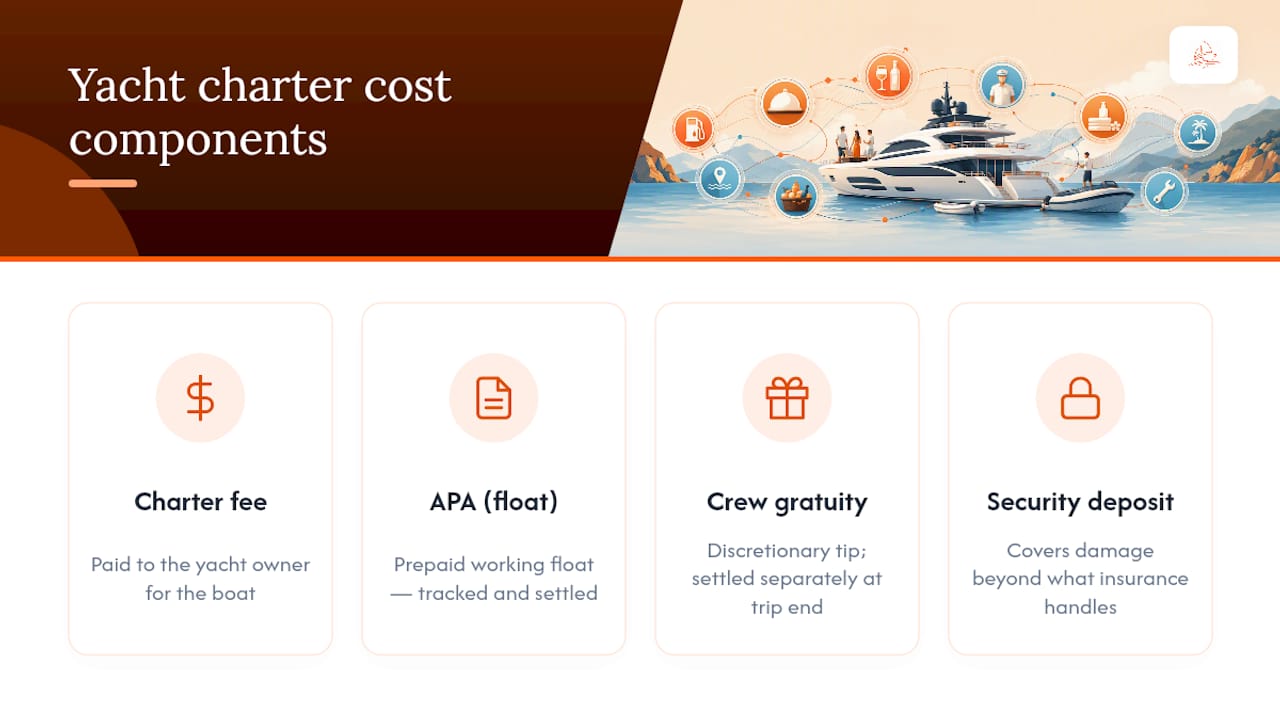
Three separate charges get lumped together by confused first-timers: the base charter fee (what you're paying the yacht owner for the boat itself), the APA (your prepaid operating float), and crew gratuity (a discretionary tip, typically settled separately at the end). A fourth, the security deposit, covers damage beyond what insurance handles. Understanding what a charter fee actually covers makes it much easier to see where APA fits into your total spend.
What APA Covers, and What It Doesn't
APA funds everything variable that keeps the trip running day to day. The core categories:
- Fuel for the main engines, generators, and tenders
- Food and beverage provisioning, including wine and spirits
- Port, marina, and berthing fees
- Communications, including satellite and onboard internet
- Water toy maintenance and tender operating costs
- Shore excursions and guided activities
- Laundry service
- Crew overtime on longer or more demanding days
- Minor repairs that come up mid charter
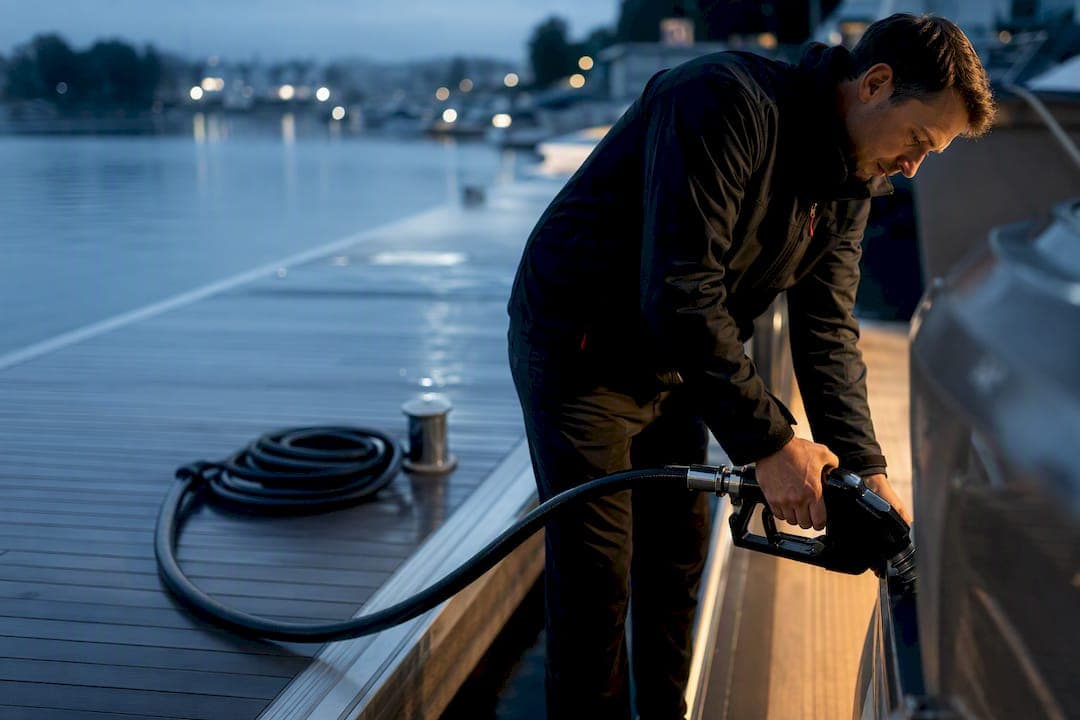
Fuel is usually the single biggest line item, often eating 30–50% of the entire APA on a typical week. Provisioning and dockage fees split most of what's left, with communications and excursions taking smaller shares. That's exactly why itinerary matters so much: a charter that hops between distant islands every day burns far more diesel than one that anchors in the same bay for three nights.
APA does not cover the base charter fee, crew gratuity, or damage that exceeds your security deposit. It also won't cover owner-list extras, like a specific champagne label or a private chef's specialty ingredients, unless you've requested and pre-cleared them with the broker.
How APA Percentages and Payment Timing Actually Work
Percentages vary by yacht type for a straightforward reason: sailing yachts burn less fuel and typically carry smaller crews, so their operating costs run lower relative to the charter fee. Motor yachts, especially larger ones doing longer-range itineraries, push toward the higher end.
Rough guidelines worth knowing before you sign anything:
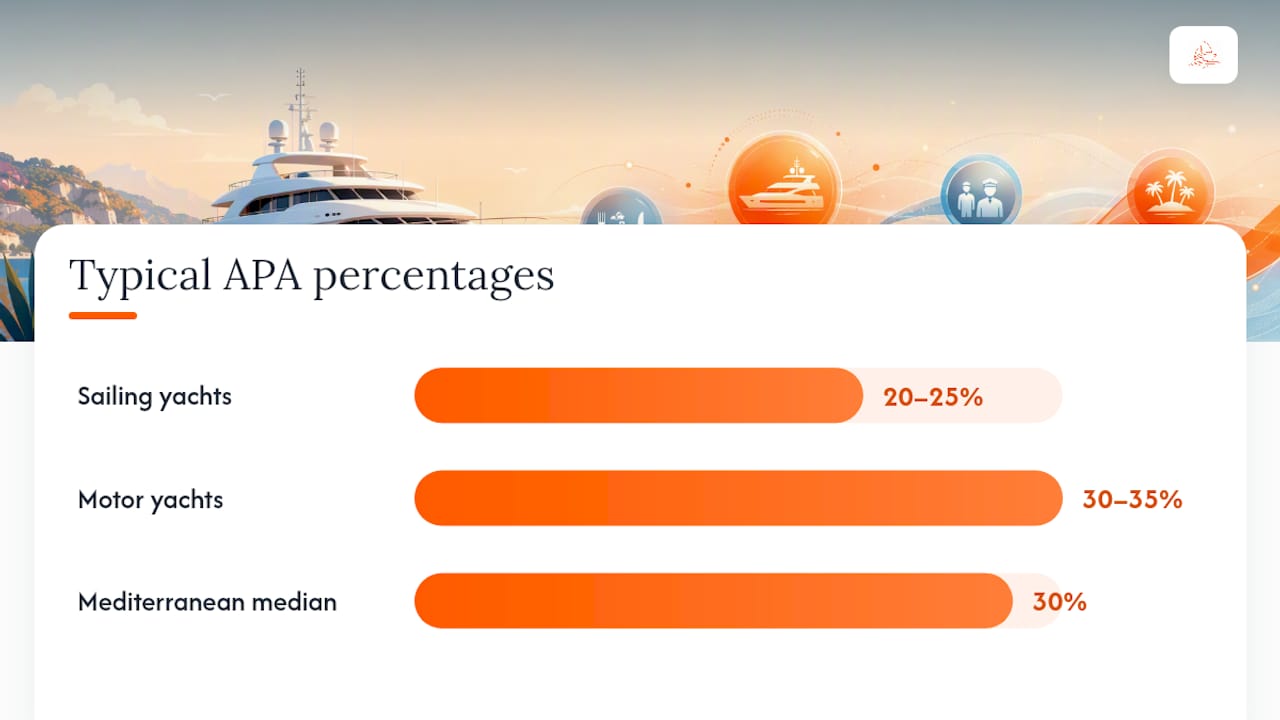
- Sailing yachts commonly sit around 20–25% of the base fee
- Motor yachts more often land at 30–35%
- Mediterranean charters frequently cite 30% as a median figure under MYBA-style contracts
- Anything above 38% without a clear itinerary-driven explanation deserves a direct question to your broker
Payment timing follows a predictable pattern. Most brokers request the APA wire 2 to 4 weeks before boarding, often alongside your final base-fee balance. Reviewing the full yacht charter payment schedule before you commit helps you avoid a cash-flow surprise right before departure.
One norm worth insisting on: APA funds should sit in a ring-fenced escrow account, separate from the operator's day-to-day operating funds. If a broker can't explain where your money is actually held, that's a signal to ask more questions before you wire anything.
Managing APA Once You're On the Water
Controlling your APA spend doesn't require confrontation with the crew. It requires paperwork done early and a couple of check-ins along the way.
- Fill out a detailed preference sheet. List specific brands, quantities, and dietary limits for provisioning, and be upfront about how much cruising you actually want. Vague requests push captains toward conservative, higher budgets.
- Ask for a midpoint ledger. On a seven-day charter, request the running accounts around day 3 or 4. Catching an overspend halfway through gives you time to adjust plans, not just absorb the bill.
- Expect receipt-backed reconciliation at the end. A proper accounting itemizes fuel, provisioning, port fees, and every other category separately, with vendor receipts attached, not just a single lump total.
- Confirm the refund or invoice timeline before boarding. Unused APA should come back to you promptly after reconciliation; overages get invoiced with the same line-item detail.
Pro Tip: Ask your broker in writing what cruising speed and daily hours the captain used to estimate fuel costs. A captain running worst-case assumptions at 20 knots will quote a very different APA than one planning slower, shorter runs between anchorages.
Mistakes, Negotiation Levers, and Red Flags
The most common mistake is treating APA like an all-inclusive price and being blind sided when it isn't. APA is refundable, gratuity generally isn't, and confusing the two leads to budgeting that's wrong from day one. A close second mistake: signing without ever specifying provisioning ceilings, then being surprised when premium requests inflate the float.
You have more room to negotiate than most first-timers assume:
- Ask that the APA percentage be tied explicitly to your confirmed itinerary, not a generic default
- Request a written clause requiring your authorization before the captain spends beyond an agreed ceiling
- Insist on ring-fenced escrow, never an operator's general operating account
Pro Tip: If a quoted APA sits well above the 25–35% norm,, ask the broker to justify it against your specific route and cruising speed. A legitimate reason (long passages, remote provisioning) is fine. A shrug is not.
How Sailorix Approaches APA Transparency
Confusion around APA usually comes from unclear contracts and service fees buried inside the quote. Sailorix works against that by keeping service fees transparent at roughly 1% for members, so the number you see for the boat itself isn't quietly padded before APA even enters the conversation.
When you're comparing offers, ask any broker three things: what percentage is the APA, where is it held, and how often will you receive a reconciled ledger. Clear answers to all three usually predict a smooth charter. Vague answers to any of them are worth pushing on before you wire a deposit.
Our Take: Budget for the Float, Then Manage It Actively
Most advice on APA stops at "expect to pay 25 to 35% more." That's true, but it treats APA as a passive tax instead of a fund you can actually influence. The charterers who come out ahead aren't the ones who negotiate the lowest percentage. They're the ones who fill out a specific preference sheet, ask for a midpoint ledger, and read the final reconciliation line by line.
Conventional guides underplay how much fuel assumptions alone can swing your final number. A captain planning long passages at high cruising speed will quote a materially different APA than one planning short island hops, even on the identical yacht. Ask about that assumption before you sign, not after you're invoiced for an overage.
Prioritize this: get the percentage tied to your actual itinerary in writing, confirm the escrow arrangement, and schedule a midpoint check. Everything else, gratuity, add-ons, excursions, is easier to manage once the float itself is under control.
— SAILORIX
Book Smarter With Lower Fees and Fewer Surprises

That matters directly for APA planning: a lower service fee on the booking itself leaves more room in your total budget for the float you'll actually need to cover fuel and provisioning without stretching. Members get access to real-time availability across premium fleets worldwide, so comparing base fees against expected APA percentages becomes a lot more straightforward before you commit. If you're ready to see what a transparent quote actually looks like, check current listings and start a booking on Sailorix.
Sources
The Wikipedia entry on advance provisioning allowance confirms the standard percentage ranges. Helm's APA breakdown details MYBA contract norms, and IYBA offers broader charter contract standards worth reviewing before you sign.
- What Is APA? Advance Provisioning Allowance Explained (2026) - George Yachts
FAQ
What Is APA on a Yacht Charter?
APA is a prepaid float, generally around a quarter to a third of the base charter fee, that covers variable costs like fuel, provisioning, and port fees. Unused funds are refunded after reconciliation; overages are invoiced.
What Is the 12-Person Rule on a Yacht?
Charter yachts flagged for private use are commonly limited to a restricted number of paying guests under international maritime passenger regulations, regardless of how many cabins the yacht has. Larger guest counts typically require a yacht certified to commercial passenger standards.
Do Guests Pay Extra Costs Like APA on Charter Shows Like Below Deck?
Yes. The charters featured on shows like Below Deck follow the same real-world structure, with guests covering a base charter fee plus an APA for fuel, food, and other variable costs, exactly as any private charterer would.
How Much Does a Short Multi-Day Charter Typically Cost With APA Included?
Total cost depends heavily on yacht size and itinerary, but expect the APA alone to add a significant percentage on top of whatever base fee the yacht quotes for the trip length you book.