
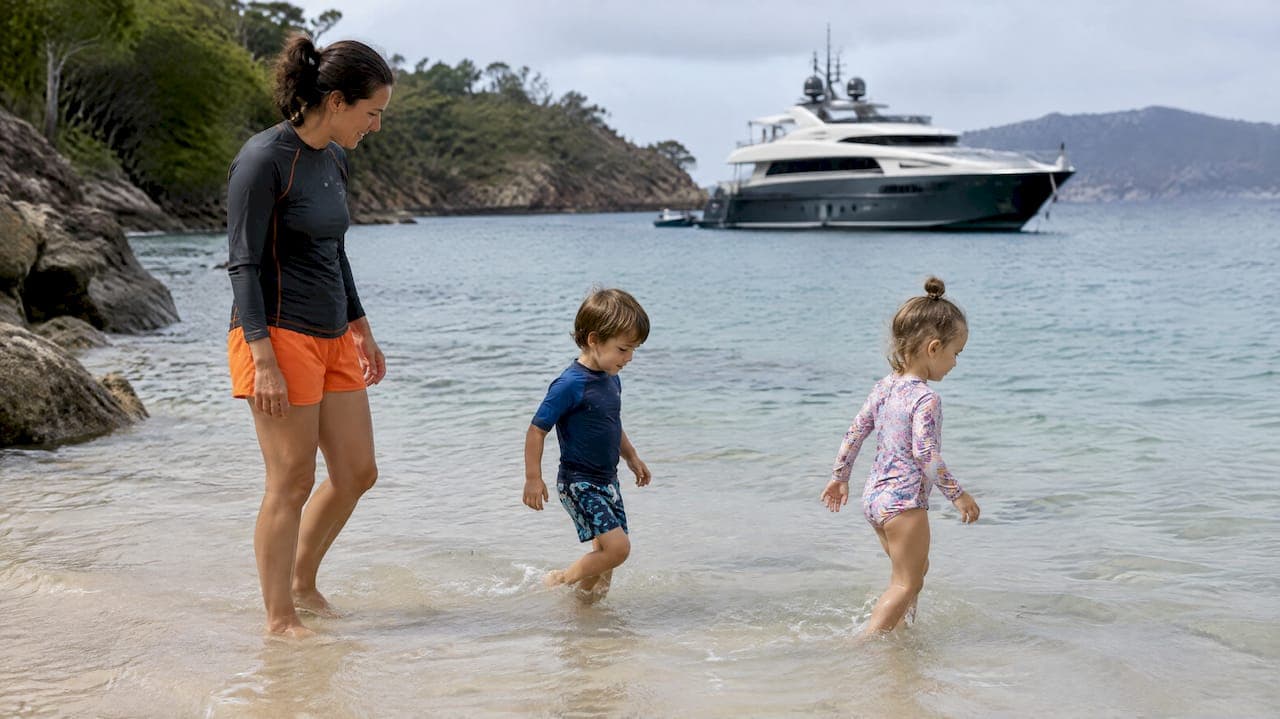
Yes, most families with young children benefit from a nanny on yacht charter, especially trips longer than a week or with kids under six. The most reliable route depends on lead time: book a specialist placement agency like Nannyland several weeks out, or bring a trusted nanny you already employ. Expect to budget several hundred dollars weekly on top of the charter fee, and always confirm pediatric first aid certification before departure.
TL;DR:
- Book placements four to six weeks ahead; a trusted nanny often needs one or two weeks, while yacht childcare requires confirmation at booking.
- Before departure, verify pediatric first aid and CPR, water safety training for swim supervision, references, and a signed contract covering pay and overtime.
- One experienced nanny can manage two to three children of similar ages, but consider two caregivers for larger groups or mixed ages, especially with infants.
- Tourist visas typically do not cover paid childcare, so confirm work authorization and whether the nanny is classified as guest, crew, or contractor.
- Budget for the nanny’s agreed rate plus agency fees, flights, visas, meals, and overtime; confirm which travel costs the yacht covers before signing.
Table of Contents
- 1. What does a yacht nanny actually do
- 2. Why families add a nanny to a family charter
- 3. How to arrange a nanny for your charter: options and checklist
- 4. Nanny costs and how to budget for one
- 5. Qualifications and safety checks to request
- 6. A day onboard: schedules, activities, and crew handoffs
- 7. Booking and safety checkpoints for childcare add-ons
- 8. Legal and regulatory considerations for employing a nanny onboard
- 9. Insurance and liability when a nanny is onboard
- 10. Nanny-to-child ratios and the expertise ratio allows
- 11. Setting clear expectations with your onboard nanny
- 12. Sample itineraries with a nanny built in
- Why routine matters more than itinerary perfection
- How we help you coordinate a family charter with childcare
- FAQ
- Sources
1. What does a yacht nanny actually do
A yacht nanny covers the same ground as a land-based nanny, adjusted for life at sea. Core duties include supervising children during swim time, planning age-appropriate activities, managing naps and meal schedules, and coordinating with the galley on kid-friendly food. On smaller boats, the nanny often works solo and reports directly to parents. On larger yachts with a full crew, the nanny slots into the existing service structure and coordinates with the stewardess on scheduling.
Role variants matter when you're hiring:
- Live-aboard nanny: travels with the family full time and already knows the children's routines and medical needs.
- Charter-only nanny: hired for the trip length, matched through an agency or the crew's network.
- Activity-host nanny: focuses less on basic care and more on running structured programs, snorkeling lessons, craft time, treasure hunts.
Duties scale with yacht size. A 50-foot sailing yacht with one family rarely needs more than a single flexible caregiver, while a larger motor yacht hosting multiple families during a group charter may need two nannies working shifts to keep ratios reasonable.
2. Why families add a nanny to a family charter
The biggest draw is freedom: parents get real evenings and shore excursions without split attention. For infants and toddlers, a nanny also preserves naptime and feeding routines that a packed charter itinerary would otherwise disrupt.
- Parents get uninterrupted time for diving, wine tastings, or dinner ashore.
- Infants and toddlers keep consistent nap and feeding schedules despite new time zones and activities.
- Crew workload drops, so the stewardess and deckhands can focus on hospitality rather than child supervision.
- A nanny who knows the itinerary can tailor shore excursions, picking tide pools over long hikes for a four-year-old, for example.
Pro Tip: Ask your nanny candidate to suggest one shore activity for each age group on your crew list; their answer tells you more about real experience than any resume line.
3. How to arrange a nanny for your charter: options and checklist
Four main paths exist, each with different lead times:
- Specialist nanny placement agency: matches you with vetted, travel-experienced candidates; book four to six weeks ahead for the best selection.
- General nanny agency: broader pool, less maritime-specific experience; similar lead time but more vetting on your end.
- Crew-provided nanny: some larger charter yachts include a nanny or stewardess trained for childcare; confirm availability when you book the boat, not after.
- Bring your own trusted nanny: fastest option if you already employ someone; mainly requires travel logistics and crew briefing, often workable within a week or two.
When vetting any candidate, request a signed contract covering hours, pay, overtime, and termination terms, plus a background check and at least two references from prior families or agencies.
Before departure, confirm:
- Valid passport and any required visas for every port on the itinerary.
- Medical history and allergy forms for each child.
- Emergency contact list shared with the captain.
- A short briefing call between the nanny, parents, and captain covering safety procedures and daily routine expectations.
4. Nanny costs and how to budget for one
Pay structures vary by hiring route. Placement agencies typically charge a placement fee plus a weekly or daily rate paid directly to the nanny; bringing your own nanny usually means covering their regular salary plus travel costs. Specialist agencies such as Nannyland advertise tailored placement packages with travel support built in, which can simplify logistics for families who need a nanny on short notice or with an unusual schedule.
- Weekly or daily rate, often higher than a land-based nanny rate given travel demands and irregular hours.
- Placement or agency fee, charged once per booking.
- Extra costs: flights, visas, meals (if not covered by the yacht), and overtime for late evenings or early starts.
Many superyacht nanny listings quote weekly rates well above standard domestic nanny pay, reflecting the travel readiness and flexible hours the role demands.
Add the nanny line item to your charter budget early, alongside provisioning and crew gratuities, so it doesn't surprise you at final payment.
5. Qualifications and safety checks to request
At minimum, ask for current pediatric first aid and CPR certification, plus water-safety or lifeguard training if swim supervision is part of the role. These aren't optional extras on a boat.
- Pediatric first aid and CPR, ideally renewed within the past two years.
- Water-safety or lifeguard certification for any nanny supervising pool or ocean swim time.
- Background check results and at least one reference from a previous charter family or placement agency.
- Basic maritime safety awareness, since even non-crew staff benefit from understanding emergency drills onboard.
For nannies crossing into crew duties on larger yachts, STCW and ENG1 certifications become relevant, and USCG training guidance outlines the kind of basic seamanship awareness that supports safer onboard practice. Ask to see original certificates, not just copies, and confirm medical fitness if the role involves extended time at sea.
6. A day onboard: schedules, activities, and crew handoffs
A workable day keeps structure without feeling rigid.
- Morning: breakfast, light activity or lesson time, then swim window before the midday sun peaks.
- Midday: lunch, quiet time or nap for younger children while parents relax or dive.
- Afternoon: shore excursion or supervised water sports, coordinated with the captain for timing and safety zones.
- Evening: dinner, wind-down activities, bedtime routine, handoff to parents or night-duty crew.
Before each excursion, the nanny checks in with the stewardess or captain on timing, weather, and any route changes. A short daily briefing covering medications, allergies, and parent contact preferences keeps everyone aligned, and age-appropriate enrichment, snorkeling lessons for older kids, sensory play for toddlers, fills the gaps between meals and naps.
7. Booking and safety checkpoints for childcare add-ons
When you book your charter, note childcare needs directly in your reservation: ages of children, swim ability, and any medical considerations. Confirm proof of pediatric first aid certification before the nanny boards, and where a crew member doubles into a childcare role, ask for STCW and ENG1 documentation to protect your booking.
- Request childcare notes be added to your reservation at booking, not after confirmation.
- Ask for proof of pediatric first aid and, where relevant, STCW/ENG1 for crossover crew roles.
- Confirm all travel documents at least two weeks before departure.
- Book agency placements four to six weeks ahead; a trusted bring-your-own nanny can often work with one to two weeks' notice.
For planning the rest of the trip, our guides on family charter layout and briefing decisions and renter safety standards cover related groundwork worth reading before you lock in dates.
8. Legal and regulatory considerations for employing a nanny onboard
Employment rules shift depending on where the nanny is hired, where the charter departs, and which flag the yacht sails under. If you're bringing your own nanny internationally, check whether destination countries require a work visa for someone performing paid childcare duties, even short-term; tourist visas typically don't cover paid work, including informal arrangements.
Maritime labor rules mainly govern crew, not guest-hired nannies, but the distinction can blur when a crew member takes on childcare duties. In that case, the yacht's flag-state labor rules and any applicable collective agreements for crew may apply instead of standard domestic employment law. Clarify with the charter broker or captain whether your nanny is considered a guest, a temporary crew member, or an independent contractor, since that status affects visa requirements, insurance coverage, and who holds liability.
If you're hiring through a placement agency, ask whether the agency handles work authorization paperwork or whether that responsibility falls to you. Agencies with international placement experience, like those described on Nannyland's site, often have more familiarity with these cross-border questions than general domestic agencies. When in doubt, consult an immigration attorney or the charter broker directly rather than assuming informal arrangements are fine; rules vary enough by country and port that a blanket assumption can create real problems mid-trip.
9. Insurance and liability when a nanny is onboard
Standard charter insurance typically covers the vessel, crew, and guests, but a nanny's employment status determines what additional coverage you need. If you employ the nanny directly (rather than through crew placement), your personal liability or a dedicated nanny insurance policy, common in domestic nanny employment, may need to extend to cover work performed at sea.
Ask your charter broker whether the yacht's existing liability policy includes any coverage for non-crew staff performing childcare duties, since many policies draw a sharp line between "guest" and "working personnel" categories. If the nanny is placed through an agency, ask whether the agency carries its own liability coverage for placements, and get that in writing before departure.
Medical coverage matters too: confirm whether your travel insurance or the nanny's own policy covers care administered to your children by the nanny, and whether the nanny has coverage for injuries sustained while working onboard. These details are worth settling before you sign the charter contract, not after a question comes up mid-trip. Clear documentation protects both your family and the nanny if a dispute or incident arises.
10. Nanny-to-child ratios and the expertise ratio allows
A single experienced nanny can reasonably manage two to three children of similar age, especially school-age kids who can largely self-direct during quiet periods. That ratio drops fast with infants, toddlers, or a wide age spread; one adult watching a one-year-old and a seven-year-old at the pool is stretched thin no matter how skilled they are.
For charters with more than three children or a mix of infants and older kids, consider two nannies working overlapping or split shifts. This also covers rest breaks, since a nanny working a twelve-hour charter day without relief isn't operating at full attention by evening, exactly when pool and sunset activities tend to happen.

Expertise matters as much as ratio. A nanny experienced with toddlers isn't automatically comfortable supervising open-water swimming for a ten-year-old, and vice versa. When briefing an agency or reviewing a candidate, be specific about each child's age, swim ability, and any medical needs so the match accounts for real skill fit, not just availability.
11. Setting clear expectations with your onboard nanny
The yacht environment has its own rhythm, tides, excursion windows, crew schedules, that a land-based nanny role doesn't require. Before departure, walk through a typical day with the nanny: when the boat usually moves between anchorages, when swim platforms are open, and how shore excursions get planned day to day.
Put expectations in writing where possible: hours, days off if the charter runs more than a week, who handles discipline decisions, and how you want meals and screen time managed. Share this with the captain or stewardess too, since they'll coordinate timing with the nanny throughout the trip.
Set a daily check-in, even five minutes at the end of each day, to flag anything that came up: a scraped knee, a missed nap, a request for tomorrow's activity. This keeps small issues from building into friction and gives the nanny a clear channel for questions about changing plans or weather-driven itinerary shifts.
12. Sample itineraries with a nanny built in
A week-long charter with two children under six might run: morning swim lesson with the nanny while parents have coffee, a late-morning snorkel stop with the nanny managing flotation gear, afternoon nap time onboard while the yacht repositions, then a supervised beach visit before dinner. Parents get a full adult dinner ashore while the nanny handles bath and bedtime.
For a charter with school-age kids, the nanny might run a morning paddleboard lesson, help with a scavenger hunt during a lunch stop at a quieter anchorage, and supervise an afternoon excursion like a guided snorkel tour. Our group trip ideas guide has more activities a nanny can adapt for mixed-age groups.
Shore excursions in family-friendly destinations work well when the nanny scouts ahead: a vacation rental hub with nearby activities can offer useful local options for a land day, and destinations with structured kid programs, like age-appropriate diving courses for older children, give the nanny a ready-made framework instead of improvising.

Why routine matters more than itinerary perfection
The families who get the most out of an onboard nanny aren't the ones with the fanciest itinerary, they're the ones who protected their kids' sleep and meal routines first and built the rest of the trip around that. A verification checklist catches the obvious risks, certifications, references, contract terms, but compatibility and clear daily communication are what actually make the week work.
How we help you coordinate a family charter with childcare

Our services page covers concierge and lifestyle support that can help coordinate add-ons like childcare logistics alongside your charter. Browse our fleet or check membership details to get started on a family-ready booking.
FAQ
What is the 12 person yacht rule?
The 12 person rule refers to international maritime regulations limiting the number of paying passengers on a charter yacht without a full commercial passenger certification, commonly capping most private charter yachts at 12 guests. Crew, including a nanny, typically don't count toward this guest limit since they're considered working staff rather than passengers.
What is the average salary for a charter yacht stewardess?
Stewardess pay varies by yacht size, experience, and region, and no single published figure applies universally across the industry. Families hiring a nanny separately from crew should budget pay based on the specific agency or candidate quote rather than assuming stewardess rates apply.
What is a waitress on a yacht called?
The crew member who serves meals and manages guest service onboard is called a stewardess (or steward), not a waitress. This role sometimes overlaps with light childcare support on smaller crews, though a dedicated nanny is recommended for families needing consistent supervision.
Do yacht crew get paid or just tips?
Yacht crew, including stewardesses and deckhands, receive a salary as their primary income, with tips from guests as a common addition on top of base pay. A nanny hired separately for a charter is typically paid a set weekly or daily rate agreed in advance, not a tip-based arrangement.