
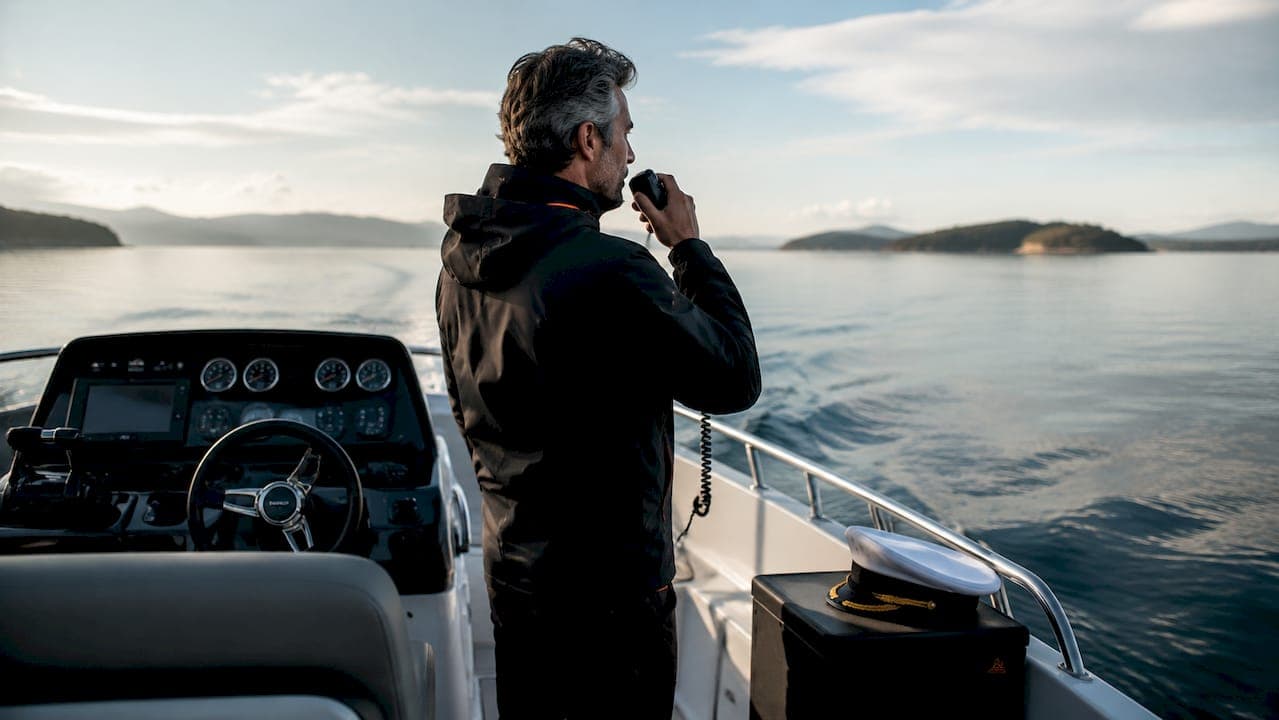
A pan emergency, known formally as a Pan-Pan call, is the international standard signal for an urgent but not yet life-threatening situation aboard a vessel. It sits between a Mayday call (grave and imminent danger) and a Sécurité call (safety warnings). Knowing when and how to use it can be the difference between a controlled response and a missed rescue window. This guide covers the exact protocols, real scenarios, and onboard preparation every boating family needs before heading out on the water.
What is a pan emergency and how does it differ from a mayday call?
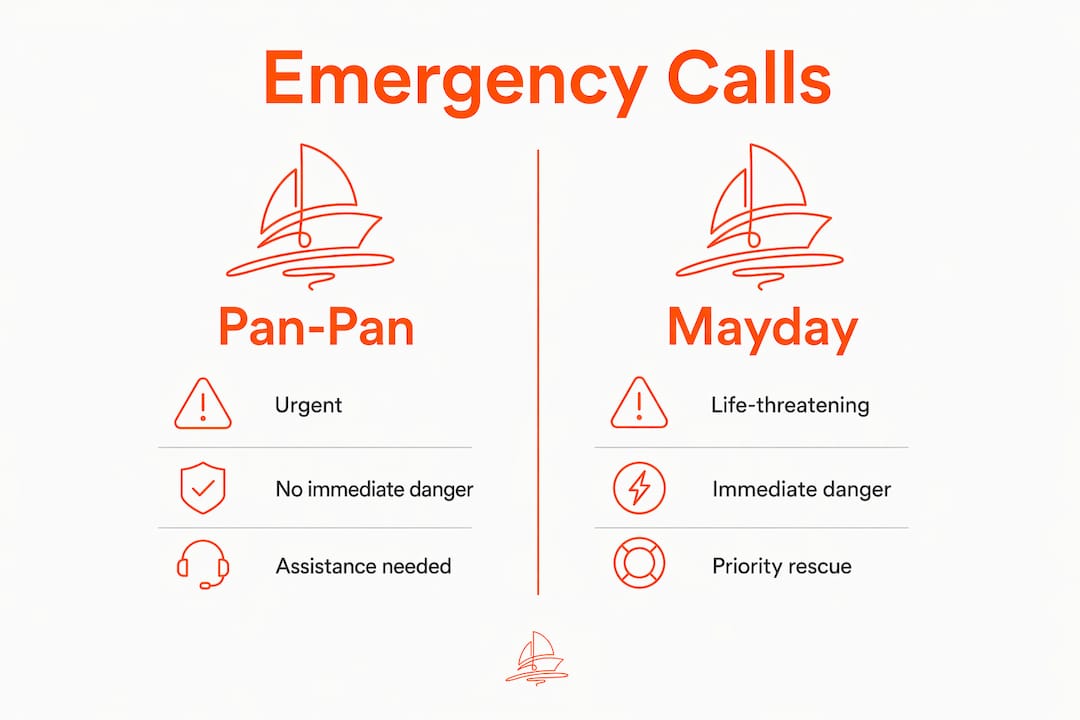
A Pan-Pan call signals urgency. A Mayday call signals that lives are in immediate danger. Confusing the two has real consequences for how quickly rescue teams respond and how resources get allocated across the water.
The distinction comes down to one word: imminence. A Pan-Pan denotes urgency without immediate threat to life. A Mayday means the vessel or its crew faces grave and imminent danger requiring immediate rescue. Using Mayday when the situation is urgent but stable can pull emergency resources away from a genuine life-or-death call elsewhere.
When each call applies
Typical Pan-Pan scenarios include:
- Engine failure in calm water with no immediate danger to crew
- Running low on fuel within reach of shore or assistance
- A non-life-threatening medical issue such as a sprained ankle or mild seasickness
- Steering malfunction that limits but does not eliminate control
- Electrical problems that affect navigation but not vessel stability
Mayday applies when the vessel is sinking, fire is spreading beyond control, a crew member has a life-threatening injury, or the boat is taking on water faster than it can be managed.
A third call, Sécurité, sits below Pan-Pan. It broadcasts safety information to nearby vessels, such as debris in the water or a sudden weather change. No response is expected.
Communication protocols
Pan-Pan calls may be made on the frequency already in use or another appropriate channel. VHF Channel 16 is the international distress and calling frequency and the standard starting point for most recreational boaters. Local maritime regions may assign different channels or follow slightly different procedures, so knowing your local VHF protocol before departure is not optional.
The correct spoken format for a Pan-Pan call is:
"Pan-Pan, Pan-Pan, Pan-Pan. All stations. This is [vessel name], [vessel name], [vessel name]. My position is [location]. I have [nature of urgency]. I have [number] persons on board. I require [type of assistance]. Over."
Repeat the vessel name three times. State your position clearly using GPS coordinates or a recognizable landmark. Describe the problem in plain language.
Pro Tip: Write your vessel name, MMSI number, and current GPS coordinates on a laminated card near the radio. In a stressful moment, reading from a card is faster and more accurate than recalling from memory.
The biggest operational difference between Pan-Pan and Mayday is the response level. A Pan-Pan alerts nearby vessels and authorities that assistance may be needed, without triggering a full emergency response. That means you may not get an immediate rescue vessel. You will get acknowledgment and monitoring, which is exactly what an urgent but stable situation requires.
When and how to issue a pan emergency call on the water
Recognizing the right moment to call is the hardest part. Most boaters wait too long. The correct mindset is: if you are asking yourself whether to call, call.
Conditions that trigger a Pan-Pan
Issue a Pan-Pan when any of these apply:
- The engine has failed and you cannot restart it
- Fuel is critically low and you cannot reach port under current conditions
- A crew member has a medical issue that is not immediately life-threatening but requires attention
- Steering or navigation equipment has failed
- You are taking on minor water but the vessel is not in danger of sinking
- Visibility has dropped severely and you cannot safely navigate
Step-by-step radio procedure
- Switch your VHF radio to Channel 16.
- Press and hold the transmit button.
- Say "Pan-Pan" three times clearly.
- Say "All stations" or the name of the coast guard station if known.
- State your vessel name three times.
- Give your position (GPS coordinates or nearest landmark).
- Describe the nature of the urgency in plain language.
- State the number of people on board.
- State what assistance you need.
- Say "Over" and release the transmit button.
- Wait for a response. If none comes within two minutes, repeat the call.
Escalation: when to upgrade to Mayday
Upgrading early prevents delays in assistance when conditions deteriorate. If a Pan-Pan situation worsens, do not wait for confirmation that it has become life-threatening. Upgrade to Mayday the moment you believe lives are at risk. Announce the upgrade on Channel 16 using the same format, replacing "Pan-Pan" with "Mayday."
Pro Tip: Tell your crew what you are doing before you transmit. A calm, coordinated crew gives you better information to relay and reduces panic during the call.
Providing your location accurately is the single most critical piece of information in any urgency call. A vessel without a known position cannot be found efficiently. Use a GPS device, a chartplotter, or a handheld GPS unit as a backup. Cross-reference with visible landmarks whenever possible.
Essential safety equipment to manage pan emergencies on boats
Preparation prevents escalation. The right equipment on board gives you more options when an urgent situation develops, and more time before it becomes life-threatening.
Proper onboard safety equipment includes marine VHF radios, first aid supplies, engine monitoring tools, and fire response gear. Each category addresses a different type of Pan-Pan scenario.
Core equipment checklist
- Marine VHF radio: A fixed-mount radio with DSC (Digital Selective Calling) capability lets you transmit a distress signal with your GPS position at the press of a button. A handheld VHF serves as a backup if the main unit fails.
- Engine monitoring tools: Fuel gauges, temperature alarms, and oil pressure indicators give early warning of mechanical problems before they become emergencies.
- First aid kit: Stock it for the number of people on board. Include items for burns, cuts, sprains, and seasickness. A non-life-threatening medical issue handled well on board stays a Pan-Pan situation rather than escalating to Mayday.
- Fire extinguisher: A Coast Guard-approved marine fire extinguisher rated for Class B fires (flammable liquids) belongs in the galley and near the engine compartment.
- Anchor and tow line: If the engine fails, anchoring prevents drift into dangerous areas while you wait for assistance.
Onboard cooking and pan fire safety
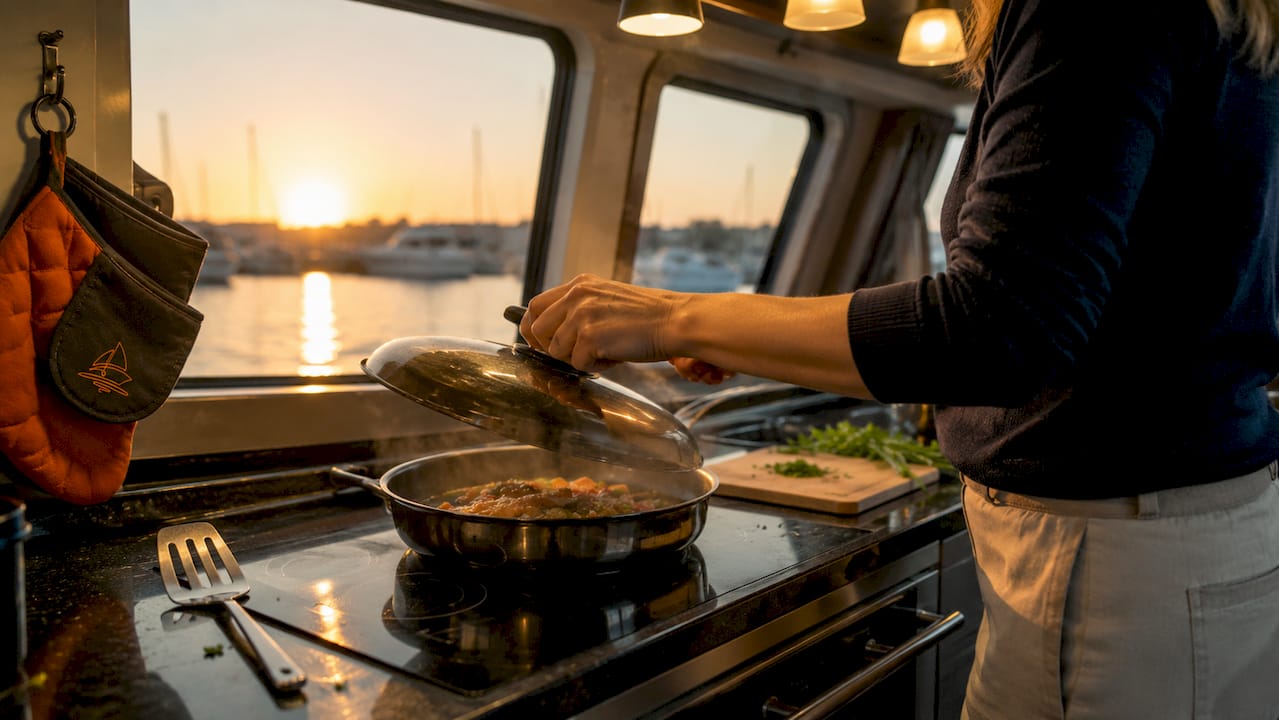
Cooking fires are a leading cause of fires aboard vessels. Unattended cooking causes many fires, and grease fires in particular behave differently from other fires. Water makes a grease fire worse by causing the burning oil to splatter and spread.
The correct response to a pan fire is to cover the pan with a lid and turn off the heat. Leave the lid in place until the pan is completely cool. Never move a burning pan. Never use water. A Class K fire extinguisher, designed for cooking oils, is the right tool for a galley fire that cannot be smothered with a lid.
Frying pan safety on a boat requires extra attention because vessel movement adds instability. Use pans with locking handles, keep the stove gimbaled if possible, and never leave cooking unattended in rough conditions.
Common pan emergency scenarios and how to respond safely
Real Pan-Pan situations rarely look like textbook examples. They develop gradually, which is exactly why many boaters misunderstand pan calls and wait too long to use them.
Engine failure in open water. Cut the throttle, assess the situation, and anchor if depth allows. Check fuel levels, battery connections, and the kill switch before assuming a mechanical failure. If the engine cannot be restarted and you are in a shipping lane or exposed to weather, issue a Pan-Pan immediately.
Running low on fuel. Calculate your remaining range against your distance to port. If you cannot make it under current conditions, issue a Pan-Pan before you run dry. A vessel with fuel is easier to assist than one that is adrift.
Minor medical issue on board. A crew member with a suspected broken bone, a bad cut, or a cardiac symptom that is not immediately life-threatening warrants a Pan-Pan. Describe the symptoms clearly on the radio. Coast guard operators can connect you with medical advice while you navigate toward assistance.
Electrical or steering malfunction. Partial steering loss is an urgent situation. You can still maneuver, but your control is compromised. Issue a Pan-Pan, reduce speed, and avoid high-traffic areas while you assess the fault.
Worsening conditions. Weather changes fast on the water. If a Pan-Pan situation develops while conditions are deteriorating, reassess every 15 minutes. The moment you believe the situation has become life-threatening, upgrade to Mayday without hesitation. Early communication keeps options open and improves rescue outcomes.
Key takeaways
A Pan-Pan call is the correct response to any urgent but non-life-threatening situation on the water, and issuing it early is always the right decision.
| Point | Details |
|---|---|
| Pan-Pan vs. Mayday | Pan-Pan signals urgency without immediate danger; Mayday signals grave and imminent threat to life. |
| Issue the call early | Waiting too long to escalate increases risk; call when in doubt, not after conditions worsen. |
| Know the radio procedure | State "Pan-Pan" three times, give your vessel name, position, nature of urgency, and persons on board. |
| Prepare your equipment | A VHF radio, first aid kit, fire extinguisher, and engine monitors are the minimum for safe boating. |
| Pan fire response | Cover the pan, turn off heat, and never use water on a grease fire aboard or ashore. |
The call most boaters make too late
Sailorix has worked with boaters across dozens of sailing regions, and the pattern is consistent. The Pan-Pan call is the most underused safety tool on the water. Families head out with good equipment and solid intentions, then hesitate at the exact moment communication matters most.
The hesitation is understandable. Nobody wants to feel like they overreacted. Nobody wants to tie up coast guard resources for a problem they think they can handle alone. But that thinking gets people into serious trouble. A Pan-Pan does not commit rescue teams to a full response. It opens a line of communication. It puts trained professionals on standby. It keeps your options open.
The boaters who handle urgencies well are not the ones who never need help. They are the ones who ask for it early, communicate clearly, and stay calm enough to follow the protocol they practiced before leaving the dock. Familiarity with your marine communication protocols is not a nice-to-have. It is the skill that determines outcomes.
Sailorix also sees a related mistake with onboard cooking fires. Boaters who know exactly what to do in a mechanical emergency freeze when a pan catches fire in the galley. The response is simple: cover it, cut the heat, stay calm. Practice that response before you need it.
— Sailorix
Sailorix and safer boating on the water
Sailorix connects boaters with the resources and vessels they need to get on the water with confidence. Safety preparation is part of every trip, not an afterthought.
Whether you are planning your first charter or your fiftieth, understanding emergency communication protocols is a core part of responsible boating. Sailorix provides access to guides, training resources, and a global network of vessels through a membership that costs €100 per year with service fees of approximately 1%. Explore boating safety resources and essential nautical terms to build the knowledge base your family needs before the next trip. When you are ready to book, find your next vessel through Sailorix and head out prepared.
FAQ
What does pan emergency mean on a boat?
A pan emergency, or Pan-Pan call, is the international signal for an urgent but not immediately life-threatening situation aboard a vessel. It requests priority communication and potential assistance without triggering a full rescue response.
What is the difference between Pan-Pan and Mayday?
Pan-Pan signals urgency without immediate danger to life. Mayday signals grave and imminent danger requiring immediate rescue. Using the wrong call affects how quickly and how heavily rescue resources respond.
What channel do you use for a Pan-Pan call?
VHF Channel 16 is the standard international distress and calling frequency for Pan-Pan calls. Local maritime regions may have additional or alternative channel procedures, so check local regulations before departure.
When should you upgrade a Pan-Pan to a Mayday?
Upgrade immediately when you believe lives are at risk. Early escalation prevents delays in rescue response when conditions deteriorate. Do not wait for the situation to become obviously life-threatening before upgrading.
What should you do if a pan catches fire on a boat?
Cover the pan with a lid and turn off the heat immediately. Never use water on a grease fire, as it causes burning oil to splatter and spread. Leave the lid in place until the pan is completely cool.