

Boat terms are the standardized vocabulary used to describe a vessel's parts, directions, and operational states, and knowing them is a safety requirement before you ever leave the dock. Without this shared language, a simple instruction like "move to the left" becomes dangerous the moment two people are facing different directions. The nautical terminology system solves that problem completely. This guide covers the core boat vocabulary you need, from hull anatomy to directional references to motion terms, so you can communicate clearly and confidently on the water from day one.
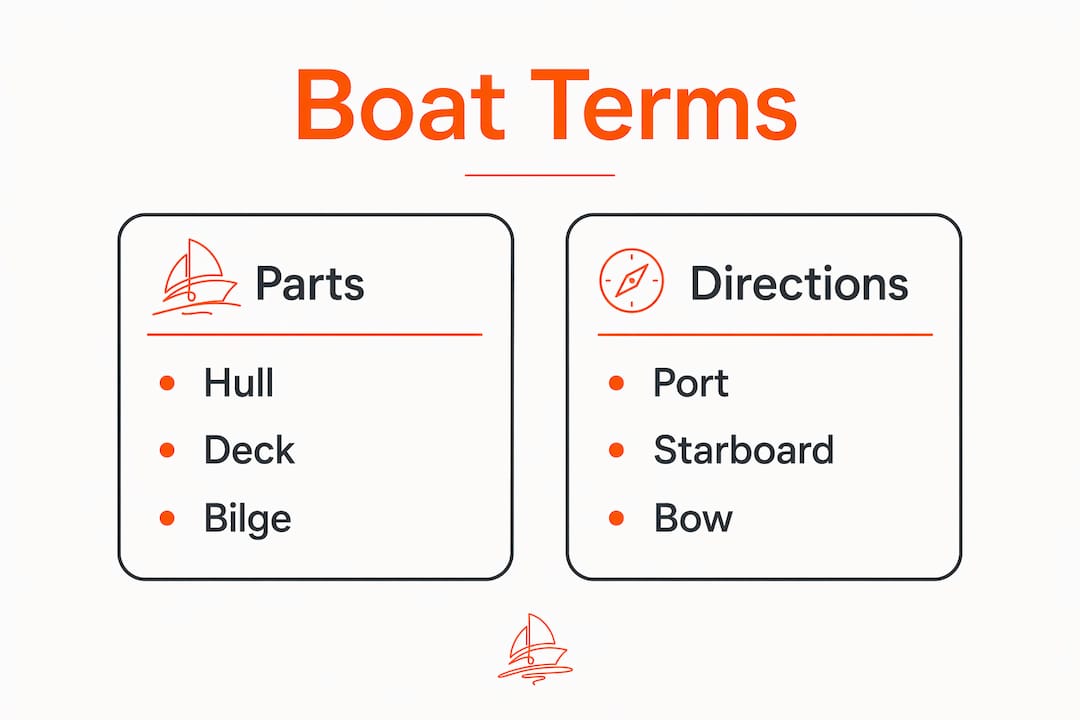
What are the main parts of a boat you need to know?
Every boat shares a set of structural parts with fixed names. Learning these names gives you a working ship parts glossary before you step aboard.
Hull, deck, and core structure
The hull is the main body of the boat, the watertight shell that keeps everything afloat. The deck is the flat surface on top of the hull where you walk and work. Below the deck, the bilge is the lowest interior section of the hull where water collects. Knowing the bilge matters because a flooded bilge signals a serious problem that needs immediate attention.
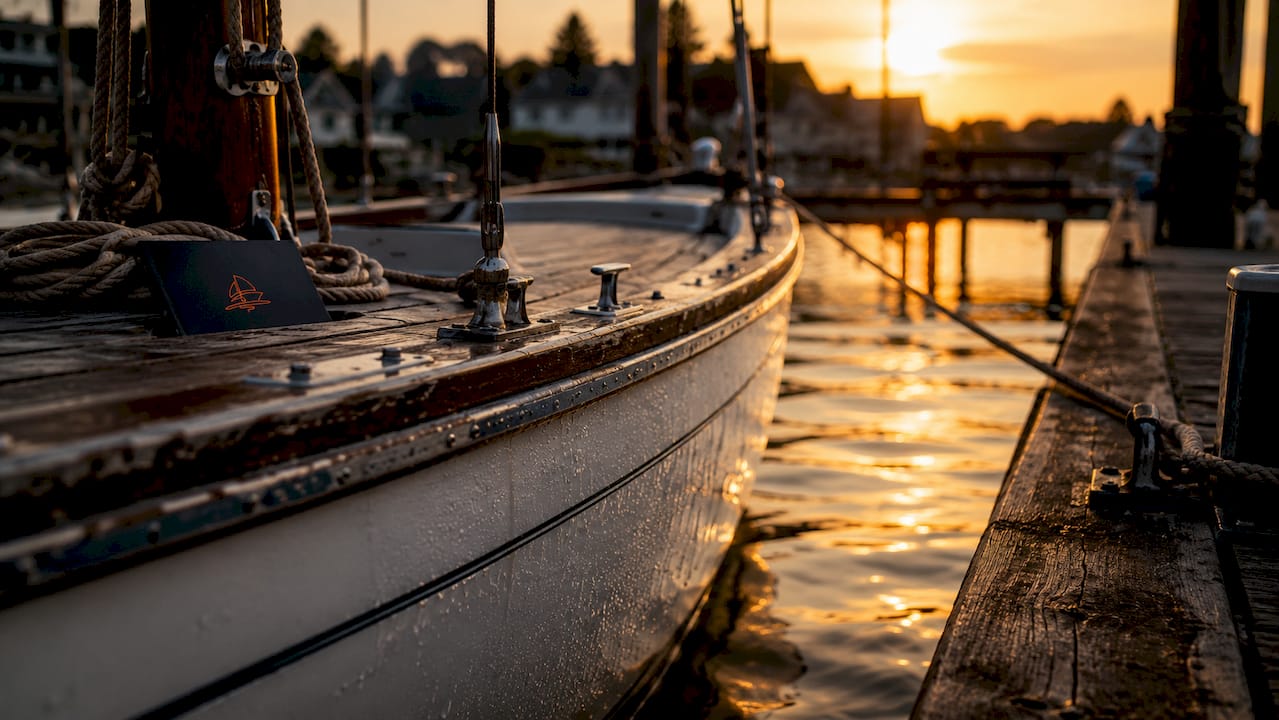
The bow is the front of the boat, and the stern is the rear. The transom is the vertical flat panel at the very back of the stern, and it is often where outboard engines are mounted. Precise structural terms like transom matter in maintenance conversations and when describing damage to a mechanic or marina.
Additional parts worth knowing early
- Keel: The fin running along the bottom centerline of the hull. It provides stability and resists sideways drift.
- Gunwale: Pronounced "gunnel," this is the upper edge of the boat's side. You hold it when boarding.
- Cockpit: The open working area, usually toward the stern, where the crew operates the boat.
- Helm: The steering station. On modern boats, the helm includes electronic displays, throttle controls, and navigation instruments, not just a wheel.
- Cabin: The enclosed interior space below deck, used for sleeping or shelter.
- Flybridge: An elevated open deck above the main cabin on larger powerboats, often with a second helm station.
- Swim platform: A flat extension at the stern, used for boarding from the water.
Learning boat parts like bilge, transom, and stanchion is directly tied to safety. During a distress call or rescue operation, you need to describe your boat's condition using words the responder recognizes instantly.
Pro Tip: Search for a labeled diagram of the specific boat type you plan to use, whether a sailboat, powerboat, or fishing boat, and study it before your first trip. Visual learning locks in these terms faster than reading definitions alone.
How are boating directions and orientations labeled?
Directional boat terms exist because "left" and "right" are observer-dependent. If you face forward and your crew member faces aft, your "left" is their "right." That ambiguity is unacceptable on the water. Fixed directional terms like port and starboard eliminate that confusion entirely because they are always defined relative to the bow, not the person speaking.
The four primary directions every boater must know are:
- Bow: The front of the boat. All directional references start here.
- Stern: The rear of the boat. Moving toward the stern means moving aft.
- Port: The left side of the boat when you face the bow. Always left, no matter where you stand.
- Starboard: The right side of the boat when you face the bow. Always right, full stop.
Two more terms complete the basic directional vocabulary. Fore means toward the bow, and aft means toward the stern. You will hear phrases like "move fore" or "stow it aft" constantly on any boat.
"Port and left both have four letters." This mnemonic from BoaterExam is the single fastest way to lock in port vs. starboard. Once you know port is left, starboard is simply the other side.
Using "front" and "back" on a boat is not just informal. Avoiding front and back is a non-negotiable safety practice because those words shift meaning based on who is speaking and where they are standing. In an emergency, that shift can cost critical seconds.
Pro Tip: When you board a boat, immediately face the bow and orient yourself. Practice saying "port is my left, starboard is my right" out loud. Do this every time until it becomes automatic.
What boat measurements and motion terms should you learn?
Understanding how a boat is measured and how its movement is described gives you the vocabulary to handle docking, navigation, and safety checks. These are not abstract numbers. They directly affect how you operate the vessel.
Key measurements explained
Boat measurements like beam, draft, freeboard, and dry weight determine how a boat handles and where it can safely go.
| Term | Definition | Why It Matters |
|---|---|---|
| Beam | The widest point of the hull | Determines if the boat fits in a slip or canal |
| Draft | Depth of the hull below the waterline | Tells you the minimum water depth needed to avoid grounding |
| Freeboard | Distance from the waterline to the top of the hull side | Indicates how much hull is above water; lower freeboard means waves come aboard more easily |
| Dry Weight | The boat's weight without fuel, water, or passengers | Used for trailering and calculating load capacity |
Draft is the measurement new boaters most often overlook. A boat with a 4-foot draft cannot safely enter a channel marked at 3 feet. Ignoring draft leads to grounding, which is one of the most common and preventable boating accidents.
Motion terms that describe what your boat is doing
Operational states like underway, headway, and leeway describe your boat's movement and status at any given moment.
Underway means the boat is moving and not attached to a dock, mooring, or the seabed. A boat can be underway even if its engine is off and it is drifting. Headway is forward motion through the water. When you say a boat is making headway, it is moving ahead. Leeway is sideways drift caused by wind or current pushing the hull off course. Sailors deal with leeway constantly, especially when sailing upwind.
These three terms come up in navigation logs, radio calls, and docking conversations. Knowing them prevents misunderstandings when conditions change quickly.
What controls, safety, and communication terms do you need?
Beyond parts and directions, a working boat vocabulary includes the terms for controls, safety equipment, and on-water communication. These words show up in every practical boating situation.
- Helm: As noted earlier, the helm is the entire steering station, not just the wheel. Calling it only a "steering wheel" understates its function and can confuse crew about what you are referring to.
- Rudder: The underwater blade at the stern that steers the boat by redirecting water flow. Sailboats and powerboats both use rudders.
- Throttle: The control that adjusts engine speed. Pushing the throttle forward increases speed; pulling it back reduces it.
- Cleats: Metal fittings on the dock or boat used to tie off lines. Knowing how to cleat a line is one of the first practical skills you learn.
- Anchor: The weighted device dropped to the seabed to hold the boat in place. "Anchoring" is the act of deploying it.
- Lines: Ropes on a boat are called lines. "Rope" is rarely used once you are aboard. Dock lines, anchor lines, and mooring lines each have specific functions.
Communication terms matter most in emergencies. A Pan-Pan call signals an urgent situation that is not yet life-threatening, while a Mayday call signals immediate danger to life. Knowing the difference and using the right term gets you the right response from the Coast Guard. Nautical terminology has been preserved for centuries specifically because orientation-independent language saves lives in high-stress situations.
Key takeaways
Mastering boat terms is a safety requirement, not optional vocabulary, because fixed nautical language prevents dangerous miscommunication during navigation, docking, and emergencies.
| Point | Details |
|---|---|
| Fixed directional terms | Port, starboard, bow, and stern never change meaning regardless of where you stand on the boat. |
| Structural vocabulary | Terms like bilge, transom, keel, and gunwale are used in safety checks, maintenance, and distress calls. |
| Measurements matter | Draft and beam directly affect where your boat can safely travel and how it fits in a slip. |
| Motion terms | Underway, headway, and leeway describe your boat's status and are used in navigation and radio communication. |
| Helm scope | The helm is the full control station, including throttle and navigation electronics, not just the steering wheel. |
Why getting these terms right changes everything on the water
At Sailorix, we have seen firsthand what separates a confident new boater from a nervous one. It is almost never skill. It is vocabulary. When you do not know the word for what you are looking at or what someone is asking you to do, you freeze. That hesitation is where accidents happen.
The mistake most beginners make is treating boat terms as trivia to memorize before a test. They are not. They are a communication protocol. When a dock hand shouts "ease the stern line," you need to act immediately, not ask what "stern" means. The same goes for a crew member calling out "watch your draft" as you approach a sandbar.
One thing I have learned from watching thousands of first-time renters is that the boaters who struggle most are the ones who skipped the vocabulary and went straight to the controls. The ones who thrive spent 20 minutes with a diagram before they ever touched a throttle. That investment pays off every single time.
My honest advice: do not just read a list of definitions. Use the terms out loud before you go. Walk around the boat at the dock and name every part you can see. Ask the marina staff to quiz you. Embarrassment at the dock is far cheaper than confusion underway.
— Sailorix
Start your boating journey with Sailorix
Building your boat vocabulary is the first step. The next is getting on the water and putting it to use.

Sailorix makes that step affordable for anyone. For €100 per year, you get access to yacht and boat rentals worldwide with service fees of around 1%, compared to the 10–20% most platforms charge. Whether you are booking your first day sail or planning a week-long charter, Sailorix gives you transparent boat rentals without the hidden costs. Explore the Sailorix blog for beginner guides on everything from renting boats abroad to mastering yacht terminology before you set off.
FAQ
What are boat terms and why do they matter?
Boat terms are the standardized vocabulary used to describe a vessel's parts, directions, and operational states. They matter because they eliminate ambiguity during navigation, docking, and emergencies where clear communication is critical.
What is the difference between port and starboard?
Port is the left side of the boat when facing the bow, and starboard is the right side. These terms are fixed relative to the bow, so they never change regardless of which direction a person on board is facing.
What does "underway" mean on a boat?
Underway means the boat is in motion and not secured to a dock, mooring, or the seabed. A boat can be underway even while drifting with no engine power.
What is draft and why should new boaters know it?
Draft is the depth of the hull below the waterline. Knowing your boat's draft tells you the minimum water depth required to avoid running aground in shallow areas.
What is the helm on a modern boat?
The helm is the full control station on a boat, including the steering wheel, throttle, and electronic navigation displays. Referring to it as just a steering wheel understates its scope and can cause confusion among crew.