
Yacht rental, known in the industry as yacht chartering, is the practice of hiring a sailing yacht, catamaran, or motor yacht for private holiday use. This beginner's guide to yacht rental covers everything you need to make a confident first booking: charter types, required certifications, budgeting, destination selection, and the step-by-step booking process. You do not need sailing experience to enjoy a crewed charter. You do need a plan. The decisions you make before you book determine whether your first trip is relaxed and memorable or stressful and expensive.
What types of yacht charters are available?
Three charter types define the market, and choosing the right one is the single most important decision a first-time renter makes.
Bareboat charter means you rent the yacht and sail it yourself. No captain, no crew. This option requires formal sailing credentials. Bareboat charters require qualifications like RYA Day Skipper or ASA 104 before you can take the helm legally. This is not the right starting point for most beginners unless you already hold those certifications.

Skippered charter adds a licensed captain to a bareboat rental. You handle the yacht with guidance, or simply leave the navigation to the skipper while you enjoy the trip. This is a practical middle ground for people who want to learn sailing while still having an expert on board.
Fully crewed charter is the most beginner-friendly option. Fully crewed charters are accessible to anyone with no sailing background, since a USCG-licensed captain handles all navigation and safety. A full crew typically includes a captain, chef, and deckhands. You arrive, relax, and let professionals manage everything.
| Charter Type | Sailing License Required | Crew Included | Best For |
|---|---|---|---|
| Bareboat | Yes (RYA/ASA) | None | Certified sailors |
| Skippered | No | Captain only | Learners and semi-experienced |
| Fully crewed | No | Full crew | Beginners and luxury travelers |
Cost scales with crew size. Bareboat charters carry the lowest base fees. Fully crewed superyachts sit at the top of the price range. Skippered charters fall in between and offer solid value for first-timers who want professional support without the full luxury price tag.
Pro Tip: If this is your first charter, book a skippered or fully crewed yacht. You will spend less time worrying and more time enjoying the destination.
What do you need before booking your first yacht rental?
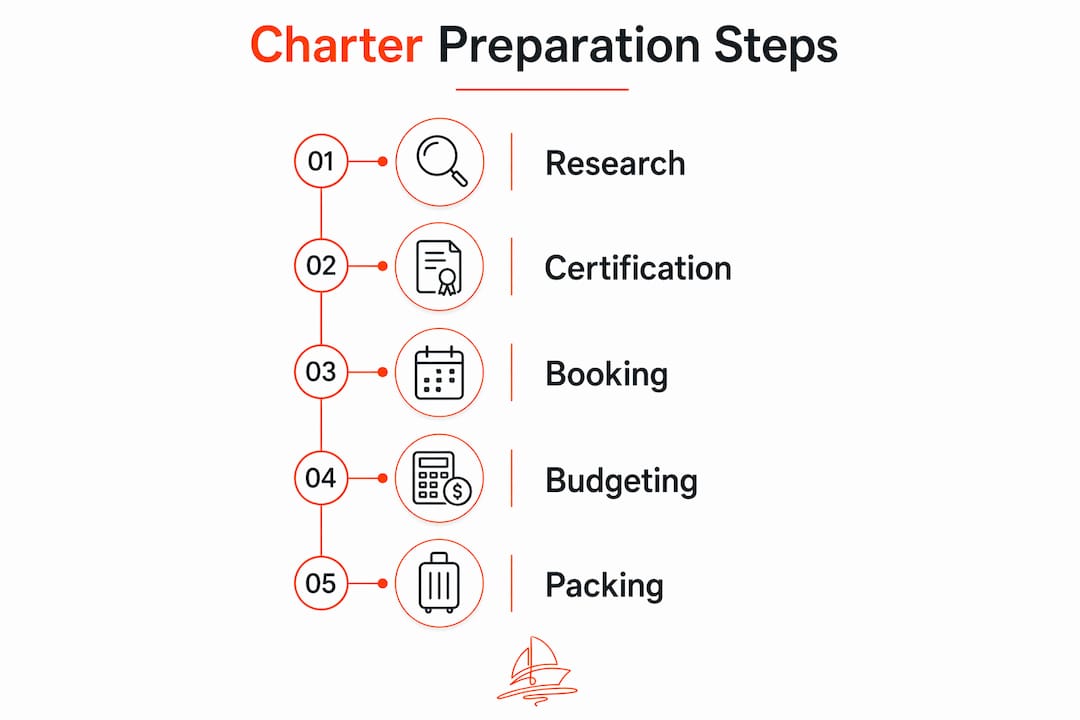
Preparation separates a smooth charter from a chaotic one. Four areas demand your attention before you contact any broker or platform.
Certifications and sailing qualifications
Bareboat renters need a recognized sailing license. The RYA Day Skipper and ASA 104 are the most widely accepted credentials globally. Skippered and crewed charters require no certification at all. If you plan to eventually sail bareboat, start your training at least six months before your intended trip date.
Booking timelines
Book 6–9 months ahead for standard seasons to secure the best yachts at your preferred destination. For holiday periods like Christmas and New Year, extend that lead time to 9–12 months. The best yachts in Croatia, the British Virgin Islands, and the Greek islands fill up fast. Waiting until two months out means settling for whatever is left.
Budgeting beyond the base fee
The base charter fee is not your total cost. Expect an additional 20–40% above the base price to cover gratuity, fuel, food, provisioning, and extras like water toys or marina fees. This additional spending is often collected through an Advance Provisioning Allowance, or APA, paid upfront and reconciled at the end of the trip. Budget for it from day one. For tips on keeping costs down, Sailorix covers ways to save on yacht booking in detail.
Packing smart
Soft-sided bags are the standard on any yacht. Hard-shell suitcases do not fit in cabin storage and create real problems for crew and fellow guests. Pack light, pack soft, and leave the oversized luggage at home.
Pro Tip: Prepare a written list of your group's dietary restrictions, allergies, and preferences before you speak to a broker. Crewed charter chefs plan menus in advance, and this detail saves time and avoids disappointment.
How do you choose the right yacht and destination?
The right yacht depends on your group size, experience level, and the kind of trip you want. The right destination depends on the season, your budget, and how much sailing you actually want to do.
Yacht types explained
- Sailing yachts offer the classic charter experience. They are quieter, more fuel-efficient, and suit sailors who want to feel the wind. Monohull sailing yachts are the most common bareboat option.
- Catamarans provide more deck space, greater stability, and larger cabins. They are the top choice for families and groups who prioritize comfort over sailing performance.
- Motor yachts cover distances faster and offer hotel-level amenities. They consume more fuel, which raises operating costs, but they suit guests who want to cover more ground in less time.
Beginner-friendly destinations
Croatia, the British Virgin Islands, and the Greek Cyclades are the three most recommended destinations for first-time charterers. All three offer predictable summer weather, short sailing distances between anchorages, and well-developed marina infrastructure. Croatia's Dalmatian coast is particularly forgiving, with calm seas and hundreds of islands within easy reach of Split or Dubrovnik.
| Destination | Best Season | Sailing Difficulty | Highlights |
|---|---|---|---|
| Croatia | june – september | Low | Dalmatian islands, clear water |
| British Virgin Islands | november – april | Low | Protected anchorages, trade winds |
| Greek Cyclades | may – october | Moderate | Iconic scenery, diverse islands |
Group size and yacht selection
A group of two to four people fits comfortably on a 38–42 foot sailing yacht or small catamaran. Six to eight guests need a 50-foot-plus catamaran or a mid-size motor yacht. Larger groups of ten or more require a superyacht or multiple vessels. Overcrowding a small yacht ruins the trip for everyone.
Itinerary pacing
Successful charters include slack time in the schedule. Spending longer at each anchorage beats rushing between ports every day. Beginners consistently overplan their itineraries and underestimate how much they will want to simply swim, eat, and rest. Build in at least one full day at anchor for every three days of sailing.
How do you book your first yacht rental step by step?
The booking process follows a clear sequence. Skipping steps creates problems later.
-
Define your parameters. Lock in your dates, destination, group size, and total budget before you contact anyone. Brokers and platforms need these details to show you relevant options.
-
Choose a broker or booking platform. Hiring a charter broker costs nothing extra and saves significant time. Brokers match your requirements to available yachts and handle negotiations on your behalf. Platforms like Sailorix let you search and compare yachts directly with real-time availability. For a detailed walkthrough, Sailorix's guide on how to book a yacht covers the full process for first-timers.
-
Review the charter agreement carefully. Charter agreements define your rights, cancellation policies, and payment terms. Read every clause before signing. Pay attention to the damage deposit, cancellation windows, and what happens if the yacht becomes unavailable.
-
Pay the deposit and schedule the balance. Standard payment terms require a 50% deposit on signing, with the remaining balance due four weeks before the charter start date. The APA is typically paid alongside the final balance.
-
Confirm logistics before embarkation. Verify the boarding location, check-in time, and provisioning arrangements at least two weeks out. Confirm crew credentials and ask for a pre-departure briefing schedule.
Pro Tip: Ask your broker or platform for a sample charter agreement before you commit to any yacht. Reviewing the contract structure in advance removes surprises when the real document arrives.
Most charters run Saturday to Saturday, which is the standard weekly format. Shorter weekend charters and longer two-week options exist, but weekly availability dominates the market.
Common mistakes beginner yacht renters should avoid
Most first-time charter problems trace back to a short list of avoidable errors.
- Underestimating total costs. The base fee covers only 60–80% of your actual spend. Failing to budget for APA, gratuity, and fuel leads to financial stress mid-trip.
- Overpacking with hard-shell luggage. Hard suitcases do not fit in yacht cabins. Bring soft duffels and pack for a week, not a month.
- Cramming the itinerary. Trying to visit six ports in seven days leaves no time to relax. Experts recommend longer stays at each anchorage over constant movement.
- Booking too late. The best yachts in peak destinations are gone by spring for summer charters. Book early or accept limited choices.
- Ignoring crew credentials. On a crewed charter, verify that the captain holds a recognized license and that the vessel carries valid safety certifications. Your charter guest rights include access to this information before you board.
- Misunderstanding the captain's role. On a crewed charter, the captain has final authority over all navigation and safety decisions. Guests do not override the captain's judgment on weather, routing, or anchoring.
The most common beginner mistake is treating the base charter fee as the total cost. Budget for the full picture from the start, and your first charter will not end with an unpleasant financial surprise.
Key takeaways
Fully crewed charters are the best entry point for beginners because they require zero sailing experience and put all navigation in the hands of a licensed professional.
| Point | Details |
|---|---|
| Charter type determines experience | Crewed charters need no license; bareboat requires RYA Day Skipper or ASA 104. |
| Budget beyond the base fee | Add 20–40% above the base charter cost for fuel, food, gratuity, and extras. |
| Book early for best selection | Reserve 6–9 months ahead for standard seasons, 9–12 months for holidays. |
| Match yacht to group size | Catamarans suit families; sailing yachts suit couples; motor yachts suit fast-paced itineraries. |
| Pace your itinerary | Build in slack days at anchor to avoid exhaustion and maximize enjoyment. |
What I have learned from watching beginners charter yachts
The most consistent pattern I see is that first-time charterers overthink the yacht and underthink the budget. They spend weeks comparing catamaran layouts and then get blindsided by an APA bill they never planned for. The yacht matters less than the financial preparation.
The second pattern is itinerary overload. New charterers want to see everything. The guests who enjoy their trips most are the ones who pick three or four anchorages and stay longer at each one. The Mediterranean and Caribbean are not going anywhere. You will come back.
My honest advice: start with a crewed charter in Croatia or the British Virgin Islands. Let professionals handle the boat. Use the trip to learn what you actually want from sailing, what size yacht suits your group, and how much time you want to spend underway versus at anchor. That knowledge is worth more than any guide, and it will make your second charter dramatically better than your first.
The accessibility of yacht chartering has genuinely improved. Platforms now show real-time availability, transparent pricing, and verified crew credentials. The barriers that once made yacht rental feel exclusive have dropped. The main thing standing between you and a great first charter is a clear plan and an honest budget.
— Sailorix
Ready to book your first yacht rental with Sailorix?
Sailorix makes the booking process straightforward for first-time charterers. The platform gives you access to vetted yachts worldwide, real-time availability, and licensed captains across all major charter destinations.
Sailorix operates on a membership model: for €100 per year, you unlock bookings with approximately 1% service fees, compared to the 10–20% charged by most traditional brokers and platforms. That difference adds up fast on a week-long charter. Whether you want a skippered sailing yacht in Croatia or a fully crewed catamaran in the British Virgin Islands, start your search on Sailorix and find the right yacht at the right price. No hidden markups, no complicated process.
FAQ
Do I need a sailing license to rent a yacht?
You need a license only for bareboat charters, where you operate the vessel yourself. Skippered and fully crewed charters require no sailing qualifications at all.
How far in advance should I book a yacht charter?
Book 6–9 months ahead for standard summer seasons. For Christmas and New Year charters, plan 9–12 months out to secure your preferred yacht.
What is included in a yacht charter fee?
The base charter fee covers the yacht itself, typically for one week. Fuel, food, gratuity, and marina fees are separate and usually add 20–40% to your total cost.
What is the best destination for a first-time yacht charter?
Croatia, the British Virgin Islands, and the Greek Cyclades are the top three choices for beginners. All three offer calm conditions, short sailing distances, and well-developed marinas.
How long does a typical yacht charter last?
Most charters run one week, Saturday to Saturday. Shorter weekend charters and longer two-week options are available, but the weekly format dominates the market.