
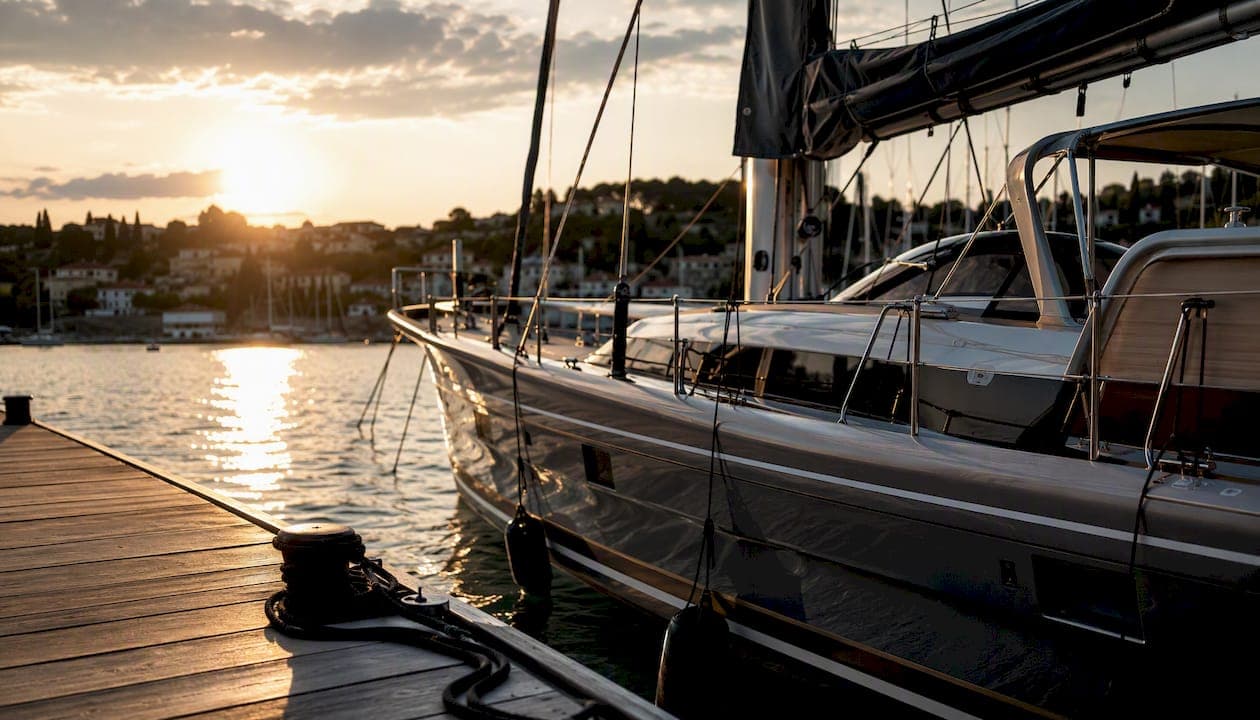
For a 7-day Croatia sailing charter, the most direct booking route for American travelers is through a platform like Sailorix that shows real-time fleet availability and charges roughly 1% in service fees rather than the typical higher fees of traditional charter brokers. Bareboat charters start at a lower price for a basic monohull; a skippered or crewed catamaran runs at a moderate premium; and a luxury gulet or motor yacht can reach significantly higher weekly rates depending on size and season. Most charters run Saturday to Saturday, with check-in at the base marina on Saturday afternoon and departure Sunday morning after a safety briefing. Start your availability search now, because peak-season weeks in July and August sell out months in advance.
Table of Contents
- Why do sailors keep coming back to the Dalmatian coast?
- Which charter type fits you: bareboat, skippered, crewed, or luxury?
- Main base marinas and what a 7-day itinerary actually looks like
- What boat types will you find, and which one should you choose?
- What does a Croatia sailing charter actually cost, and what's included?
- When is the best time to sail Croatia?
- Two 7-day sample itineraries: north and south Dalmatia
- Key Takeaways
- Bareboat, skippered, or crewed: how to actually decide
- Sailorix makes Croatia charter pricing transparent from the first search
- Useful sources and further reading
Why do sailors keep coming back to the Dalmatian coast?
Croatia's Adriatic coastline packs more than 1,200 islands, islets, and reefs into a stretch of water that stays calm enough for comfortable sailing most of the year. The hops between ports are short, typically 10–25 nautical miles, which means you can anchor in a new bay every day without grinding through long passages. That density is the single biggest reason Croatia works so well for first-time charter sailors and experienced crews alike.
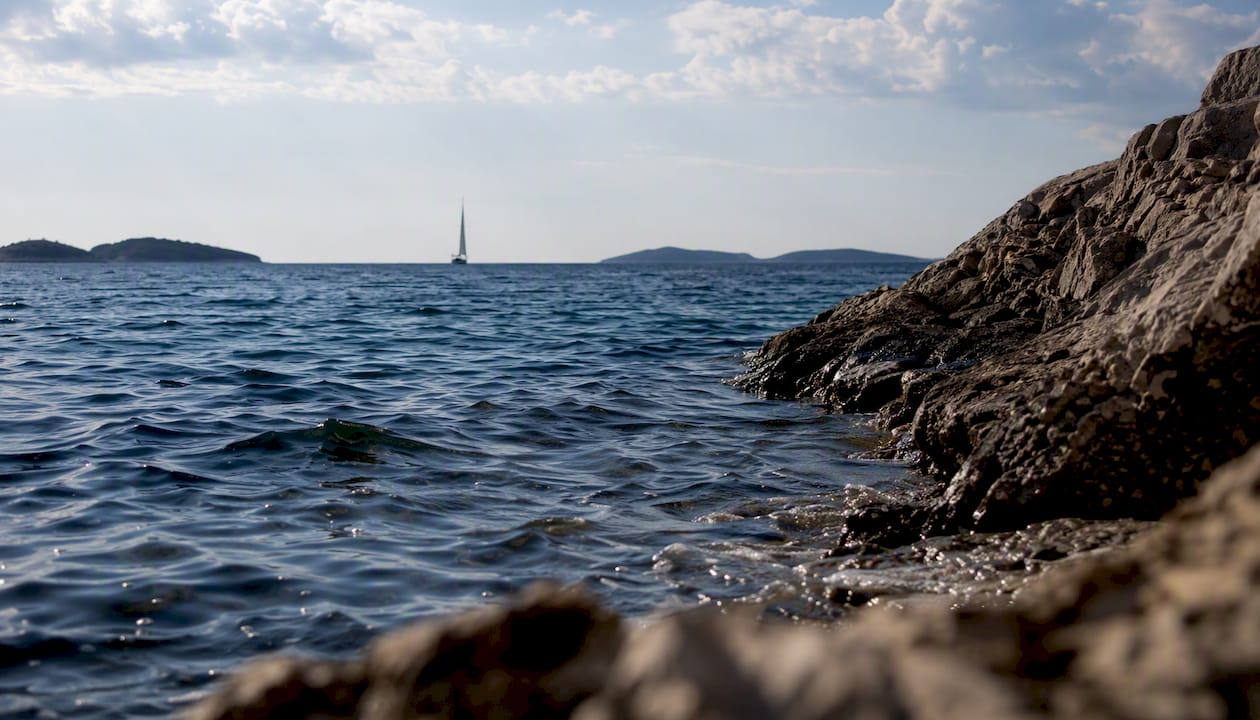
The main departure bases are Split/Trogir (the busiest, with the largest fleet concentration), Zadar (best for northern Dalmatia and the Kornati archipelago), Dubrovnik (gateway to the southern islands and Montenegro), and Marina Agana near Trogir. Most charters run a minimum of 7 days, though some operators offer 3- or 4-day mini-charters in shoulder season. Marina infrastructure along the coast is well developed, with fuel docks, provisioning supermarkets, and shore power at most stops. American travelers will find English widely spoken at marinas and in restaurants throughout the islands, which removes a lot of the friction that comes with chartering in less tourist-friendly destinations.
For a visual sense of what the coast offers, Croatia's most beautiful places covers the standout anchorages and scenic highlights worth building an itinerary around.
Which charter type fits you: bareboat, skippered, crewed, or luxury?
The right charter type depends on three things: your sailing license, your group's appetite for managing the boat, and your budget. Here is how the main options break down.
| Charter Type | Who It Suits | What You Provide | Price Signal (7 days) |
|---|---|---|---|
| Bareboat | Licensed, experienced sailors | Valid sailing certificate, logbook, crew list | $1,200–$2,500+ |
| Skippered | Novices or those wanting local knowledge | Nothing beyond a deposit | Add ~$150–$250/day to bareboat rate |
| Crewed (catamaran or gulet) | Groups wanting full service | Just your luggage | $5,000–$15,000 (catamaran or gulet) |
| Flotilla | Beginners who want guided sailing | Basic sailing ability | Similar to skippered |
| Luxury gulet/motor yacht | Large groups, full comfort | Nothing | $15,000–$30,000+ |
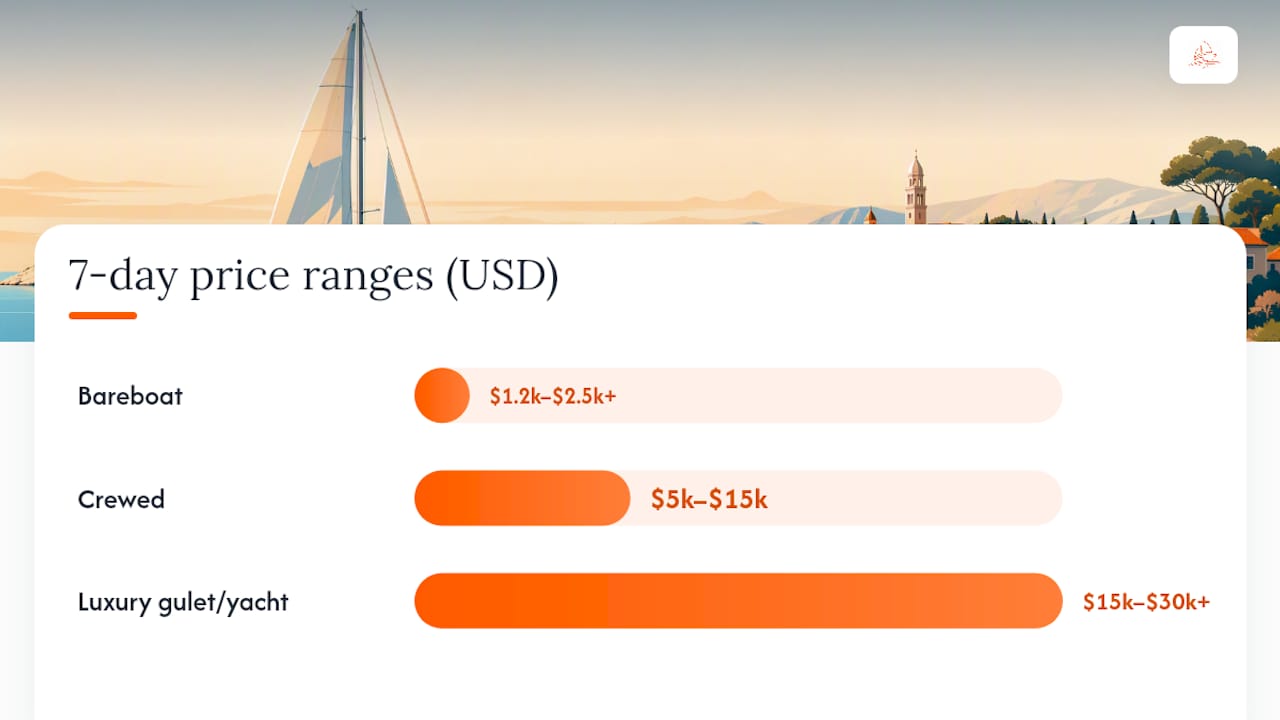
Bareboat is the most cost-effective option for a group of four to eight people who hold a recognized sailing certificate. You get the boat to yourselves, set your own pace, and cook your own meals or eat ashore. The tradeoff is full responsibility for the vessel.
Skippered charters add a professional captain who handles navigation, docking, and local knowledge. This is the smart call for sailors who are technically licensed but unfamiliar with Croatian waters, or for couples who want to focus on the holiday rather than the boat handling.
Crewed charters (often called cabin charters) put you on a larger catamaran or gulet with a full crew, a cook, and sometimes a hostess. Demand for full-crew options spikes during peak holiday periods, so booking early matters more here than for any other type, as noted by Luxury Travel Magazine.
Flotilla sailing groups several boats together under a lead boat with a professional crew. It suits beginners who want the safety net of a guide without giving up the independence of their own vessel.
Luxury gulets and motor yachts are traditional wooden or fiberglass vessels with 4–10 cabins, a full crew, and all meals included. They move slowly but offer the most comfortable liveaboard experience, particularly for larger family groups or corporate charters.
Main base marinas and what a 7-day itinerary actually looks like
Check-in rhythm and exceptions
The standard schedule is Saturday check-in from 5:00 PM, with departure Sunday morning after the safety briefing and boat handover. Check-out is the following Saturday by 9:00 AM. Some operators offer mid-week starts (Tuesday or Wednesday), which can be useful for reducing Saturday-flight congestion at Split Airport. One-way charters between Split and Dubrovnik are available but carry a repositioning fee, typically $300–$600 depending on the operator.
TripAdvisor reviews of Split-based sail charters consistently highlight the Saturday departure rhythm and note that the first night is usually spent in the base marina to allow for provisioning and settling in.
Pro Tip: Book a Saturday-night hotel in Split or Trogir before your charter start. Flights from the U.S. rarely land early enough to provision and depart the same day, and arriving rested makes the first sailing day far more enjoyable.
What boat types will you find, and which one should you choose?
Monohulls
The most common charter vessel in Croatia. A 38–45-foot monohull typically offers 3–4 cabins sleeping 6–8 people. They are cheaper to charter and easier to berth in tight marinas, but they heel under sail, which some guests find uncomfortable. For experienced sailors who want to actually sail rather than motor, a monohull is the natural choice.
Catamarans
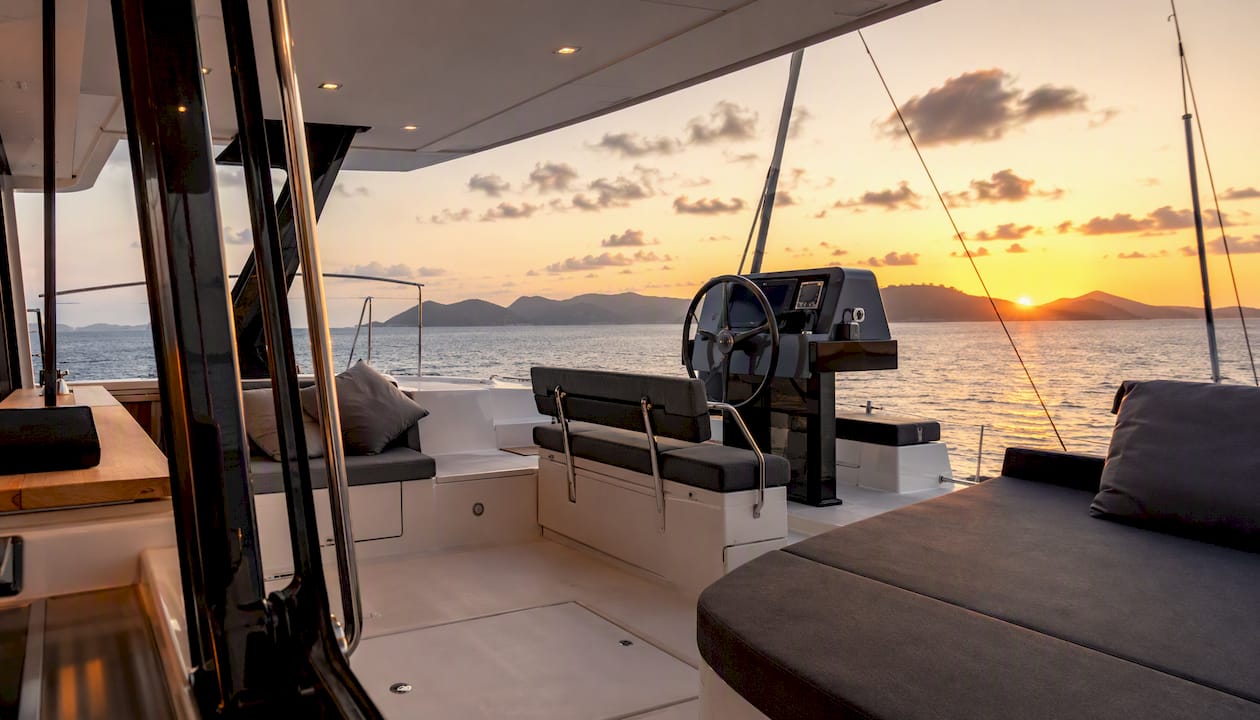
Catamarans have become the dominant choice for family and group charters. A 40–45-foot catamaran offers 4 cabins, two heads, a large saloon, and a wide cockpit that functions as an outdoor living room. The flat deck and minimal heel make them far more comfortable for non-sailors. Leopard Catamarans documents how interior volume and deck layout differences materially affect liveaboard comfort on week-long trips, and that shows up clearly in Croatia's charter market. The tradeoff: marina fees are higher because you pay for two berths, and anchoring in tight bays requires more care.
Motor yachts and gulets
Motor yachts cover ground faster and suit itineraries where you want to visit more ports without worrying about wind. Gulets are traditional wooden vessels, usually 60–90 feet, with 4–10 cabins and a full crew. They are the go-to for groups of 8–20 people who want the crewed experience without the price of a modern superyacht.
Pro Tip: When comparing catamarans, check the build year. A 2018 or newer vessel will typically have USB charging in cabins, a watermaker, and a proper chart plotter. Older boats may lack these, which matters on a 7-day trip with a full group.
What does a Croatia sailing charter actually cost, and what's included?
Price bands by charter type
- Luxury motor yacht or large gulet (6–10 cabins): $15,000–$30,000+ per week. Forbes' 2025 luxury travel trend report identifies rising demand for premium crewed charters, which has pushed prices at the top end upward.
What the base charter fee normally covers
- The yacht itself, including sails and standard safety equipment
- Dinghy and outboard motor (on most boats)
- Navigation instruments and charts
- Mandatory safety gear (life jackets, flares, fire extinguisher)
Security deposit and damage waiver
Most operators require a refundable security deposit held on a credit card at check-in. You can reduce your exposure by purchasing a damage waiver (also called a security deposit insurance policy) for a modest weekly fee..
Pro Tip: Always pay the security deposit with a credit card rather than a debit card. Credit cards offer better dispute resolution if there is a disagreement about damage claims after the charter.
For more on saving on your yacht booking, Sailorix's guide covers timing strategies and fee-reduction tactics worth reading before you commit.
When is the best time to sail Croatia?
| Season | Months | Weather | Crowds | Price |
|---|---|---|---|---|
| High season | July–August | Hot, reliable wind (Maestral) | Very busy | Peak rates |
| Shoulder (spring) | May–June | Warm, less predictable | Moderate | 15–30% below peak |
| Shoulder (fall) | September | Best sailing conditions | Easing | 10–25% below peak |
| Low season | October–April | Cooler, some marinas closed | Minimal | Lowest rates |
September is the single best month for most American travelers. The Maestral wind (a reliable afternoon sea breeze) is still blowing, water temperatures remain warm from the summer, marina services are fully operational, and prices drop noticeably from August highs. July and August offer the most reliable weather but also the most crowded anchorages and the highest prices.
- July–August: — Peak demand. Book 6–9 months in advance for popular boats and bases. Luxury Travel Magazine notes that crewed charter inventory at reputable operators sells out earliest during this window.
The "12-person" rule
Croatian maritime law limits charter vessels to a maximum of 12 passengers (excluding the skipper). This applies to all charter boats regardless of size. Groups larger than 12 must split across two vessels or charter a licensed passenger vessel, which is a different category with different regulations.
Other rules to know:
- Life jackets must be worn by children under 12 at all times while underway.
- VHF radio must be monitored on Channel 16 at all times.
- Anchoring in designated protected areas (parts of Kornati National Park, for example) requires a park entry permit.
- Local tourist taxes are collected by the marina or harbor master, not the charter company.
For a full breakdown of how to get a sailing license recognized for international charters, Sailorix's guide covers the U.S.-specific path.
Cancellation and refund practicalities
Most Croatian charter operators follow a sliding cancellation scale: cancel more than 90 days out and you lose the deposit; cancel within 30 days and you typically forfeit the full charter fee. Condé Nast Traveler's evaluation of boat rental services emphasizes verifying cancellation terms and vessel condition documentation before signing anything. Purchasing a charter cancellation insurance policy at booking is the most practical way to protect against unexpected trip changes.
For a complete guide to renting boats abroad, including document checklists and local rule summaries, Sailorix's resource covers the international specifics.
Two 7-day sample itineraries: north and south Dalmatia
North Dalmatia: Zadar base
| Day | Route | Highlight |
|---|---|---|
| 1 | Zadar → Kornati Islands | Anchor in a deserted bay; park entry permit required |
| 2 | Kornati → Šibenik | UNESCO-listed fortress and old town |
| 3 | Šibenik → Primošten | Hilltop village, excellent local wine |
| 4 | Primošten → Trogir | UNESCO old town, great provisioning |
| 5 | Trogir → Šolta | Quiet island, local olive oil |
| 6 | Šolta → Hvar | Croatia's most famous island; book a marina berth early |
| 7 | Hvar → Zadar (or Split) | Sail back or arrange one-way return |
South Dalmatia: Split base
| Day | Route | Highlight |
|---|---|---|
| 1 | Split → Hvar | Lavender fields, Venetian architecture |
| 2 | Hvar → Vis | Remote island, Blue Cave nearby |
| 3 | Vis → Korčula | Marco Polo's alleged birthplace; walled old town |
| 4 | Korčula → Mljet | National park, saltwater lakes |
| 5 | Mljet → Dubrovnik | Game of Thrones filming locations |
| 6 | Dubrovnik → Elaphiti Islands | Lopud, Šipan, Koločep: uncrowded anchorages |
| 7 | Elaphiti → Split (or end Dubrovnik) | One-way option available |
Both routes follow the island-hopping approach that Lonely Planet describes as the most satisfying format for week-long sailing trips: short daily passages, varied overnight stops, and a mix of town berths and anchor nights.
- Provisioning: Stock up at Split, Trogir, or Zadar before departure. Island supermarkets are small and expensive. For galley meal ideas on a week-long trip, yacht galley recipes can help you plan ahead.
Key Takeaways
A Croatia sailing charter is most cost-effective when booked through a low-fee platform like Sailorix, with a 7-day bareboat starting around $1,200 and a crewed catamaran or gulet running $5,000–$15,000 depending on season and size.
| Point | Details |
|---|---|
| Best booking route | Use Sailorix for real-time availability and ~1% service fees versus the typical 10–20% broker rate. |
| Expected price range | Bareboat monohull from $1,200/week; crewed catamaran or gulet $5,000–$15,000; luxury gulet $15,000–$30,000+. |
| License requirements | Bring your ICC or recognized national certificate, VHF license, logbook, and passport copies for all crew. |
| Best travel window | September offers the best balance of weather, crowd levels, and pricing for U.S. travelers. |
| Deposits and insurance | Budget a $1,500–$3,000 refundable security deposit and purchase charter cancellation insurance at booking. |
Bareboat, skippered, or crewed: how to actually decide
The conventional advice is to match your license to the charter type, but that framing misses the more useful question: how much do you want the boat to be part of the holiday versus the backdrop to it?
Couples who sail regularly and want complete privacy and control should default to bareboat. You set the pace, you choose the anchorages, and you are not sharing a cockpit with strangers or a hired captain. The cost per person for two people on a bareboat is often higher than joining a crewed charter, but the privacy premium is real and worth paying if that is what you are after.
Novices or mixed groups where not everyone sails should go skippered rather than crewed. A skipper adds local knowledge and handles the stressful parts (docking in a crowded marina, reading the weather) while leaving the group in charge of the social experience. The cost is modest relative to the stress it removes.
Groups of six or more who want a genuine luxury experience, with meals prepared and logistics handled, should look at crewed catamarans or gulets. The per-person cost on a 6-cabin gulet at $12,000 per week works out to $2,000 per person, which is competitive with a comparable land-based resort holiday in Croatia.
The one thing most guides understate: assess the skipper or crew before you commit. Ask the operator for the captain's years of experience in Croatian waters specifically, not just total sailing hours. A skipper who knows the Kornati anchorages and the local weather patterns is worth far more than one with twice the total miles but no Adriatic experience.
Sailorix makes Croatia charter pricing transparent from the first search
Most travelers spend hours comparing charter quotes that are not actually comparable because the fee structures differ. Sailorix solves that by showing the full cost upfront, with service fees of approximately 1% for members rather than the 10–20% that traditional brokers layer on top.
The path to booking is straightforward: create a Sailorix account, pay the €100 annual membership, and search Croatia availability by date, base, and boat type. Every listing shows real-time availability, the base charter rate, and the optional extras (skipper, provisioning, damage waiver) so you can build the full trip cost before you commit to a deposit. For American travelers who want to compare a bareboat in Split against a crewed catamaran out of Zadar in the same session, that transparency is the practical difference between a booking that takes an afternoon and one that takes two weeks of back-and-forth with brokers.
Start your Croatia charter search on Sailorix and lock in your week before the best boats disappear for peak season.
Useful sources and further reading
The following sources are worth bookmarking as you plan your trip:
- Sail Charter in Croatia - All You SHOULD Know Before ...
- leopardcatamarans.com
- luxurytravelmagazine.com
- lonelyplanet.com
- forbes.com
- cntraveler.com
Check official Croatian port authority pages and the specific marina websites for your base before departure. Entry requirements, park permits (Kornati, Mljet), and local tourist tax rates can change between booking and embarkation.
This article provides general information for trip-planning purposes. Confirm current licensing requirements, maritime regulations, and cancellation terms directly with your charter operator or a qualified maritime professional before booking.