
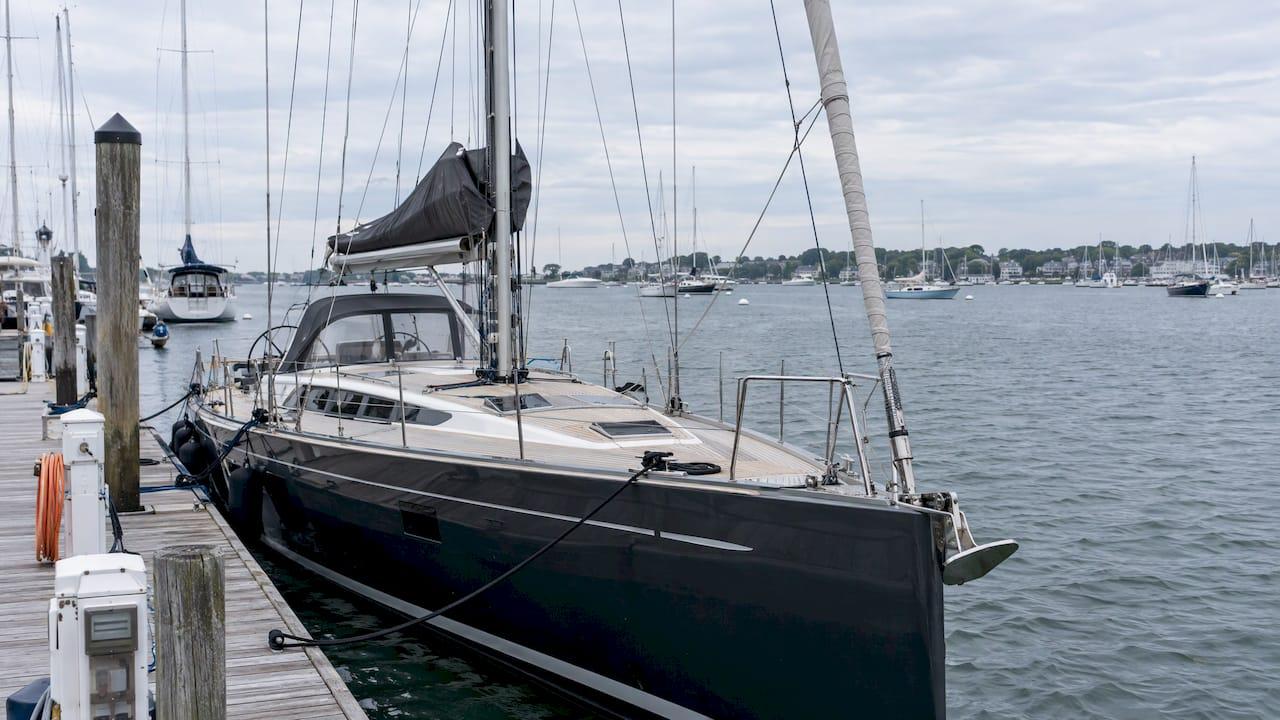
Book peak-season yachts, meaning summer in the Mediterranean and winter in the Caribbean, many months ahead, ideally the autumn or winter before. Book shoulder-season trips three to six months out. Last-minute deals exist, but only where boats are still unbooked. The date you pick matters as much as the day you book, because the same yacht can cost far less just outside peak weeks. Whatever the season, the lowest total cost comes from the fee you pay on top of the charter price, and that is where membership with us helps.
TL;DR
- Peak weeks (July and August in the Mediterranean, mid-December to April in the Caribbean): reserve 6 to 12 months ahead for the widest choice of boats and layouts.
- Shoulder season (roughly April to early July and October in many regions): 3 to 6 months ahead is usually enough, and rates are lower.
- Off-season rates can run as much as 25% below peak, according to one charter-planning guide, but check the weather for your region first.
- Last minute works for flexible travelers who can take whichever boat is open in the days ahead.
- Service fees add to every booking, so compare the full cost, not just the headline rate.
Table of Contents
- The short rule: book by the season you want, not by the calendar
- How far ahead to book, by type of trip
- Peak season: what to expect and when to move
- Shoulder season: the sweet spot for most travelers
- Off-season and hurricane season: cheaper, with the weather in mind
- The booking timeline: what happens after you reserve
- Can you book a yacht at the last minute?
- A simple decision path
- Timing is only half the price
- Perspective
- Book with a lower service fee
- FAQ
- Sources
The short rule: book by the season you want, not by the calendar
There is no single best day to book a yacht. There is a best window for each kind of trip, and it depends on how crowded the dates are. Popular weeks sell out first because a charter fleet is finite: the number of yachts in a harbor does not grow when demand does.
Three questions decide your timeline:
- Which weeks do you want? Holiday weeks and midsummer fill first.
- How specific is your boat? A particular catamaran with four cabins and a certain layout goes sooner than "any boat for six people."
- How flexible are you on dates and port? Flexibility can substitute for lead time.
The more rigid you are on all three, the earlier you should book. The more open you are, the later you can get away with.
How far ahead to book, by type of trip
| Trip type | Typical lead time | Why |
|---|---|---|
| Peak holiday weeks (Christmas, New Year, Easter, July and August) | 6 to 12 months | Best boats and layouts go first |
| Peak season, flexible on boat | 4 to 6 months | More choice than at the last moment, fewer picks of layout |
| Shoulder season | 3 to 6 months | Fewer crowds, more availability |
| Off-season | 1 to 3 months | Plenty of boats, but weather matters |
| Last minute | Days to 2 weeks | Only what is unbooked remains |
These are planning ranges, not rules. They match the general pattern that early booking gives you more yachts, crews and layouts to choose from, and our own guide to the benefits of booking early for yacht rentals goes into what you gain by locking a date sooner.
Why early booking matters most for crewed yachts
A crewed charter, where a captain and crew come with the boat, has even less spare capacity than a bareboat (a boat you sail yourself). A skipper, a chef or a specific crew has to be free for your dates too. If you want a particular crew or a yacht with a certain number of cabins, you are competing for a small set of boats.
Peak season: what to expect and when to move
Peak season is when prices are highest and choice narrows fastest.
- Caribbean: winter is the busy stretch, from December into spring. The Atlantic hurricane season, which NOAA lists as June 1 to November 30, is the reason winter is the classic Caribbean charter time.
- Mediterranean: July and August bring the heaviest demand. For Greece, Croatia, Italy and Spain, a booking made the previous autumn or winter gives you real choice.
- U.S. coastal destinations: in a place like Miami, high season is generally winter into spring, with a quieter summer and fall.
If you want a specific holiday week, book as soon as you know your dates. Waiting rarely lowers the price in peak weeks, because the boats that remain are the ones nobody wanted at the earlier, cheaper stage.
Shoulder season: the sweet spot for most travelers
Shoulder season sits between peak and off-peak. Weather is generally good, marinas are calmer and rates drop. In the Caribbean, that is often April to early July, before the core of hurricane season. In the Mediterranean, June and September are the months most U.S. planners aim for, with warm water and fewer boats on the anchorage. For Greece specifically, we break the same months down in our Greece sailing guide.
Booking in shoulder season is easier on the calendar too. You can reserve three to six months ahead and still choose from a healthy list of boats. Our guide to shoulder-season dates and U.S. tactics shows how to match the weeks to your destination.
The same timing logic holds in other rental markets that fill by season, and a guide to booking timing and seasonal rates shows how lead time and season combine to move prices.
Off-season and hurricane season: cheaper, with the weather in mind
Off-season charters cost less. One charter-planning guide reports that off-season rates from October to May can be as much as 25% lower than peak or shoulder rates, and that a 5% discount can apply for booking six months ahead. Those figures vary by operator and region, so treat them as an order of magnitude, not a quote.
The discount is only worth taking if the weather suits your plans. For the Caribbean and Gulf of Mexico, NOAA's climatology says an average Atlantic season has 14 named storms, 7 hurricanes and 3 major hurricanes, and the first major hurricane typically forms in late August or early September. If you sail within that window, pick a region and itinerary with room to adjust, and read when and where to sail in hurricane season before you commit.

A simple way to use this: if your dates are fixed in summer or fall, look at the Mediterranean or other regions outside the Atlantic hurricane zone. If your dates are flexible, a shoulder-season Caribbean trip captures most of the savings with less weather risk.
The booking timeline: what happens after you reserve
Booking early is not only about choice. It also sets your payment schedule. The same planning guide notes that charter companies typically ask for a 30% deposit to guarantee a reservation, with full payment due 90 days before the charter starts. Terms differ by operator, so read yours before you sign.
That makes a long lead time cheap in cash-flow terms: you commit with a deposit and pay the balance later. Crewed charters also usually involve an advance provisioning allowance (APA), a pre-paid fund for fuel, food and dockage that is settled after the trip. Our walkthrough of the yacht charter payment schedule, deposits and APA covers each payment and when it falls due.
Can you book a yacht at the last minute?
Yes, with trade-offs. Last-minute booking works when:
- You can travel on short notice and accept the boat that is available.
- You are visiting a destination with a deep fleet, such as popular marinas in the Mediterranean or Florida.
- You are not tied to a holiday week.
It works poorly when you need a specific layout, a larger group, a crew with particular skills, or a peak-season weekend. Expect fewer choices, and expect the cheaper boats to be gone. Real-time availability is the tool that makes last-minute trips possible: it shows what is open today, not what was open when a brochure was printed. We explain the process in our guides to last-minute yacht booking in 24 to 48 hours and verified live availability.
A simple decision path
- Pick your dates or window. Check whether they fall in peak, shoulder or off-season for your destination.
- Set your boat requirements. Cabins, boat type (sailing yacht, catamaran, motor yacht, gulet), crew or skipper.
- Choose your lead time. Peak: 6 to 12 months. Shoulder: 3 to 6. Off-season: 1 to 3. Last minute: days.
- Compare total cost. Include the base charter price, service fee, extras like a skipper or equipment, insurance and, on crewed boats, the APA.
- Lock in with a deposit and put the balance date in your calendar.
For price ranges that go with each trip type, see our breakdown of what yacht charters cost, and for savings tactics, our budget charter guide.
Timing is only half the price
Booking at the right moment lowers the charter rate. The other piece of your total is the service fee that a booking platform adds. Typical platform fees run 10% to 20% of the booking in our market, and that is a larger swing on a week-long charter than most date changes. On a $10,000 charter, a 15% fee is $1,500, while a 1% fee is $100.

That is why timing and fees belong in the same plan. Book early to get the boat you want, and book through a model where the fee does not erase what you saved.
Perspective
Most travelers ask when to book because they are afraid of two things: missing out on the boat, and overpaying. Timing answers the first. The fee structure answers the second.
Our view is that the cleanest way to plan is to decide your season, book inside the right window, and keep the cost of booking itself small. That is why we built the SAILORIX membership: €100 per year, with service fees of around 1% on bookings instead of the 10 to 20% typical elsewhere. A traveler who books early to lock a good boat should not hand a large share of the saving back in fees.
Real-time availability, add-ons such as a skipper or early check-in, and insurance options sit in one place, so you can compare options for your dates and settle the whole trip in one booking.
SAILORIX
Book with a lower service fee
If your dates are set, the next step is to see what is open. The SAILORIX membership costs €100 per year and gives you access to bookings with service fees of around 1%. You can search by destination and boat type, see real-time availability across sailing yachts, catamarans, motor yachts, gulets and more, and add a skipper, equipment or insurance to the booking.

You can browse the fleet first, or read the membership details before you decide.
FAQ
How far in advance should I book a yacht charter?
For peak weeks, six to twelve months ahead gives you the most choice. For shoulder season, three to six months is usually enough. For off-season, one to three months often works.
What is the cheapest time of year to charter a yacht?
Off-season, which varies by region. One planning guide puts off-season rates up to 25% below peak for October through May, though the weather in your region decides whether those weeks suit you.
Is it too late to book a yacht for this summer?
Not necessarily. Peak weeks and specific boats may be gone, but open boats can still be found, especially midweek or in shoulder weeks. Live availability shows what remains for your dates and port.
Do I pay the full price when I book?
Usually not. A deposit of around 30% is common to hold the reservation, with the balance due closer to departure, as one guide describes. Your contract sets the exact schedule.