
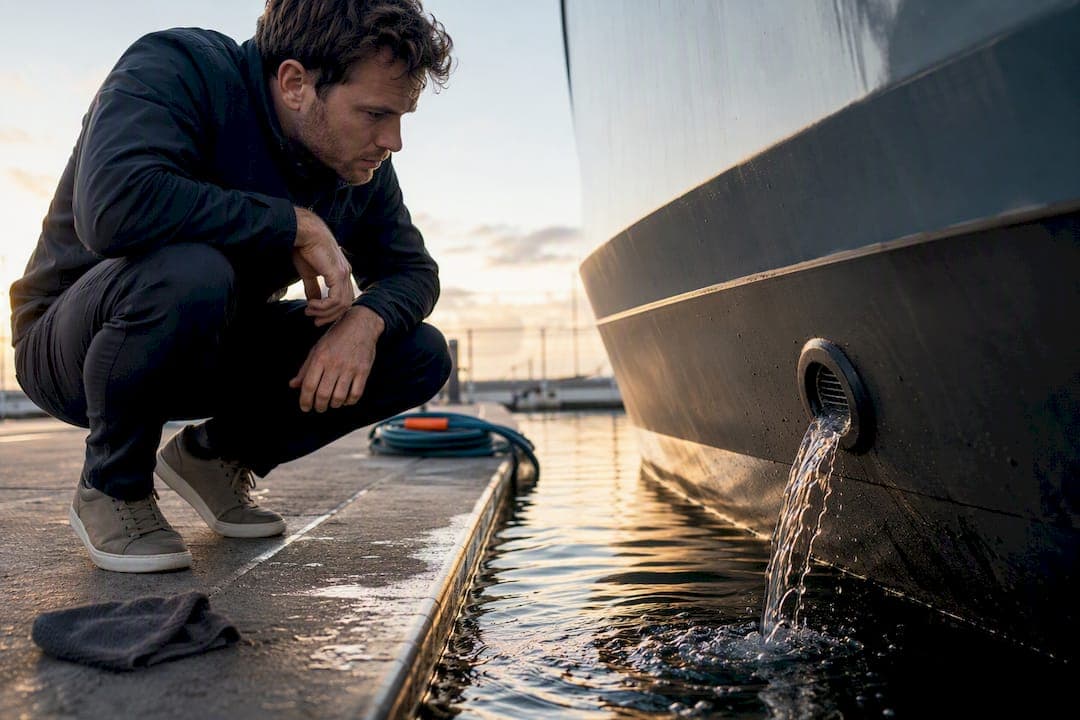
Yes, most charter boats offer air conditioning, but "included" rarely means unlimited. Operators typically cap hours, restrict overnight use to genset-friendly windows, or charge for extra runtime once you exceed a set allowance. If you're sailing somewhere hot and humid, sleeping comfortably or managing a heat-sensitive passenger, you need written confirmation of hours, fees, and power source before you sign anything, not a verbal assurance from a broker.
TL;DR:
- Most charter boat air conditioning is limited by hours or requires additional fees, especially for overnight or daytime use beyond the allowance.
- Marine AC systems depend on seawater cooling and can draw significantly more power than household units, with BTU ratings indicating larger energy needs at higher capacities.
- Common charter inclusion patterns include limited daily hours, night-only cooling, pay-per-hour billing, or unlimited use on premium vessels, with genset hours being the primary tracking metric.
- Reliable overnight cooling is crucial for vulnerable passengers such as children or those with health conditions, particularly in hot, humid, or tropical locations.
- Noise issues usually stem from normal compressor hum, but unusual sounds or system failures should be reported immediately with documentation to avoid deposit disputes.
Table of Contents
- How Marine Air Conditioning Systems Actually Work
- Charter Inclusion Rules You'll Actually Encounter
- Power, Energy, and Charging: What Determines Your Runtime
- When Air Conditioning Stops Being Optional
- What Noise and Wear You Should Actually Expect
- Your Pre-Booking Checklist: Confirm This Before You Pay
- Onboard Habits That Cut AC Use Without Cutting Comfort
- If the AC Fails: Troubleshooting and Safety Steps
- Eco-Friendly Cooling Options Worth Asking About
- Sailorix Perspective: Booking With Clarity, Not Guesswork
- Book a Charter Where AC Terms Are Clear From the Start
- Sources
- FAQ
How Marine Air Conditioning Systems Actually Work
Most yacht air conditioning runs on a water-cooled refrigerant loop, not the air-cooled compressor you have at home. Seawater gets pulled through a raw-water pump, passes across a heat exchanger to absorb heat from the refrigerant, then gets discharged overboard. That seawater dependency is why marine units draw more power than a comparable household system and why they're rated in BTUs (British Thermal Units) rather than simple horsepower.
A small cabin unit might run 5,000 to 8,000 BTUs, while a full yacht system serving multiple cabins and salons can require 60,000 BTUs or more. Every jump in BTU rating means a bigger draw on the genset or battery bank, which is exactly why crews and operators set runtime limits in the first place.
Three configurations show up on charter boats:
- Central chillers cool water that circulates to multiple cabins through a closed loop, quieter overall but slower to respond to temperature changes.
- Self-contained cabin units cool one space directly, cheaper to install but noisier at the compressor.
- Ducted systems distribute air from one or two central units through vents, common on larger motor yachts and catamarans.
Older self-contained units tend to be the loudest because the compressor sits close to the living space rather than tucked into a machinery room.
Charter Inclusion Rules You'll Actually Encounter
Ask five brokers about air conditioning inclusion and you'll get five different answers, because operators genuinely run different models. Understanding which one applies to your booking matters more than the brand of unit on board.
Four patterns dominate the charter market:
- Limited included hours — a set number of hours per day (often overnight) built into the base price, with extra hours billed separately.
- Night-only inclusion — AC runs automatically from evening through early morning, but daytime use requires the genset and may cost extra.
- Pay-per-hour metering — no hours included at all; usage gets tracked on an hour meter and billed against the Advance Provisioning Allowance (APA) at the end of the week.
- Unlimited included — typically reserved for larger, premium yachts with generous genset capacity and larger fuel budgets.
Genset hours are almost always the metric operators track, since running AC without shore power means running the generator. Some contracts bury the meter policy in a single line about "genset fuel charged separately," which is easy to miss if you're only skimming the amenities list. Read the fine print the way you'd read a lease, because that clause is where surprise charges live.
Power, Energy, and Charging: What Determines Your Runtime
How your charter powers its air conditioning determines whether you get cool air for two hours or all night. Three sources exist, and each comes with tradeoffs:
- Shore power at a marina berth gives you essentially unlimited AC with no fuel cost or generator noise, but it only works while you're docked.
- Generator (genset) power lets you run AC anywhere, including at anchor, but it burns diesel and adds a low hum that some sleepers find intrusive.
- Battery and solar power can run smaller cabin units for limited stretches, but full-size systems will drain a battery bank within a few hours without a genset or engine assist to recharge it.
Running the main engines at anchor is another option some captains use briefly to top off batteries, though most crews prefer scheduled genset runs since engines aren't built for extended idling.
Pro Tip: Ask your captain to run the genset for an hour before bedtime to pre-cool cabins and top off the batteries. You get several hours of quiet, battery-powered comfort without a generator humming outside your porthole all night.
When Air Conditioning Stops Being Optional
Air conditioning matters most when you're asleep. A cabin that feels tolerable at 4 PM with the hatches open becomes stifling at midnight with everything sealed against bugs and spray. Humidity control matters just as much as temperature, since a poorly ventilated cabin invites both mold growth and mosquitoes through any cracked window.
Certain passengers should never be an afterthought in your planning:
- Infants and young children regulate body heat poorly and are more vulnerable to heat stress than adults.
- Older passengers and anyone managing a cardiovascular or respiratory condition face real risk from sustained heat exposure.
- Anyone on medication that affects sweating or heat tolerance needs reliable overnight cooling, not a "we'll see" policy.
Route matters too. A summer charter through the tropics demands a very different AC commitment than a shoulder-season sail through cooler, drier latitudes.
What Noise and Wear You Should Actually Expect
Compressors hum, seawater pumps click, and exhaust systems add a low drone whenever the genset runs, that's normal, not a defect. The noise you should flag is anything new: grinding, rattling, or a sudden change in pitch from the compressor.
Charterers most commonly run into clogged seawater strainers, tripped breakers after a power surge, or a unit that runs but stops actually cooling, usually a refrigerant or airflow issue rather than total failure.
- Report any malfunction to the crew immediately rather than waiting to see if it resolves itself.
- Ask the crew to log the issue and the time it was reported.
- Photograph error messages, breaker panels, or visible damage before anyone touches the equipment.
That documentation protects your security deposit and gives you leverage if you need to dispute APA charges tied to a system that wasn't working as promised.
Your Pre-Booking Checklist: Confirm This Before You Pay
Most AC disputes trace back to one thing: nobody put the terms in writing before the deposit went down. Work through this list in your booking messages, not verbally on a call.
- Ask exactly how many AC hours are included and whether that allowance covers daytime, nighttime, or both.
- Confirm how usage is tracked and billed — hour meter, genset log, or flat inclusion, and get the per-hour overage rate if one applies.
- Verify the power source at anchor. Shore power availability, genset capacity, and whether fuel gets charged separately to your APA all change your real cost.
- Request the unit's specs — BTU rating or generator size, particularly on smaller boats where runtime is genuinely tight.
- Get it in writing. A confirmation in the listing message thread or a specific contract clause beats a verbal promise from a broker every time.
Sailorix's guide to yacht rental standards walks through the broader verification steps worth running before you commit, and the breakdown of key charter terms explains exactly what APA and genset-fuel clauses mean in practice.
Onboard Habits That Cut AC Use Without Cutting Comfort
Small habits save real energy and keep the peace with your crew; for tips on maintaining comfort over long trips, see our group travel vehicle comfort guide. Closing hatches and curtains during the hottest part of the day blocks solar heat gain before it ever reaches the cabin, and running a fan for ten minutes before switching on the AC often makes a space feel several degrees cooler with far less compressor strain.
- Set the thermostat moderately rather than as cold as it goes; every degree lower adds meaningful runtime.
- Coordinate genset timing with the crew instead of requesting AC on demand at 2 AM.
- Report faults the moment you notice them, and never touch isolation switches or breakers yourself.
Pro Tip: A cabin that's pre-cooled for twenty minutes before bed, then switched to a lower fan setting, often stays comfortable for hours on stored battery power alone.
If the AC Fails: Troubleshooting and Safety Steps
Heat-related illness escalates fast on a boat, watch for dizziness, confusion, nausea, or skin that's hot but not sweating, and treat any of those as reason to move the person to shade or a cooler space immediately, not to wait it out. A charter flight AC malfunction that hospitalized four passengers at Miami-Opa Locka is a stark reminder that mechanical cooling failures carry real medical risk, on water just as much as in the air.
Before escalating, check the obvious: shore power connection, genset status, tripped breakers, and whether hatches are actually open for airflow. If none of that resolves it, contact the operator or marina staff directly and document the failure with photos and a timestamp for any later deposit dispute.
Eco-Friendly Cooling Options Worth Asking About
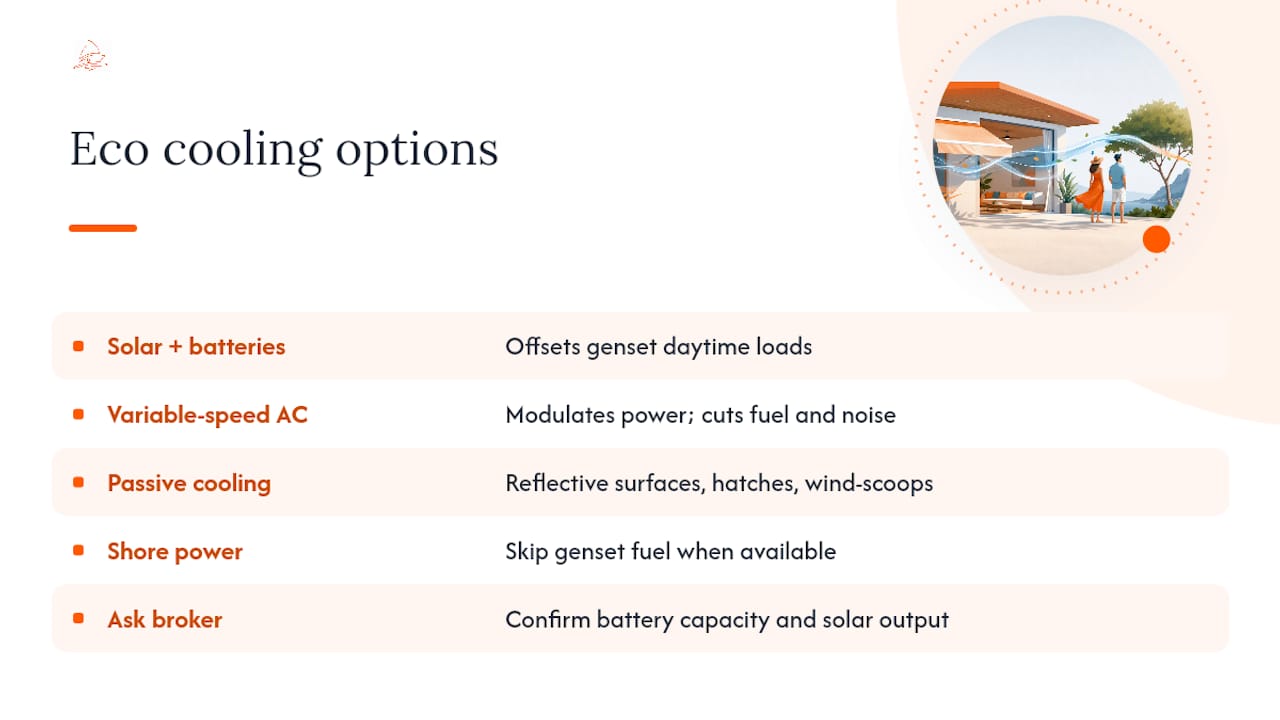
Diesel gensets remain the backbone of most charter AC systems, but the fuel burn adds up over a week, and it's worth knowing what alternatives exist before you assume "more genset hours" is the only fix for a hot cabin.
Solar panels paired with lithium battery banks are increasingly common on newer catamarans and can offset genset hours for smaller cooling loads, particularly during daytime when panels are producing peak output. Some operators now offer variable-speed compressors that modulate power draw instead of cycling on and off at full load, cutting both fuel use and noise compared to older fixed-speed units.
Passive cooling still does more heavy lifting than most renters expect. Light-colored hulls and decks reflect rather than absorb solar heat, opening hatches and using wind-scoops overnight reduces reliance on mechanical cooling entirely, and marina berths with reliable shore power let you skip genset fuel altogether whenever the itinerary allows it.
None of this replaces asking directly about a boat's power setup, but a charter with solar assist, efficient compressors, or generous shore-power time in the itinerary will typically cost less in fuel surcharges and run quieter at anchor. If sustainability matters to your trip, ask the broker specifically about battery capacity and solar output rather than assuming every yacht in the fleet is equipped the same way.
Sailorix Perspective: Booking With Clarity, Not Guesswork
Most AC disputes on charter don't come from bad equipment, they come from vague listings. Sailorix's membership model keeps service fees near 1%, but the bigger value for renters is pushing for specific language, "A/C hours included" or "A/C unlimited," in every booking message before money changes hands. That single habit resolves most disputes before they start. Our guide on yacht amenities breaks down what honest listings actually say versus what gets glossed over.
— SAILORIX
Book a Charter Where AC Terms Are Clear From the Start
Vague amenity lists cost renters real money once genset fuel gets billed to the APA at checkout. Sailorix charges roughly 1% in service fees against the 10 to 20% typical elsewhere, and that savings holds whether you're booking a weekend sail or a full week in the tropics.

Search Sailorix listings by destination and filter for boats that state AC hours and power source directly in the listing, not buried in a PDF contract you get after paying a deposit. If you charter regularly, the membership programs page breaks down which tier fits your booking frequency, and before you commit to a specific boat, Sailorix's guide on verifying charter boat age and equipment covers how to check HVAC maintenance history alongside engine hours. Start browsing available yachts and confirm AC terms in writing at Sailorix before your next trip.
Sources
The claim about heat-related risk from AC failure draws on a reported incident at Miami-Opa Locka involving four hospitalized passengers. Amenity-listing language referenced throughout comes from Virginia State Parks' cabin rental pages and Turkey Run State Park's cabin listings, both useful models for how honest AC amenity language should read.
- Global X Flight AC Failure Sends 4 to Hospital in Miami
FAQ
What is the three-minute rule for AC?
The three-minute rule refers to waiting at least three minutes after shutting off a compressor before restarting it, giving refrigerant pressure time to equalize and preventing motor damage. It applies to most compressor-driven systems, including marine AC units, so don't panic-cycle a unit that seems slow to start.
What are the four types of air conditioners found on boats?
Charter boats typically use central chillers, self-contained cabin units, ducted systems, or portable/window-style units as supplemental cooling. Central chillers and ducted systems tend to run quieter, while self-contained units are cheaper but noisier at the compressor.
What does "air conditioned" actually mean on a charter listing?
It means the boat has a mechanical cooling system aboard, but it says nothing about hours, fees, or power source unless the listing specifies them. Always confirm whether hours are included, metered, or unlimited before booking, since Sailorix listings are built to state that detail upfront rather than leave it ambiguous.
What are the three main types of marine air conditioning systems?
Marine AC systems generally fall into central chilled-water systems, self-contained direct-expansion units, and ducted multi-zone systems. Each trades off differently on noise, installation cost, and power draw, which is why BTU rating and genset capacity matter as much as the brand name.
Is air conditioning ever included with no restrictions on a charter?
Unlimited included AC does exist, mostly on larger, premium yachts with generous genset and fuel budgets, but it's the exception rather than the rule. Confirm this in writing rather than assuming a bigger boat automatically means unrestricted cooling.