
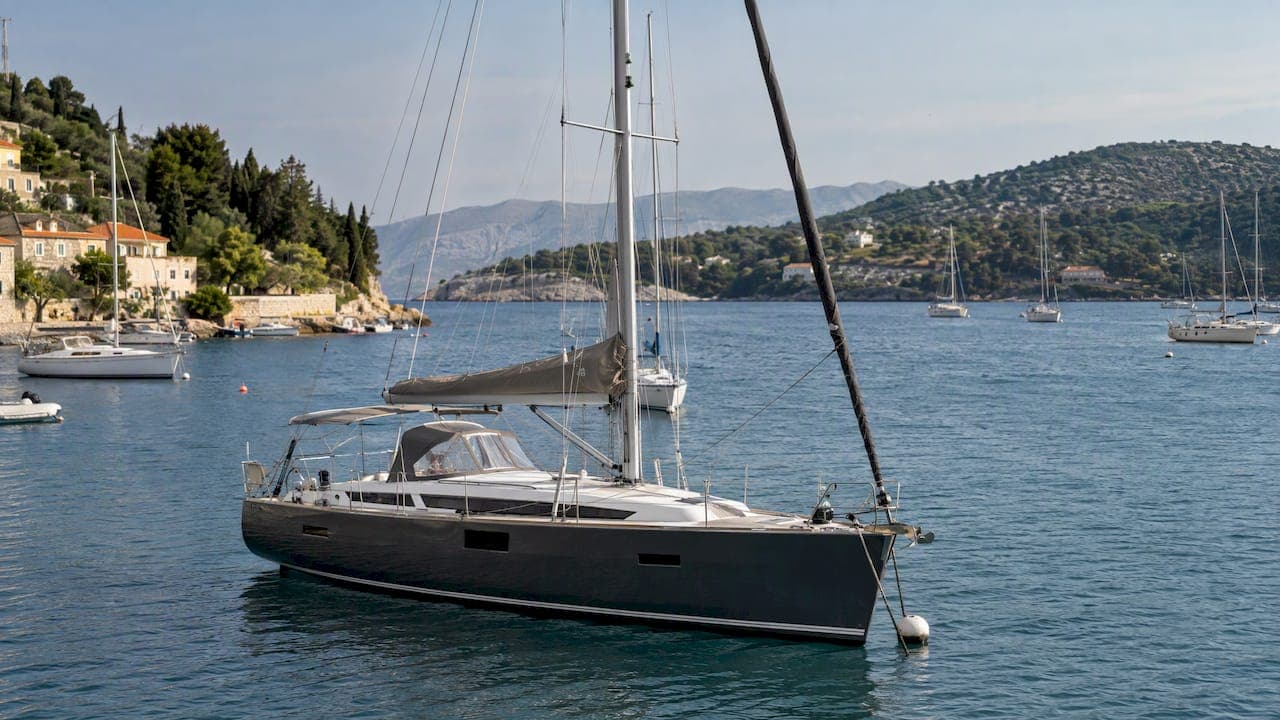
The best bareboat destinations are the ones that match your sailing experience, your travel window and your budget. For most U.S. crews that means the Caribbean in winter, the Ionian Sea or the western Mediterranean in summer, and, for a shorter trip, a U.S. cruising ground such as the Florida Keys, Puget Sound or the Channel Islands. Below we sort the options by skill level and season, and we explain what to check before you commit to a boat.
TL;DR
- The Caribbean is the most popular charter area in the world, and its peak season runs from December through May, according to US Sailing.
- First-time bareboaters do best in places with moderate winds and few navigational hazards: the Ionian Sea, the Balearics, the Côte d'Azur, the Gulf of Naples and the US Virgin Islands.
- The Aegean, the Bahamas and Thailand ask for more experience, so build your logbook first.
- Budget beyond the charter fee: flights, hotels before and after, food, fuel, mooring and a cushion for surprises.
- Match the destination to the month you can travel. A great place in the wrong season is a poor trip.
Table of Contents
- How to pick a bareboat destination
- Best bareboat destinations for first-timers
- Destinations for confident skippers
- Best bareboat destinations without leaving the U.S.
- When to go: matching season to destination
- What a bareboat trip really costs
- Experience, paperwork and the skipper's resume
- Our perspective
- Find your boat on SAILORIX
- FAQ
- Sources
How to pick a bareboat destination
Bareboat means you charter the boat without a professional crew. You are the skipper, so the destination decides how stressful or relaxing the week will be. US Sailing says choosing an area comes down to balancing your personal experience, the climate you want and your budget, and that sailing in a foreign country adds local language and customs to the list (US Sailing).
In practice we ask four questions:
- How much have you sailed as skipper? Not as crew. As the person who anchors, docks and decides when to stay in port.
- What wind and sea do you want? Light breezes and short hops, or longer passages with real wind.
- When can you go? School schedules and work leave often fix the month before anything else.
- What does the whole trip cost? The charter is only one line.
Answer those honestly and the list of destinations shrinks fast.
Best bareboat destinations for first-timers
If you are new to skippering, look for short distances between anchorages, steady moderate wind and easy navigation. According to boot Düsseldorf, the Balearic Islands, the Côte d'Azur, the Gulf of Naples, the Ionian Sea and the US Virgin Islands are particularly easy for beginners, with moderate winds and few navigational difficulties.
The Ionian Sea, Greece
The same source singles out the Ionian as particularly easy for newcomers. Expect islands close together, many harbors and bays, and the kind of week where you sail in the afternoon, anchor early and eat ashore. It is a strong first Mediterranean charter, and it is mainly a summer destination, since US Sailing notes that most Mediterranean chartering happens in the summer months. For help choosing a month, see our guide to the best Mediterranean sailing season for U.S. planners.
The US Virgin Islands
The USVI makes the beginner list too, and for Americans it has a practical bonus: the Caribbean is accessible from the U.S. and Europe, one of the reasons US Sailing gives for its popularity. Warm, protected waterways and safe anchorages are what you are paying for. Winter is the high season, so book early and expect winter pricing.
The Balearics and the Côte d'Azur
Both appear on the beginner list for their moderate conditions. They suit crews who want a polished shoreside scene alongside easy sailing: lively harbors, beach clubs and restaurants. They also tend to reward flexible dates, because summer is crowded. If your week falls in July or August, reserve as far ahead as you can.
Destinations for confident skippers
The same boot Düsseldorf guide lists the BVI as easy for advanced boaters, the Aegean as needing more experience, and the Bahamas and Thailand as unsuitable for inexperienced charter sailors. That tells you something useful about how to build a ladder.
The British Virgin Islands
The BVI is a classic for good reason. Sailing here is usually described as straightforward: islands in sight of each other, protected waters and a well-established charter scene. The guide above rates it easy for advanced boaters, so a skipper with a few seasons behind them will find it comfortable. It follows the Caribbean high season, December through May, which is when you will find the best weather and also the highest demand.
A tip for U.S. crews: read the operator's briefing material before you arrive, and ask about local formalities when you book. Rules differ by territory and can change, so confirm them with your operator instead of relying on a forum post.
The Aegean, Greece
The Aegean sits a step above the Ionian in difficulty. It asks for more experience, so it suits a skipper who has already completed a couple of Mediterranean weeks. Plan your passages with a margin, read the forecast every day and keep your itinerary flexible enough to wait in port when conditions call for it.
The Bahamas
The Bahamas are beautiful, and they are not a place to learn. The boot Düsseldorf guide flags them as unsuitable for inexperienced charter sailors. If you have the miles and want shallow water, clear color and a quiet anchorage, it is a rewarding step up.

Thailand
Thailand is also flagged for experienced sailors only. The draw is warm water, dramatic scenery and a very different culture from the Caribbean or Mediterranean. Come prepared with solid logbook hours and a plan for the local customs.
Best bareboat destinations without leaving the U.S.
Not every bareboat trip needs a passport. US Sailing says U.S. charter options run from the Florida Keys to Maine on the East Coast, around San Diego, Los Angeles, San Francisco and the Channel Islands on the West Coast, and through Puget Sound and the Alaska inland passage (US Sailing).
That gives you very different flavors:
- Florida Keys: warm water and short hops, a good weekend or week option.
- New England and Maine: cooler water, rocky coast, a cruising tradition you can easily extend across a week.
- Southern California and the Channel Islands: easy access from major cities and a distinctive island setting.
- Puget Sound and Alaska: wild scenery, and a trip better suited to a crew that has already logged time in tides and cooler weather.
Domestic charters also remove the foreign language, customs and long flight from your budget, which makes them a smart way to test a crew before an international trip.
When to go: matching season to destination
Season shapes the experience as much as geography. Based on US Sailing's overview, peak Caribbean season runs from December through May, while most Mediterranean chartering takes place in summer.
| Region | Typical high season | Good for |
|---|---|---|
| Caribbean (BVI, USVI) | December to May | Winter escape, warm protected water |
| Ionian and Aegean, Greece | Summer | Island hopping, beginner-friendly Ionian |
| Western Mediterranean (Balearics, Côte d'Azur) | Summer | Moderate winds, lively harbors |
| U.S. coasts | Varies by coast | Short trips, no passport needed |
Outside the peak window you can sometimes find calmer harbors and lower prices, but you also need to read local conditions more carefully. Ask your operator what the shoulder season looks like in the specific area you chose. Our comparison of June versus September in the Med shows how much the month changes the trip: June or September for Mediterranean sailing.
What a bareboat trip really costs
The charter fee is only the headline. US Sailing explains that price varies with boat size and type, equipment, age, season, destination, discounts, exchange rates and operator strategy. It also says to budget for transportation, lodging before and after the cruise, food, equipment and incidentals, and to leave room for the unexpected (US Sailing).
A practical way to plan:
- Start with the charter fee for your boat type and week.
- Add flights for the whole crew and a night or two of hotel at each end.
- Add provisioning, fuel, mooring or marina fees and dinners ashore.
- Add any extras such as a skipper for the first day, early check-in or equipment.
- Put a buffer on top.
For deeper numbers, these guides on our blog go line by line: what a charter fee covers, hidden costs that add up, realistic weekly catamaran budgets and budget per person for Mediterranean trips. If cost is your main filter, our list of affordable yachting destinations is a good second read, and the affordable sailing trip workflow walks you through the planning order.
Experience, paperwork and the skipper's resume
Operators want to know you can handle their boat. Many ask for a sailing resume and recent experience before they hand over the keys, and requirements for licenses or certificates differ by country. We do not want to give you a rule that is out of date, so the safest step is to ask the operator directly, at the time of booking, what it requires for your destination and boat, and to check with the local authority if you are unsure.
Building a credible record is the part you control. Our guide to a bareboat sailing resume with a logbook shows how to present your hours so an operator can approve you quickly. If you are short on miles, a hired skipper for the first day or two is a sensible way to get comfortable with a boat and an area.

Before you book, also read the contract. Fees and conditions differ between operators, and our article on avoiding 10–20% hidden fees in a U.S. charter agreement explains what to look for.
Our perspective
We built SAILORIX around a simple observation: the destination is the fun part of a bareboat trip, and the booking fees should not be the part that hurts. Many travelers pay 10 to 20% in service fees on a charter without noticing. Our membership is designed to change that.
For €100 per year, members book with a service fee of around 1%. On a week-long charter that difference can be larger than the cost of a provisioning run, a few dinners ashore or an extra day of hotel. We also believe in a best price guarantee, real-time availability and add-ons you can choose yourself, such as a skipper, early check-in or equipment.
We would steer a first-time skipper toward a gentle destination and a proper briefing, and an experienced crew toward the places that reward skill. Whichever you choose, search by destination and boat type, compare the whole trip cost and book with a platform that is transparent about what it charges.
SAILORIX
Find your boat on SAILORIX
When you have your destination, the next step is the boat. SAILORIX lets you search by destination and boat type, from sailing yachts and catamarans to motor yachts, gulets and RIBs, with real-time availability. Membership is €100 per year and is designed to bring the service fee down to around 1% on your bookings.

Start on the SAILORIX homepage to search your destination. If you want to compare the membership programs, see the programs page, and if you are considering ownership or fleet management, the services page covers that side.
FAQ
What is the easiest place for a first bareboat charter?
The Ionian Sea is described as particularly easy for beginners, with the Balearics, the Côte d'Azur, the Gulf of Naples and the US Virgin Islands also on the beginner list (boot Düsseldorf). They share moderate winds and few navigational difficulties. Pick the one whose season matches your vacation dates.
When is the best time to charter in the Caribbean?
Peak Caribbean season runs from December through May (US Sailing). That is also when demand is highest, so book early. Ask your operator about conditions if you plan to go outside that window.
Can I bareboat in the U.S.?
Yes. US Sailing lists charter options from the Florida Keys to Maine, in Southern California and the Channel Islands, around San Francisco, and in Puget Sound and Alaska. Domestic trips avoid foreign customs and long flights, so they are a good way to test your crew.
What should I budget besides the charter fee?
Plan for transportation, lodging before and after the cruise, food, equipment and incidentals, and leave room for the unexpected, as US Sailing advises. Fuel and mooring fees belong on the list too. Also compare the service fee a booking platform adds, since it changes the final price.
Do I need a license to bareboat abroad?
Requirements differ by country and operator, and they can change. Ask the operator what it needs for your destination when you book, and confirm with the local authority if anything is unclear. A well-kept logbook helps in every case.
Sources
- Bareboat Chartering: A world of possibilities, US Sailing
- How to choose a suitable charter destination, boot Düsseldorf