
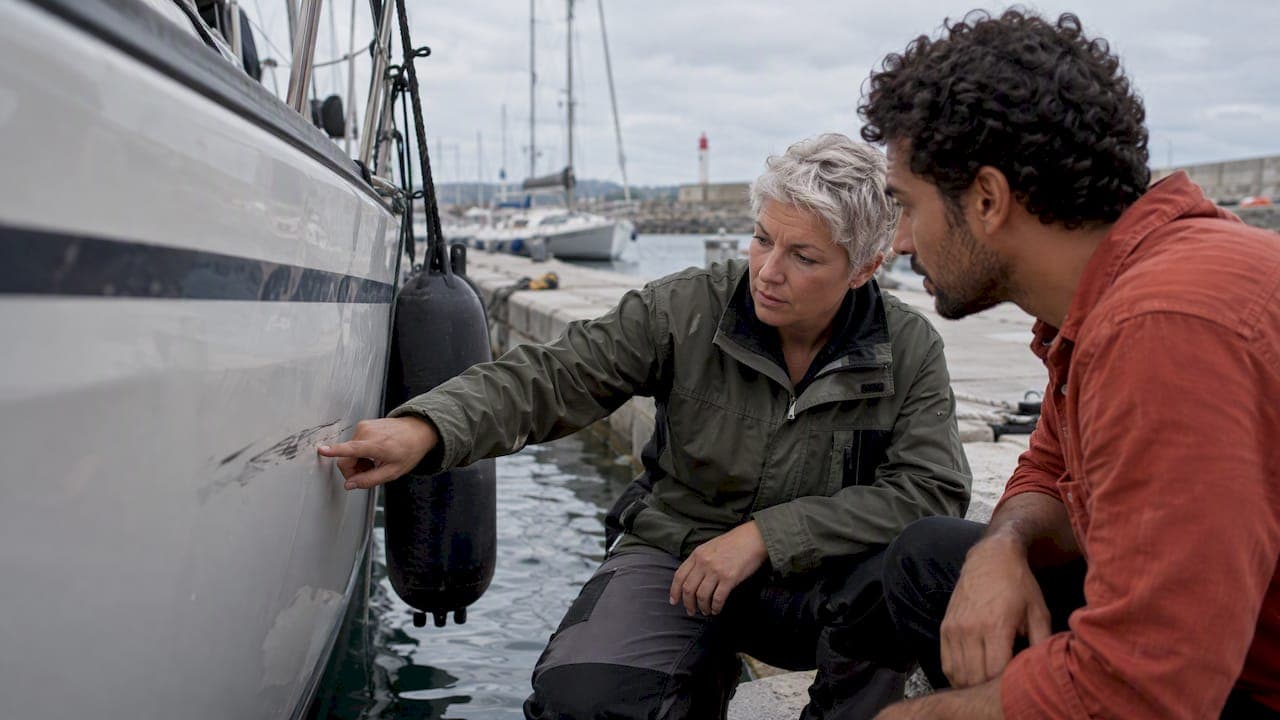
Charter deposit insurance is a separate policy you buy to cover the security deposit a charter company can keep if the boat is damaged on your trip. If the company withholds money for damage you caused, the insurer reimburses you, usually after you file a claim with receipts and a damage report. It does not replace the company's own hull insurance, it does not cover everything, and it is not the same as a waiver the charter company sells you directly. Here is how it works, what it leaves out, and what to check before you sign.
TL;DR
- Deposit insurance typically reimburses the part of your security deposit that the charter company keeps for damage caused by you or your crew, up to the policy limit.
- Exclusions depend on the tariff and can include wear and tear, cleaning, fuel and gross negligence.
- It is different from skipper liability insurance, which covers third-party injury or property claims, and from travel insurance.
- In the U.S., a card hold for a boat rental is meant to clear within 10 calendar days under Visa's framework, but your contract and card issuer decide the real timing.
- "No deposit" charters usually swap the deposit for a non-refundable fee, so read what you still owe if something breaks.
Table of Contents
- What deposit insurance means on a charter
- What it covers, and what it usually does not
- Deposit insurance versus paying, reducing or waiving the deposit
- What a no-deposit charter really means
- How long a deposit or card hold lasts
- Making a claim
- Is it worth buying?
- Our perspective
- Book with fees you can see
- Checklist before you sign
- FAQ
- Sources
What deposit insurance means on a charter
When you charter a yacht, the operator insures the boat. Your exposure is the excess on that policy, the amount the operator's insurer does not pay. The security deposit is how the operator makes sure you can cover that excess. Deposit insurance steps in at that point: it covers the renter's liability for the excess on the charter operator's own hull policy, according to NauticAssure's explanation of charter deposit insurance.
Think of three layers:
- The operator's hull and liability policy insures the boat itself.
- Your security deposit (usually a card hold or a payment) sits between that policy and you, covering the excess.
- Deposit insurance reimburses you if the operator keeps some or all of that deposit for damage you caused.
The same NauticAssure page stresses a distinction that trips many first-time charterers: deposit insurance protects your deposit when the boat is damaged, while skipper liability insurance covers your personal liability for injuries or property damage to third parties. They answer different questions. If you want the liability side, our guide to skipper liability insurance and what it costs in the US goes through it.
What it covers, and what it usually does not
Policies vary, so treat this as a map of common terms, not a promise about any one policy.
Typically covered: damage to the chartered boat caused by the skipper or crew, resulting in the operator withholding all or part of the deposit.

Often excluded, depending on the tariff: according to the same NauticAssure page, exclusions can include wear and tear, cleaning costs, fuel and gross negligence.
That last word matters. A grounding in a marked channel you misjudged is one thing. Damage after ignoring a clear warning, sailing while impaired, or breaching a charter agreement's cruising limits can be treated very differently. Read the exclusions list before you pay, not after the incident.
Some other points to check in any policy wording:
- The limit. Does it match the deposit in your charter contract, or is it lower?
- Who is insured. Usually the named charterer and crew. Confirm the skipper is covered if you hire one.
- When you must buy. Many policies need to be bought before the charter starts, often at booking.
- The claim route. Some insurers reimburse you after the fact. They do not pay the operator up front.
Deposit insurance versus paying, reducing or waiving the deposit
There are four common ways to handle a charter deposit. They look similar on a booking page and behave very differently when something breaks.
| Option | What you pay | If there is damage | Main catch |
|---|---|---|---|
| Pay the full deposit | A refundable hold or payment | The operator deducts justified repair costs | Funds are tied up until release |
| Pay deposit, add deposit insurance | Deposit plus a premium | The operator deducts, then you claim from the insurer | You still front the deposit, and exclusions apply |
| Reduce the deposit through the operator | A fee to the operator for a lower deposit | You owe up to the reduced amount | The fee is generally not refundable |
| Waive the deposit | Typically a non-refundable fee | Depends on the waiver terms | Exclusions and caps can still leave you exposed |
In a deposit-insurance policy you are insured against losing money you already paid. In an operator waiver or reduction, you are buying a lower liability from the operator directly. Both are legitimate, and which is better depends on price, the exclusions, and whether you are comfortable claiming from a third-party insurer.
One thing to watch is how the operator describes the product. Some call a waiver "insurance" in marketing. Ask whether it is an insurance policy issued by an insurer or a contractual reduction of your liability to the charter company. The answer changes who handles the claim and what documents you need.
For a broader look at what you may need beyond the deposit, see what charterers actually need to buy and our walkthrough of travel insurance for a yacht charter.
What a no-deposit charter really means
A "no deposit yacht charter" listing rarely means you owe nothing if the boat is damaged. More often it means one of these:
- A damage waiver replaces the deposit. You pay a fixed, non-refundable fee up front. In return, the operator waives or caps what it can claim from you.
- A card is still kept on file. No money is held, but the operator may still charge the card for damage or missing equipment after the trip.
- Other fees stay in place. Final cleaning, fuel, tourist taxes, mooring and skipper costs are normally separate from any deposit arrangement.
Before you pick a no-deposit offer, ask three questions in writing: what is the maximum I can owe for damage, what is excluded from the waiver, and will my card be charged for anything after the trip? If the answers are vague, the "no deposit" label is a marketing line, not a protection.
If the deposit is non-refundable in some form, make sure the contract says exactly which part. Our explainer on key yacht charter terms to understand before you sign covers the vocabulary you will meet in those clauses.
How long a deposit or card hold lasts
Most operators take the security deposit as a card authorization hold, not a charge. A hold reserves part of your credit limit. It is released if no deductions are made. It becomes a charge only for the amount the operator claims.
In the U.S., Visa's authorization framework sets a maximum authorization-to-clearing timeframe of 10 calendar days for estimated boat-rental transactions, according to Visa's published authorization framework update. That is a card-network rule about authorizations, not a promise about when your bank will show the funds as available again. Release timing depends on how the operator handles the hold, how your issuer processes it, and what your contract says.
If your deposit is paid by bank transfer or taken as a charge rather than a hold, the contract's refund period governs instead. Look for a stated number of days and a stated method.
Practical steps:
- Check the contract's return period for the deposit and the method (release of hold, refund to card, bank transfer).
- Use a card with enough headroom. A large hold on a card with a low limit can block other spending on your trip.
- Photograph the boat at check-in and check-out. Date-stamped photos are your best evidence in a dispute about deductions.
- Get the check-out sign-off in writing, including any note on existing damage.
- Keep tabs on your statement. If the hold has not cleared after the period in your contract and Visa's timeframe, ask the operator for the release date and then contact your card issuer.
Our guides on security deposits for renters and sailors and boat rental deposits go deeper on amounts and timing, and the yacht charter payment schedule shows where the deposit fits among your other payments.
Making a claim
Deposit insurance only pays if the paperwork is in order, so think about the claim before you leave the dock.
According to YACHT-POOL's charter deposit insurance page, reimbursement requires a receipt and, if necessary, a repair invoice, plus a damage report signed by all crew members, submitted after you return home. Other insurers will have their own lists, but expect something similar.
The same provider says reimbursement applies only to justified retentions caused by the skipper or crew. If the operator keeps money for a structural defect or material fatigue, the page says you should challenge that with the charter company, not expect the insurer to pay.
That suggests a simple routine:
- Record the damage as it happens. Photos, time, location, weather and what you were doing.
- Write the damage report on the boat, and have every crew member sign it.
- Ask the operator for an itemized deduction with receipts or the repair invoice.
- Challenge anything that looks like pre-existing wear. If the base found a worn fitting that failed, the operator's own policy may be the right place for that cost.
- File with your insurer with all documents, as soon as you are home and within the policy's deadline.
A second point from YACHT-POOL is worth copying into your own checklist: make sure the contract says the deposit is only for material damage to the vessel and not for liability claims, because the yacht's existing liability insurance should be primary for those. If the contract lets the operator draw on your deposit for third-party claims, ask for that wording to be changed before you sign.
Is it worth buying?
Deposit insurance is a bet on how much of the deposit you could lose and how much you would pay to remove that risk. Some situations where it tends to make sense:
- The deposit is large relative to your budget, and losing it would hurt.
- You are chartering a bareboat and handling docking, anchoring and maneuvering yourselves.
- The operator's own waiver or reduction is expensive or has broad exclusions.
- You are bringing a less experienced crew and want a cushion against ordinary mistakes.
Situations where it may add little:
- A skippered charter where the professional skipper handles the boat and the contract is clear on responsibility.
- Your credit card or an existing travel policy already covers the same risk (check the wording, because many policies exclude rented vessels).
- The deposit is small compared with the premium.
Compare the premium with the deposit and with the exclusions, not just the headline price. A cheap policy that excludes the types of mishaps most likely on your trip is poor value.
Our perspective
We see the same mistake again and again: people compare the headline charter price and ignore the layers around it. The deposit, any waiver, the insurance, the fees on top of the booking. Those layers can cost more than a small difference in the base rate, and they are where surprises come from.
Our approach is simple. Start with the contract and ask what you can lose, how you would claim, and when your money comes back. Then buy cover only for the gap that remains. We built Sailorix around the same idea of clarity: a membership of €100 per year, with service fees of around 1% on bookings, and add-ons such as insurance options chosen deliberately instead of bundled in. Our guide to avoiding 10 to 20% hidden fees in a U.S. charter agreement shows the same habit applied to the whole contract.
— SAILORIX
Book with fees you can see
If you are ready to compare boats, Sailorix lets you search real-time availability by destination and boat type, and add options such as a skipper, equipment or insurance at booking. A SAILORIX membership costs €100 per year and gives access to bookings with a service fee of around 1%, instead of the 10 to 20% typically charged elsewhere. You can see what the membership includes and start a search from our home page.

Before you pay for anything, read the cancellation terms too. Our note on flexible booking for boat charters lists what to check.
Checklist before you sign
- What is the deposit amount, and is it held on a card or paid as a charge?
- When and how is it returned, and in how many days?
- Is any portion non-refundable, and what does that fee buy?
- Does the deposit apply only to material damage to the boat, not to liability claims?
- What does the insurer or waiver exclude: wear and tear, cleaning, fuel, gross negligence?
- Who must sign the damage report, and what proof will the insurer want?
- Is there a deadline to buy the policy or to file a claim?
For a wider view of what a renter should expect from an operator, see our overview of yacht rental standards every renter should know.
FAQ
Does charter deposit insurance cover wear and tear?
Usually not. Exclusions can include wear and tear, cleaning costs, fuel and gross negligence, depending on the tariff, so check the policy wording. If the operator keeps money for a defect or material fatigue, raise it with the charter company first.
Is a damage waiver the same as deposit insurance?
Not necessarily. A waiver is typically a fee paid to the operator that reduces or removes your liability, while deposit insurance is a policy from an insurer that reimburses a deposit you lost. Ask which one you are being offered and who handles a claim.
How long will a charter company hold my card?
It depends on the contract and your card issuer. Visa's U.S. framework sets a 10 calendar day maximum from authorization to clearing for estimated boat-rental transactions. If the hold is still on your card beyond the contract period, ask the operator for the release date.
Is a no-deposit yacht charter really free of risk?
No. It usually means you pay a non-refundable waiver fee or leave a card on file instead. Ask in writing what the maximum charge for damage could be, and what is excluded.
Is deposit insurance the same as skipper liability insurance?
No. Deposit insurance protects your deposit when the boat is damaged. Skipper liability insurance covers your personal liability for injury or property damage to others. Many charterers need to consider both.
Sources
- NauticAssure: Charter Deposit Insurance
- YACHT-POOL: Charter Deposit Insurance
- Visa: Authorization framework update