

Sailing adventures fall into a handful of distinct categories, and the variety is wider than most people expect. Coastal and island-hopping trips, offshore ocean passages, expedition and polar voyages, racing programs, delivery and crew experiences, tall-ship heritage sails, and long-term liveaboard or circumnavigation routes each offer something genuinely different. Here are six quick examples to show the range:
- 7-day BVI island hop | Beginner–Intermediate | November–April | Line-of-sight navigation between anchorages, mooring balls, and rum punch at sunset
- transatlantic passage lasting several weeks (Canary Islands to Caribbean) | Intermediate–Advanced | November–January | Trade winds, open ocean, and a life-list crossing
- 21-day Pacific crossing to the Marquesas | Advanced | April–May | 3,000+ nautical miles of blue-water sailing with equator ceremonies and flying fish
- 3-day coastal New England cruise | Beginner | June–September | Lobster towns, fog, and tidal anchorages
- 10-day Antarctic expedition voyage | Advanced | November–March | Ice channels, wildlife landings, and sub-zero night watches
- 5-day tall-ship voyage (Mediterranean) | Beginner | May–October | Traditional rigging, shared crew duties, and port-to-port history
Pro Tip: The RYA's competency framework is the most widely recognized standard for matching skill level to trip type. Check your qualification level before committing to an offshore or ocean passage.
Key Takeaways
Sailing adventures span everything from a 7-day BVI island hop to a 3-year circumnavigation, and matching the trip type to your goal, skill level, and vessel is what determines whether the experience is memorable or merely expensive.
| Point | Details |
|---|---|
| Match trip to goal | Relaxation suits crewed or skippered charters; skill-building suits masterclass or crew trips; challenge suits offshore passages. |
| Choose the vessel first | Boat layout and condition predict trip satisfaction more reliably than the destination alone. |
| Know your booking format | Bareboat requires qualifications; skippered adds a captain; crewed is fully managed; flotilla offers a safety-net middle ground. |
| Pack for the conditions | Foul-weather gear, non-slip shoes, seasickness medication, and a PLB are non-negotiable for offshore passages. |
| Season and region matter | BVI runs in the cooler part of the year; Ionian and Mediterranean run in the warmer months; Pacific crossings typically depart in the spring. |
Table of Contents
- 1. BVI Island-Hopping: the Classic Beginner's Adventure
- 2. Greek Islands Coastal Cruise: Mediterranean Island-Hopping
- 3. Transatlantic Passage: Canary Islands to the Caribbean
- 4. Pacific Crossing: Panama to the Marquesas
- 5. Antarctic Expedition Sailing: the Ultimate Polar Adventure
- 6. Racing Experience: Join an Amateur Regatta
- 7. Tall-Ship Heritage Voyage: Sailing History
- 8. Delivery and Crew Experiences: Sail Someone Else's Boat
- 9. Liveaboard and Circumnavigation: the Long Game
- 10. Masterclass and Skill-Building Voyages
- Where should you actually go? A quick destination guide
- How to pick the right sailing adventure for you
- What to expect onboard and what to pack
- The one rule experienced sailors follow: choose the vessel first
- Why sailing trips stay with you longer than almost any other travel
- Sources
1. BVI Island-Hopping: the Classic Beginner's Adventure
The British Virgin Islands remain the world's most-referenced example of a beginner-friendly sailing adventure, and the reputation is earned. The islands sit close together, mooring balls eliminate the stress of anchoring in crowded bays, and the trade winds blow predictably from the east. A first-time charterer can sail from Tortola to Virgin Gorda, Norman Island, and Jost Van Dyke in seven days without ever losing sight of land.
Duration: 7–10 days | Skill level: Beginner–Intermediate | Best season: November–April
According to a first-timer charter guide, the BVI's line-of-sight navigation and well-maintained mooring infrastructure make it one of the top recommended regions for novice charterers worldwide.
2. Greek Islands Coastal Cruise: Mediterranean Island-Hopping
The Ionian Islands (Corfu, Lefkada, Kefalonia, Ithaca) offer a gentler version of Mediterranean sailing than the Aegean. Winds are moderate, anchorages are sheltered, and the distances between islands rarely exceed 20 miles. You can spend a week moving between whitewashed villages and still feel like you've barely scratched the surface.
Duration: 7–14 days | Skill level: Beginner–Intermediate | Best season: May–September
The same beginner charter guide highlights the Ionian as one of the two most recommended regions for first-time charterers, alongside the BVI, specifically because of its calm summer conditions and short inter-island passages.
3. Transatlantic Passage: Canary Islands to the Caribbean
This is the trip that separates coastal sailors from offshore sailors. The classic route runs from Las Palmas, Gran Canaria, to Barbados or St. Lucia, roughly 2,700 nautical miles on the trade wind belt. One documented crew account describes island-hopping through the Canaries for several weeks before an ocean crossing lasting about eleven days covering over a thousand nautical miles, with strong wind gusts and mechanical challenges that tested the whole crew.
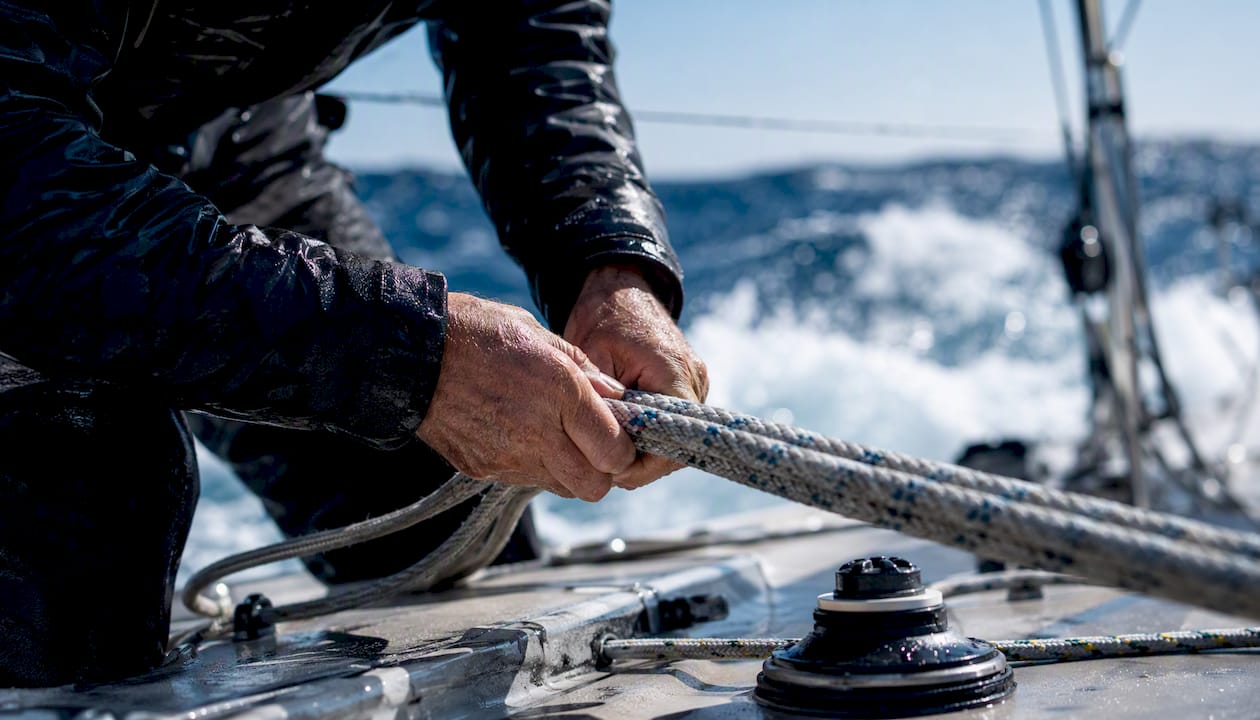
Duration: 18–24 days at sea | Skill level: Intermediate–Advanced | Best season: November–January
The mental side of this trip surprises most first-timers. Days four through seven, when land is long gone and the destination is still invisible, are where the real adventure lives.
4. Pacific Crossing: Panama to the Marquesas
At roughly 3,000 nautical miles, the Pacific crossing from Panama (or the Galapagos) to the Marquesas Islands in French Polynesia is one of the longest non-stop passages most bluewater sailors ever make. Typical pacing runs 100–200 miles per day, meaning three to four weeks at sea. The doldrums near the equator can stall progress for days; squalls arrive without warning. Crew dynamics shift dramatically over that kind of time, and the equator-crossing ceremony (Neptune's ritual) becomes a genuine milestone.
Duration: 21–30 days | Skill level: Advanced | Best season: April–May
5. Antarctic Expedition Sailing: the Ultimate Polar Adventure
National Geographic's sailing photo essay captures it well: the range of sailing adventures stretches from tropical island sunsets to Antarctic ice mazes. Expedition voyages to the Antarctic Peninsula typically depart from Ushuaia, Argentina, and spend 10–21 days navigating the Drake Passage and the Gerlache Strait among icebergs, humpback whales, and penguin colonies. This is not a charter trip. It requires an experienced skipper, a reinforced hull, and serious cold-weather gear.
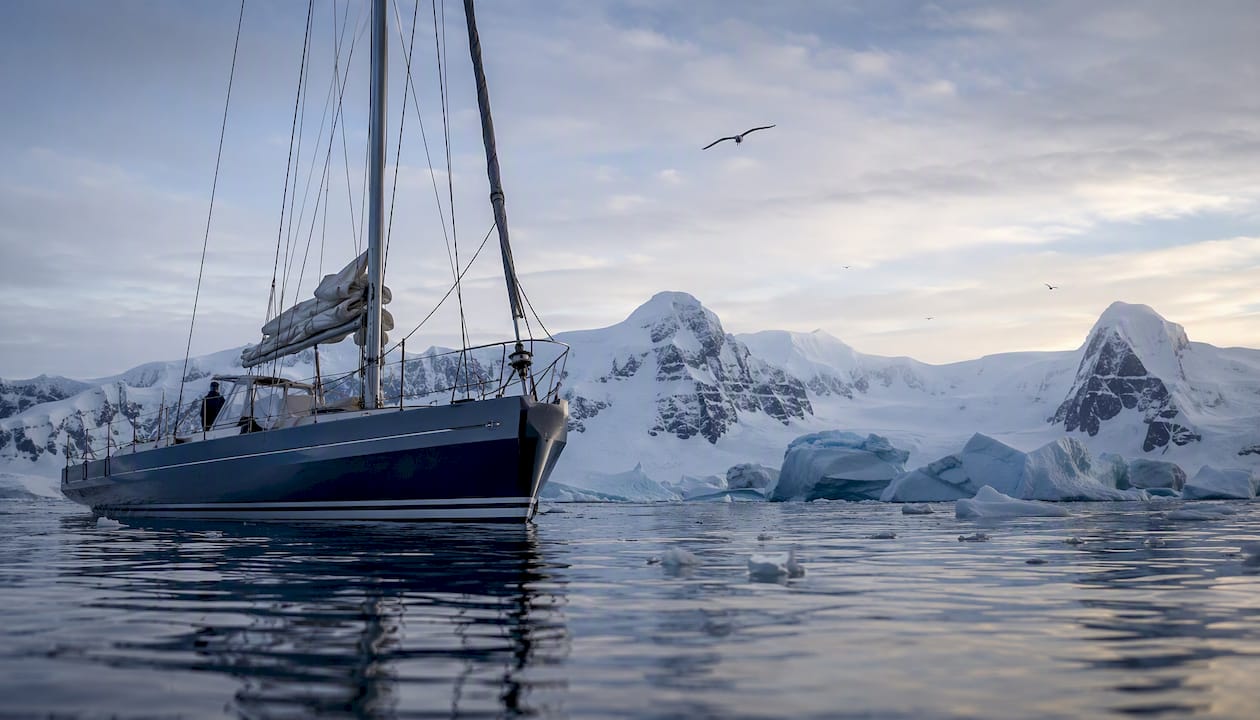
Duration: 10–21 days | Skill level: Advanced (as crew) | Best season: November–March
6. Racing Experience: Join an Amateur Regatta
Modern racing programs have opened beginner pathways that simply didn't exist a generation ago. Amateur-focused regattas now emphasize professional coaching, safety briefings, and team experience over pure speed. The Antigua Sailing Week, the Fastnet Race (as a crew member on a larger boat), and Caribbean racing series all accept novice crew through organized programs. You don't need to own a boat or hold a racing license to participate.
Duration: 3–7 days | Skill level: Beginner–Intermediate | Best season: Varies by event (Caribbean: January–April; UK/Atlantic: July–August)
7. Tall-Ship Heritage Voyage: Sailing History
Tall-ship voyages put you on a working replica of a 19th-century square-rigger or a traditional schooner. Organizations like the Jubilee Sailing Trust and various European sail-training associations run 5–14-day voyages where paying crew haul lines, stand watches, and learn traditional seamanship. The Mediterranean and the Baltic are the most common routes. The experience is less about speed and more about the physical reality of sailing before engines existed.
Duration: 5–14 days | Skill level: Beginner (no prior experience required) | Best season: May–October
8. Delivery and Crew Experiences: Sail Someone Else's Boat
Crew-matching platforms let novices join long passages as hands-on crew, often in exchange for sharing costs or simply for the experience. One documented account describes joining a transatlantic delivery crew with no prior offshore experience, then spending months island-hopping before the Atlantic crossing itself. The learning curve is steep, the living conditions are tight, and the stories are extraordinary.
Duration: 7 days to several months | Skill level: Beginner–Advanced (varies by skipper) | Best season: Depends on route
Pro Tip: Read crew blogs before committing to a delivery trip. Mechanical failures, extended layovers, and personality clashes appear in nearly every honest account. That's not a reason to avoid the trip; it's a reason to choose your skipper carefully.
9. Liveaboard and Circumnavigation: the Long Game
A circumnavigation takes one to three years and covers roughly 25,000–30,000 nautical miles. Most people who do it don't set out to "sail around the world." They start with a season in the Mediterranean, extend to the Caribbean, and keep going. The Pacific, Southeast Asia, the Indian Ocean, and the Red Sea route home follow a well-worn path called the "milk run." The lifestyle is genuinely different from any vacation: provisioning, boat maintenance, weather routing, and customs paperwork become daily work.
Duration: 1–3 years | Skill level: Advanced | Best season: Follow the seasons (depart Atlantic November–January, Pacific April–May)
10. Masterclass and Skill-Building Voyages
Sailing schools and charter companies offer structured learning trips where an instructor sails with you for the whole week. You cover real distance, anchor in real harbors, and handle real weather, but with a qualified teacher on board. The Ionian, the Solent, and the Chesapeake Bay are popular venues. These trips suit anyone who wants to build toward a bareboat qualification without the pressure of a classroom-only course.
Duration: 5–7 days | Skill level: Beginner–Intermediate | Best season: May–September (Northern Hemisphere)
Where should you actually go? A quick destination guide
The destination shapes the trip as much as the boat does. Here's what each major sailing region actually delivers.
-
British Virgin Islands (best sailing season is generally in the cooler months): Protected waters, reliable trade winds, mooring balls in most anchorages, and short inter-island passages. The BVI charter guide covers mooring logistics and island-by-island highlights in detail. Best for first-timers and families.
-
Greek Islands / Ionian (best sailing season is generally in the warmer months): Calm meltemi winds in the Ionian (stronger in the Aegean), ancient ruins at every port, and affordable provisioning. Passages of 15–25 miles between islands keep days manageable.
-
Croatia / Dalmatian Coast (May–September): Hundreds of islands, crystal-clear water, and a well-developed charter infrastructure. The Bora wind can arrive fast in autumn, so May through July is the sweet spot.
-
Caribbean Leeward Islands (best sailing season during the cooler months): Antigua, St. Barths, Martinique, and the Grenadines form a chain where you can sail south for a month and never repeat an anchorage. Caribbean safety considerations are worth reviewing before finalizing a route.
-
Pacific Islands: Marquesas and Society Islands (typically in the spring): Remote, dramatic, and genuinely off the beaten path. The Marquesas are the first landfall after the Pacific crossing; the Society Islands (Tahiti, Bora Bora, Moorea) follow. Charter options exist but are limited compared to the Mediterranean.
-
Alaska and New England (generally summer months): Cold-water coastal sailing with extraordinary scenery. Alaska's Inside Passage offers protected channels, glaciers, and wildlife. New England delivers lobster towns, tidal rivers, and classic wooden boats. Both require layered clothing and a tolerance for fog.
-
Antarctica and Patagonia (southern hemisphere summer): Expedition territory. The Drake Passage crossing (600 miles each way) is notoriously rough. Once through, the Antarctic Peninsula offers scenery that has no equivalent anywhere else on earth.
-
Transatlantic routes (Canaries to Caribbean generally in late fall to early winter): The trade wind belt makes the westbound crossing relatively predictable. The Azores route home offers a mid-Atlantic stopover with good provisioning.
The BVI's mooring ball system and line-of-sight navigation between islands make it the most consistently recommended starting point for first-time charterers. The Ionian runs a close second.
How to pick the right sailing adventure for you
Match the trip type to your primary goal first. Relaxation points toward a skippered or crewed charter in a calm region. Skill-building points toward a masterclass voyage or a hands-on crew trip. Challenge and story point toward an offshore passage or expedition.
The three booking formats and who they suit:
The charter-type explainer from First Class Sailing breaks this down clearly:
- Bareboat: You are the skipper. Requires formal qualifications (typically RYA Day Skipper or equivalent ICC). Full responsibility for the boat and crew. Lowest daily cost of the three formats.
- Skippered: You hire a professional captain. No sailing qualifications required. You can participate as much or as little as you like. Costs more than bareboat; less than fully crewed.
- Crewed (fully managed): Captain, cook, and crew included. Hands-off luxury. The highest daily rate, but zero logistical burden on guests.
- Flotilla: A middle ground. Individual boats sail together in a fleet led by a lead boat with a professional skipper. Good for people who want independence with a safety net.
Four questions to ask before booking:
- What is your actual sailing experience, and does the trip require qualifications you don't hold yet?
- How do you handle seasickness? (Offshore passages in rough conditions are a different category from coastal day sails.)
- How flexible is the itinerary if weather forces a change?
- What are the cancellation and insurance terms?
A simple decision sequence:
- Pick your goal (relaxation / skills / challenge / story).
- Pick the boat type and booking format that matches your experience and budget.
- Pick the season and region that align with your goal and the weather window.
- Book through a platform that offers real-time availability, skipper add-ons, and transparent fees.
For licensing pathways that connect to bareboat qualifications, the sailing license guide covers RYA and ICC routes in detail.
What to expect onboard and what to pack
Life aboard a sailing yacht is small-space living. Cabins are compact, fresh water is rationed on longer passages, and the boat moves constantly. On offshore trips, watch routines divide the day into three- or four-hour shifts, so sleep comes in fragments. The galley (kitchen) is functional rather than spacious. None of this is a complaint; it's just the reality that makes the experience different from a hotel.
Packing checklist by category:
Clothing:
- Lightweight base layers and a mid-layer fleece
- Offshore foul-weather jacket and trousers (non-negotiable for passages)
- Non-slip deck shoes (rubber sole, no black marks)
- Sun hat, UV-protective shirt, sunglasses with a strap
- Warm hat and gloves for night watches or cold-water regions
Health and safety:
- Prescription seasickness medication (scopolamine patches or meclizine; consult a doctor before departure)
- Personal first-aid kit with blister treatment and reef-cut antiseptic
- Sunscreen SPF 50+ (reef-safe formulas where required)
- Personal locator beacon (PLB) for offshore passages
Documentation and electronics:
- Passport, charter contract, and qualification certificates
- Waterproof phone case or dry bag for electronics
- Offline navigation app loaded before departure (Navionics, iNavX)
- Portable power bank
On-deck vs. below-deck items:
- Keep a small dry bag on deck with sunscreen, snacks, and a water bottle
- Store valuables, electronics, and spare clothing below in sealed bags
Safety checklist:
- Lifejackets fitted and checked for each crew member before departure
- Ditch bag stocked: EPIRB or PLB, flares, water, first aid, VHF radio
- Emergency contact plan filed with marina or coast guard
- Full safety briefing completed before leaving the dock (fire extinguisher locations, MOB drill, engine kill switch)
For a detailed kit list covering navigation and on-deck safety equipment, the nautical tools guide is a practical reference.
Cost ballpark by format:
| Format | Typical daily cost per person | Notes |
|---|---|---|
| Bareboat (split among crew) | $100–$200 | Depends on boat size and region |
| Skippered charter | $200 | Skipper fee added to base boat cost |
| Fully crewed | $400 | All-inclusive; varies sharply by yacht size |
| Shared crew / flotilla | $150 | Skill-building option; costs shared |
Pro Tip: Budget sailing trips are genuinely achievable. The affordable sailing trip guide walks through how to cut costs without cutting corners on safety or experience.
The one rule experienced sailors follow: choose the vessel first
Pick the boat before you finalize the itinerary. This is the single most consistent piece of advice from experienced trip planners, and it's the one most first-timers ignore.
The logic is straightforward. A 38-foot monohull with two small aft cabins and a single head is a fine boat for a couple. Put four couples on it for ten days and the trip becomes an exercise in patience. A catamaran with four equal cabins and two heads changes the social dynamic entirely.
Three things to evaluate in any boat listing:
- Layout and sleeping configuration. Count the cabins, count the heads (bathrooms), and match them to your group. A boat with one head for six people is a source of friction on day two.
- Age and maintenance signals. Look for recent survey dates, engine hours, and whether the sails and standing rigging have been updated. A well-maintained 15-year-old boat beats a neglected 5-year-old one.
- Onboard systems and reviews. Check for a functional autopilot (critical on offshore passages), a reliable watermaker on longer trips, and recent charter reviews that mention cleanliness and mechanical condition.
Sailorix's fleet filters let you search by boat type, cabin configuration, and region simultaneously, and skipper add-ons can be booked directly alongside the vessel. That combination of filters and add-ons is what makes matching boat to trip type practical rather than theoretical.
Pro Tip: Read at least three recent charter reviews before booking any boat. Look specifically for comments about the engine, the sails, and the condition of safety equipment. Those details don't show up in the listing photos.
Why sailing trips stay with you longer than almost any other travel
There's a specific moment that happens after a long passage. You step off the boat onto solid ground, and the ground moves. Not actually, but your body insists it does. Land sickness (sometimes called "dock rock") is a normal physiologic readjustment after extended time at sea, and it can last hours or days. It's disorienting and slightly surreal, and it is also, oddly, one of the things sailors remember most vividly.
That physical aftereffect points to something real about what sailing does to you. The sea imposes a different relationship with time, space, and other people. On a passage, the weather is not an inconvenience; it is the entire context of your day. The boat is not a vehicle; it is your home, your safety system, and your community simultaneously. When you arrive somewhere after days at sea, the place feels earned in a way that no flight can replicate.
The practical lesson embedded in that experience: the format and the vessel matter enormously. A skippered charter in the BVI and a crewed Atlantic crossing are both "sailing trips," but they produce completely different versions of that feeling. Choosing the right one for where you are in your sailing life is what turns a vacation into a story you'll still be telling in ten years.
Sources
- Stunning Sailing Adventures Around the World | National Geographic
- Mayo Clinic
- Take-me-everywhere
- Essential Tips for First-Time Sailing Charter Holidays | She Who Sails
This article is general information, not a substitute for advice from a qualified doctor. Consult a qualified healthcare professional about your own circumstances before acting on anything here.