
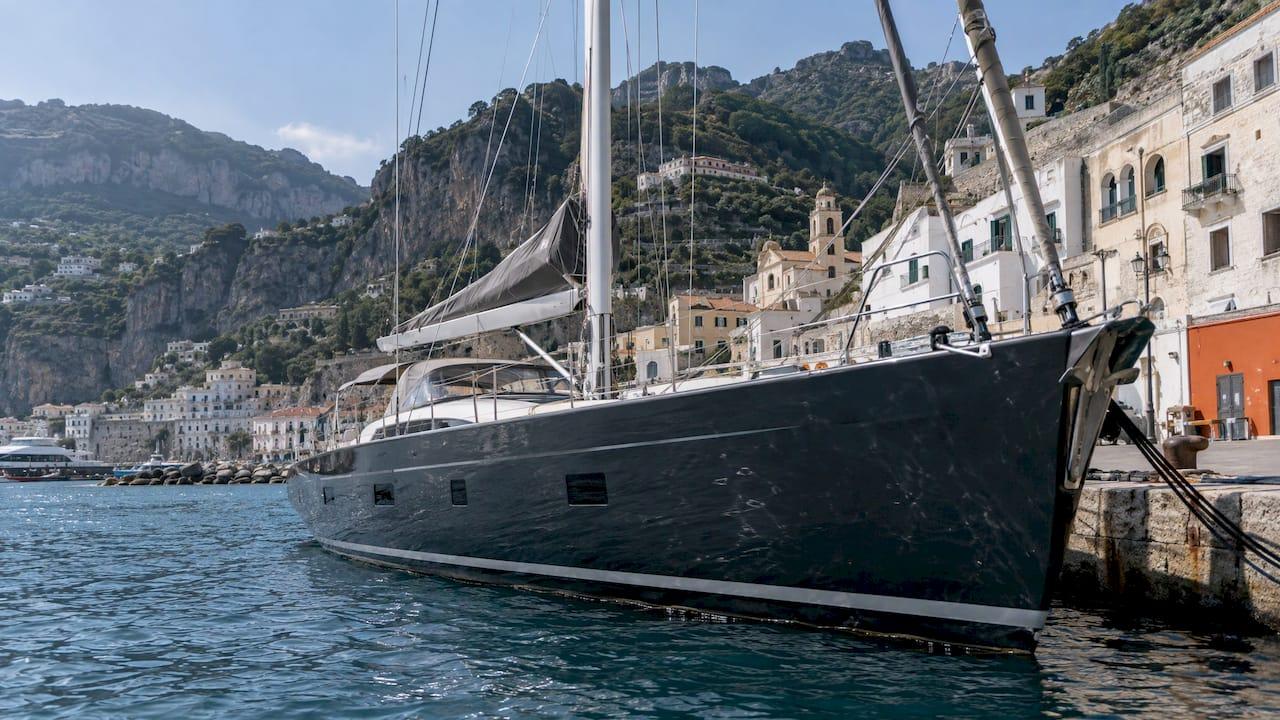
A week on a yacht in Italy typically runs from a few thousand euros for a bareboat sailing yacht in the shoulder season to well into six figures for a crewed motor yacht in August. The number on the listing is only the base rate. Fuel, food, port fees, tax and the crew's tip come on top, and on a crewed boat they can add a third or more to the bill. This guide shows the ranges by boat type and season, the extras that move the total, and a simple way to budget before you send a single inquiry.
TL;DR
- Published guides put a 40-foot bareboat sailing yacht at roughly €3,000 to €5,000 a week in May, June, September and October, and €5,000 to €8,000 in July and August.
- A mid-size crewed sailing yacht is commonly quoted at about €8,000 to €15,000 a week, and luxury motor yachts cost far more.
- On crewed charters, plan for an advance for running costs (APA) of about 20 to 30% of the charter price, plus VAT and a gratuity.
- Season, boat type and whether you hire a skipper or full crew move the price more than the region does.
- Short two- or three-day charters usually cost less in total but more per day than a full week.
Table of Contents
- What the base rate covers, and what it doesn't
- Weekly prices by type of boat
- How season changes the price
- Destination: where in Italy you sail
- The extras that move the total
- A worked budget for a week in Italy
- Short charters: two or three days
- Perspective
- Ways to keep the cost down
- Book your Italy charter with Sailorix
- FAQ
- Sources
What the base rate covers, and what it doesn't
The base rate is the fixed price for the boat. On a bareboat charter, where you or a licensed skipper you hire run the boat, it generally covers the vessel, basic insurance and standard equipment. On a crewed charter it also covers the professional crew's wages.
Everything that depends on how you use the boat is separate. That means fuel, food and drink, marina and mooring fees, and often cruising or tourist taxes. Two families on identical boats can end the week with very different totals, because one motored between islands every day and the other anchored for three nights.
The cleanest way to compare quotes is to ask each one the same four questions:
- Is the price all-inclusive or plus expenses?
- Is VAT included, and at what rate?
- What is the APA percentage, if any?
- What does the quote say about the skipper, hostess, cleaning, final fuel and security deposit?
Weekly prices by type of boat
The figures below are budgeting ranges drawn from published Italian charter guides. Treat them as a starting frame, not a quote. Real prices depend on the exact boat, its age, the departure port and the week you pick.
| Boat type | Typical charter style | Rough weekly base rate |
|---|---|---|
| Sailing yacht, about 40 ft | Bareboat, shoulder season | €3,000 to €5,000 |
| Sailing yacht, about 40 ft | Bareboat, July and August | €5,000 to €8,000 |
| Mid-size sailing yacht | Crewed | €8,000 to €15,000 |
| Catamaran | Bareboat or skippered | Often above a monohull of the same length |
| Motor yacht | Crewed | Well above sailing equivalents |
| Gulet | Crewed | Upper end of the range, with a crew included |
| Superyacht | Fully crewed | Six figures per week and up |
Three patterns are worth knowing.
Catamarans cost more per boat but can cost less per person. Four couples splitting a four-cabin catamaran often pay less each than they would for two monohulls, and everyone gets their own bathroom. Our catamaran charter cost guide walks through realistic weekly budgets.
Motor yachts burn fuel. A motor yacht's higher base price is only part of the story. Fuel is the largest variable on a motor yacht week, which is why the APA is set higher on fuel-heavy itineraries.
Crew changes the whole shape of the bill. Once a captain, chef and deckhand are on board, you are paying for a hospitality service as well as a boat. That is where the gratuity and the advance enter the picture.

How season changes the price
Italy's charter calendar is clear. Peak weeks are July and August, when demand is highest, the Amalfi Coast and the Aeolian Islands are busiest and the sea is warm. Shoulder months, May to June and September to October, sit lower on the price list, with calmer harbors and easier mooring.
The gap is real. The same 40-foot bareboat sailing yacht costs roughly a third to a half less in the shoulder season, based on the guide ranges above. For a deeper look at how seasonality works on boat rentals, this overview of seasonal boat rental pricing explains why rates climb when demand does, and the same logic applies to Italian yacht weeks. Our own shoulder season charter guide covers how to time a booking to save.
A practical tip: many Italian charters run Saturday to Saturday. A week that starts mid-week may be possible but is often priced differently, and a short charter can be harder to find in July and August.
Destination: where in Italy you sail
Italy has several distinct charter areas, and each has its own price personality.
- Amalfi Coast and the Bay of Naples. Glamorous, busy and expensive in summer. Berths and restaurants are priced accordingly.
- Sicily and the Aeolian Islands. Volcanic islands, long open stretches and good sailing. Distances between islands push fuel use up on motor yachts.
- Sardinia. Famous for its turquoise coves and a deep charter market. Our 7-day Sardinia sailing itinerary shows what a typical week looks like.
- Liguria and the Italian Riviera. Elegant ports and fashionable anchorages, with high marina fees in the best-known harbors.
- Tuscan Archipelago and the Adriatic coast. Quieter in many weeks, with a gentler price curve.
Where you depart matters too. Hubs with many boats compete on price. Smaller ports offer fewer choices but often a more relaxed week.
The extras that move the total
This is where most budgets go wrong. A €10,000 base rate is never a €10,000 week.
APA: the advance for running costs
On crewed charters, the standard contract adds an advance on top of the charter price. Under the MYBA standard charter terms, the APA is an advance payment for running costs, typically 20 to 30% of the charter price. The captain manages it on your behalf, gives a detailed account with receipts at the end of the charter and refunds any surplus. It pays for fuel, food and drink, port fees and similar costs.

Our own guides see charterers plan higher on fuel-heavy itineraries. Read how charterers control APA costs and the fuel budget guide before you sign.
VAT
Italian VAT can apply to charters that start in Italy, and the rate and the amount of the charter it applies to can depend on the boat and the route. Ask your broker or the operator to state the VAT treatment in writing, and check that it is included in the figure you are comparing. A quote that excludes VAT looks much cheaper than one that includes it.
Crew gratuity
Tipping the crew is customary on a crewed yacht and is paid at the end of the week, at your discretion. Many charterers budget somewhere between 5% and 15% of the base rate, with 10% a common figure. Hand it over in cash or as agreed with the captain, and divide it among the whole crew.
Bareboat extras
On a bareboat charter the costs are different but just as real:
- Security deposit, refundable or covered by waiver insurance.
- Final cleaning and sometimes a mandatory transit log or skipper fee.
- Fuel, usually charged on return if the tank is not full.
- Marina berths for nights you don't spend at anchor.
- Optional extras such as a paddleboard, dinghy engine, linen or bike hire.
Add a skipper if you do not hold a license that Italian authorities and the charter company accept. Ask the operator which qualification they require for the boat and the area.
A worked budget for a week in Italy
Here is an illustration, using round numbers for two sample weeks. These are not quotes. They show how the percentages stack up.
| Line item | Crewed sailing yacht, shoulder season | Bareboat 40 ft, peak season |
|---|---|---|
| Base rate (example) | €12,000 | €6,500 |
| APA at 25% (example) | €3,000 | n/a |
| Fuel, food, berths | Drawn from the APA | Roughly €900 to €1,500 (example) |
| Gratuity at 10% (example) | €1,200 | n/a |
| VAT | As stated in your quote | As stated in your quote |
| Illustrative subtotal before VAT | €16,200 | €7,400 to €8,000 |
The crewed week lands about a third above its base rate before VAT. The bareboat week lands 15 to 25% above. That gap between listing and total is the number you should plan for.
Divide by the number of guests for a per-person view. Eight people on a catamaran cost far less each than two people on a small sailing yacht. Our Mediterranean per-person budget guide is a good companion for this step.
Short charters: two or three days
A two- or three-day charter costs less in total than a week, which makes it a good entry point. It usually costs more per day, because operators have to cover the same turnaround work, cleaning and handover in fewer days. Many Italian charter companies set a minimum length in high season, so these trips are easiest to find in the shoulder months, and on some coasts as day or weekend rentals by the boat.
Budget the same way: base rate for the days, fuel, berths, food and a gratuity if crewed. If you only have a long weekend, a smaller boat with a skipper in one compact area, such as the Bay of Naples or the Tuscan islands, keeps fuel and travel time down.
Perspective
We see the same thing in almost every Italy budget: people compare the headline price of a boat and then get surprised by what sits around it. The fairest way to compare is the total, not the base rate.
That is why we built Sailorix around transparency. A membership costs €100 per year, and members book with a service fee of about 1%, where the typical fee elsewhere is 10 to 20%. On a €10,000 week, that difference is where the savings come from, and it comes before you have even negotiated anything else.
Our approach is to keep the quote clean: the boat, the add-ons you choose, such as a skipper, early check-in or equipment, and insurance options you can see, so the total you plan is the total you pay. We also stand behind a best price guarantee for members.
If you are choosing between two similar boats in different ports, price them the same way: base rate, APA, VAT, gratuity, service fee. The cheaper option on paper is not always the cheaper week.
SAILORIX
Ways to keep the cost down
- Travel in the shoulder season. May, June, September and October are the single biggest saver.
- Share the boat. A catamaran split between several couples often beats separate hotel rooms and restaurant meals ashore.
- Choose sailing over motoring. Wind costs nothing. A sailing week uses far less fuel than a motor yacht week.
- Anchor more, dock less. Marina nights in popular ports are a large share of running costs.
- Lower the fees. The service or commission fee is a percentage of a large number, so a lower rate saves real money. Our overview of yacht charter prices shows how this adds up.
- Understand the payment schedule. Deposits and balances are due on set dates, and the APA is paid at the start. Read our payment schedule guide so nothing surprises you.
If you are comparing with another Mediterranean country, see how Adriatic prices stack up in our Croatia yacht charter cost guide.
Book your Italy charter with Sailorix
If you are ready to price a real boat, Sailorix lets you search by destination and boat type, see availability in real time and add what you need, from a skipper to equipment and insurance. Membership is €100 per year and unlocks bookings with a service fee of about 1%.

Browse sailing yachts, catamarans, motor yachts, gulets and more, then compare the full cost of each before you commit. For a mid-size cruiser, the Dufour 430 Premium is one example of the kind of boat you can look at.
FAQ
How much does it cost to charter a yacht in Italy for a week?
Published guides put a 40-foot bareboat sailing yacht at about €3,000 to €5,000 in the shoulder season and €5,000 to €8,000 in July and August. Crewed mid-size sailing yachts are commonly quoted at €8,000 to €15,000, and luxury motor yachts cost much more. Add running costs, VAT and any gratuity on top.
What is APA on an Italian yacht charter?
APA is an advance paid on top of the charter price to cover running costs such as fuel, food and port fees. Under the MYBA contract it is typically 20 to 30% of the charter price. The captain accounts for it with receipts and refunds what is left.
Is a crewed or bareboat charter cheaper?
Bareboat charters carry a lower base rate because you handle the sailing, but you still pay for fuel, berths and deposits. Crewed charters cost more because the crew is included, and they add an APA and a gratuity. Choose by the kind of week you want, then compare totals.
How much should I tip the crew?
Tipping is discretionary. Many charterers budget around 5 to 15% of the base rate, with 10% a common figure, handed to the captain at the end of the week for the whole crew.
Can I charter for just two or three days?
Yes, mostly outside July and August, and often on smaller boats. The total is lower than a week but the daily rate is higher. Check each operator's minimum stay for your dates.
Sources
- MYBA Legal Advice (English translation): APA under the standard charter contract
- How Boat Rental Pricing Works: A 2026 Cost Guide