
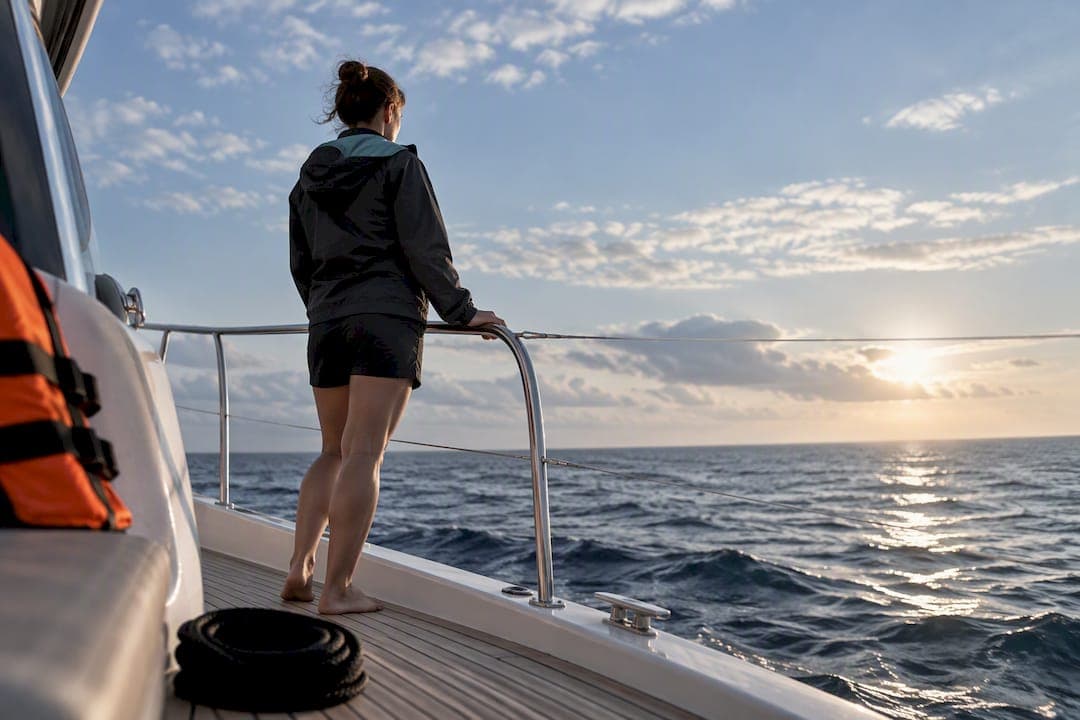
You can usually prevent or limit seasickness on a yacht charter by starting prevention 24 to 48 hours before boarding, staying on deck midship with your eyes on the horizon during the first hours, and using well-timed medication or non drug tactics before symptoms build. Sleep, hydration and a light diet matter as much as any pill. Treat the earliest warning signs early, and most people acclimate within a day or two.
TL;DR:
- Sitting midship and facing forward on deck significantly reduces motion sickness risk by minimizing the body's exposure to rolling and pitching.
- Preparations such as staying well-hydrated, avoiding greasy meals, and trialing medication on land can prevent symptoms from developing during the trip.
- Applying a scopolamine patch at least four hours before departure and taking antihistamines before symptoms start markedly lowers the chance of nausea.
- Using early remedies like the 3-3-3 reset and moving to open, cool air immediately are more effective than waiting once symptoms appear.
- Choosing vessels with stabilizers, deck access, and routes in calmer sea conditions can greatly reduce seasickness risk.
Table of Contents
- Your pre trip and on board checklist
- Why seasickness happens and how long it usually lasts
- What to do before you board
- Where to sit and what to do once you're on board
- Medications and when to take them
- If you start feeling sick anyway
- Recovery and when it's time to get medical help
- What to check before you book your charter
- A realistic take on managing seasickness at sea
- Finding your next charter with less seasickness risk
- Sources
- FAQ
Your pre trip and on board checklist
A short list gives you something to actually follow when you are packing or already on the water, instead of trying to remember advice after the fact.
- Sleep well and stay hydrated for 24 to 48 hours before departure, and skip heavy alcohol and greasy meals the night before.
- Trial any medication on land first, and follow label timing: most over the counter pills work best taken about an hour before sailing, while a scopolamine patch needs to go on at least 4 hours ahead.
- On day one, sit midship on deck, keep the horizon in view, eat small bland snacks, and take frequent small sips of water.
- If nausea starts, use the 3-3-3 reset (3 minutes on the horizon, 3 slow breaths, 3 small sips or bites) and tell the captain right away.
Pro Tip: Keep your seasickness kit (medication, ginger chews, a wristband, a spare shirt) in one dry bag by the cockpit so you never have to go below to find it.
Why seasickness happens and how long it usually lasts
Seasickness comes from a mismatch between what your inner ear feels and what your eyes see. When a boat rolls but your eyes are fixed on a stationary cabin wall or a phone screen, your brain gets conflicting signals, and that conflict is what produces nausea, according to NOAA's explanation of seasickness. Standing on deck with an open horizon line gives your eyes a moving reference that matches what your inner ear is sensing, which is why that single change helps more than almost anything else.
Vessel size and stabilizers reduce the intensity of that mismatch but do not remove it. Even on large, stabilized ships, up to 25% of cruise travelers report seasickness, which shows that hull size and stabilization lower risk without guaranteeing comfort. Route and sea state matter just as much as the boat itself, since a calm bay and an open crossing in a swell produce very different experiences on the same yacht.

Symptoms most commonly show up in the first 12 to 24 hours of a trip, and most people find their body adjusts within one to four days unless conditions stay rough the whole time.
What to do before you board
The 24 to 48 hours before departure matter more than most people expect, and a little preparation on land can prevent a lost first day at sea.
- Sleep normally and stay hydrated in the two days before boarding, since fatigue and dehydration both make motion sickness worse.
- Avoid heavy, greasy meals and heavy alcohol the night before and the morning of departure.
- If you plan to use medication, trial it on land first so you know how it affects you before you are also managing boat motion, since drowsiness or impaired coordination can catch you off guard at sea.
- Pack non drug aids such as ginger chews, electrolyte mixes and acupressure wristbands, along with a change of clothes and a few sealed sick bags.
- Tell your charter operator or captain in advance if anyone in your group is prone to seasickness, so routing and timing can be adjusted before you leave the dock.
Pro Tip: Book a shorter first leg or a calmer bay crossing for day one if you can. Giving your body a gentle introduction to motion works better than starting with the longest passage of the trip.
Choosing the right vessel type also plays a part here, and features like deck layout and cabin placement are worth checking when you book, something covered in more detail in guides on yacht rental standards and cabin configurations.
Where to sit and what to do once you're on board
Once you are actually moving, small positioning choices make a real difference in how much motion conflict your body has to process.
- Sit midship, outside, facing forward, since that part of the boat pitches and rolls the least compared to the bow or stern.
- Keep your head steady against a seat back or rail rather than letting it bob freely with every wave.
- Avoid reading, using a screen, or going below deck in the first hours, since all three force your eyes to focus on something that is not moving with the boat.
- Breathe slowly and steadily, and get into open cool air rather than a sheltered, warm corner.
- Ask the captain about calmer route options, adjusted timing, or shorter legs if conditions are rough and someone aboard is struggling.
- Clip on with a harness or hold a rail when moving around on deck, and keep water and a waste bag within reach at all times.
Screens are a bigger trap than most first time charterers realize. Checking messages or streaming something while the boat rolls is one of the fastest ways to trigger symptoms, a point worth remembering even when Wi-Fi is available on board.
Medications and when to take them
Two drug categories do most of the work for motion sickness, and timing matters as much as the choice of drug.
- Scopolamine patches: apply the patch at least 4 hours before you need it, since it needs time to absorb through the skin. One patch lasts up to 72 hours, and the FDA label warns of dry mouth, blurred vision and drowsiness, plus contraindications such as glaucoma.
- Dimenhydrinate and meclizine: both are H1 antihistamines that the CDC lists as effective for motion sickness. Dimenhydrinate tends to be more sedating, while meclizine is often less so, and both work best taken before symptoms start rather than after.
- Non-sedating allergy antihistamines such as cetirizine or loratadine are not effective for motion sickness, since they do not cross into the central nervous system the way older antihistamines do.
- Trial any new medication on land first and pair it with steady hydration, since dehydration compounds nausea and some motion sickness drugs are themselves drying.
Up to 25% of cruise travelers report seasickness even with access to modern stabilization and onboard pharmacies, a reminder that medication reduces risk rather than removing it entirely. If vomiting has already started, oral medication may not absorb well, which is why timing your first dose before symptoms appear matters so much.
If you start feeling sick anyway
Acting in the first minutes after symptoms appear is far more effective than waiting to see if they pass on their own.
- Use the 3-3-3 reset: spend 3 minutes with your eyes fixed on the horizon, take 3 slow deep breaths, then take 3 small sips of water or bites of a plain snack.
- Move to open, cool air immediately, remove a layer of clothing, and apply a damp cool compress to your neck or forehead if one is available.
- Stay away from galley smells and enclosed spaces, since both intensify nausea quickly.
- If vomiting occurs, take small sips of an electrolyte drink afterward and keep track of how much fluid you are able to keep down.
- Tell the captain what is happening. A small change in heading or speed can sometimes ease symptoms, and the crew needs to know if someone aboard is struggling.
Skippers with years on the water consistently point to the same lesson: act at the first sign of trouble, not after it has taken hold, according to Yachting World's practical guide. Waiting until nausea is severe makes every remedy, drug or otherwise, less effective.
Recovery and when it's time to get medical help
Most people feel back to normal within one to four days, and a lingering sensation that the ground is still moving after you step off the boat is common and usually fades on its own.
The real danger during recovery is dehydration, not the nausea itself. Seek medical attention if you cannot keep fluids down for more than 24 hours, or if you become confused, unusually weak or disoriented. Severe vomiting with blood, fainting, any neurological symptoms, or signs of heat related illness need immediate medical attention rather than home remedies. If you do see a clinician, note what medication you took and when, since that detail speeds up their assessment considerably.
What to check before you book your charter
The vessel and route you choose affect your odds of seasickness just as much as anything you do once you are aboard, so it is worth asking a few pointed questions before you commit to a booking.
- Ask whether the boat is a catamaran or a monohull, whether it has stabilizers, and whether there is comfortable outdoor seating midship.
- Confirm the captain is willing to adjust routes or timing for passengers prone to motion sickness, and ask what first aid or seasickness supplies are kept on board.
- Prefer vessels with easy access to open deck space and some shade, and crew who have handled seasick passengers before.
- Bring any prescriptions with you, trial medications on land beforehand, and ask what the charter's emergency and medical procedures are before you leave the dock.
Sea conditions vary a lot by region, and some areas carry extra considerations worth understanding before you book, covered in more detail in a look at regional sea conditions in the Caribbean. Deck layout and shaded seating are also worth checking against a broader list of amenities worth prioritizing when comparing boats.
A realistic take on managing seasickness at sea
Seasickness is common, manageable, and almost never something that has to define a charter. The charterers who have the smoothest trips are the ones who plan for it before they board: they trial a medication on land, pack a few simple non drug aids, and tell the crew early if someone in their group is prone to motion sickness. That single conversation with a captain, before departure rather than after symptoms appear, is often what separates a rough afternoon from a ruined day. Prevention is rarely complicated. It is mostly a matter of doing the small things on time.
— SAILORIX
Finding your next charter with less seasickness risk
Booking the right boat matters as much as anything you pack. When you search SAILORIX for a charter, you can filter by hull type and vessel size, compare catamarans, motor yachts and other categories side by side, and message the operator directly about stabilizers, deck layout and route flexibility before you commit. SAILORIX charges around 1% in service fees rather than the 10 to 20% many platforms add on, and members get that rate plus best price guarantee access for €100 a year through the SAILORIX Membership. If you want more hands on planning, from route selection to concierge level support, the services page outlines options for charterers who want extra guidance before they book. Start comparing available yachts and ask your questions directly on Sailorix.

This article is general information, not a substitute for advice from a qualified doctor. Consult a qualified healthcare professional about your own circumstances before acting on anything here.
Sources
- Seasickness facts | NOAA
- TRANSDERM SCŌP label | FDA
- Cruise Ship Travel | CDC Yellow Book™
- Seasickness: How to prevent it and how to cope with it | Yachting World
FAQ
What percent of people get seasick on a cruise?
Up to 25% of cruise travelers report seasickness even on modern, stabilized ships. Smaller yacht charters can carry a different risk profile depending on the vessel and route, since size and stabilization both affect motion exposure.
What pills can I take to prevent motion sickness on a boat?
The CDC lists antimuscarinics like scopolamine and H1 antihistamines like dimenhydrinate and meclizine as effective options. Non-sedating allergy antihistamines such as cetirizine do not work for motion sickness, and any medication should be trialed on land first because of side effects like drowsiness.
What is the secret to not getting seasick?
There is no single trick, but staying on deck and keeping your eyes on the horizon addresses the visual and inner ear mismatch that causes symptoms in the first place. Combining that with good sleep, hydration, a light diet before boarding, and early medication timing covers most of what actually helps.
Where should I sit on a boat to avoid seasickness?
Sit midship, outside, and facing forward, since that part of the vessel experiences the least pitching and rolling. Keep your head steady against a seat or rail and avoid the bow or stern during rougher moments, where motion is more exaggerated.