
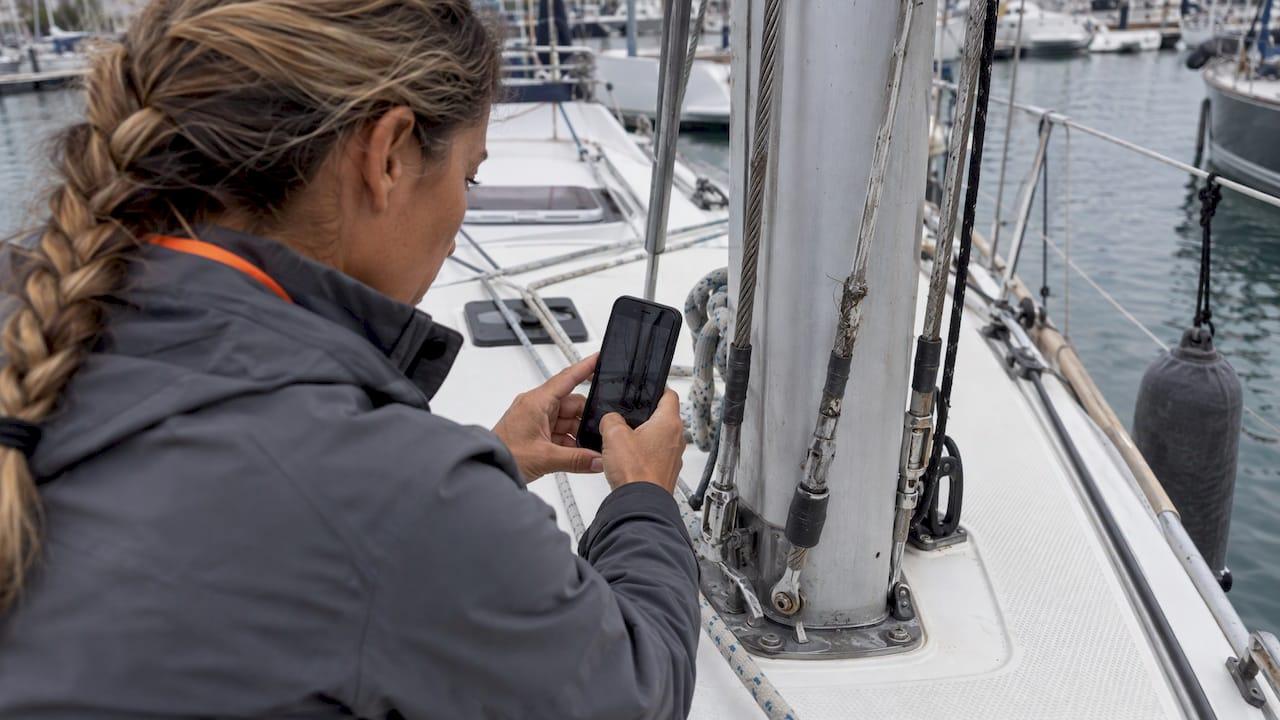
Report any damage to the charter company as soon as you find it, then photograph it, secure the boat and write down what happened. If anyone is hurt, or the damage reaches $2,000, a federal accident report may also be due. Your documents decide who pays, so this guide covers the order of steps, the evidence to collect and the deadlines that apply.
TL;DR
- Tell the charter company right away, by phone first and then in writing. Insurers and charter contracts commonly treat late notice as a problem.
- Photograph everything with timestamps, at pickup and again at return. Before-and-after photos are the strongest proof of what changed.
- Under U.S. federal rules, injury needing more than first aid, a death or a disappearance means a written report within 48 hours. Property damage of $2,000 or more, or total loss of a vessel, means a report within 10 days.
- Do not make repairs beyond what keeps the boat safe. Keep receipts, quotes and every message.
- Read your deposit and damage waiver terms before you sail, so you know what you could owe.
Table of Contents
- First hour: what to do when you find damage
- Who needs to know, and how fast
- When a damage event becomes a federal accident report
- What a good damage report contains
- Evidence that protects you
- Deposits, waivers and who pays
- Perspective: why documentation is cheaper than arguing
- Before you book: reduce the odds of a dispute
- Book with the paperwork in mind
- FAQ
- Sources
First hour: what to do when you find damage
The first hour sets the tone for everything after it. Work through these steps in order.
- Check people first. If anyone is hurt, get medical help before you think about the boat. Travelers advises checking for injuries and seeking care promptly.
- Make the boat safe. Stop taking on water, anchor or tie up, and shut off anything that could worsen the damage. Only do what prevents further harm.
- Call the charter company. Use the base or emergency number in your charter documents. Give your name, the boat's name, your location and a short description. Ask whom to contact for repairs and whether the base wants you to return early.
- Photograph and film the damage before anything is moved or cleaned up.
- Write down the facts while they are fresh: time, place, wind, sea state, who was at the helm, who saw it.
- Follow up in writing. Send an email or message that repeats what you said by phone. It creates a timestamped record.
On a bareboat charter you are the skipper, so the legal duties described below fall on you. On a crewed charter, the captain handles the official reports, but you should still keep your own notes and photos.
Who needs to know, and how fast
There are usually three audiences: the charter company, any insurer or damage waiver provider, and the authorities.
The charter company
Your charter agreement is the first document to open. Many agreements require immediate notice of any collision, grounding, or damage to the hull, propeller or rig, and some charge extra if you hide a problem and it is found at check-in. Treat the contract's wording as the rule. If you did not read it closely, the explainer on avoiding hidden fees in a U.S. charter agreement shows which clauses to check.
Your insurer or waiver provider
If you carry your own boat or charter coverage, or a policy through a card or travel plan, read its notice clause. As an example of how strict these can be, the Travelers boat policy form requires immediate notice of any loss or damage that may lead to a claim. It states that failing to give notice as required voids the claim. Your own policy may differ, so check it. The same form says that for theft or vandalism the insured must also notify the Coast Guard or the law enforcement agency with jurisdiction.
The same sample policy sets a one-year limit for presenting a claim and expects you to take reasonable steps, including temporary repairs, to protect the property. It also lets the insurer inspect the damaged boat before it is repaired or disposed of. That is a good reason to keep damaged parts and avoid permanent repairs before anyone has seen them.
The authorities
Not every scrape needs an official report. The rules depend on what happened, as the next section explains. If a crime is involved, such as theft or vandalism, call local law enforcement and get a report number for your file.
When a damage event becomes a federal accident report
U.S. boating accident reporting is set out in 33 CFR Part 173, Subpart C. In summary, the operator must file a written report:
| Situation | Deadline |
|---|---|
| A person dies within 24 hours, is injured and needs medical treatment beyond first aid, or disappears | Within 48 hours |
| Other reportable accidents, including property damage of $2,000 or more or complete loss of a vessel | Within 10 days |
The same regulation says where to file. It is the reporting authority where the vessel number was issued, where the accident happened, or, for an unnumbered vessel, where it is principally used. The Coast Guard's CG-3865 accident report form repeats the split of 48 hours for injury, disappearance or death and 10 days for damage only.
Two cautions. First, states can be stricter than the federal baseline: the Illinois DNR's boater's guide notes that state reporting rules may be more demanding, and requires immediate notice to the nearest authority for a death or disappearance. Second, damage figures are estimates at the moment you must decide. If you are near $2,000, ask the charter base for a repair estimate and consider filing. For anything involving injury, contact the state boating agency or the Coast Guard promptly and ask which form applies where you are.
Who files on a charter? The regulation puts the duty on the operator. That is usually you on a bareboat trip. Tell the charter company you are filing, and send them a copy.
What a good damage report contains
The federal report has a defined content list. Under 33 CFR 173.57, the report must be in writing, dated when completed and signed. It must include the following, where available:
- vessel and owner details, and the hull identification number if there is one
- location, time and date
- weather and water conditions
- operator and passenger details
- property and vessel damage, with repair cost estimates
- equipment failures
- the type of operation and accident
- your opinion of the cause, including whether alcohol or drugs played a part
- witness contact details
Even when no federal report is due, this list makes a strong template for your own damage report to the charter company. Add the charter booking reference and the dates of your trip.
A simple structure to follow
- Header: your name, booking reference, boat name, charter dates.
- What happened: a plain, factual sequence. Say what you saw and did, not who is to blame.
- Conditions: wind, sea state, visibility, time of day, location (coordinates if you have them).
- Damage: the parts affected, with photo numbers.
- Actions taken: whom you called and when, any temporary measures.
- Witnesses: names and contact details.
- Signature and date.
Keep it free of speculation. "The boat touched bottom at 14:20 while motoring in about 6 feet of water" is useful. "The chart was wrong" is an opinion, and it may come back on you.
Evidence that protects you
Pickup photos are half the case
The most useful report is the one that proves what the boat looked like before you took it. Boat rental guidance from EquipDash recommends at least eight photos covering all four sides of the hull. It also suggests close-ups of existing damage with something for scale, upholstery, electronics and gauges powered on, and the prop and lower unit, shot with a camera app that keeps timestamps and metadata. Put the registration number in at least one photo per set.

On a charter, adapt that list: add the dinghy and outboard, sails and covers if present, the anchor and windlass, fenders, and the swim platform. Do a walk-through with the base staff and ask them to note every existing mark on the check-in form. Our guide to a U.S. base orientation briefing lists the checks that prevent disputes later.
After the damage
Photograph from several distances: a wide shot that shows where the damage sits on the boat, a medium shot, and a close-up with a scale reference. Take video, too. Shoot the surroundings if relevant: the rock, the dock piling, the other vessel and its name or number.
Keep the paper trail
Clayton Marine Surveys suggests avoiding repairs beyond those needed to safeguard the yacht, saving receipts for emergency repairs or towing, and keeping surveys, quotes, invoices and communications together. They also stress getting witness contact details, which help a marine surveyor produce an accurate loss report. Their point that prompt reporting keeps you compliant with both the law and the policy is worth remembering.
If you file an insurance claim, Charter Lakes lists the details to have ready: policy number, a description of what happened, the date and time, the location, photos or other supporting documents and contact information for everyone involved. It adds items such as a master's protest form, official police or Coast Guard reports, photos taken before repairs, receipts for recently replaced items, itemized repair estimates, and the damaged parts kept for the adjuster.
Deposits, waivers and who pays
Most U.S. and international charters take a security deposit, and many offer a damage waiver that limits what you can owe. Terms vary, so what follows is how the pieces usually fit. Always confirm in your own contract.
- Security deposit: a hold or payment against damage, loss or missing equipment, returned if the boat comes back in the agreed condition.
- Damage waiver: an optional product that can reduce your damage liability on stated terms. It is not the same as insurance, and it comes with exclusions.
- Your liability cap: the maximum you could owe for damage, which is often the same as the deposit amount.
Waivers and policies usually exclude some categories. The Travelers yacht policy form is one example. It excludes intentional damage, dishonest or illegal acts, concealment or fraud, wear and tear, neglect, gradual deterioration and cosmetic harm such as scratching, weathering, fading or denting. Charter waivers have their own lists, so read yours for items like ground tackle, sails, dinghies, electronics and lost keys. A waiver can also be void if you misreport or delay.
For a plain-language walk-through of holds, releases and disputes, see our explainer on boat rental deposits. For coverage choices, read what charterers actually need to buy.
What the charge notice should show
If a company keeps part of your deposit, it should be able to explain why. Rental-industry guidance from EquipDash describes a written explanation within 48 hours listing your name and booking reference, the vessel and rental dates, a description of the damage, side-by-side before and after photos, a repair estimate, the amount and how it was calculated, the repair timeline and a contact for disputes. That is one company's recommended practice rather than a legal rule, but it is a fair yardstick for the paperwork you should expect. If your notice is missing these parts, ask for them in writing.
The same guide notes that card processors expect a documented package, including the signed agreement, condition reports with timestamped photos and a communication log, and that most give 7 to 14 days to respond to a chargeback. This is another reason to keep your own records: they are your side of the file.
Perspective: why documentation is cheaper than arguing
We see the same pattern in deposit disputes: the renters who have the least trouble are not the ones who never touch a dock piling. They are the ones who photographed the boat at pickup, called the base the moment something happened and wrote it down the same day.
That is why we built Sailorix around transparency. Members get real-time availability, add-ons such as insurance options and a skipper, and a pricing model with a service fee of around 1% instead of the 10 to 20% we see elsewhere. A low fee leaves more of your budget for the things that protect a trip, like a damage waiver and a proper briefing at check-in.
Our advice: choose the add-ons before you sail, not after something breaks. Know your liability limit, keep your pickup photos and report fast.
SAILORIX
Before you book: reduce the odds of a dispute
Most damage arguments are decided before the trip. Use this checklist when you choose a boat.
- Ask about the boat's condition. Age, refit history and engine hours affect how likely wear is to be called damage. Our guide to checking charter boat age, refit and engine hours shows what to ask.
- Read the standards. What every renter must know about yacht rental standards explains what to expect from a professional operator.
- Confirm your liability limit, how long the company holds the deposit and how disputes are handled.
- Add the right cover. If you want a skipper for an unfamiliar area, add one at booking.
- Avoid avoidable mistakes. The common errors are in our list of boat booking mistakes to avoid.
- Bring tools. A waterproof phone case, a torch and a tape measure make documentation easier; see nautical tools every renter needs.
Book with the paperwork in mind
A membership with Sailorix costs €100 per year. Members book boats and yachts worldwide with a service fee of around 1%, which is our own figure for how we compare with the typical 10 to 20% charged elsewhere. You can search by destination and boat type, see real-time availability and add extras such as a skipper, early check-in, equipment or insurance options when you book, so the terms are in front of you before you sign.

See how it works on the Sailorix membership page, or start your search on sailorix.com.
FAQ
How soon must I report damage on a charter?
Tell the charter company immediately, before you move on, and confirm in writing. Your contract and any insurance may set their own notice terms, and one sample Travelers policy voids claims for improper notice. Federal accident reports have their own deadlines: 48 hours for injury or death, 10 days for property damage of $2,000 or more.
Do I have to file a Coast Guard report for minor damage?
Under federal rules, a written report is required for property damage of $2,000 or more, complete loss of a vessel, or an accident with injury beyond first aid, death or disappearance. Smaller scrapes do not trigger the federal report, but your charter contract may still require you to report them. State rules can be stricter.
What should I photograph if the boat is damaged?
Capture wide, medium and close-up shots of the damage, with a scale reference, plus the surroundings such as the dock, rock or other vessel. Include the boat's name or registration number in a frame. Compare these with your pickup photos so the change is obvious.
Can I be charged more than my deposit?
It depends on your contract. Many charters cap your liability at the deposit amount, and a damage waiver can lower it further, but exclusions and unreported or intentional damage can change that. Read the liability clause before you sign and ask the company to explain it in writing.
Should I repair damage myself to avoid a charge?
No. Only take steps that keep the boat safe and prevent more damage, and keep receipts. Permanent repairs before the company or an insurer has seen the damage can complicate a claim.
Sources
- What Should I Do if My Boat is Damaged? (Travelers)
- Your Travelers Boat Policy
- Your Travelers Yacht Policy
- 33 CFR Part 173, Subpart C: Casualty and Accident Reporting
- 33 CFR 173.57: Contents of report
- CG-3865 Boating Accident Report Form
- A Boater's Guide to the Federal Requirements (Illinois DNR)
- Claims Information (Charter Lakes)
- 8 Essential Steps in a Yacht or Boating Accident (Clayton Marine Surveys)
- Boat Damage Deposits & Customer Communications (EquipDash)