
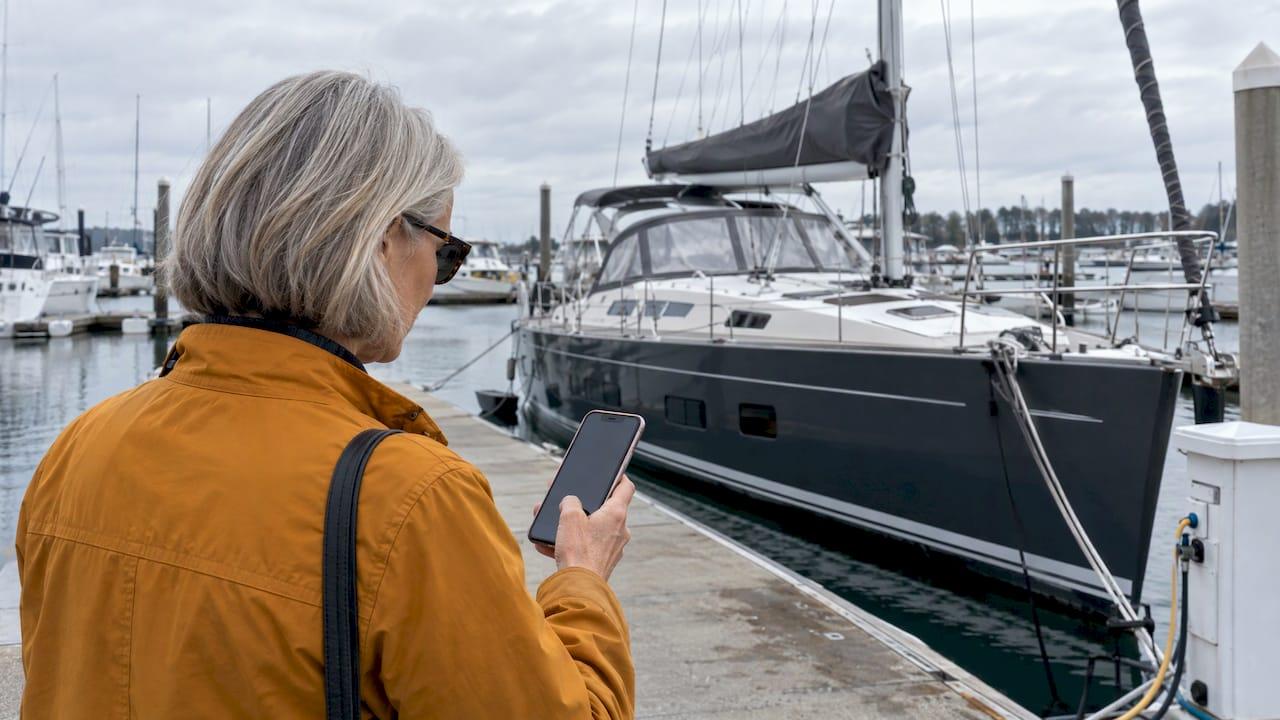
A safe yacht charter platform shows you the full price up front, lets you see who is running the boat, and lets you pay by traceable methods under written terms. Before any deposit, confirm four things: the price is realistic, the captain holds a Coast Guard credential, the vessel has the right inspection paperwork for its passenger count, and the cancellation terms are in writing. At Sailorix, members pay a €100 annual membership and a service fee of about 1% per booking, so the cost of the booking stays easy to read next to the boat's rate.
TL;DR
- A price far below comparable boats is the first warning sign, according to the U.S. Coast Guard. Ask for the captain's credential before you pay.
- Charters with more than six passengers need a Coast Guard Certificate of Inspection. Smaller boats are covered by a captain's "six-pack" license.
- Pay by card or invoice with a receipt, and get cancellation, weather and refund terms in writing.
- A platform's fee structure matters: a flat, low service fee leaves less room for surprise add-ons. Sailorix members pay about 1%, against the 10 to 20% that is common elsewhere.
- Check life jackets, lifebuoys and the safety briefing at the dock, before the lines come off.
Table of Contents
- What "safe" means when you book a charter online
- Step 1: Test the price before you test anything else
- Step 2: Confirm the captain's credentials
- Step 3: Check inspection and passenger limits
- Step 4: Look at the safety equipment
- Step 5: Read the contract and the payment terms
- Step 6: Sort out insurance
- What to do on the day, and if something goes wrong
- How Sailorix fits into a safe booking
- Our view: price transparency is a safety feature
- FAQ
- Sources
What "safe" means when you book a charter online
When you search for a safe yacht charter platform, you are really asking two questions. Is the money safe, and is the boat safe? A platform can help with the first through transparent pricing, a clear checkout and written terms. The second depends on the vessel and the person at the helm, and U.S. rules spell out what both must have.
The risk is real. In August 2025 the Coast Guard terminated two illegal charters, one of which also violated federal orders. The violations cited included no drug and alcohol program, no Certificate of Inspection for a small passenger vessel, and no credentialed mariner on board. None of these is visible in a photo gallery, which is why you ask for documents instead of trusting a listing.
A good rule: treat every charter as a purchase of two things, a boat and a professional service. The boat needs equipment and paperwork. The service needs a licensed operator and a contract. The sections below take each in turn.
Step 1: Test the price before you test anything else
The Coast Guard's guidance on illegal charters lists a price significantly below competitors as a sign to be careful. Illegal operators save money by skipping licensed crew, inspections and commercial insurance, then pass part of the saving to you as a bargain. The bargain disappears if the trip is shut down at the dock.
A practical way to compare:
- Pick two or three similar boats: same type, length, cabin count and region.
- Compare the total, not the headline rate. Include the service fee, the skipper or crew, fuel, cleaning, taxes and any mandatory add-ons.
- Treat the outlier, in either direction, as a question to ask before you book.
Fees are where "cheap" listings often change shape. Many platforms add a service fee of 10 to 20% at checkout. Sailorix works differently: a €100 annual membership unlocks bookings with a service fee of around 1%, and the platform backs this with a best price guarantee. That makes the comparison simple, because the number you see is close to the number the owner charges. For how fees show up in agreements, see our guide on avoiding 10 to 20% hidden fees in a U.S. charter agreement.
Step 2: Confirm the captain's credentials
If you are paying for a trip on a passenger-for-hire vessel, the Coast Guard says to verify that the captain has a safety plan and a Merchant Mariner Credential. That credential, often shortened to MMC, is the document the Coast Guard issues to licensed mariners. NOAA's law enforcement office gives the same advice: ask to see the operator's credential, and if the captain cannot produce one, do not board.
Two license types come up most often on smaller charters:
- OUPV (Operator of Uninspected Passenger Vessels): the "six-pack" license. It allows a captain to carry up to six paying passengers on an uninspected vessel under 100 gross tons.
- Master: the credential used for inspected vessels and larger commercial operations with more passengers.
The federal rule behind this is 46 CFR 15.905, which sets out which credentials may operate an uninspected passenger vessel under 100 gross tons. You do not need to memorize it. You need to ask for the captain's full name and credential type in writing before you pay, then check that the name matches the person who greets you.
Crewed or bareboat: who is the operator?
The Coast Guard also notes that, in a legitimate arrangement, the contract lets the passenger choose the captain and crew, with the owner not acting as the operator. This is the difference between a true bareboat charter, where you take responsibility for the boat, and a crewed trip that has been dressed up as one. If you do not plan to skipper, say so at the start and book a boat with a professional captain. Sailorix lets you add a skipper to a booking as a custom add-on, so the crew question is settled at checkout, not at the dock.

Step 3: Check inspection and passenger limits
Passenger count decides the paperwork. For charter boats carrying more than six passengers, the Coast Guard says to ask to see a Certificate of Inspection, the document showing the vessel has passed a Coast Guard inspection. NOAA adds that on such a vessel the certificate should be visibly displayed onboard.
This gives you a simple test for any group booking:
| Your group | What to ask for |
|---|---|
| Six paying passengers or fewer | The captain's credential, in writing, before payment |
| Seven or more passengers | The credential plus the vessel's Certificate of Inspection |
| Any size | The written passenger limit for that vessel |
Be wary of any operator who offers to squeeze in extra guests for cash. The Coast Guard describes an illegal charter as one with no credentialed captain, more paying passengers than allowed, or missing inspection paperwork. The same warning notes that operators can face significant civil penalties and that willful violations can carry felony charges. Your risk is more practical: an unlicensed trip can be stopped, and your insurance may not respond.
Step 4: Look at the safety equipment

You do not need to be a marine surveyor, but you should know the basics. Under 46 CFR 25.25-5, each vessel carrying passengers for hire must have at least one approved life jacket (PFD) of a suitable size for each person on board. A vessel 26 feet or longer must also have at least one approved lifebuoy.
At the dock, before departure:
- Count the life jackets and check that sizes fit the people on your trip, including children.
- Find the lifebuoy and ask where it is stowed.
- Ask for a pre-departure safety briefing: exits, fire extinguishers, man-overboard procedure, radio use.
- Note the captain's emergency plan and who to call if the plan changes.
If you are renting a small boat on a lake instead of a yacht at sea, local rules and rental practices vary by state. A regional example is this overview of boat rentals on Smith Lake, which shows how a local rental and its safety routine fit into a trip.
Step 5: Read the contract and the payment terms
Money problems on charters are usually quiet ones. YACHT magazine reports that it is problematic when advance payments from charter customers are used to fund an agency's ongoing business, and that failing to pass payments on in time is a misappropriation with serious consequences for customers. In other words, a cheap price from an unknown seller can put your deposit at risk.
What a trustworthy booking looks like:
- Payment by card or invoice, with a receipt. Cash-only payment or a transfer to a personal app account is a reason to stop.
- A written cancellation and weather policy. A verbal promise is not a refund policy. Read our guides to what to expect from a yacht charter cancellation policy and to confirming weather cancellation terms before you pay.
- A clear payment schedule. Know when the deposit is due, when the balance is due, and what the extra fund for fuel and provisions (the APA, or advance provisioning allowance) covers. Our explainer on deposits, APA and timing walks through it.
- Plain-language terms. If a phrase in the agreement is unfamiliar, look it up first. We list the key yacht charter terms in one place.
A quick scorecard you can use on any listing:
| Green flag | Red flag |
|---|---|
| Names the captain's credential without being asked | Dodges questions about credentials |
| Sends a certificate of insurance on request | Cannot produce insurance papers |
| States a passenger limit that matches the vessel | Offers extra seats for cash |
| Written cancellation and weather policy | Verbal assurances only |
| Card or invoice payment with receipt | Cash or personal-account transfers |
Step 6: Sort out insurance
Ask two questions: what insurance covers the vessel and its operation, and what covers you and your trip? The operator should be able to send a certificate of insurance on request. Ask for the commercial liability limit, and keep the document with your booking.
Your own trip protection is separate. Cancellation, medical care away from home and gear are not part of the vessel's policy. Our guides explain what charterers actually need to buy and when to buy travel insurance for a yacht charter. Sailorix also offers insurance options as part of the booking, so you can add cover while you choose the boat.
What to do on the day, and if something goes wrong
A short routine before you leave the dock keeps a good booking good:
- Match the captain's name and credential to what you were sent.
- Confirm the passenger count and that everyone on the manifest is aboard.
- Attend the safety briefing and locate life jackets and the lifebuoy.
- Confirm the weather plan and who decides to turn back.
- Keep your receipts, messages and the contract on your phone.
If the captain cannot show a credential, or the vessel has more passengers than its paperwork allows, do not board. The Coast Guard's guidance is unambiguous: if the operator cannot produce appropriate credentials, passengers should not get on the boat. Contact your card issuer about a dispute, and report an illegal charter to the Coast Guard through its local sector. For an emergency at sea, call the Coast Guard on VHF channel 16 or dial 911 ashore. Your rights as a guest are covered in our guide to charter guest rights.
How Sailorix fits into a safe booking
Sailorix is a membership-based booking platform for yachts and boats worldwide. The membership is €100 per year, and members book with a service fee of around 1%, compared with the 10 to 20% that is typical elsewhere. You search real-time availability by destination and boat type, from sailing yachts, catamarans and motor yachts to gulets and rigid inflatable boats, and you can add a skipper, early check-in, equipment or insurance options to the same booking.
The checkout is built around a clear price. Our walk-through of the secure yacht checkout process shows how the 1% fee appears, and our page on yacht rental standards sets out what every renter should expect.
Ready to compare boats with the fee visible? Become a SAILORIX member and search availability for your destination. You can also look at specific boats, such as the Dufour 430 Premium or the Viga Luxury 900.

Our view: price transparency is a safety feature
We think of safety on a charter as the sum of small, checkable facts. Is the captain licensed? Is the boat inspected for the number of guests? Is the price what the owner actually charges, and are the terms written down?
The last question is the one most platforms make hard to answer. When a service fee of 10 to 20% is added on top of the owner's rate, the real cost of a trip is difficult to read, and a low headline price becomes a poor guide to anything. That is why we built Sailorix around a €100 annual membership and a service fee of around 1%. It keeps the booking simple enough that you can put your attention where it belongs: on the captain, the vessel and the terms.
Our best price guarantee, real-time availability and add-ons for a skipper, equipment and insurance mean you can build the whole trip in one place and compare it honestly with any other quote. Ask every question in this guide, whichever boat you choose. A well-prepared charterer is a safe one.
SAILORIX
FAQ
How do I know if a yacht charter platform is legitimate?
Look for a realistic price, a clear fee structure, written terms and traceable payment by card or invoice. The Coast Guard advises asking for the captain's credential and, for larger groups, the vessel's Certificate of Inspection. If the operator cannot show them, do not board.
Do I need a licensed captain on a charter?
If the trip is a crewed charter, the captain must hold a Coast Guard credential. On a true bareboat charter, you take over operation of the boat, so you should be confident in your own experience. If you want a professional at the helm, add a skipper when you book.
What is a Certificate of Inspection, and when do I need to see one?
It is the Coast Guard document showing that a passenger vessel has passed inspection. The Coast Guard says to ask to see one when you book a charter boat with more than six passengers. NOAA adds that it should be displayed onboard.
Is it safe to pay a deposit online?
It can be, if you pay by card or invoice with a receipt and have the cancellation and refund terms in writing. Avoid cash-only payments and transfers to personal accounts. Confirm the payment schedule so you know what is due and when.
What safety equipment must a charter boat carry?
A vessel carrying passengers for hire must have at least one approved life jacket of suitable size for each person on board, and a vessel 26 feet or longer must also carry an approved lifebuoy. Ask for the briefing and see the equipment before departure.
Sources
- Coast Guard warns public of risks, consequences associated with illegal charter
- Coast Guard terminates 2 illegal charters, 1 violated federal orders
- NOAA's Office of Law Enforcement offers rewards for information on unpermitted fishing charters
- 46 CFR 15.905, Uninspected passenger vessels
- 46 CFR 25.25-5, Life preservers and other lifesaving equipment
- Labor Day weekend prompts Coast Guard push against illegal charters
- Beware of dubious online charter providers, YACHT magazine